1973 is the Year of Global Transformation and Modern Turmoil
1973 is the year of the OPEC oil embargo, the landmark Roe v. Wade Supreme Court decision, and the formal end of U.S. military involvement in the Vietnam War. It stands as a pivotal historical threshold that concluded the post-WWII eco...
1973 is the year of the OPEC oil embargo, the landmark Roe v. Wade Supreme Court decision, and the formal end of U.S. military involvement in the Vietnam War. It stands as a pivotal historical threshold that concluded the post-WWII economic boom and ushered in the complexities of the modern geopolitical and technological era.
Contents
For historians and social analysts looking back from 2026, 1973 represents more than just a calendar year; it is a "hinge point" in the 20th century. During these twelve months, the world witnessed the collapse of the Bretton Woods monetary system, the birth of mobile telephony, and a fundamental shift in how Western powers viewed energy security. This year recalibrated global power dynamics, redirected the trajectory of civil rights, and introduced structural economic challenges like "stagflation" that would dominate the remainder of the decade.
The Economic Earthquake: The OPEC Oil Embargo and Inflation
Economically, 1973 is primarily defined by the First Oil Crisis. In October 1973, the Organization of Arab Petroleum Exporting Countries (OAPEC) proclaimed an oil embargo against nations perceived as supporting Israel during the Yom Kippur War. This decision fundamentally altered the global economy by ending the era of cheap, reliable energy.
The embargo targeted the United States, the United Kingdom, Japan, and the Netherlands. The immediate impact was a quadrupling of oil prices, which surged from roughly $3 per barrel to nearly $12 by early 1974. In the U.S., this led to severe fuel shortages, the implementation of "odd-even" rationing systems at gas stations, and a national 55 mph speed limit intended to conserve fuel.
Beyond the gas pumps, the crisis triggered a systemic economic shift known as stagflation—a previously rare combination of stagnant economic growth and high inflation. The cost of manufacturing and shipping soared, leading to a decade-long struggle with rising prices. This period also marked the definitive end of the "Golden Age of Capitalism," the long post-war period of uninterrupted growth in Western economies.
Legal and Social Landmarks: Roe v. Wade
On January 22, 1973, the United States Supreme Court issued its ruling in Roe v. Wade, a decision that would define American social and political discourse for the next half-century. The Court ruled 7-2 that the Due Process Clause of the Fourteenth Amendment provided a "right to privacy" that protected a pregnant woman's liberty to choose to have an abortion.
This decision established the trimester framework, which balanced the state’s interests in protecting prenatal life and the mother's health against the woman's right to privacy. The legal impact of 1973 was profound, as it invalidated dozens of state laws and legalized the procedure nationwide. From the perspective of 2026, the historical weight of 1973 remains a critical reference point for understanding the subsequent decades of judicial appointments, political polarization, and the eventual 2022 overturning of the precedent in Dobbs v. Jackson.
The End of an Era: Vietnam and Watergate
1973 was a watershed year for American foreign and domestic policy. In January, the Paris Peace Accords were signed, officially ending direct U.S. military involvement in the Vietnam War. While the conflict between North and South Vietnam continued until 1975, the 1973 withdrawal marked a humbling end to the longest war in U.S. history up to that point. The return of American Prisoners of War (POWs) during "Operation Homecoming" provided a rare moment of national unity in an otherwise fractured year.
Simultaneously, the domestic political landscape was being devoured by the Watergate Scandal. Although the break-in at the Democratic National Committee headquarters occurred in 1972, 1973 was the year the cover-up unraveled.
- The Senate Watergate Committee began its televised hearings in May 1973, captivating the nation.
- The existence of President Richard Nixon’s secret White House taping system was revealed in July.
- The "Saturday Night Massacre" in October saw the resignations of the Attorney General and Deputy Attorney General as Nixon attempted to fire special prosecutor Archibald Cox.
These events severely eroded public trust in the federal government, a sentiment that persisted well into the 21st century.
Technological Breakthroughs: The Birth of the Mobile Phone
While politics and economics were in turmoil, 1973 saw the birth of technologies that would eventually reshape human communication. On April 3, 1973, Martin Cooper, an executive at Motorola, made the first handheld cellular phone call. Standing on a street in New York City, Cooper called his rival at Bell Labs using the Motorola DynaTAC 8000X prototype.
This device weighed nearly 2.5 pounds and offered only 30 minutes of talk time after 10 hours of charging. Despite its bulk, this moment in 1973 is the direct ancestor of the smartphone technology ubiquitous in 2026. Additionally, 1973 saw the launch of Skylab, the first United States space station, which proved that humans could live and work in space for extended periods, paving the way for the International Space Station.
Cultural and Architectural Milestones
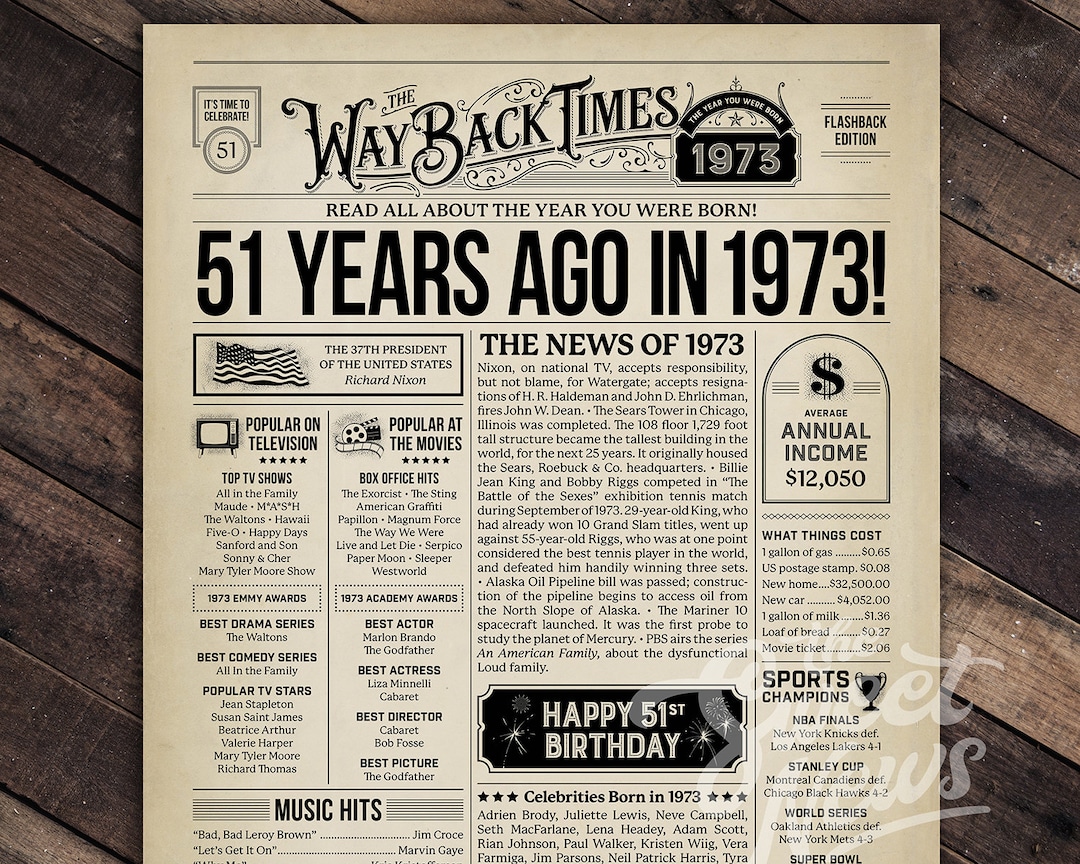
In the realm of culture and infrastructure, 1973 was a year of "biggest and best." The Sears Tower (now Willis Tower) was completed in Chicago, becoming the tallest building in the world at the time, a title it would hold for 25 years. This achievement reflected the peak of American structural engineering and high-rise commercialism.
In music, 1973 was the year of Pink Floyd’s "The Dark Side of the Moon," an album that would spend a record-breaking 741 weeks on the Billboard charts. In film, The Exorcist and The Sting dominated the box office, reflecting a shift toward darker, more complex, or gritty cinematic storytelling. Furthermore, 1973 marked the launch of the Water Ox year in the Chinese Zodiac (specifically beginning February 3, 1973), a sign associated with diligence, persistence, and the ability to endure hardship—traits that were certainly tested by the year's global events.
Comparison of Major 1973 Milestones
The following table summarizes the key events of 1973 and their long-term significance as viewed from the perspective of 2026.
| Category | Primary Event | Significance | Long-term Impact (as of 2026) |
|---|---|---|---|
| Geopolitics | Paris Peace Accords | Ended U.S. combat in Vietnam | Reshaped U.S. foreign policy and military interventionism. |
| Economy | OPEC Oil Embargo | Quadrupled global oil prices | Triggered a shift toward energy efficiency and green energy. |
| Legal | Roe v. Wade | Legalized abortion in the U.S. | Defined 50 years of American political and judicial division. |
| Technology | First Mobile Phone Call | Motorola's Martin Cooper | Laid the foundation for the modern global mobile economy. |
| Domestic Policy | Watergate Hearings | Unraveled the Nixon cover-up | Led to the only presidential resignation in U.S. history (1974). |
| Space | Skylab Launch | First U.S. Space Station | Demonstrated long-term human viability in orbit. |
| Finance | End of Bretton Woods | Transition to floating exchange rates | Created the modern global fiat currency system. |
The Legacy of 1973 in the Year 2026
Looking back from 2026, 1973 is viewed as the year that broke the post-war consensus. The reliance on fossil fuels, the unquestioned authority of the presidency, and the stability of the dollar were all challenged or overturned. For professionals in the energy sector, 1973 remains the original "stress test" that eventually drove the diversification of energy portfolios toward nuclear, wind, and solar power.
In legal and social circles, the debates initiated in 1973 regarding reproductive rights and executive privilege continue to occupy courtrooms and legislative chambers. The technological "firsts" of 1973—from mobile calls to the early ARPANET protocols (which were expanded significantly that year)—provided the digital infrastructure that defines modern life.
Frequently Asked Questions (FAQ)
What was the Chinese Zodiac animal for 1973? 1973 was the Year of the Water Ox. In the Chinese Zodiac, the Ox represents reliability, strength, and determination. The Water element specifically suggests a year where these traits are tempered by a more fluid, observant, and intellectual approach to problems.
Why is 1973 considered the end of the "Golden Age" of the economy? 1973 saw the convergence of the collapse of the Bretton Woods system (fixed exchange rates tied to gold) and the OPEC oil shock. These events ended the period of low-inflation, high-growth prosperity that the West had enjoyed since 1945, leading to the "Great Inflation" of the 1970s.
Who was the President of the United States in 1973? Richard Nixon was the President of the United States throughout 1973. However, his administration was under heavy scrutiny due to Watergate, and his Vice President, Spiro Agnew, resigned in October 1973 due to unrelated corruption charges, leading to the appointment of Gerald Ford.
What major medical or scientific breakthroughs occurred in 1973? In addition to the launch of Skylab, 1973 was a critical year for MRI technology. Paul Lauterbur published the first nuclear magnetic resonance image, which is the foundational principle behind the modern MRI machines used in hospitals globally today.
What was the "Battle of the Sexes" in 1973? On September 20, 1973, tennis star Billie Jean King defeated Bobby Riggs in a highly publicized match. It was a massive cultural event that drew 90 million viewers worldwide and became a landmark moment for women's sports and the broader women's liberation movement.
Practical Recommendations for Researchers
When studying 1973, it is essential to look beyond individual events and analyze how they intersected. The economic pressure of the oil crisis, for instance, significantly hampered the U.S. government’s ability to manage the social transitions occurring at home. For those researching this period in 2026, primary sources such as the Congressional Record for the Watergate hearings or the OPEC historical archives provide the most accurate technical data regarding these shifts.
For educators or students, the best "next step" is to analyze the 1973 War Powers Resolution, which was passed by Congress over Nixon's veto. It remains a crucial piece of legislation that governs how a President can commit U.S. forces to an armed conflict—a legal framework still heavily debated in contemporary foreign policy discussions.
Image Gallery