How to Craft Open Ended Questions for Qualitative Research
Crafting open ended questions for qualitative research requires designing prompts that invite descriptive, narrative, and unconstrained responses rather than simple yes-no answers. Researchers achieve this by avoiding leading phrasing,...
Crafting open ended questions for qualitative research requires designing prompts that invite descriptive, narrative, and unconstrained responses rather than simple yes-no answers. Researchers achieve this by avoiding leading phrasing, focusing on single core ideas, and using neutral exploratory verbs like "how," "what," and "describe."
Contents
Qualitative research depends heavily on capturing the rich, nuanced perspectives of participants. Whether conducting semi-structured interviews, focus groups, or open-ended survey questionnaires, the quality of the data collected is directly tied to the construction of the questions. Poorly phrased queries can shut down conversation, introduce bias, or lead participants toward socially desirable answers. Mastering the art and science of questionnaire design ensures that researchers gather authentic insights that faithfully represent human experiences, behaviors, and motivations.
Understanding Qualitative Research Questions
Before drafting questions, researchers must understand what distinguishes qualitative inquiry from quantitative surveys. Quantitative research focuses on measurement, statistical frequency, and numerical correlations. Qualitative research, by contrast, explores meaning, context, process, and subjective experiences.
Because qualitative research is exploratory and interpretive, questions must remain flexible. They should act as conversational guides rather than rigid interrogations. The primary objective is to elicit deep, detailed narratives that reveal why people think, feel, or act the way they do, rather than simply measuring how many do so.
The Anatomy of an Open-Ended Question
An open-ended question imposes no artificial boundaries on the respondent. It allows individuals to draw from their own frames of reference, prioritize what matters most to them, and explain their thoughts in their own words.
Consider the difference between these two examples:
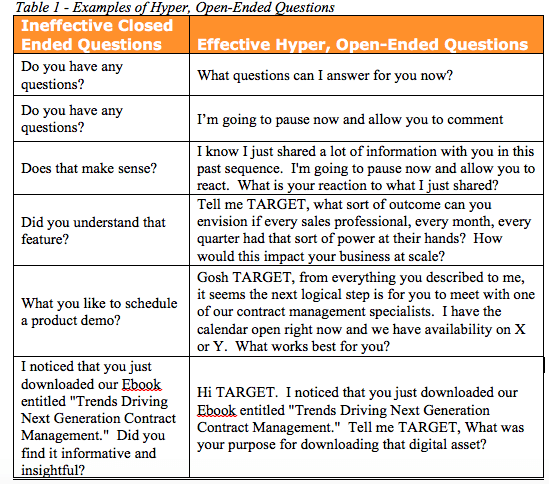
- Closed-ended: "Did you find the onboarding process difficult?" (Yields a simple yes or no).
- Open-ended: "Can you walk me through your experience during the onboarding process?" (Yields a detailed narrative detailing specific friction points and positive moments).
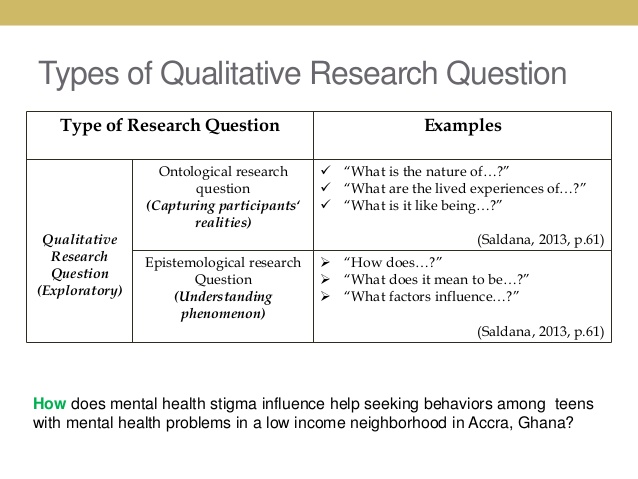
Effective qualitative questions typically begin with neutral interrogative words. "What" questions encourage participants to describe events, objects, or phenomena. "How" questions uncover processes, mechanisms, and pathways. "In what ways" queries help participants evaluate or contextualize their experiences.
Core Principles for Crafting Effective Prompts
Designing high-utility qualitative questions is an iterative process. Researchers must adhere to established methodological principles to maintain data integrity and reduce interviewer bias.
1. Maintain Neutrality and Avoid Leading Questions
A leading question subtly signals the "correct" or preferred answer to the participant, compromising the validity of the data.
- Biased: "How frustrated were you with the software's frequent crashing?"
- Neutral: "What has your experience been like interacting with the software's performance?"
Neutral phrasing ensures that participants feel comfortable sharing both positive and negative perspectives without fearing judgment or steering the researcher toward a predetermined conclusion.
2. Focus on a Single Idea at a Time
Double-barreled questions ask two or more things simultaneously, confusing respondents and resulting in incomplete data because participants often answer only the final part of the prompt.
- Double-barreled: "How did you feel about the management style, and what changes would you make to the office layout?"
- Refined (Part A): "Can you describe the management style you experienced in your previous role?"
- Refined (Part B): "What physical changes to your workspace would have better supported your daily tasks?"
3. Use Conversational, Accessible Language
Academic jargon, complex technical terms, or corporate acronyms can alienate participants or skew their answers based on misunderstandings. Questions should match the language register of the target audience while maintaining professional clarity. If specialized terminology must be used, researchers should define it or prompt the participant to use their own terms.
Step-by-Step Guide to Developing a Question Guide
Creating a comprehensive qualitative instrument requires a systematic approach from initial scoping to pilot testing.
| Phase | Key Objective | Action Steps |
|---|---|---|
| 1. Scoping | Define research objectives | Align questions with central research questions and theoretical frameworks. |
| 2. Drafting | Generate initial prompt pool | Write broad descriptive queries, avoiding yes/no structures. |
| 3. Refining | Eliminate bias and complexity | Review drafts for leading language, double-barreled structures, and jargon. |
| 4. Piloting | Test questions in the field | Conduct mock interviews with representative peers or small sample groups. |
| 5. Iterating | Optimize based on feedback | Adjust wording, pacing, and follow-up probes based on pilot results. |
Designing the Funnel Structure
When organizing an interview guide or questionnaire, researchers often employ a funnel approach. This means starting with broad, non-threatening grand tour questions to build rapport and ease the participant into the topic.
Once the participant is comfortable, the questioning transitions to more focused, specific, or sensitive sub-questions. Finally, the session concludes with a debriefing or closing question that allows the participant to add anything they feel was missed.
Common Mistakes to Avoid
Even experienced researchers occasionally fall into common traps that compromise qualitative data collection. Recognizing these pitfalls helps maintain methodological rigor.
- Asking "Why" Too Frequently: While uncovering motivations is essential, repeatedly asking "Why?" can make participants feel defensive, as if they must justify or rationalize their behavior. Instead, use descriptive prompts like "What led you to that decision?" or "Can you tell me more about the factors that influenced your choice?"
- Relying on Hypotheticals: Questions starting with "What would you do if..." often yield speculative, idealized answers rather than reflections on actual behavior. Whenever possible, ground questions in past experiences: "Can you recall a time when you faced X, and walk me through how you handled it?"
- Failing to Prepare Probes: Open-ended questions require active listening and follow-up. A researcher who asks a broad question and simply nods without probing for elaboration will miss valuable depth. Prepare a mental or written list of neutral probes (e.g., "Could you give me an example of that?" or "How did that make you feel?") to enrich the data during live sessions.
Frequently Asked Questions
What is the difference between open-ended and closed-ended questions in research?
Open-ended questions allow participants to answer in their own words without fixed response options, generating rich narrative data ideal for qualitative analysis. Closed-ended questions provide predetermined options (such as multiple-choice, rating scales, or yes-no), which are best suited for quantitative measurement and statistical analysis.
How many open-ended questions should be included in an interview guide?
For a 45-to-60-minute qualitative interview, researchers typically prepare 5 to 8 primary open-ended questions. Because each primary question should be followed by targeted probes and conversational exploration, a smaller number of well-crafted questions yields higher-quality data than a long list of rushed inquiries.
Can open-ended questions be used in quantitative surveys?
Yes. Quantitative surveys frequently incorporate open-ended text fields at the end of questionnaire modules. These allow respondents to provide qualitative context, feedback, or elaboration on their numerical ratings, often analyzed using thematic coding.
How do I handle participants who give very brief answers to open-ended questions?
When a participant gives a one-word or overly brief response, researchers should rely on non-verbal encouragement (such as expectant silence or attentive nodding) or gentle verbal probes. Prompts like "Tell me a bit more about that" or "What makes you say that?" encourage elaboration without leading the participant.
Why are leading questions problematic in qualitative research?
Leading questions introduce researcher bias by signaling the expected or desired answer. In qualitative research, where the goal is to uncover the participant's authentic lived experience, leading questions invalidate findings by distorting reality to match the researcher's preconceptions.
Recommended Next Actions
Before finalizing your qualitative research instrument, conduct a peer review of your draft questions with a colleague unfamiliar with the study. Ask them to identify any ambiguous phrasing, hidden assumptions, or leading statements. Afterward, run at least two pilot interviews with individuals who match your target demographic to test how naturally the questions flow and whether they successfully elicit the deep narrative data required for your analysis.
Image Gallery