Types of Life Insurance for Retirement
Life insurance for retirement typically involves permanent policies—such as whole life or universal life—that build tax-advantaged cash value, which policyholders can access during their retirement years through withdrawals or loans to...
Life insurance for retirement typically involves permanent policies—such as whole life or universal life—that build tax-advantaged cash value, which policyholders can access during their retirement years through withdrawals or loans to supplement income.
Contents
Navigating the transition from building a career to enjoying retirement requires a comprehensive look at every financial tool at your disposal. While traditional vehicles like 401(k) plans, individual retirement accounts (IRAs), and taxable brokerage accounts form the bedrock of most retirement strategies, certain types of life insurance can also serve a dual purpose. They provide a financial safety net for dependents while simultaneously acting as an auxiliary asset class for tax-advantaged wealth accumulation.
Understanding how different life insurance products function requires looking past the death benefit to examine the underlying mechanisms of cash value growth, structural costs, and distribution rules. This guide breaks down the core categories of life insurance used in retirement planning, evaluates their operational mechanics, and examines how they compare to traditional retirement vehicles.
(Note: Insurance products are financial instruments governed by state regulations and carrier underwriting guidelines. This article is for informational purposes and does not constitute formal financial, tax, or legal advice. Consult a certified financial planner or tax professional before making major structural changes to your retirement strategy.)
The Core Distinction: Term Versus Permanent Life Insurance
Before evaluating policies specifically tailored for retirement income, it is essential to separate temporary coverage from permanent coverage. The fundamental architecture of a life insurance policy dictates whether it can play a role in your retirement funding.
Term Life Insurance
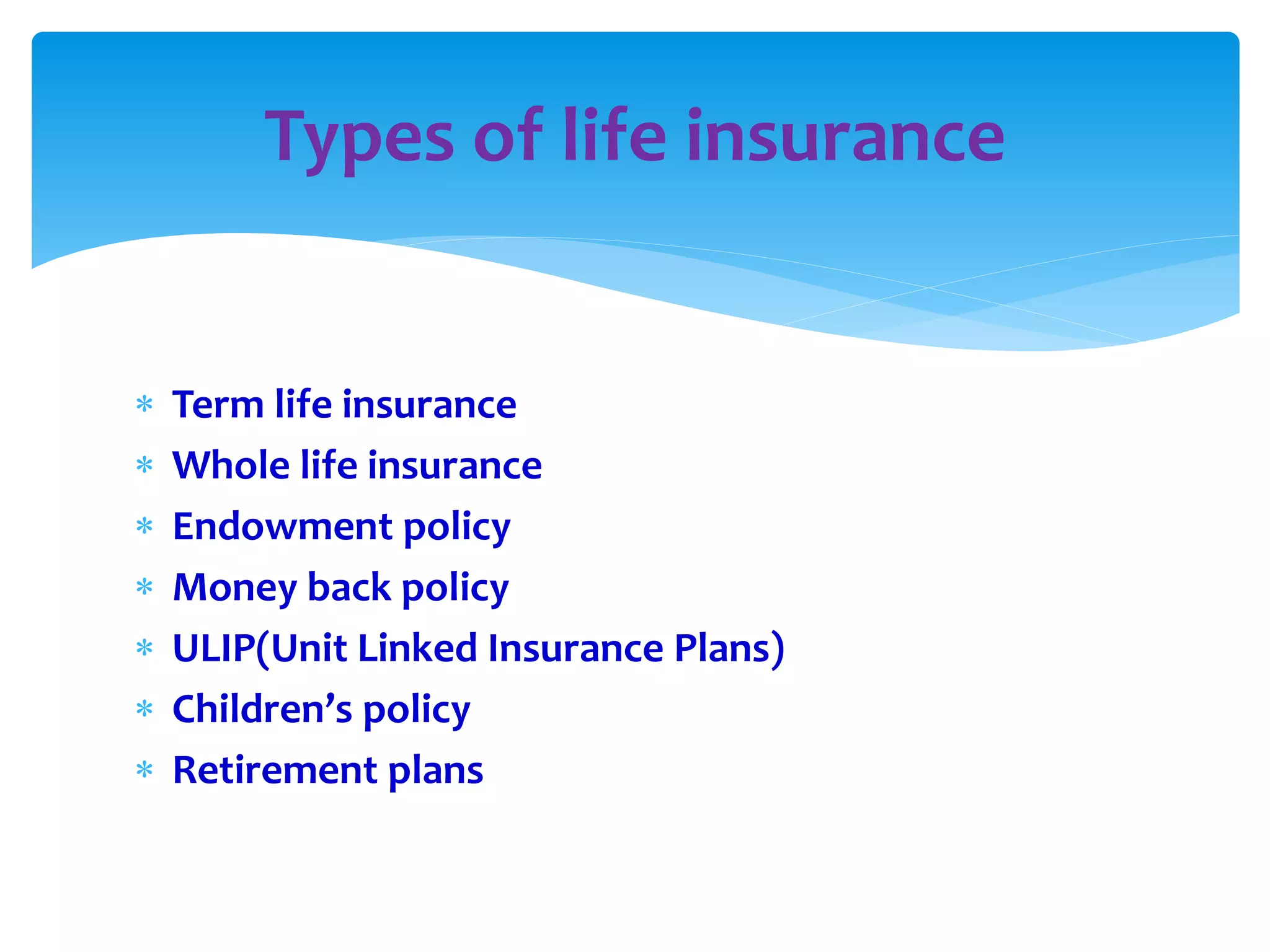
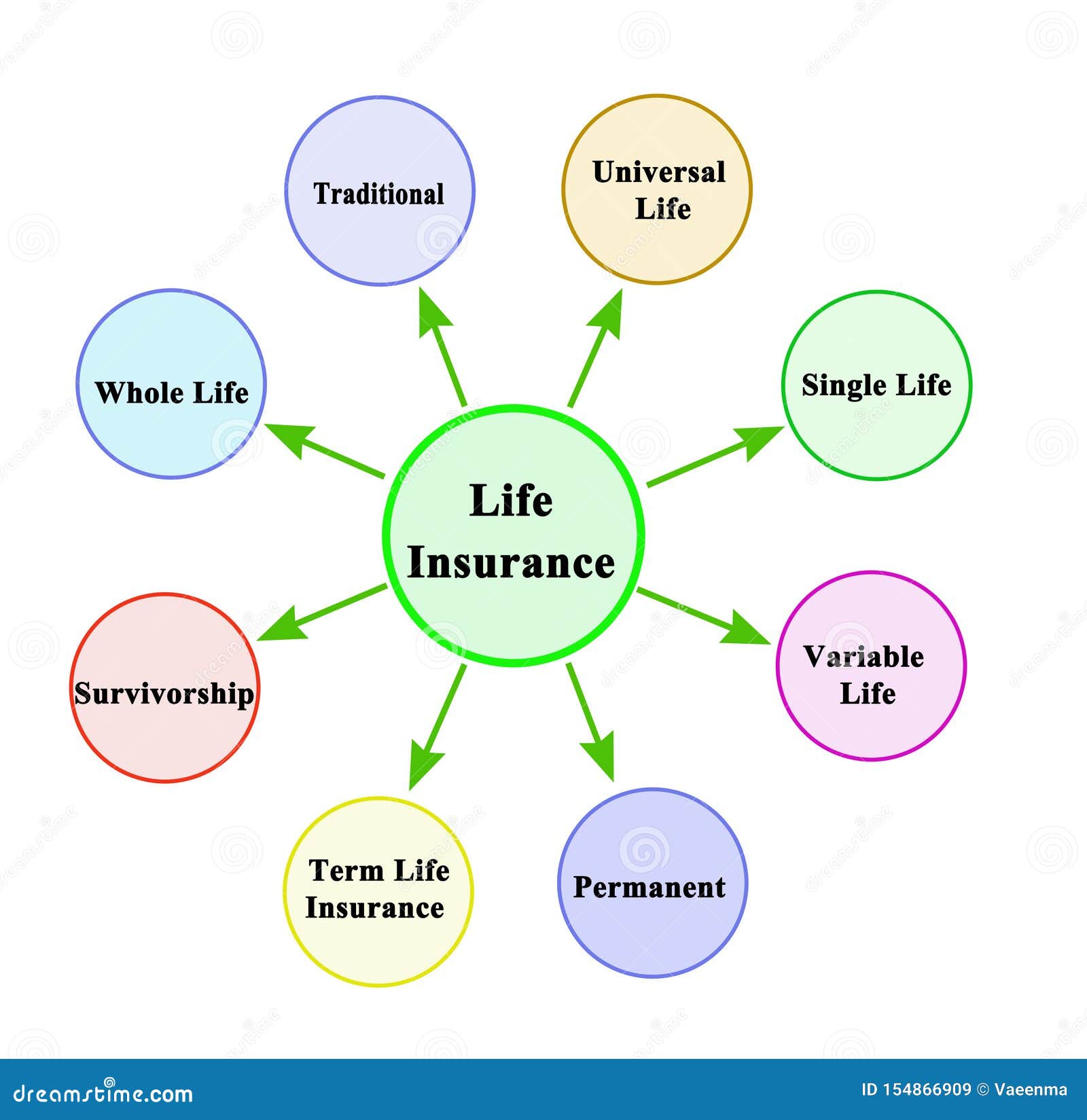
Term life insurance provides coverage for a specified period—such as 10, 20, or 30 years. If the insured passes away during that window, the beneficiaries receive the income-tax-free death benefit.
- Retirement Utility: Term life insurance builds no cash value and expires. Consequently, it generally offers no direct utility for funding retirement expenses.
- Primary Use Case: It is designed strictly for income replacement and debt protection during your working years when financial dependents rely on your earnings. Once mortgages are paid off and children are independent, term policies typically lapse or are no longer needed.
Permanent Life Insurance
Permanent life insurance remains active for the insured's entire life, provided required premiums are paid. Crucially, these policies feature a cash value account alongside the death benefit. A portion of each premium payment funds the cost of insurance and administrative fees, while the remainder enters the cash value account, where it grows on a tax-deferred basis.
- Retirement Utility: The cash value component is what transforms permanent life insurance into a potential retirement asset. Policyholders can access this accumulated capital later in life through policy loans or withdrawals to help fund their post-work years.
Types of Permanent Life Insurance for Retirement
Permanent policies are not monolithic. They vary significantly in how cash value is invested, how much risk the policyholder assumes, and how costs are structured.
Whole Life Insurance
Whole life insurance is the oldest and most conservative form of permanent coverage. It offers guaranteed premiums, a guaranteed death benefit, and a guaranteed minimum rate of return on the cash value.
- How Growth Works: The insurance company's investment portfolio backs the policy's cash value. Many whole life policies are issued by mutual companies that pay annual dividends to policyholders. While dividends are never guaranteed, top-tier mutual insurers have long historical records of paying them consistently.
- Retirement Application: Retirees can use accumulated dividends to pay premiums, take cash payouts, or purchase paid-up additions that increase both the cash value and the death benefit. Cash value can be accessed via policy loans, though unpaid loans reduce the final death benefit.
- Pros and Cons: It offers stability and predictability, but it generally features higher mandatory premium outlays and lower long-term growth potential compared to market-linked policies.
Universal Life (UL) Insurance
Universal life insurance introduces flexibility into permanent coverage. Policyholders can often adjust their premium payments and death benefit amounts within contractual limits, provided the cash value is sufficient to cover internal monthly expenses.
- How Growth Works: The cash value earns a declared interest rate set by the insurance carrier, which is typically tied to prevailing short- and medium-term fixed-income yields, subject to a guaranteed minimum floor.
- Retirement Application: UL policies allow retirees to lower premium payments or stop them temporarily by letting accumulated cash value cover the internal costs of the policy. However, if market interest rates remain low for extended periods, the cash value may underperform, requiring higher out-of-pocket premium payments to keep the policy from lapsing.
Indexed Universal Life (IUL) Insurance
Indexed universal life insurance links cash value growth to the performance of an external financial market index, such as the S&P 500, without directly investing in the stock market.
- How Growth Works: Policies feature "caps" (maximum crediting rates) and "floors" (typically 0%, protecting the principal from market downturns). If the index rises, the policy earns interest up to the cap. If the index falls, the cash value does not decline due to market losses, though fixed administrative fees and cost-of-insurance charges still apply.
- Retirement Application: IUL is frequently marketed as a vehicle for tax-free retirement income through policy loans. The zero-percent floor protects principal during severe market corrections, which appeals to risk-averse savers nearing retirement.
- Pros and Cons: While IUL offers downside protection and participation upside, complex fee structures, caps, and participation rates can limit actual returns. Underestimating internal costs can cause policies to underperform projections.
Variable Universal Life (VUL) Insurance
Variable universal life insurance combines the flexibility of universal life with direct investment sub-accounts that resemble mutual funds.
- How Growth Works: Policyholders allocate their cash value among various equity, bond, and money market sub-accounts. Growth depends entirely on the performance of the selected sub-accounts.
- Retirement Application: VUL offers the highest growth potential among permanent insurance options, making it attractive for aggressive accumulators. Retirees can shift sub-accounts into conservative fixed income as they age.
- Pros and Cons: VUL exposes the cash value to direct market risk. If underlying investments suffer severe losses, the cash value can drop significantly, forcing the policyholder to inject substantial capital to maintain coverage.
Comparison of Permanent Life Insurance Options
| Policy Type | Growth Mechanism | Downside Protection | Flexibility | Primary Retirement Appeal |
|---|---|---|---|---|
| Whole Life | Guaranteed minimum rate + potential dividends | High (Guaranteed by insurer) | Low (Fixed premiums) | Predictable, stable cash accumulation and lifetime guarantees. |
| Universal Life (UL) | Insurer-declared interest rate | Moderate (Guaranteed minimum floor) | High (Adjustable premiums/benefits) | Flexible funding options and adjustable death benefits. |
| Indexed Universal Life (IUL) | Linked to market index with caps/floors | High (0% floor prevents market loss) | High | Growth tied to market gains with downside principal protection. |
| Variable Universal Life (VUL) | Direct market sub-accounts (Equities/Bonds) | Low (Subject to market drops) | High | Maximum growth potential for aggressive investors. |
How Life Insurance Fits Into a Retirement Income Plan
Integrating life insurance into a retirement plan requires examining how policy funds are accessed and how they interact with existing tax-advantaged accounts.
Tax-Free Income via Policy Loans
The primary method of generating retirement income from permanent life insurance is taking policy loans against the cash value rather than making direct withdrawals.
- The Mechanics: When you borrow against your cash value, the insurance company issues a loan using your cash value as collateral. Because the money is technically a loan and not a distribution of earnings, it is generally treated as tax-free income by the Internal Revenue Service (IRS), provided the policy remains in force.
- Interest and Dividends: Even while a loan is outstanding, the remaining cash value continues to earn interest or dividends (in participating whole life policies), though the net rate of return is often reduced by the loan interest charged by the carrier.
- The Lapse Risk: If a policy lapses due to unpaid loans and accumulated interest exceeding the cash value, the IRS may treat the entire outstanding loan balance as taxable ordinary income in that single tax year, creating a substantial, unexpected tax liability.
Integration with Social Security and Tax Brackets
Unlike traditional withdrawals from a Traditional 401(k) or IRA, which count as taxable ordinary income and can push retirees into higher tax brackets or trigger taxation on Social Security benefits, properly structured life insurance loans do not count as provisional income. This can help retirees manage their Adjusted Gross Income (AGI) to minimize taxes.
Potential Drawbacks and Risks
While life insurance can complement a retirement strategy, it comes with notable trade-offs that buyers must evaluate carefully.
- High Front-End Costs: Commissions, premium taxes, and administrative fees can consume a large portion of early premium payments, meaning cash value grows slowly during the first several years of the policy.
- Complexity and Misprojection: Policy performance depends on actuarial assumptions, dividend scales, or interest rate environments. Illustrations provided by agents are projections, not guarantees.
- Opportunity Cost: The capital tied up in permanent insurance premiums could potentially generate higher long-term returns if invested directly in low-cost equities through taxable brokerage accounts or tax-advantaged retirement plans.
- Underwriting Hurdles: Securing permanent life insurance later in life becomes significantly more expensive or difficult due to age-related health changes. Purchasing these policies earlier in life is typically required to make the math work.
Frequently Asked Questions
Can I use a term life insurance policy to fund my retirement?
No. Term life insurance builds no cash value and expires after a set term. It provides a death benefit only if the insured passes away while the policy is active. Because it lacks a cash accumulation component, it cannot be used to generate retirement income.
How do policy loans affect the death benefit?
Any outstanding policy loans, plus accrued interest, are deducted directly from the death benefit when the insured passes away. If your beneficiaries are relying on a specific inheritance amount, unpaid loans will reduce the final payout.
Is income taken from a life insurance policy tax-free?
Generally, yes, if executed correctly. Taking policy loans against cash value does not trigger taxable events, because loans are not considered income. However, if the policy lapses or is surrendered with an outstanding loan balance that exceeds your cost basis, the excess can be taxed as ordinary income.
What happens if my IUL or UL policy underperforms?
If market performance or interest rates fall below the rates assumed in original illustrations, the cash value will grow more slowly than projected. To prevent the policy from lapsing, you may be required to pay higher out-of-pocket premiums to cover the ongoing internal costs of insurance.
Should I maximize my 401(k) before buying permanent life insurance for retirement?
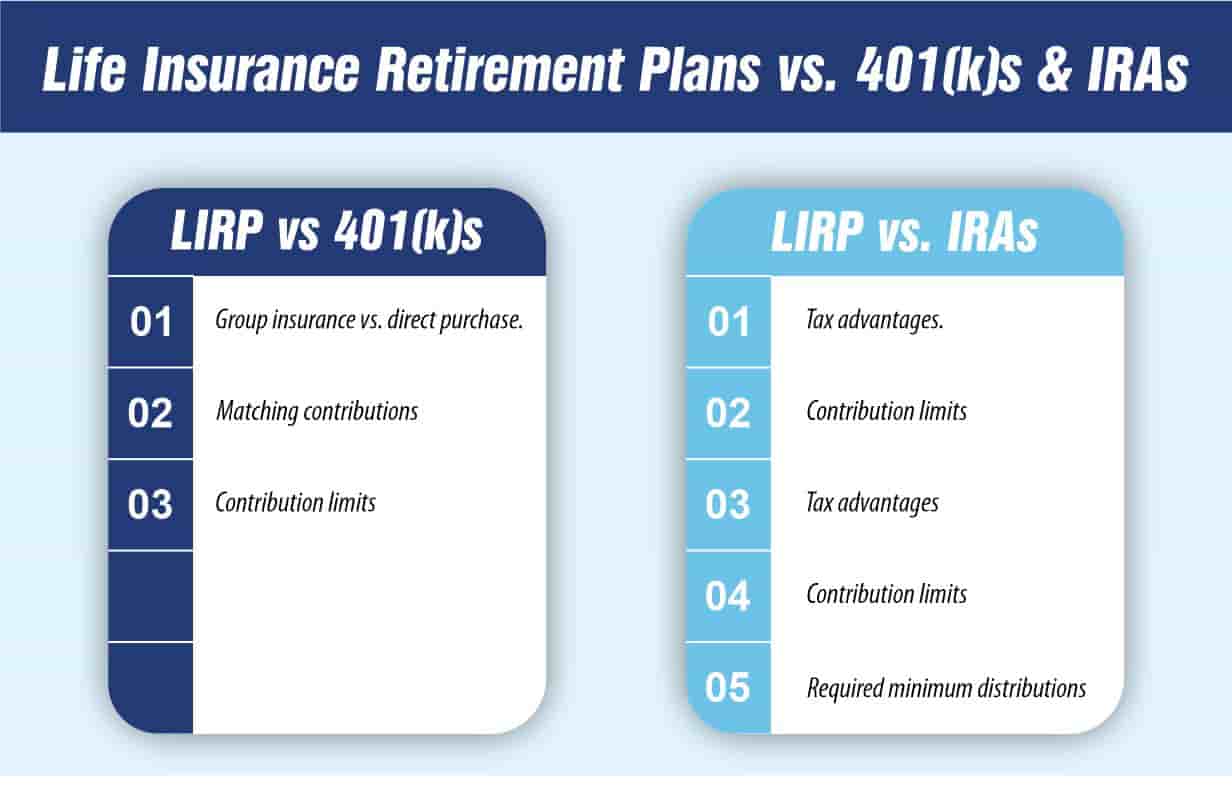
For most savers, maximizing employer-sponsored retirement plans that offer matching contributions takes priority. Employer matches represent an immediate, guaranteed return on investment that life insurance cannot replicate. Permanent life insurance is typically considered only after maximizing traditional retirement vehicles and establishing a clear need for permanent death benefit protection.
Next Actions for Retirement Planners
If you are considering adding permanent life insurance to your retirement portfolio, start by auditing your current retirement savings trajectory, tax exposure, and estate-planning goals. Request in-force illustrations if you already own a policy, or consult an independent financial professional who can model different scenarios across multiple insurance carriers. Ensure that any policy you consider aligns with your long-term liquidity needs and does not compromise your primary retirement savings vehicles.
Image Gallery