Demystifying Customer Purchase Orders: A Comprehensive Business Guide
A customer purchase order (PO) is a legally binding commercial document issued by a buyer to a vendor that specifies the products, quantities, agreed prices, and payment terms for a transaction. Upon acceptance by the vendor, the purch...
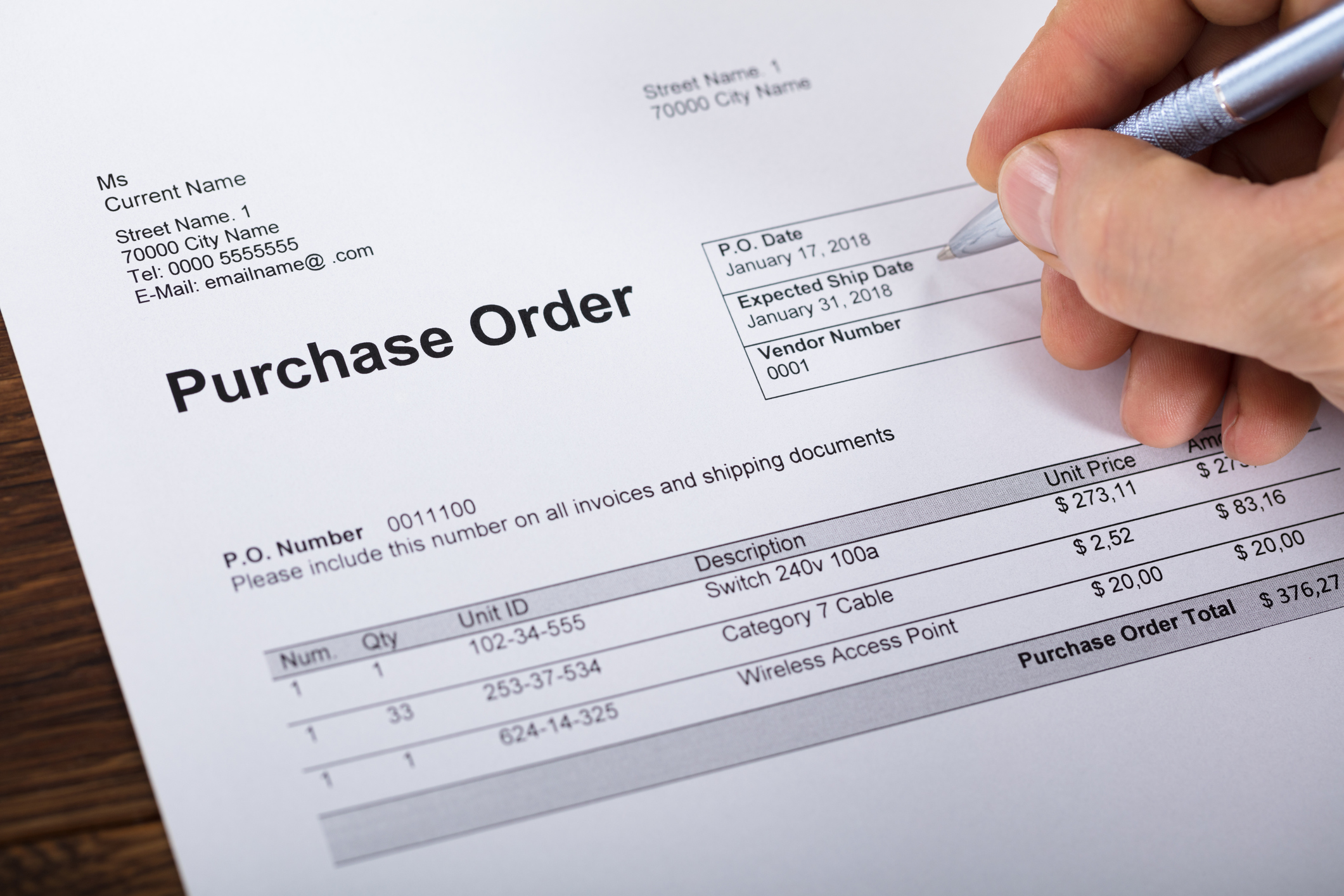
A customer purchase order (PO) is a legally binding commercial document issued by a buyer to a vendor that specifies the products, quantities, agreed prices, and payment terms for a transaction. Upon acceptance by the vendor, the purchase order establishes a contractual agreement that protects both parties and streamlines accounting controls.
Contents
What Is a Customer Purchase Order and How Does It Work?
A customer purchase order serves as the official commercial offer sent from a buyer to a seller. In B2B commerce and enterprise procurement, oral commitments or informal email exchanges create financial and operational ambiguity. A purchase order formalizes the intent to purchase by documenting explicit contract terms before goods are shipped or services are rendered.
When a customer generates a purchase order, it acts as a legally enforceable offer to buy goods or services under specified conditions. The legal contract is formalized once the vendor accepts the purchase order—either through a written order confirmation, a digital acknowledgement via an Enterprise Resource Planning (ERP) platform, or by fulfilling the requested order.
From an internal control standpoint, purchase orders prevent unapproved spending. Organizations establish clear thresholds requiring employees to route purchase requisitions through management approvals before a purchase order is dispatched to a supplier. This mechanism ensures that financial obligations are pre-authorized against current budgets.
Key Components of an Effective Customer Purchase Order
To prevent misunderstandings, delays, and payment disputes, a customer purchase order must contain standard, unambiguous data elements. Omitting crucial fields can invalidate the document's legal enforceability or lead to processing errors in accounts payable and inventory management.
| Field / Item | Details / Description | Quantity | Unit Price | Total / Date |
|---|---|---|---|---|
| COMPANY HEADER & LOGO | Buyer Company NameStreet Address, City, State, ZipContact Phone & Email | |||
| PO NUMBER | PO-2026-89412 | DATE | October 14, 2026 | |
| PAYMENT TERMS | Net 30 | DELIVERY DATE | Nov 01, 2026 | |
| VENDOR (SELLER) INFORMATION | Vendor NameAttn: Sales DepartmentStreet Address, City, State | SHIP TO (DELIVERY LOCATION) | Receiving Warehouse #4Attn: Logistics Manager100 Logistics Parkway | |
| ITEM # | DESCRIPTION | QTY | UNIT PRICE | TOTAL PRICE |
| SK-101 | Industrial Sensor A1 | 50 | $ 120.00 | $ 6,000.00 |
| SK-204 | Mounting Bracket B2 | 100 | $ 15.00 | $ 1,500.00 |
| SUBTOTAL: | $ 7,500.00 | |||
| SHIPPING: | $ 150.00 | |||
| TAX (8%): | $ 612.00 | |||
| TOTAL COST: | $ 8,262.00 | |||
| AUTHORIZED SIGNATURE: | J. Doe | DATE: | Oct 14, 2026 |
Essential Data Fields
- Header Identification: A unique, sequential PO number is mandatory for tracking. The header also records the issue date and expected delivery date.
- Entity Details: Full legal names, tax identification numbers, physical addresses, and primary contact information for both the customer (buyer) and the vendor (seller).
- Itemized Order Lines: Detailed technical specifications, Stock Keeping Units (SKUs), exact quantities, agreed unit pricing, and extended line totals.
- Fulfillment Logistics: Specified delivery addresses (including specific warehouse bay or department designations), preferred freight carriers, and Incoterms (such as FOB Destination or EXW) that clarify when liability transfers from seller to buyer.
- Commercial & Payment Terms: Explicit credit terms, such as Net 30, Net 60, or early-payment discount windows (e.g., 2/10 Net 30).
- Legal Terms and Signatures: Default terms and conditions, governing law clauses, and an explicit signature or digital authentication from an authorized purchasing officer.
The Purchase Order Lifecycle: Step-by-Step Workflow
Understanding the step-by-step lifecycle of a purchase order helps businesses identify operational bottlenecks and maintain financial discipline across procurement teams.
- Purchase Requisition
- Internal Approval
- PO Generation & Transmission
- Goods Receiving & Inspection
- 3-Way Matching
- Payment Settlement
1. Purchase Requisition and Internal Approval
The process begins internally within the buyer's organization. An employee or department identifies a operational need and submits a purchase requisition. This internal document specifies the items required, estimated cost, and department budget code. Managers review and approve the request based on internal authority delegation schedules.
2. PO Generation and Transmission
Once approved, the procurement software automatically converts the purchase requisition into an official purchase order. The system assigns a unique PO number and transmits the document to the chosen vendor via Electronic Data Interchange (EDI), automated procurement software, or email.
3. Vendor Review and Acceptance
The vendor receives the purchase order and evaluates the terms. They verify that the requested items are in stock, the prices match agreed rate cards, and the delivery timeframe can be met. If accepted, the vendor returns a formal order acknowledgement. If discrepancies exist, negotiations occur to amend the PO before work begins.
4. Fulfillment and Goods Receiving
The vendor processes the order, packages the items, and dispatches them according to the logistics instructions on the PO. A packing slip referencing the customer's PO number accompanies the shipment. Upon arrival, the customer's receiving team inspects the goods against the purchase order to confirm correct quantities and condition.
5. Three-Way Matching and Accounts Payable Settlement
After fulfillment, the vendor sends a sales invoice referencing the original PO number. The buyer’s accounts payable department performs three-way matching, comparing:
- The original Purchase Order (what was ordered and agreed upon),
- The Receiving Log / Packing Slip (what was actually delivered), and
- The Vendor Invoice (what is being billed).
If all three documents align within established variance limits, the invoice is approved for payment according to the agreed credit terms.
Purchase Order vs. Sales Order vs. Invoice: Key Differences
It is common for emerging businesses to confuse purchase orders with sales orders and invoices. While all three are fundamental to transactional accounting, they serve distinct functions at different stages of the commercial process.
| Metric / Dimension | Purchase Order (PO) | Sales Order (SO) | Commercial Invoice |
|---|---|---|---|
| Issued By | Buyer (Customer) | Seller (Vendor) | Seller (Vendor) |
| Primary Recipient | Seller (Vendor) | Buyer (Customer) & Internal Operations | Buyer (Customer) |
| Timing in Workflow | Before order processing begins | Upon order acceptance and confirmation | After goods/services are delivered |
| Primary Purpose | Authorize spend and request goods/services | Confirm inventory availability and order commitment | Demand payment for delivered goods/services |
| Legal Function | Acts as an official offer to purchase | Acts as confirmation of contract acceptance | Serves as a financial demand and accounting record |
| Key Reference Element | Unique PO Number | Internal Sales Order Number (linked to PO) | Invoice Number (must cite original PO Number) |
Why Customer Purchase Orders Are Critical for Operations and Finance
Relying on informal communication or verbal agreements exposes businesses to significant financial and operational risk. Formal purchase order workflows deliver several organizational benefits.
Strict Budgetary Controls
Purchase orders prevent maverick spend—unauthorized purchases made outside established procurement policies. By requiring approval prior to PO issuance, financial managers ensure that funds are committed only when allocated within active operating budgets.
Dispute Mitigation and Legal Protection
When product specifications, quantities, or delivery windows are contested, an accepted purchase order provides clear documentary evidence. If a vendor ships incorrect items or attempts to raise prices unilaterally, the buyer can point to the agreed-upon PO terms for legal and operational recourse.
Enhanced Inventory and Resource Planning
For sellers, receiving customer purchase orders provides advance visibility into demand forecasts. Production schedules and inventory replenishments can be aligned directly with incoming binding orders, minimizing safety stock holding costs while preventing stockouts.
Streamlined Financial Audits
Internal and external financial auditors rely on purchase orders to verify the integrity of corporate balance sheets. Every entry in the accounts payable ledger ideally links back to a matching purchase order, receiving document, and approved invoice, providing a verifiable audit trail.
Common Mistakes in Purchase Order Management
Even with structured processes, organizations frequently encounter errors that disrupt supply chains or delay vendor payments.
1. Incomplete or Ambiguous Descriptions
Listing vague item descriptions such as "custom parts" or "IT consultation" without clear specifications, part numbers, or scopes of work leads to misinterpretation. Sellers may fulfill orders incorrectly, resulting in costly returns and delays.
- Fix: Enforce mandatory standardized SKU inputs and structured scopes of work on every PO line item.
2. After-the-Fact (After-the-Event) POs
An "after-the-fact" purchase order occurs when an employee orders goods directly from a vendor and only requests a purchase order after receiving the vendor's invoice. This completely undermines internal approval mechanisms and budgetary controls.
- Fix: Implement strict corporate policies that prohibit vendors from fulfilling orders without a pre-approved PO number on file.
3. Inaccurate Pricing and Currency Specifications
Failing to state whether prices are fixed, subject to volume discounts, or in foreign currencies (e.g., USD vs. EUR) leads to invoicing discrepancies during three-way matching.
- Fix: Integrate procurement portals directly with updated vendor pricing catalogs and lock in target currencies on international transactions.
4. Poor Tracking of Blanket Purchase Orders
A Blanket Purchase Order (BPO) is a single PO approved for recurring orders over a set period up to a maximum spend limit. Companies often fail to track cumulative spend against a BPO, leading to unbudgeted overruns once the limit is exceeded.
- Fix: Use accounting software that automatically decrements the open balance on a blanket PO as each invoice is processed.
Modernizing Purchase Order Workflows: Automation and Integration
Manual purchase order creation using static spreadsheets or paper forms creates operational delays, data entry errors, and lost records. Modern enterprise procurement relies on automated digital workflows.
Procure-to-Pay (P2P) Systems
Modern organizations utilize integrated Enterprise Resource Planning (ERP) and Procure-to-Pay platforms (such as SAP, Oracle NetSuite, Workday, or Coupa). These tools automate the entire workflow:
Requisition Created
Dynamic Rule-Based Routing
Automated Vendor Dispatch
AI Optical Character Recognition
Automated ERP Reconciliation
Automated Approval Routing: Requisitions are automatically routed to appropriate managers based on spend thresholds, department codes, and delegative authority rules.
Electronic Data Interchange (EDI): Approved POs translate directly into standard EDI formats (such as EDI 850) and transmit instantly into the vendor's enterprise software without human intervention.
Automated 3-Way Matching: Intelligent optical character recognition (OCR) scans incoming supplier invoices, matches them against the original PO and electronic receiving records, and automatically flags variances for human review while auto-approving matched lines.
Transitioning to automated PO workflows reduces purchase order processing cycles from days to minutes, cuts administrative handling costs, and eliminates invoice matching delays.
Frequently Asked Questions (FAQs)
Is a customer purchase order legally binding?
Yes, a customer purchase order becomes a legally binding contract once the vendor accepts it. Acceptance can occur explicitly (via a signed acknowledgement or digital confirmation) or implicitly (by fulfilling and shipping the requested goods). Prior to vendor acceptance, a PO is considered a revocable commercial offer.
Can a customer cancel a purchase order after issuing it?
A customer can modify or cancel a purchase order prior to vendor acceptance without legal penalty. However, once the vendor accepts the PO or begins performance (such as manufacturing custom goods or purchasing dedicated raw materials), cancellation rights depend on the cancellation and termination clauses outlined in the underlying vendor contract or the PO's standard terms.
What is the difference between a purchase requisition and a purchase order?
A purchase requisition is an internal document created by an employee to request permission to purchase goods or services. It stays within the buyer's organization. A purchase order is an external legal document generated after the requisition is approved, which is then formally issued to the vendor to commit to the transaction.
What is a blanket purchase order?
A blanket purchase order (also known as a standing PO) is an agreement between a customer and a vendor to purchase goods or services repeatedly over a specific time frame with predetermined prices, terms, and spending limits. Instead of creating separate POs for every order, the customer issues single call-offs against the blanket PO until the maximum budget or date threshold is reached.
How does automated PO tracking prevent accounts payable fraud?
Automated purchase order tracking enforces separation of duties and mandates three-way matching before funds are disbursed. This prevents common fraudulent schemes, such as fake vendor invoices, duplicate billing, or unauthorized employee disbursements, because payments cannot be issued without an approved, verified PO and matching receiving document already logged in the enterprise system.
Strategic Recommendations for Optimizing Your PO Process
To maximize operational efficiency and maintain tight financial controls, organizations should implement the following actionable steps:
- Establish Clear Delegation of Authority (DoA) Controls: Define exact dollar thresholds for requisition approvals. Ensure lower-level managers can approve routine operational expenses, while high-value purchases require executive sign-off.
- Mandate a "No PO, No Pay" Policy: Enforce a strict policy with vendors and internal staff stating that invoices lacking a valid, pre-approved PO number will be automatically rejected by accounts payable.
- Standardize Item Master Catalogs: Prevent invoice matching errors by requiring internal requisitioners to select items from pre-approved vendor catalogs with pre-negotiated part numbers and pricing.
- Audit Open Purchase Orders Periodically: Conduct quarterly reviews of unfulfilled or partially fulfilled purchase orders. Close out old, inactive POs to release committed funds back into active operational budgets.
Image Gallery