Navigating Chicago: The Complete Guide to CTA Bus Routes in 2026
Chicago Transit Authority (CTA) bus routes provide comprehensive coverage across Chicago and 35 surrounding suburbs, operating a fleet of over 1,800 buses across more than 120 routes. To navigate effectively in 2026, commuters utilize...
Chicago Transit Authority (CTA) bus routes provide comprehensive coverage across Chicago and 35 surrounding suburbs, operating a fleet of over 1,800 buses across more than 120 routes. To navigate effectively in 2026, commuters utilize the Ventra app for real-time tracking, digital fare payment, and interactive system maps that integrate bus and "L" rail connections seamlessly. Whether you are a daily commuter or a visitor, understanding the grid-based system and high-frequency corridors is essential for efficient travel throughout the Chicagoland area.
Contents
The Architecture of the CTA Bus Network
The CTA bus system is the backbone of Chicago's surface transportation, designed primarily around the city’s famous grid layout. Unlike many older cities with radial patterns, Chicago’s streets mostly run in straight north-south or east-west lines, which simplifies the bus network. In 2026, the CTA continues to refine this network under the "Better Bus" initiative, focusing on speed, reliability, and frequency.
The network is categorized by route numbers and service types, which help riders identify the speed and stop frequency of their transit option. Most north-south and east-west routes follow major arterial streets, with stops typically located every two blocks (roughly one-eighth of a mile).
Understanding Route Numbering and Designations
CTA bus routes are numbered logically, though historical legacy still influences some designations. Generally, routes are categorized as follows:
- Primary Grid Routes (1-157): These are the workhorse routes of the city, providing local service along major streets like Western Avenue (#49), Halsted Street (#8), and Chicago Avenue (#66).
- Express Routes (numbered with an 'X' or in the 100s/190s): These routes utilize Lake Shore Drive or skip blocks to provide faster transit between neighborhoods and the Loop (downtown).
- Feeder and Supplemental Routes: Often found in the 200s, these serve specific suburban connections or specialized school/event schedules.
Types of CTA Bus Services in 2026
The CTA offers various service levels to accommodate different commuting needs. Choosing the right service type can significantly reduce travel time, especially during peak congestion hours.
Local Bus Service
Local buses stop at nearly every designated bus stop along their route. While slower than express options, they provide the most comprehensive access to local businesses and residential pockets. In 2026, many local routes have been upgraded with "Bus Priority" signals, which allow buses to communicate with traffic lights to extend green cycles.
Express and Limited-Stop Service
Express buses are designed for long-distance commuters. For example, the #147 Outer Drive Express provides a rapid link from the North Side to the Loop via Jean Baptiste Point du Sable Lake Shore Drive. These routes have fewer stops and often utilize dedicated bus lanes or "Jump" lanes at intersections to bypass traffic.
The Night Owl Network
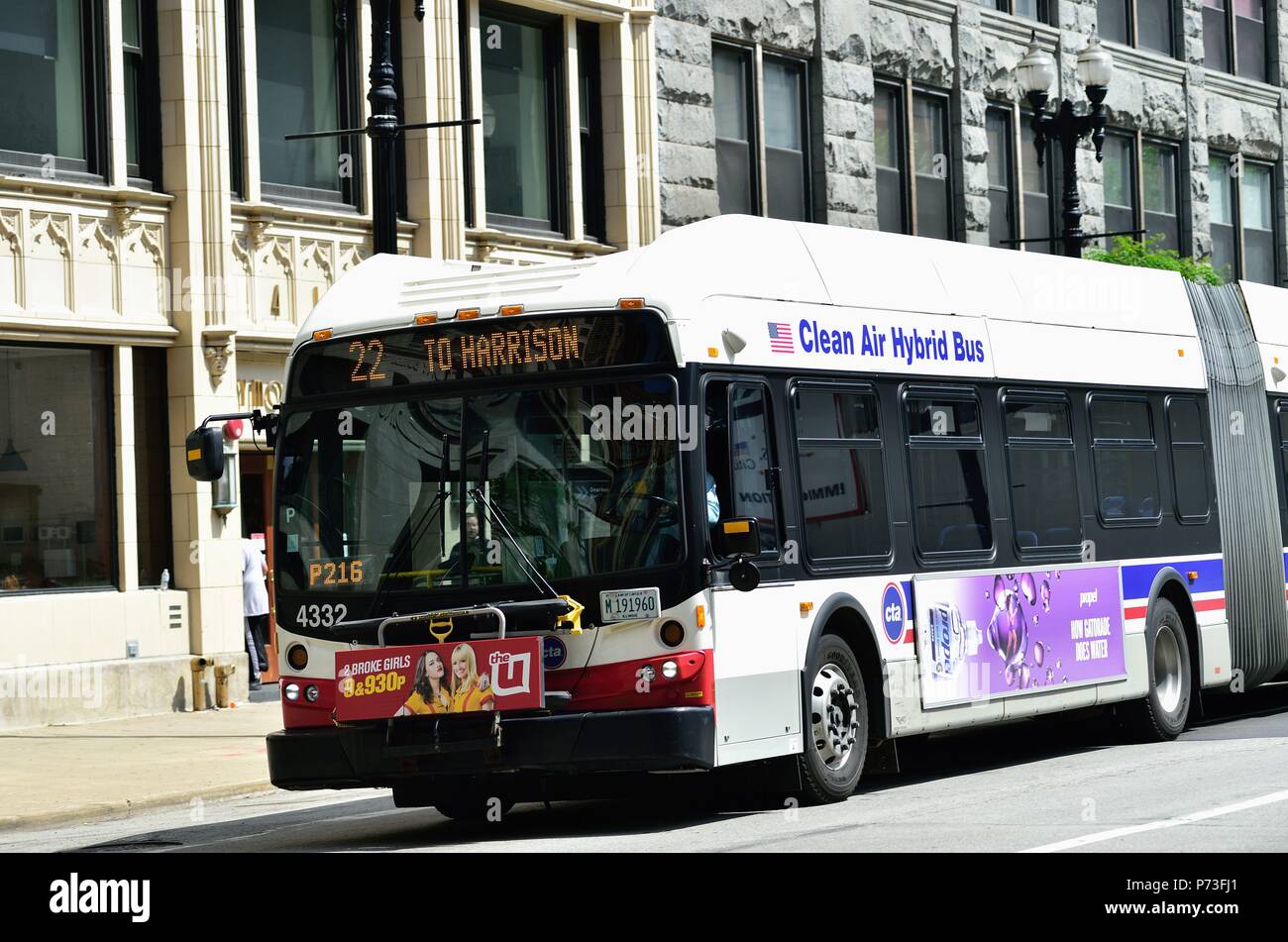
Chicago is one of the few U.S. cities offering robust 24-hour transit. The "Night Owl" network consists of several key routes that run through the night when the "L" or other bus lines may have reduced service. Notable Owl routes include the #22 Clark, #49 Western, and #63 63rd Street.
Comparison of CTA Bus Service Categories
| Service Type | Typical Operating Hours | Stop Frequency | Primary Use Case |
|---|---|---|---|
| Local Service | 4:00 AM – 1:00 AM | Every 2 blocks | Short trips, neighborhood errands |
| Express Service | Peak Commute (6A-9A, 3P-6P) | Limited/Major Hubs | Rapid transit to/from downtown |
| Owl Service | 12:00 AM – 5:00 AM | Varies (Major Arterials) | Late-night workers and travelers |
| Connectors | 6:00 AM – 8:00 PM | Rail Stations/Transit Hubs | Bridging the gap between 'L' lines |
Planning Your Trip: Tools and Real-Time Tracking
In 2026, the accuracy of bus tracking has reached its highest level due to the full integration of GPS-based CAD/AVL (Computer-Aided Dispatch/Automatic Vehicle Location) systems across the entire fleet. Gone are the days of "ghost buses"; the current system uses predictive algorithms to account for traffic density and bridge openings.
The Ventra App
The Ventra app is the primary interface for CTA bus riders. It allows users to:
- Purchase and load transit value or passes (Daily, 3-Day, 7-Day, or 30-Day).
- View live "Bus Tracker" maps showing the exact location of buses on a chosen route.
- Get "push" notifications regarding reroutes due to construction or street festivals.
- Integrate with Pace Suburban Bus and Metra commuter rail for regional planning.
CTA Bus Tracker via SMS
For riders without smartphone access or those in low-service areas, the CTA provides a text-based tracking system. By texting "CTABUS [Stop ID]" to 41411, riders receive an immediate reply with the estimated arrival times for the next several buses at that specific stop. Stop IDs are clearly printed on the bus stop signs located at every intersection.
Fares, Payments, and Transfer Rules
As of 2026, the CTA has streamlined its fare structure to encourage multi-modal transit use. The system is entirely cashless, requiring a Ventra card, a Ventra-compatible mobile wallet (Apple Pay, Google Pay), or a contactless credit/debit card.
Current Fare Structure and Transfer Policies
Standard Bus Fare The base fare for a single bus ride is $2.25. This fare includes up to two transfers within a two-hour window. If your journey requires taking a bus, then an "L" train, and then another bus, all three legs are covered under the initial $2.25 fare, provided they occur within the 120-minute limit.
Reduced Fare Programs Reduced fares are available for seniors (65+), persons with disabilities, and students (ages 7-20). Military personnel in uniform or with qualifying ID ride for free. All reduced-fare riders must use a dedicated Reduced Fare Ventra Card to receive the discount automatically at the reader.
Contactless Convenience Riders using contactless bank cards or mobile devices are charged the same $2.25 rate. However, to benefit from the "two free transfers" rule, the same device or card must be tapped at each point of entry.
Accessibility and Special Needs
The CTA bus fleet is 100% accessible to people with disabilities. Every bus in service in 2026 is equipped with "kneeling" technology, which lowers the front of the bus to curb level, and automated ramps for wheelchair and scooter users.
Inside the bus, there are designated priority seating areas and securement zones for mobility devices. Furthermore, all buses feature automated audio and visual announcements of upcoming stops and major transfer points, ensuring that riders with visual or hearing impairments can navigate the system with confidence.
Major Bus Corridors and Hubs
While there are over a hundred routes, certain corridors act as the "arteries" of the city. These routes usually have the highest frequency, with buses arriving every 5 to 10 minutes during peak hours.
- The Ashland Corridor (#9 and #X9): Running almost the entire north-south length of the city, this is one of the highest-ridership routes in the system.
- The Western Avenue Corridor (#49 and #X49): Providing essential north-south connectivity on the city's West Side.
- The Loop/Downtown Hub: Michigan Avenue and State Street serve as massive transfer points where dozens of routes converge, allowing riders to switch between bus lines or descend into the subway system.
- Jefferson Park Transit Center: A critical hub on the Northwest Side connecting the Blue Line, Metra, and several CTA and Pace bus routes.
Troubleshooting Common Issues on CTA Bus Routes
Even with advanced technology in 2026, urban transit can face interruptions. Here is how to handle common scenarios:
- Reroutes and Construction: Chicago’s heavy construction season (spring through autumn) often results in bus reroutes. Always check the "Alerts" section of the Ventra app or the CTA website before starting a trip. Rerouted buses will typically travel one block over to bypass the closure.
- Full Buses: During extreme weather or peak rush hour, a bus may be too full to accept new passengers. The driver will display a "Full Bus" message on the digital header. In these cases, the "Bus Tracker" will show the following bus's proximity, which is usually only a few minutes behind.
- Lost and Found: If an item is left on a bus, it is usually taken to the garage from which that route operates at the end of the shift. Riders should call the CTA Lost and Found center with the route number and the 4-digit bus number (located inside near the ceiling) if possible.
Comparison: CTA Bus vs. Other Chicago Transit Options
| Feature | CTA Bus | CTA "L" (Train) | Metra Rail |
|---|---|---|---|
| Coverage | Extremely Dense (Citywide) | Fixed Corridors | Regional/Suburban |
| Flexibility | High (Stops every 2 blocks) | Medium (Station-based) | Low (Specific schedules) |
| Speed | Variable (Traffic-dependent) | High (Dedicated track) | Very High (Commuter) |
| Cost | Lowest ($2.25) | Standard ($2.50) | Distance-based |
| Best For | Short-Medium urban trips | Cross-town / Loop travel | Suburban commuting |
Frequently Asked Questions (FAQ)
How do I find a CTA bus route map for my specific area?
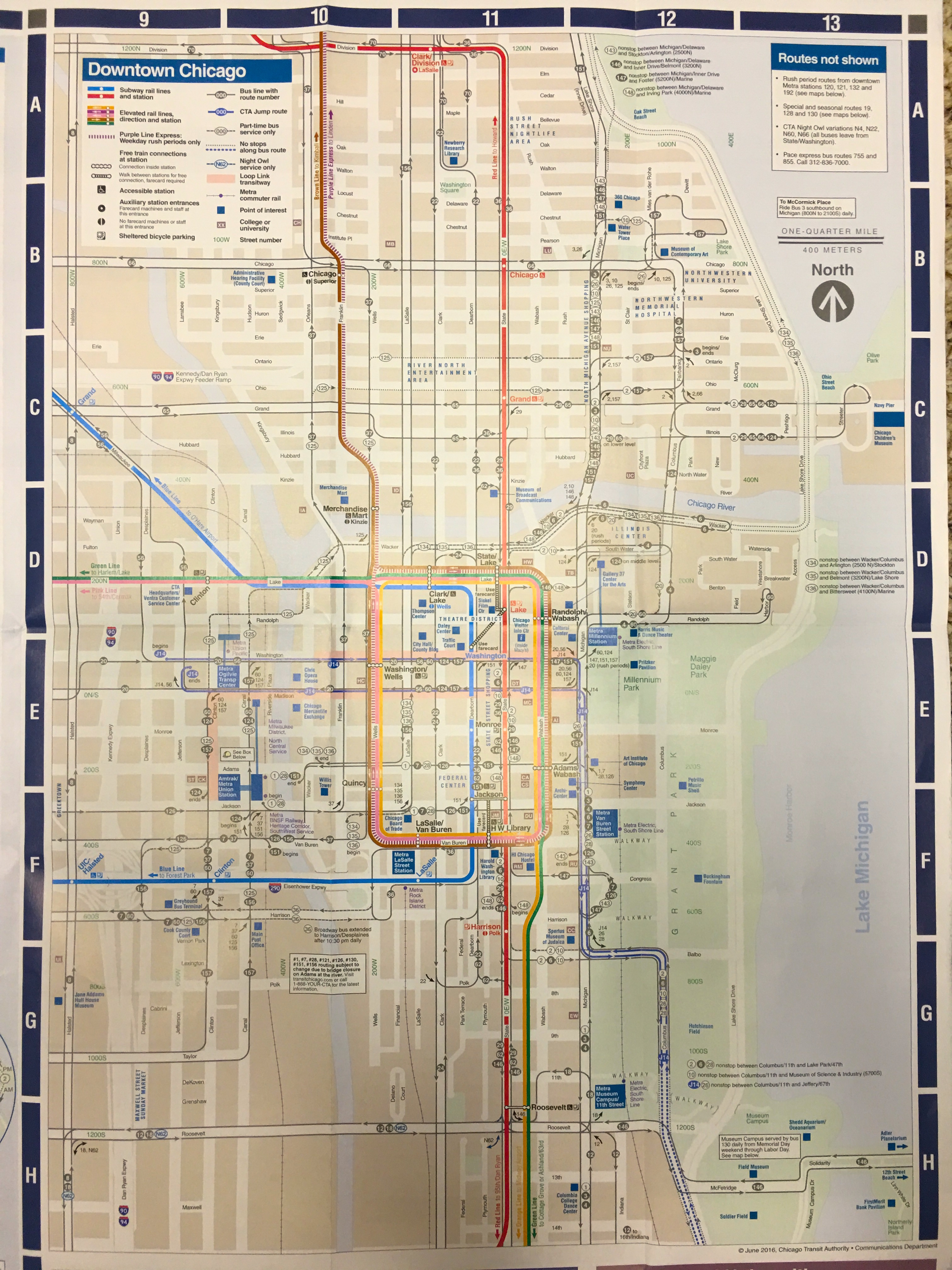
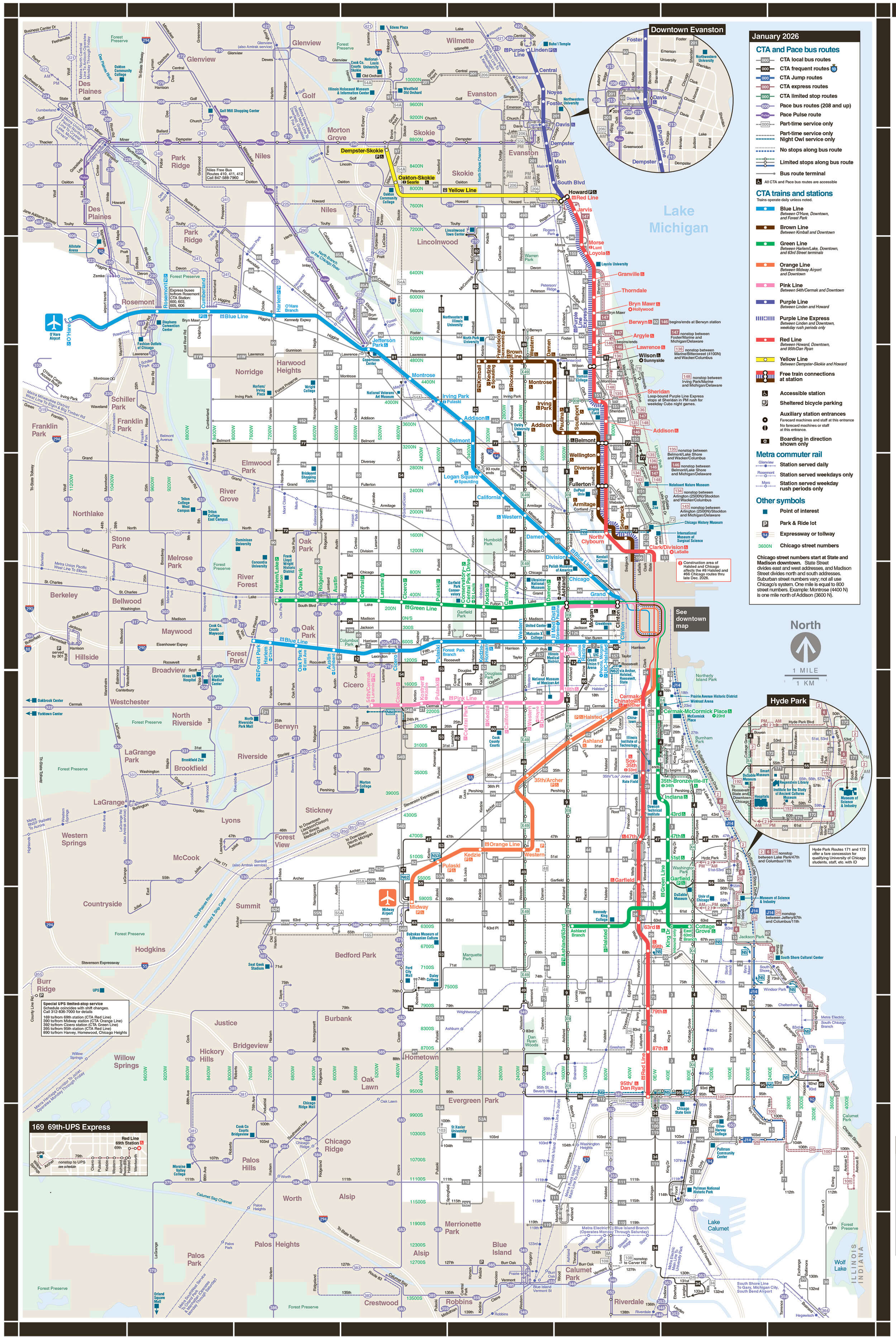
You can access a full system map or individual route schedules on the official CTA website or via the Ventra app. Individual PDF maps for every route are available for download, showing every stop, major landmark, and transfer point along the path. In 2026, interactive maps also show real-time detours.
What is the difference between a CTA bus and a Pace bus?
CTA buses primarily serve the City of Chicago and its immediate borders, while Pace buses serve the surrounding suburbs. While they are separate agencies, they both accept the Ventra card for payment. Some routes overlap, particularly at major transit hubs like the Howard Red Line or the Midway Orange Line stations.
Can I bring my bike on a CTA bus in 2026?
Yes, every CTA bus is equipped with a front-mounted bike rack that can hold two bicycles. These are available on a first-come, first-served basis. If the rack is full, you must wait for the next bus. Bicycles are not allowed inside the bus for safety reasons.
Does the CTA bus run on holidays?
Yes, CTA bus routes operate 365 days a year. However, on major holidays like Christmas, New Year's Day, and Thanksgiving, most routes operate on a "Sunday Schedule," which means less frequent service and different start/end times. Always verify the holiday schedule on the Ventra app.
How do I pay if I don't have a Ventra card?
In 2026, you can simply tap any contactless credit card, debit card, or smartphone with a mobile wallet (like Apple Pay or Google Pay) directly on the reader at the front of the bus. You do not need to buy a separate transit card to ride, though a registered Ventra card is required for monthly passes or reduced-fare benefits.
Conclusion and Recommendations
The CTA bus network remains the most accessible and far-reaching transit option in Chicago. To maximize your efficiency in 2026, always utilize the Ventra app for real-time updates and ensure your account is topped up to avoid delays at the boarding door. By understanding the distinction between local and express routes and mastering the grid system, you can navigate the city with the expertise of a lifelong Chicagoan. For the most up-to-date schedule changes or to plan a specific route, visit the official Chicago Transit Authority portal or consult the live maps in the Ventra mobile interface.
Image Gallery