Who Is the Largest U.S. Life Insurer in 2026?
As of 2026, the title of the largest U.S. life insurer depends on whether you measure by total admitted assets or direct premiums written. MetLife, Inc. remains the largest by total assets, managing over $700 billion. However, Northwes...
As of 2026, the title of the largest U.S. life insurer depends on whether you measure by total admitted assets or direct premiums written. MetLife, Inc. remains the largest by total assets, managing over $700 billion. However, Northwestern Mutual holds the top spot for individual life insurance market share and direct premiums written, maintaining its status as the nation’s leading mutual life insurance provider.
Contents
The landscape of the American life insurance industry is dominated by a handful of institutional giants that have survived over a century of economic cycles. While many policyholders look for the "biggest" company under the assumption of safety, the definition of size in the insurance world is multifaceted. To understand which company truly leads the market, one must look at financial solvency, market share in specific product lines, and the total volume of premiums collected annually.
Metrics of Magnitude: How Life Insurers Are Ranked
In the financial services sector, "size" is not a singular data point. Regulatory bodies like the National Association of Insurance Commissioners (NAIC) and credit rating agencies like A.M. Best evaluate companies using several distinct benchmarks. Understanding these metrics is essential for any consumer or investor evaluating the stability of a provider.
Total Admitted Assets
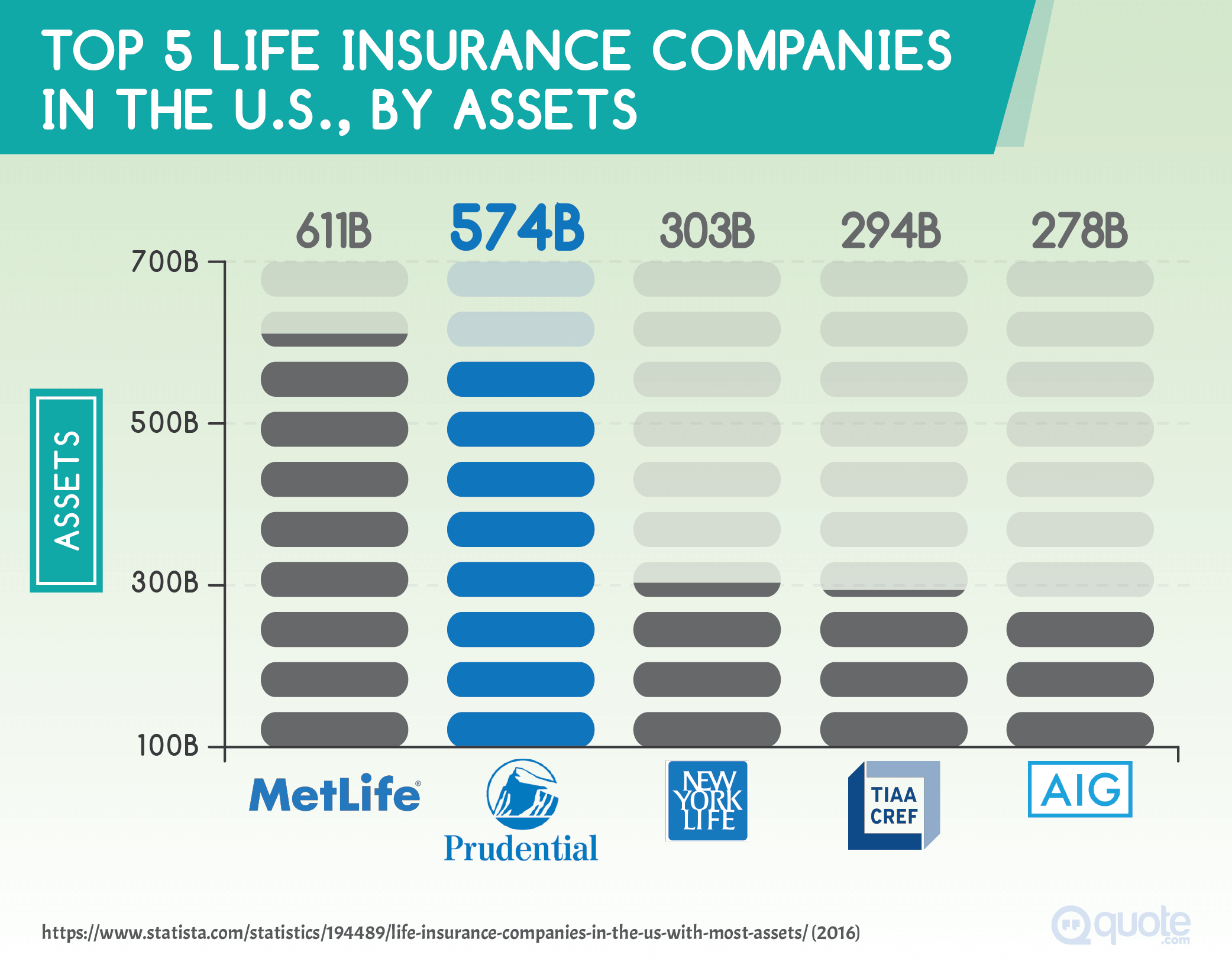
This represents the total value of all investments, cash, and property held by the insurer that are permitted by state law to be included in the company’s financial statement. Assets are a primary indicator of a company’s ability to pay out long-term claims. Institutional giants like MetLife and Prudential Financial consistently lead this category because they manage massive pension de-risking portfolios and global investment arms.
Direct Premiums Written (DPW)
Direct premiums written reflect the total amount of money customers paid for insurance policies during a specific period (usually a fiscal year) before accounting for reinsurance. This metric is the best indicator of current sales performance and market dominance. A company can have high assets but declining premiums, suggesting a legacy portfolio but weakening sales.
Market Share
Market share is calculated by dividing a company’s premiums by the total premiums in the industry. In the U.S., the life insurance market is highly fragmented; even the largest carrier rarely holds more than 10% of the total market share, as thousands of smaller regional players and niche subsidiaries compete for various demographics.
The Asset Leader: MetLife, Inc.
MetLife has long been the titan of the U.S. insurance industry. Founded in 1868, the company transitioned from a mutual structure to a public stock company in 2000, a move that allowed it to scale aggressively through global acquisitions.
As of 2026, MetLife’s dominance is driven largely by its Institutional Income segment. The company is a preferred partner for Fortune 500 firms looking to manage employee benefit programs and group life insurance. Because MetLife handles massive group contracts, its asset base remains the largest in the country.
One of MetLife's strategic strengths is its diversified portfolio. Unlike some competitors that focus strictly on individual term or whole life policies, MetLife has significant operations in dental insurance, disability insurance, and global capital markets. This diversification provides a "buffer" during periods of market volatility. However, for the average consumer, it is important to note that MetLife exited much of its individual life insurance retail business in the U.S. several years ago, spinning off its retail arm into what is now Brighthouse Financial. Therefore, while MetLife is the "largest" by assets, it may not be the provider an individual shopper interacts with directly for a private policy.
The Premium Powerhouse: Northwestern Mutual
While MetLife leads in assets, Northwestern Mutual consistently ranks as the number one provider of individual life insurance in the United States based on direct premiums written. As a mutual company, it is owned by its policyholders rather than outside shareholders.
Northwestern Mutual’s lead in 2026 is attributed to its massive fleet of financial advisors and its focus on whole life insurance. Because whole life policies involve higher premiums that build cash value, they generate significantly more premium volume than low-cost term life policies.
The company’s "Northwestern Mutual Path" strategy focuses on holistic financial planning, integrating life insurance into retirement and wealth management. This approach has allowed the company to capture a significant portion of the high-net-worth market. For policyholders, the mutual structure is a major draw, as the company historically pays out billions in dividends annually to its participating policyowners.
The Institutional Giant: Prudential Financial
Prudential Financial, often recognized by its "Rock of Gibraltar" logo, rivals MetLife for the top spot in total assets. Prudential’s strength lies in its Retirement Strategies and Group Insurance segments.
In 2026, Prudential remains a leader in the "pension de-risking" market. This occurs when large corporations transfer their pension liabilities to an insurance company. Because these transactions involve tens of billions of dollars, they inflate Prudential’s asset numbers significantly. Prudential is also a global player, with massive operations in Japan and other international markets, making it one of the most systemically important financial institutions (SIFIs) in the world.
Comparing the Top 5 U.S. Life Insurers (2026 Estimates)
The following table compares the projected standing of the leading U.S. life insurers based on the most recent industry data regarding statutory assets and market presence.
| Company Name | Primary Metric Rank | Ownership Structure | Key Strength |
|---|---|---|---|
| MetLife, Inc. | #1 by Total Assets | Public (Stock) | Group Benefits & Global Institutional |
| Prudential Financial | #2 by Total Assets | Public (Stock) | Pension De-risking & Retirement |
| Northwestern Mutual | #1 by Individual Premiums | Mutual | Whole Life & Financial Planning |
| New York Life | #2 by Individual Premiums | Mutual | Conservative Investments & Dividends |
| MassMutual | #3 by Individual Premiums | Mutual | Wealth Management & Digital Tools |
Why Size Matters for Policyholders
Choosing the largest life insurer isn't just about prestige; it is about long-term solvency. Life insurance is a contract that may not be called upon for 30, 40, or even 50 years. A company’s size often correlates with its ability to weather economic depressions, pandemics, and shifts in interest rates.
Financial Strength Ratings
Size provides the capital necessary to maintain high financial strength ratings. When evaluating these giants, look for ratings from:
- A.M. Best: Focuses specifically on the insurance industry’s ability to pay claims.
- Moody’s and S&P: Provide broader credit outlooks.
- Fitch Ratings: Evaluates the capacity to meet financial commitments.
A "Large" company with a "Superior" (A++) rating from A.M. Best provides the highest level of assurance that your death benefit will be paid out decades from now.
Operational Efficiency and Technology
Larger insurers have the capital to invest in the digital transformation trends of 2026. This includes accelerated underwriting, where AI algorithms analyze medical data and prescription history to approve policies in minutes rather than weeks. Smaller companies often lack the R&D budget to implement these seamless customer experiences, making the largest insurers more attractive to younger, tech-savvy demographics.
The "Large" Advantage in 2026: AI and Underwriting
By 2026, the largest U.S. life insurers have fully integrated artificial intelligence into their risk assessment models. For the largest players like Northwestern Mutual and New York Life, this has resulted in a shift toward Fluidless Underwriting.
In the past, getting a million-dollar policy required a paramedical exam (blood and urine samples). Today, the largest insurers use "Big Data"—including electronic health records (EHRs) and credit-based insurance scores—to bypass these exams for many applicants. The sheer volume of historical data held by the largest insurers gives them a competitive edge in training these AI models, allowing them to price risk more accurately than smaller competitors.
Common Pitfalls: When "Largest" Is Not "Best"
Despite the benefits of size, being the largest doesn't always mean a company is the right fit for every individual.
- Customer Service: Massive institutions can sometimes feel bureaucratic. Smaller or mid-sized insurers may offer more personalized "high-touch" service.
- Niche Underwriting: If you have a specific health condition (e.g., Type 1 Diabetes) or a high-risk hobby (e.g., scuba diving), a smaller, niche insurer might offer better rates than a giant that uses broad, automated underwriting.
- Product Specialization: A company like MetLife might be the largest in assets, but if you want a specific type of Indexed Universal Life (IUL) policy, a company like Pacific Life or National Life Group might have a more competitive product despite being smaller in total assets.
Frequently Asked Questions
Which U.S. life insurer has the highest customer satisfaction?
Customer satisfaction often fluctuates, but Northwestern Mutual and State Farm frequently top J.D. Power surveys. While State Farm is not the largest by assets, its massive network of local agents contributes to high scores in customer interaction.
Are my policies safe if a large insurer goes bankrupt?
In the rare event that a large insurer faces insolvency, state guaranty associations act as a safety net. These associations provide coverage (up to certain limits, often $300,000 to $500,000) to ensure policyholders are protected. The largest insurers are also subject to strict "Risk-Based Capital" (RBC) requirements monitored by state regulators to prevent such failures.
Is MetLife still selling life insurance to individuals?
In the U.S., MetLife primarily focuses on group life insurance through employers. For individual retail policies, they spun off that business into Brighthouse Financial. If you are looking for a personal policy, you would likely look toward Northwestern Mutual, New York Life, or MassMutual.
What is the difference between a mutual and a stock insurance company?
A stock company (like MetLife or Prudential) is owned by shareholders and aims to generate profit for them. A mutual company (like Northwestern Mutual or New York Life) is owned by policyholders. Mutual companies often pay out "dividends," which can be used to reduce premiums or increase the policy's cash value.
Does the largest company always have the cheapest rates?
No. In fact, the largest companies often have higher premiums for whole life products because of their brand prestige and the cost of their massive agent forces. For the cheapest term life insurance, smaller digital-first carriers or "insurtech" companies often provide lower rates by minimizing overhead.
Summary and Next Steps
In 2026, MetLife remains the largest U.S. life insurer by total assets, while Northwestern Mutual leads in individual market share and premium volume. When choosing a provider, do not rely solely on the "largest" label. Instead, follow these steps:
- Identify Your Need: Are you looking for a simple death benefit (Term) or an investment vehicle (Whole/Universal)?
- Check the Rating: Ensure the company has an A or higher rating from A.M. Best.
- Compare Ownership Models: Decide if you prefer the dividend potential of a Mutual company or the potentially lower term costs of a Stock company.
- Verify Claims History: Use the NAIC Consumer Insurance Search to check for complaint ratios.
By balancing the stability of a giant with the specific product features you need, you can ensure that your financial legacy is protected by a firm capable of meeting its obligations decades into the future.
Image Gallery