Beyond "I Believe": Professional Synonyms and Strategies for Authoritative Writing
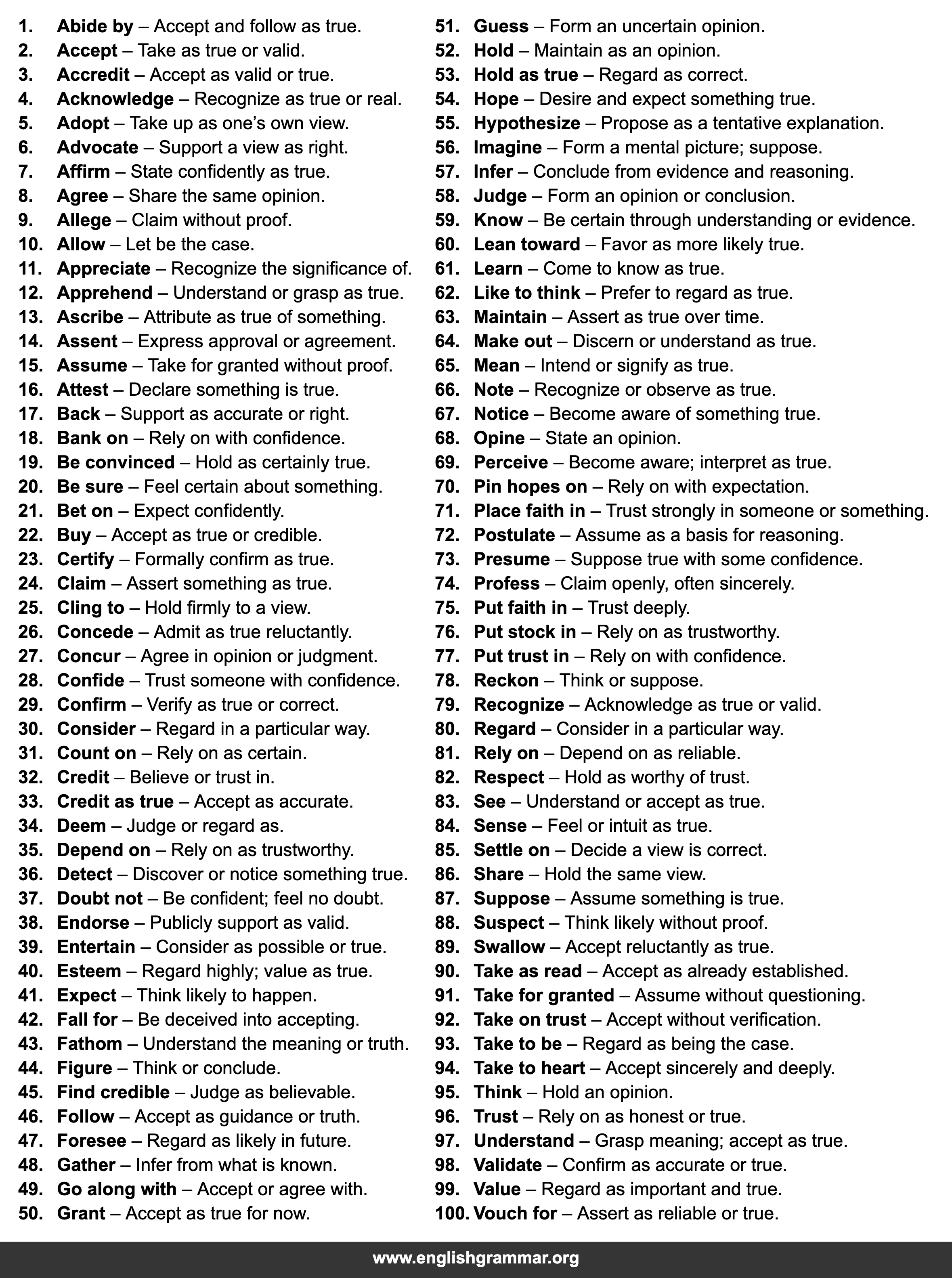
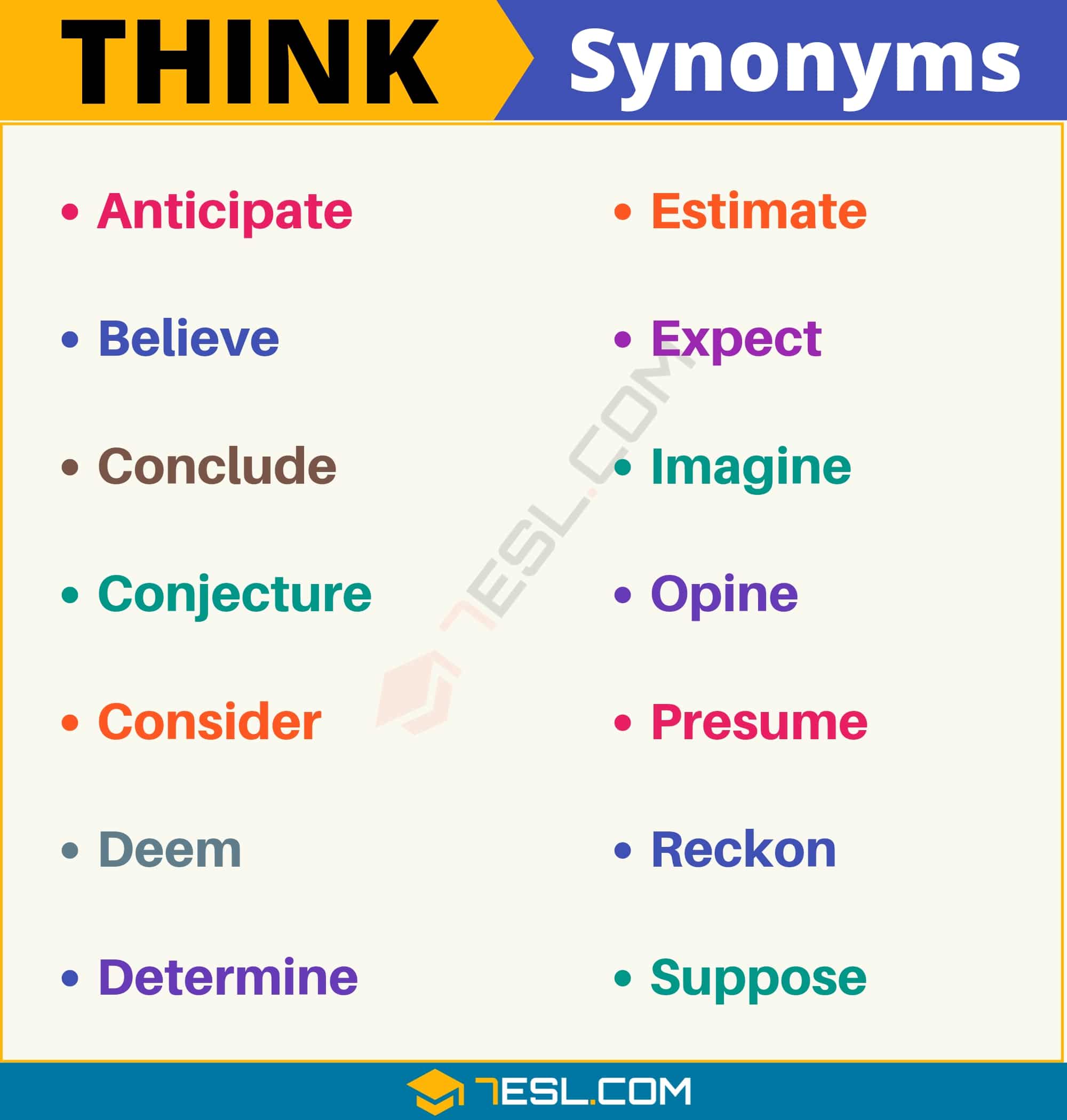
To replace "I believe" in writing, use stronger verbs like assert, contend, maintain, or posit for persuasive arguments. For objective or academic contexts, consider phrases such as it is evident that or the evidence suggests. These al...
To replace "I believe" in writing, use stronger verbs like assert, contend, maintain, or posit for persuasive arguments. For objective or academic contexts, consider phrases such as it is evident that or the evidence suggests. These alternatives remove subjective hedging, shifting the focus from your personal opinion to the strength of your evidence.
Contents
The phrase "I believe" is one of the most common crutches in both academic and professional writing. While it feels natural to frame thoughts through a personal lens, using this phrase often signals a lack of confidence or an over-reliance on subjectivity. In the landscape of 2026 communications—where clarity, data-driven insights, and authorial authority are paramount—refining your vocabulary is essential for impactful messaging.
The Problem with "I Believe" in Modern Writing
In professional and scholarly discourse, the phrase "I believe" is often considered redundant. If you are the author of a document, the reader already understands that the ideas presented are yours. By explicitly stating "I believe," you inadvertently create a psychological distance between the reader and the fact. This is known as "hedging."
Hedging is the use of cautious or vague language to reduce the risk of being proven wrong. While it has its place in scientific uncertainty, "I believe" usually functions as a weak hedge. It transforms a potentially powerful statement of fact into a mere personal preference. For example, compare "I believe this strategy will increase revenue" to "This strategy will increase revenue." The latter is more confident and places the emphasis on the strategy's merit rather than the writer's internal state.
Furthermore, "I believe" can signal a lack of evidence. When a writer says they "believe" something, it often implies they lack the data to "prove" or "demonstrate" it. In a competitive professional environment, moving away from belief-based language toward evidence-based language is a hallmark of senior-level communication.
Strong Synonyms for Persuasive Arguments
When your goal is to persuade an audience or advocate for a specific position, you need verbs that carry weight and conviction. These synonyms replace the passivity of "belief" with the activity of "assertion."
Assert and Contend
To assert something is to state a fact or belief confidently and forcefully. It is an excellent choice when you are presenting a core premise of your argument. Contend is similar but often used when there is a potential for disagreement. If you "contend" that a policy is flawed, you are acknowledging that it is a point of debate while firmly holding your ground.
Maintain and Insist
Maintain suggests a consistent, long-standing position. It is useful in longer documents where you are reinforcing a point made earlier. Insist carries a higher level of urgency or firm resolve, often used when responding to counterarguments or emphasizing a non-negotiable point.
Posit and Propose
These are slightly more formal and are frequently used in theoretical or strategic contexts. To posit is to assume as a fact or put forward as a basis for argument. It is a sophisticated way to introduce a foundational idea without the subjective "I."
Academic Alternatives for Research and Formal Papers
In academic writing, the first person ("I") is frequently discouraged in favor of an objective, third-person perspective. The goal is to make the findings appear universal and derived from the data rather than the researcher's mind.
It Is Evident That
This phrase shifts the focus entirely to the logic of the situation. It suggests that any reasonable person looking at the same facts would reach the same conclusion. It removes the author from the equation entirely, which is the gold standard for many peer-reviewed journals and technical reports.
The Data Indicates/Suggests
By making "the data" or "the evidence" the subject of the sentence, you provide an objective foundation for your claims. Use indicates when the evidence is strong and direct. Use suggests when the conclusion is a likely interpretation but not the only possibility. This nuance allows for scientific rigor while maintaining authority.
Demonstrates and Illustrates
These verbs are highly effective when referring to examples, charts, or case studies. Instead of saying "I believe this example shows," you should write "This case study demonstrates." This attributes the power of the argument to the evidence itself.
Navigating Different Levels of Certainty
Not every statement should be a hard assertion. Effective writing requires a spectrum of certainty. Choosing the right synonym allows you to communicate exactly how confident you are in a particular claim.
| Synonym | Tone | Level of Certainty | Best Use Case |
|---|---|---|---|
| Assert | Confident | High | Presenting a main argument or thesis. |
| Contend | Argumentative | Medium-High | Engaging with a debate or differing opinions. |
| Maintain | Steadfast | High | Reaffirming a position throughout a text. |
| Suggest | Nuanced | Medium | Interpreting data that allows for other views. |
| Posit | Theoretical | Medium | Proposing a theory or foundational premise. |
| Advocate | Persuasive | High | Pushing for a specific action or policy change. |
| Conclude | Analytical | High | Summarizing findings at the end of a section. |
The "Invisible Author" Technique
One of the most effective ways to replace "I believe" is to remove it entirely and restructure the sentence. This is often referred to as the "invisible author" technique. It involves stating your belief as an objective reality.
For instance:
- Weak: I believe that remote work improves employee retention.
- Strong: Remote work improves employee retention by increasing work-life balance and reducing commute-related stress.
In the second version, the "belief" is transformed into a "claim" supported by a "reason." This transition forces the writer to provide the "why" behind their thoughts, which inherently makes the writing more informative and persuasive. By removing yourself, you allow the logic of your argument to stand on its own feet.
When to Use the First Person
While professional writing generally favors the objective, there are specific instances where using the first person—and even "I believe"—is appropriate. In 2026, personal branding and "authentic voice" have become more prominent in certain niches, such as op-eds, personal essays, and internal leadership memos.
If you are writing a leadership vision statement, the personal "I" can build rapport and trust. However, even in these cases, you can vary your language to avoid sounding repetitive. Instead of "I believe in our team," you might say "I have full confidence in our team" or "I stand by our team’s ability to deliver." These variations maintain the personal connection while adding professional polish.
Common Pitfalls and Hedging
Replacing "I believe" is only the first step. Writers must also be wary of "double hedging." This occurs when a writer uses a synonym for "believe" but then weakens it with another tentative word.
- Example of double hedging: "It seems that the data might suggest a trend."
- Correction: "The data suggests a trend."
In the corrected version, the sentence is leaner and more direct. Another pitfall is the use of "In my opinion." This is functionally identical to "I believe" and should be treated with the same scrutiny. If you find yourself using these phrases, ask yourself: What evidence am I basing this on? Then, rewrite the sentence to focus on that evidence.
Frequently Asked Questions
Is "I believe" ever better than a synonym?
In very rare cases where you are specifically asked for a personal, subjective opinion—such as a reflective journal or a personal statement—"I believe" can be appropriate. However, even then, using it sparingly makes it more impactful when it does appear.
How do I replace "I believe" in a cover letter?
In a cover letter, you want to project confidence. Instead of "I believe I am the best candidate," use "My background in project management qualifies me for this role" or "I am confident that my skills align with your requirements."
Can I use "I think" instead?
"I think" is generally considered even weaker than "I believe" in formal writing. It sounds more like an internal thought process than a settled conclusion. Avoid "I think" in all professional and academic contexts.
What is a good synonym for "I believe" in a conclusion?
In a conclusion, you are summarizing what has already been discussed. Use verbs like conclude, determine, establish, or confirm. For example: "Based on the findings, we conclude that the hypothesis is valid."
Does removing "I believe" make my writing too aggressive?
Not if you choose your verbs carefully. If you are worried about sounding too forceful, use nuanced verbs like suggest, propose, or observe. These allow you to be objective without being overly dogmatic.
Practical Recommendation for Writers
To improve your writing immediately, perform a "search and destroy" mission on your drafts. Use the "Find" function (Ctrl+F) to search for "I believe," "I think," and "In my opinion."
For every instance you find, try the following three-step process:
- Delete it: See if the sentence stands stronger without it.
- Substitute it: If the sentence needs a lead-in, use a stronger verb like assert or maintain.
- Objectify it: Change the subject of the sentence to the evidence itself (e.g., "The results show..." instead of "I believe the results show...").
By consistently applying these strategies, you will develop a more authoritative voice that commands respect and ensures your ideas are judged on their merits rather than their presentation.
Image Gallery