Comprehensive Guide to Lifesize Wall Decals: Customization, Installation, and Trends for 2026
Lifesize wall decals are large-scale, high-resolution adhesive graphics designed to represent people, characters, or objects at their actual, 1:1 physical dimensions. These decals serve as impactful decor or branding tools, offering a...
Lifesize wall decals are large-scale, high-resolution adhesive graphics designed to represent people, characters, or objects at their actual, 1:1 physical dimensions. These decals serve as impactful decor or branding tools, offering a removable and customizable alternative to permanent paint or traditional wallpaper for residential and commercial spaces in 2026.
Contents
Understanding the Anatomy of Lifesize Wall Decals
In 2026, the technology behind lifesize wall decals has shifted significantly toward sustainable materials and high-definition printing. Unlike standard stickers, a lifesize decal is engineered to maintain structural integrity at heights ranging from five to seven feet or more. This requires a specific balance between the substrate (the material being printed on) and the adhesive (the backing that sticks to the wall).
Most modern decals are made from either polyvinyl chloride (PVC) or woven polyester fabric. PVC remains the industry standard for high-contrast, vibrant colors, often used for sports graphics and cinematic characters. However, as of 2026, "bio-vinyl" options have gained traction, utilizing plant-based plasticizers to reduce environmental impact without sacrificing the material's ability to stretch and conform to wall contours. Woven fabric decals, on the other hand, offer a matte, textured finish that mimics the look of a mural. These are favored for high-end interior design because they are generally more breathable, reducing the risk of air bubbles during the application process.
The adhesive layer is equally critical. In the current market, pressure-sensitive adhesives (PSA) allow for "low-tack" initial placement. This means you can stick the decal to the wall and move it around several times to get the alignment perfect before applying firm pressure to create a long-term bond. This "repositionability" is what distinguishes professional-grade lifesize decals from cheaper, permanent alternatives that can tear or ruin paint upon removal.
Technical Requirements for Custom Lifesize Graphics
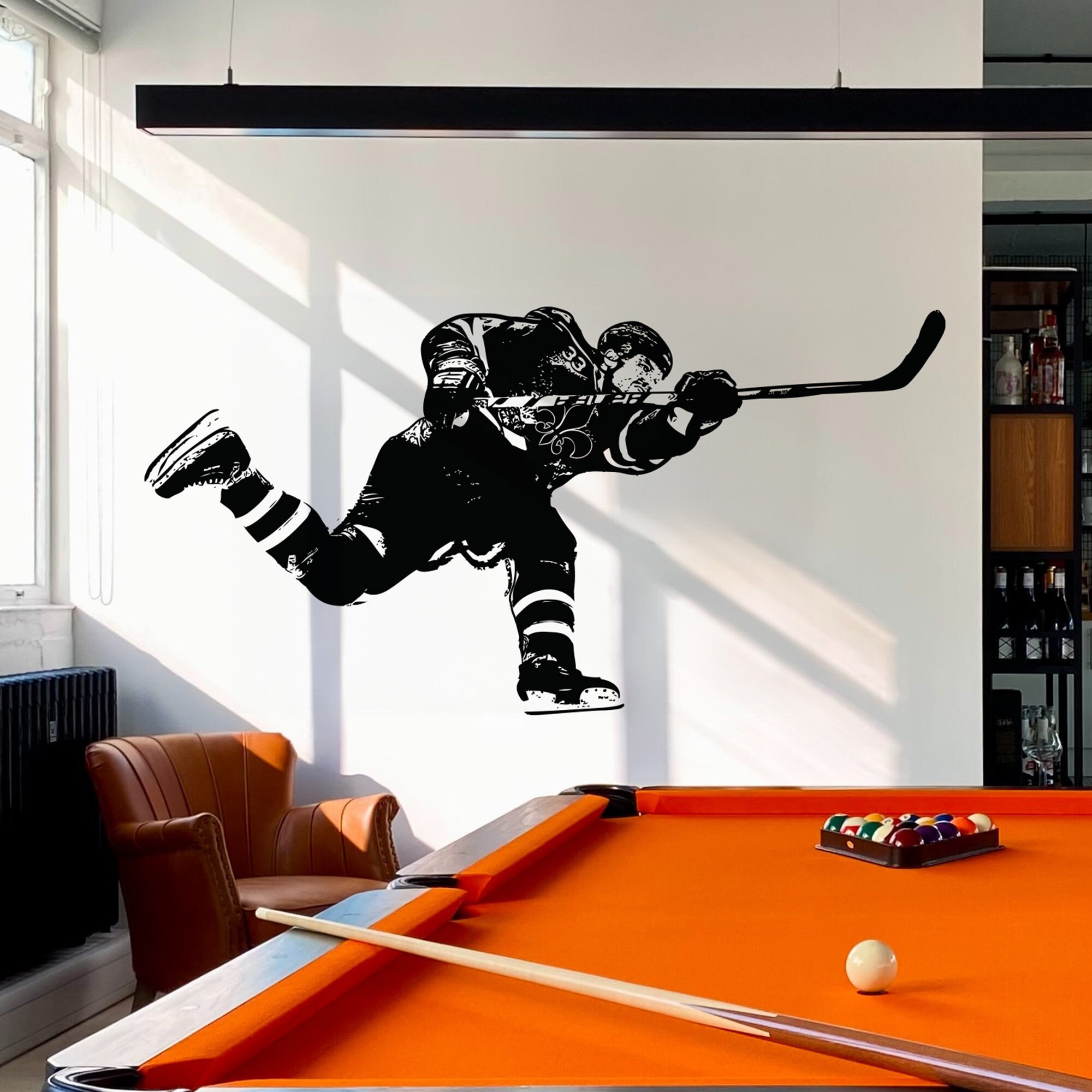
When ordering or producing a custom lifesize decal, the primary technical hurdle is image resolution. Because the final product is printed at a 1:1 scale, any imperfections in the original digital file are magnified. If you are printing a 6-foot tall athlete, a low-resolution photo will appear "pixelated" or "stair-stepped" at the edges.
To achieve a crisp, professional look, the source image should ideally be a vector file (such as .EPS or .AI), which can be scaled infinitely without loss of quality. However, since most lifesize decals are based on photographs, high-resolution raster files are more common. In 2026, printing standards require at least 150 Dots Per Inch (DPI) at the final output size. For a 72-inch tall decal, this means the digital image should be approximately 10,800 pixels tall.
Advanced AI-upscaling tools are now frequently used by manufacturers to enhance consumer-grade photos for lifesize printing. These tools use neural networks to predict and fill in missing pixels, allowing a standard smartphone photo to be converted into a sharp, life-sized graphic. When selecting an image, ensure the lighting is consistent and that no parts of the subject are "cut off" by the frame, as this will result in a flat edge on your decal.
Surface Compatibility and Preparation
The success of a lifesize wall decal depends more on the wall than the decal itself. In 2026, many interior paints are formulated with "easy-clean" or "scuff-resistant" properties. These paints often contain silicone or Teflon-like additives that repel dirt—and, unfortunately, adhesive. If your wall has been painted with these "washable" varieties, a standard decal may peel off within hours.
Before installation, you must identify your wall texture. Smooth drywall is the ideal candidate. Textured walls, such as "orange peel," "knockdown," or "popcorn" finishes, create air pockets behind the decal. These pockets weaken the adhesive bond and can cause the decal to look bumpy. For textured surfaces, a high-tack vinyl or a specialized fabric decal is necessary to ensure the material can "bridge" the gaps in the texture.
Preparation Steps:
- Cleaning: Wipe the wall with a lint-free cloth and a solution of 70% isopropyl alcohol and 30% water. Avoid household cleaners, which often leave a waxy residue.
- Drying: Allow the wall to dry for at least 24 hours.
- Curing: If the wall was recently painted, you must wait at least 21 to 30 days before applying a decal. Applying it sooner will lead to "outgassing," where the evaporating paint solvents create bubbles under the vinyl.
- Temperature: Ensure the room is between 65°F and 75°F. Extreme cold makes the vinyl brittle, while extreme heat makes the adhesive too aggressive.
The Installation Masterclass: Using the Hinge Method
Installing a lifesize decal is a two-person job. Because of the sheer height and width of the material, trying to do it alone often results in the decal sticking to itself. The most reliable technique used by professionals in 2026 is the Hinge Method.
First, use painter's tape to position the decal (with its backing still on) exactly where you want it. Place a long horizontal strip of tape across the center of the decal, securing it to the wall. This creates your "hinge."
Next, peel the top half of the decal away from its paper backing down to the tape hinge. Cut away the dangling paper backing with scissors. Carefully fold the top half of the decal back up toward the wall. Use a squeegee (a plastic smoothing tool) to apply the decal from the center outward in overlapping horizontal strokes. This pushes the air out to the edges. Once the top half is secure, remove the tape hinge and the remaining paper backing from the bottom half, then repeat the squeegee process downward.
This method ensures that the decal stays perfectly aligned with your original measurements. If bubbles do appear, do not try to squeeze them to the nearest edge if they are in the center. Instead, use a very fine needle to prick the bubble and use your finger to push the air out.
Comparison of Lifesize Decal Materials
| Feature | Removable Vinyl | Woven Polyester Fabric | High-Tack Vinyl |
|---|---|---|---|
| Finish | Matte or Glossy | Textured, Canvas-like | Usually Matte |
| Best Surface | Smooth Drywall | Smooth or Light Texture | Heavily Textured / Brick |
| Durability | 3–5 Years | 5–7 Years | 5+ Years (Outdoor capable) |
| Repositionable | Yes (Limited) | Yes (Highly) | No |
| Ease of Install | Moderate | Easy | Difficult |
| Typical Cost | $$ | $$$ | $$$ |
Commercial and Educational Applications
Beyond home decor, lifesize wall decals have become vital tools for enterprise and educational environments in 2026. In corporate settings, "Wayfinding Decals" at a 1:1 scale—such as life-sized "digital human" guides or silhouettes—help direct foot traffic in large office complexes. They are also used for "Brand Ambassadors," where life-sized graphics of company founders or top performers are used to boost office culture.
In education, lifesize decals of historical figures or biological diagrams (like a life-sized human skeleton or a 1:1 scale blue whale heart) provide a tactile, immersive learning experience that digital screens cannot replicate. These graphics allow students to physically stand next to a historical figure or a scientific phenomenon, providing a sense of scale that aids in cognitive retention.
For trade shows and retail, the "pop-up" nature of these decals is invaluable. They can be applied to temporary booth walls and removed without leaving a trace of adhesive, making them a cost-effective solution for short-term high-impact branding.
Maintenance, Longevity, and Removal
Maintaining a lifesize decal is relatively simple. Most 2026 vinyls are coated with a UV-resistant laminate that prevents fading from sunlight. To clean, use a damp, soft cloth. Never use abrasive sponges or solvent-based cleaners, as these can degrade the ink or the protective laminate layer.
Longevity depends heavily on environmental stability. Decals placed near heating vents or in direct, intense sunlight will have a shorter lifespan (approximately 2–3 years) compared to those in climate-controlled hallways (up to 7 years).
When it is time for removal, do not simply rip the decal off. Use a hairdryer on a low-heat setting to warm the vinyl. This softens the adhesive, allowing the decal to be pulled away at a 45-degree angle with minimal tension on the paint. If any residue remains, a citrus-based adhesive remover is usually sufficient to clean the surface without damaging the drywall.
Common Mistakes to Avoid
- Ignoring the "Bleed": When ordering custom decals, many users fail to include a "bleed" or a "contour path." This can result in a white border around the image that wasn't intended. Always clarify with the printer if you want a "die-cut" (cut to the exact shape) or a "square-cut" (the image stays on a rectangular background).
- Skipping the Test Decal: Most reputable 2026 manufacturers include a small "test decal" with your order. Always apply this to an inconspicuous area of your wall and leave it for 48 hours to ensure the adhesive is compatible with your paint.
- Applying to Cold Walls: If you are installing in winter, ensure the wall itself is warm. A cold wall will cause the adhesive to "shock," preventing it from ever reaching its full bonding potential.
Frequently Asked Questions
Can lifesize decals be reused after they are removed?
Whether a decal is reusable depends on the material. Woven fabric decals are generally the most reusable because the fabric does not stretch or tear easily during removal. Vinyl decals, however, often stretch when pulled, which can distort the 1:1 scale of the image, making them difficult to reapply perfectly.
Do these decals work on "Orange Peel" or "Knockdown" textures?
Standard vinyl decals often struggle with heavy textures because air gets trapped in the recessed areas. For these walls, you should choose a "high-conformity" vinyl or a fabric-based decal. Using a heat gun during installation can also help the vinyl "melt" into the texture for a better bond.
How do I know if my photo is high enough quality for a lifesize print?
A quick rule of thumb is to check the file size. Most photos suitable for lifesize printing (approx. 6 feet tall) will be at least 5MB to 10MB in size. If your photo is under 1MB, it will likely look blurry. Always view your image at "100% size" on a computer monitor to check for clarity before sending it to the printer.
Are lifesize wall decals safe for nurseries and hospitals?
Yes, provided they are printed with GREENGUARD Gold certified inks or Latex inks, which are common in 2026. these inks do not emit harmful Volatile Organic Compounds (VOCs) and are safe for use in environments with sensitive individuals.
Can I put a lifesize decal on a window?
Yes, but you should specify that you want "perforated window film" or "clear cling" material. Standard wall decals have an opaque white backing that will look messy from the outside of the window. Window-specific materials allow for light transmission or visibility from one side.
Practical Recommendation
For the best results in 2026, prioritize woven polyester fabric over standard vinyl if your budget allows. The ease of installation and the superior "breathability" of the fabric significantly reduce the likelihood of failure on standard residential walls. If you are creating a custom decal, utilize AI-upscaling software to ensure your source image meets the 150-300 DPI threshold. Always perform a 48-hour adhesion test before committing to a full-scale installation on a new paint type.
Image Gallery