The Creepy Annabelle Doll Phenomenon Explained: Real History vs. Hollywood Myth
The Annabelle doll phenomenon involves a supposedly haunted Raggedy Ann doll that gained international notoriety through the investigations of Ed and Lorraine Warren. While Hollywood portrays her as a terrifying porcelain figure, the a...
The Annabelle doll phenomenon involves a supposedly haunted Raggedy Ann doll that gained international notoriety through the investigations of Ed and Lorraine Warren. While Hollywood portrays her as a terrifying porcelain figure, the actual case originated in 1970, involving claims of teleportation, malevolent spirit communication, and demonic attachment within a Connecticut apartment.
Contents
The story of Annabelle is one of the most enduring legends in modern American folklore. It bridges the gap between mid-century spiritualism and the contemporary "Conjuring Universe" of cinema. To understand the phenomenon, one must separate the historical accounts of the 1970s from the creative liberties taken by filmmakers, while also examining the psychological and cultural impact the doll has had on the public consciousness.
The 1970 Origins: The Apartment in Hartford
The phenomenon began in 1970 when a 28-year-old nursing student named Donna received a vintage Raggedy Ann doll as a birthday present from her mother. Donna lived in a small apartment with her roommate, Angie. Initially, the doll was a mundane piece of decor, usually resting on Donna’s bed. However, within weeks, both women reported that the doll seemed to move autonomously.
The movements were subtle at first—a slight shift in position or a change in the angle of its limbs. According to the roommates' testimony, these movements escalated until the doll was found in different rooms entirely. They would leave the doll on the bed in the morning and return home to find it sitting on the sofa with its arms crossed, or standing upright leaning against a wall in the hallway.
The "Help Us" Messages
As the activity intensified, Donna and Angie began finding slips of parchment paper scattered around the apartment. On these scraps, messages were written in a childish script, typically saying "Help Us" or "Help Lou." Lou was a close friend of the roommates who had expressed an immediate, instinctual dislike for the doll.
The appearance of the parchment was particularly unsettling because the roommates did not keep parchment paper in the house. This led them to believe the materials were being "apported"—a spiritualist term for objects appearing out of thin air through supernatural means.
The Medium and the Story of Annabelle Higgins
Distraught by the escalating activity, the roommates contacted a medium to hold a séance. During this session, the medium claimed to contact the spirit of a seven-year-old girl named Annabelle Higgins.
According to the medium's account, Annabelle had lived on the property before the apartment complex was built and had died there at a young age. The spirit claimed she felt "safe" with Donna and Angie and asked permission to inhabit the doll so she could stay with them. Moved by compassion for the "orphan spirit," the young women gave their consent. However, the Warrens would later argue that this was a fatal mistake, as they believed the entity was not a young girl but a demonic force using a "mask" to gain trust and invitation.
The Escalation to Violence
The phenomenon shifted from unsettling to dangerous when Lou, the friend mentioned in the notes, reported a physical encounter. Lou claimed to have had a recurring nightmare where the doll crawled up his legs while he was paralyzed in bed, attempting to strangle him.
Later, while preparing for a road trip, Lou and Angie heard a noise coming from Donna’s room. Upon investigating, they found the doll tossed in a corner. As Lou approached it, he claimed to feel a sudden, sharp pain in his chest. When he unbuttoned his shirt, he found seven distinct claw marks—three vertical and four horizontal—that allegedly burned and then vanished within two days. This event prompted the group to seek professional help from the clergy, which eventually led them to Ed and Lorraine Warren.
The Warrens' Investigation and Intervention
Ed Warren (a self-taught demonologist) and Lorraine Warren (a self-proclaimed clairvoyant) were called in by Father Hegan and Father Cooke. After interviewing the roommates, the Warrens concluded that the doll itself was not possessed, but rather served as a conduit or a "focal point" for an inhuman entity.
The Theological Framework: Infestation and Oppression
The Warrens explained the phenomenon using a specific theological progression often cited in traditional demonology:
- Infestation: The stage where strange noises and movements occur to get the victim's attention.
- Oppression: The stage where the entity attacks the victim's psychological and physical well-being.
- Possession: The final stage, where the entity attempts to take over a human host.
The Warrens argued that by "inviting" the spirit of Annabelle Higgins to stay, the roommates had granted the entity legal "permission" to remain in their lives. To resolve the issue, Father Cooke performed an Episcopal exorcism of the apartment, and the Warrens took the doll into their custody.
The Journey to the Occult Museum
The drive from the apartment to the Warrens' home in Monroe, Connecticut, is a central part of the Annabelle lore. Ed Warren claimed that the entity's influence caused the car's power steering and brakes to fail repeatedly during the trip. He reportedly had to stop the car and douse the doll in holy water to make it home safely.
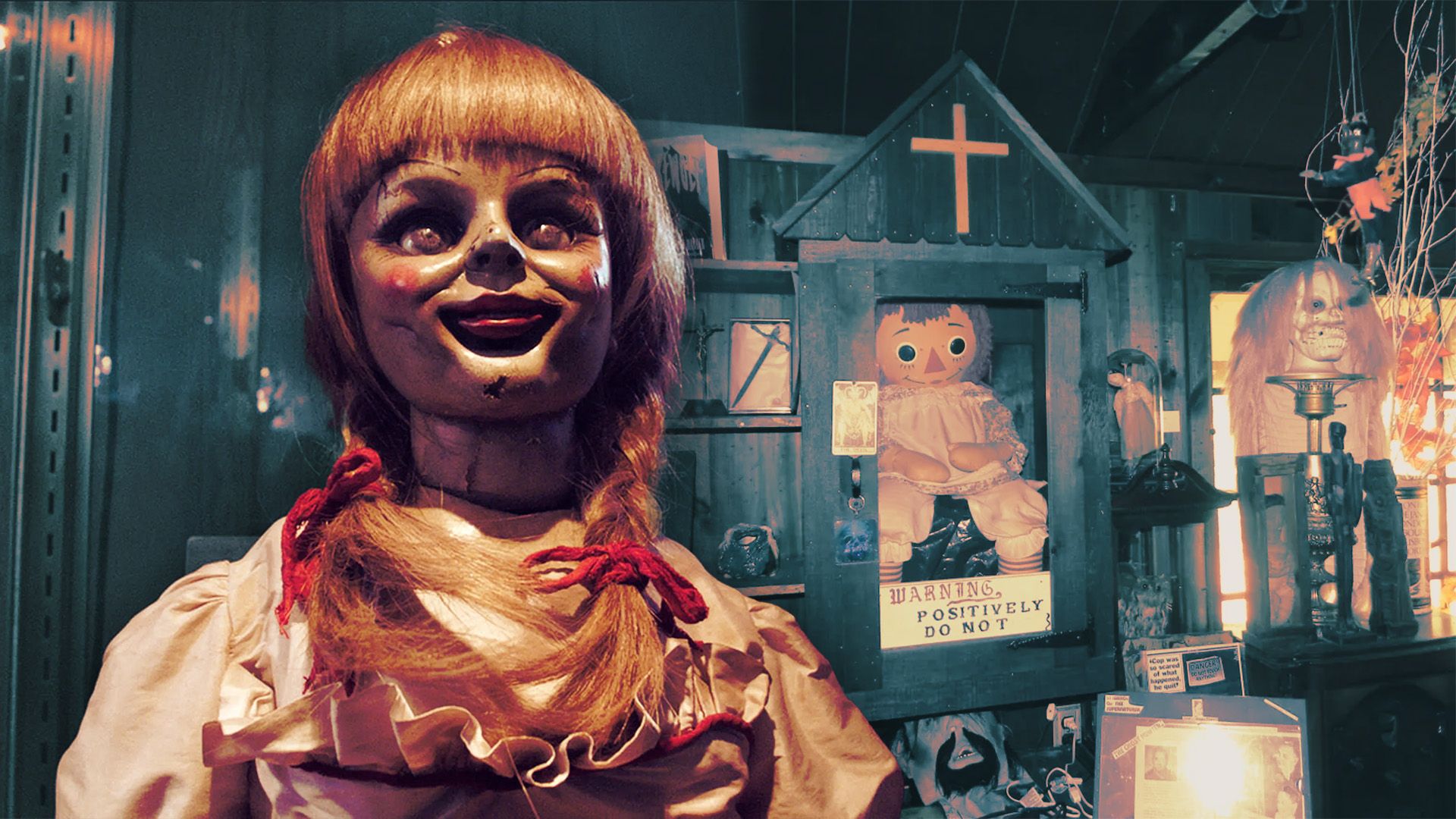
Once in their home, the Warrens reported that the doll continued to move and even "levitate." Eventually, they commissioned a special wooden and glass case, which was inscribed with the Lord’s Prayer and St. Michael’s Prayer. This case became the permanent home of the doll in the Warrens' Occult Museum. The case featured a famous warning: "WARNING: POSITIVELY DO NOT OPEN."
| Feature | The Real Annabelle Doll | The Movie Version (The Conjuring) |
|---|---|---|
| Physical Form | Classic Raggedy Ann (cloth/yarn) | Oversized Porcelain/Wood-look |
| Facial Expression | Painted, smiling, simple | Menacing, aged, cracked paint |
| Origin Year | 1970 | 1960s-1970s (fictionalized) |
| Initial Owner | Nursing student (Donna) | Various (John and Mia Form in spinoffs) |
| Entity Claim | Annabelle Higgins (Girl spirit/Demon) | Malthus (Specific named demon) |
| Primary Danger | Scratches, psychological distress | Violent murders, soul harvesting |
Cinematic Liberties: Why Hollywood Changed the Doll
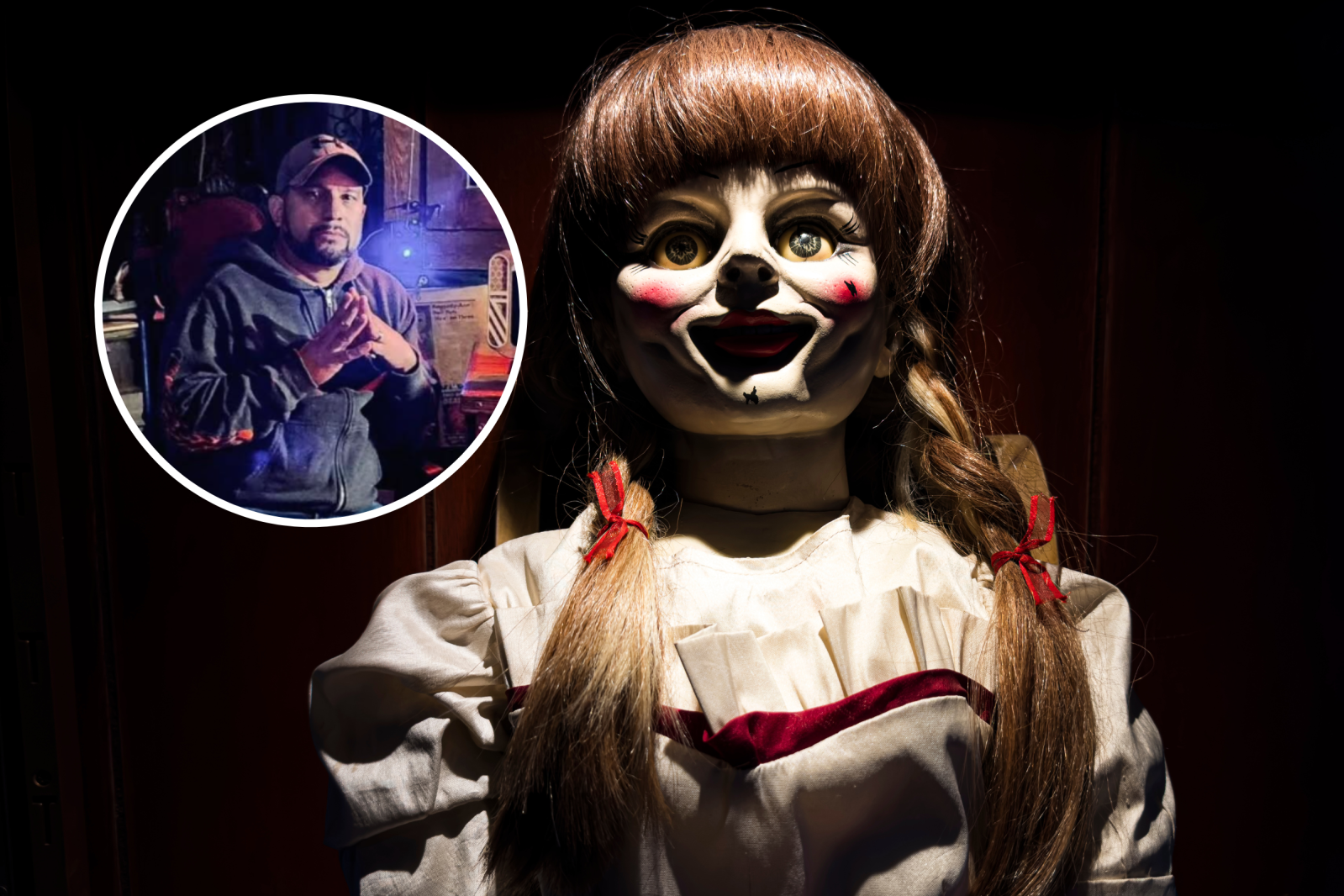
When director James Wan brought the story to the screen in 2013's The Conjuring, the decision was made to redesign the doll. The real Raggedy Ann doll was a mass-produced toy with a friendly, trademarked face. Using the actual design would have presented both legal licensing hurdles and aesthetic challenges for a horror film.
The cinematic Annabelle was designed to be "disturbing from the start." The film version is larger, made of a rigid material that looks like weathered porcelain, and features exaggerated, uncanny facial features. This design taps into automatonophobia (the fear of human-like figures) and pediophobia (the fear of dolls), ensuring that the audience feels a sense of dread even when the doll is stationary.
Scientific and Skeptical Perspectives
From a skeptical viewpoint, the Annabelle phenomenon can be explained through several psychological and sociological lenses. Skeptics point out that many of the most dramatic details of the story were popularized by the Warrens themselves, who were master storytellers and promoters of their own paranormal investigations.
- The Ideomotor Effect: This explains the movement of objects during séances or through physical contact. If a person expects a doll to move, they may unconsciously move it themselves.
- Pareidolia: The human brain’s tendency to see patterns (like claw marks or faces) in random stimuli.
- Folklore and Narrative Contagion: Once a story about a "haunted" object begins, others who interact with it often report similar experiences due to the power of suggestion.
- Zoning and Legal Issues: As of 2026, the Occult Museum in Monroe remains closed to the general public due to long-standing zoning disputes in the residential neighborhood. This closure has added to the "mystery" and "forbidden" nature of the doll.
The Doll's Current Status in 2026
As we move through 2026, the Annabelle doll remains in the possession of the Warren family estate, overseen by Tony Spera, the son-in-law of Ed and Lorraine Warren. Although the museum is no longer open for walk-in tours, the doll is occasionally moved for special sanctioned events or featured in digital presentations.
Rumors occasionally circulate on social media—such as the 2020 hoax claiming the doll had "escaped" the museum—but these have been consistently debunked. The doll remains secured in her original glass case, which continues to be treated with religious rites by the family to maintain what they believe is a spiritual "containment."
FAQs About the Annabelle Phenomenon
Is the real Annabelle doll still dangerous?
According to the Warren family and believers in the paranormal, the doll remains a high-risk object. They maintain that the entity attached to it is immortal and that the case and religious blessings are the only things preventing further activity. Skeptics, however, argue the doll is simply a vintage toy with no inherent power.
Can I visit the Annabelle doll in 2026?
Public access to the doll is strictly limited. The original Occult Museum in Monroe, Connecticut, was closed due to local zoning regulations and the heavy traffic of "ghost hunters" in the neighborhood. While the doll is still housed in a private location, it is generally not available for public viewing except during specifically organized "The Warren Files" events or private exhibitions.
What happened to the people who mocked the doll?
One of the most famous legends involves a young man who visited the museum, pounded on the glass of Annabelle's case, and challenged her to "scratch him." According to Ed Warren, the man died in a motorcycle accident shortly after leaving the museum. While the accident was a real event, skeptics argue that connecting it to the doll is a classic case of post hoc ergo propter hoc (after this, therefore because of this) fallacy.
Was there a real Annabelle Higgins?
There is no historical record of a seven-year-old girl named Annabelle Higgins dying on the property where the apartment stood in 1970. Paranormal researchers often suggest that the name was either a fabrication by the "entity" to gain sympathy or a misinterpretation by the medium during the original séance.
How does the real doll look compared to the movie?
The real doll is a large Raggedy Ann doll with red yarn hair and a printed face. It does not have the cracked porcelain skin or the menacing eyes seen in the movies. The simplicity of the real doll is often cited by believers as being more "creepy" because it looks so innocent.
Summary of the Phenomenon
The Annabelle phenomenon is a complex mixture of 1970s counter-culture spiritualism, Catholic demonology, and modern cinematic marketing. Whether one views it as a genuine supernatural threat or a masterful piece of urban folklore, the doll has cemented her place as a cultural icon.
Recommendation: For those interested in the history of the doll, focus on the recorded testimonies of the original witnesses from 1970 and compare them to the cinematic adaptations. If you ever encounter the doll at a private exhibition, the standard advice from the Warren estate remains: Respect the boundaries and do not touch the case.
Image Gallery