Comprehensive Guide to 2026 Spring Training Standings and Performance Analysis
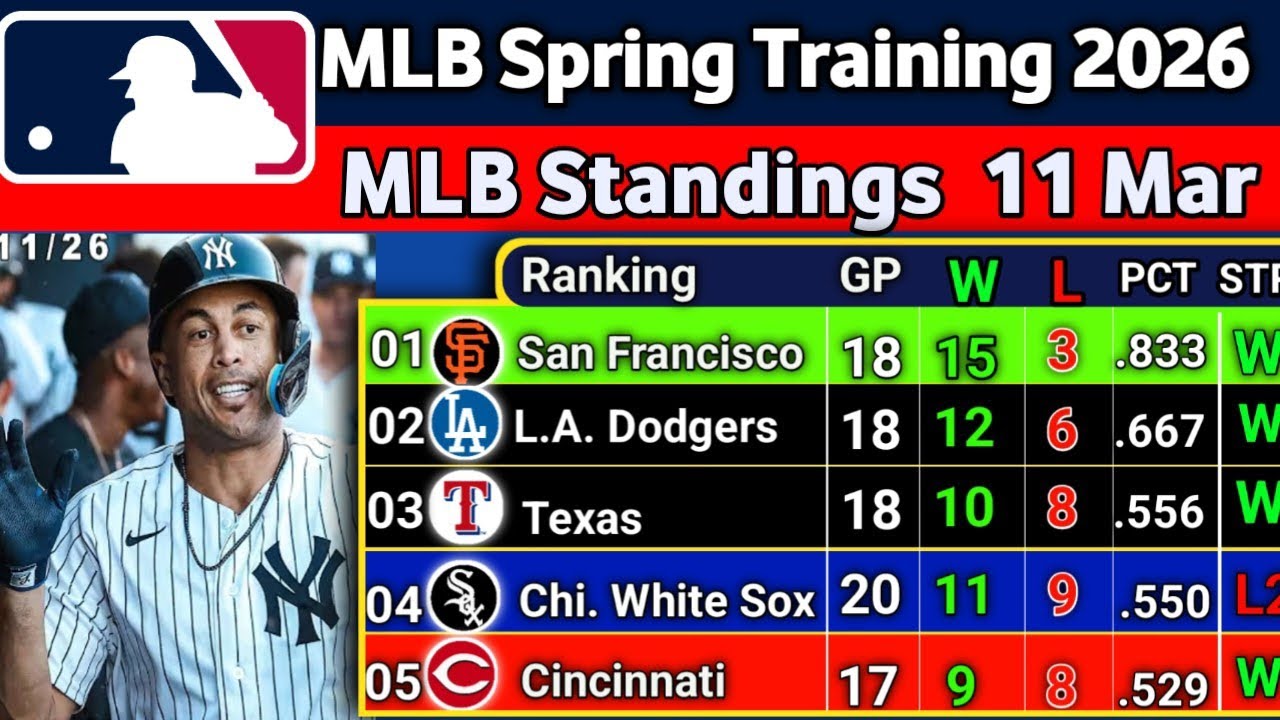
Spring training standings track the win-loss records of Major League Baseball teams during the exhibition season held in February and March. While these standings do not count toward the official regular-season record, they serve as a...
Spring training standings track the win-loss records of Major League Baseball teams during the exhibition season held in February and March. While these standings do not count toward the official regular-season record, they serve as a critical period for evaluating roster depth, prospect development, and player health as teams finalize their opening-day lineups for the 2026 campaign.
Contents
The Purpose and Mechanics of Spring Training Records
In Major League Baseball, spring training consists of two geographically distinct leagues: the Grapefruit League, held in Florida, and the Cactus League, held in Arizona. The standings for these leagues are tracked meticulously by media outlets and team analytics departments, though they function differently than the rigorous 162-game schedule.
During these exhibition games, managers prioritize player development over winning. The objective is to evaluate non-roster invitees, test new mechanical adjustments in pitchers, and provide playing time to bench players. Consequently, a team with a high winning percentage in the standings may simply possess superior organizational depth rather than a superior major league roster.
Evaluating Performance Beyond the Win-Loss Column
To derive actionable insights from spring training, analysts look past the total number of wins. Instead, the focus shifts toward metrics that correlate with long-term success. Front offices and advanced scouts prioritize these specific indicators when assessing the 2026 talent pool:
- Velocity Stability: Monitoring whether a pitcher can maintain their average fastball velocity across multiple outings without signs of fatigue or injury.
- Plate Discipline: Tracking the walk-to-strikeout ratio for prospects, which serves as a leading indicator for their ability to transition to the higher intensity of the regular season.
- Defensive Versatility: Observing how utility players handle defensive assignments at multiple positions, a key metric for determining bench flexibility in 2026.
- Injury Recovery Rates: Measuring the return-to-play timeline and performance baseline for athletes returning from surgery or significant 2025 injuries.
Analytical Differences: Grapefruit League vs. Cactus League
The two leagues offer different environments, which can influence player statistics and standings outcomes. Understanding these nuances is essential for any technical analysis of pre-season records.
| Feature | Grapefruit League (Florida) | Cactus League (Arizona) |
|---|---|---|
| Climate | Humid, often higher air density | Dry, warmer, thin air |
| Travel | Longer bus trips between venues | Shorter travel distances |
| Focus | Traditional scouting focus | Analytics-heavy developmental approach |
| Typical Results | Generally lower scoring games | Statistically higher offensive production |
Interpreting Roster Moves and Lineup Construction
The standings often fluctuate based on the timing of "roster cuts." In early March, lineups frequently include minor league players who are later reassigned to high-A, double-A, or triple-A affiliates. Once these cuts are made, the remaining core players—those intended for the 2026 Opening Day roster—begin to play more innings together.
Observers should look for "split-squad" games, where a team fields two different groups of players in separate locations on the same day. These games often distort the standings, as they dilute the talent on both squads, leading to results that are less indicative of overall team strength.
Common Misconceptions Regarding Pre-Season Success
A frequent mistake for fans and casual bettors is overvaluing an undefeated spring record. Historical data indicates there is negligible correlation between a high winning percentage in March and success in the World Series. In fact, teams with the worst spring records have often gone on to win division titles, primarily because they focused their spring efforts on high-leverage experimentation rather than securing exhibition wins.
Strategic Note: The Developmental Priority During the 2026 spring season, organizations are heavily invested in the implementation of new ball-tracking technology and specialized biomechanical assessment software. Teams that prioritize these data-driven initiatives often sacrifice game results in the standings to ensure that their primary pitchers and hitters are receiving the necessary reps to calibrate their mechanics for the rigors of the regular season.
Frequently Asked Questions
Do spring training standings impact a team's official regular-season ranking? No, spring training records are completely independent of the regular season. They serve only as internal data for team management and are wiped clean before the first pitch of the official season.
Why do some teams have significantly more losses than others during spring training? Losses often result from managers intentionally testing younger, less experienced players in late-game situations. These games provide front offices with the necessary data to determine which minor league prospects are ready for a call-up in the event of an injury during the regular season.
Are statistics like batting average and ERA reliable in spring training? These statistics are highly unreliable due to the experimental nature of the games. Pitchers may throw only one type of pitch for an entire outing to work on their command, which can artificially inflate their ERA, regardless of their actual talent level.
What should a scout look for in a player's performance during these games? Scouts focus on intent rather than result. A hitter successfully executing a two-strike approach or a pitcher maintaining a consistent arm slot is far more valuable than a high box-score stat line.
How do the 2026 rules affect spring training standings? The 2026 season continues to utilize the standardized pitch clock and defensive shift restrictions. During spring training, these rules are strictly enforced to ensure that players are fully acclimated to the pace-of-play requirements before the regular season begins.
Utilizing Spring Data for 2026 Projections
As we move toward the conclusion of the 2026 training cycle, the best approach is to aggregate the "eye-test" of talent development with the underlying mechanical data. By focusing on the consistency of individual performance rather than the team’s total wins, you gain a clearer picture of how the organization will likely perform when the real games begin. Track the daily reports on velocity, defensive efficiency, and injury status to stay ahead of the curve as the regular season approaches.
Image Gallery