Self-Directed Learning in Higher Education: Frameworks, Implementation, and Best Practices
Self-directed learning (SDL) in higher education is an instructional approach where students take primary responsibility for diagnosing their learning needs, formulating educational goals, identifying resources, selecting learning stra...
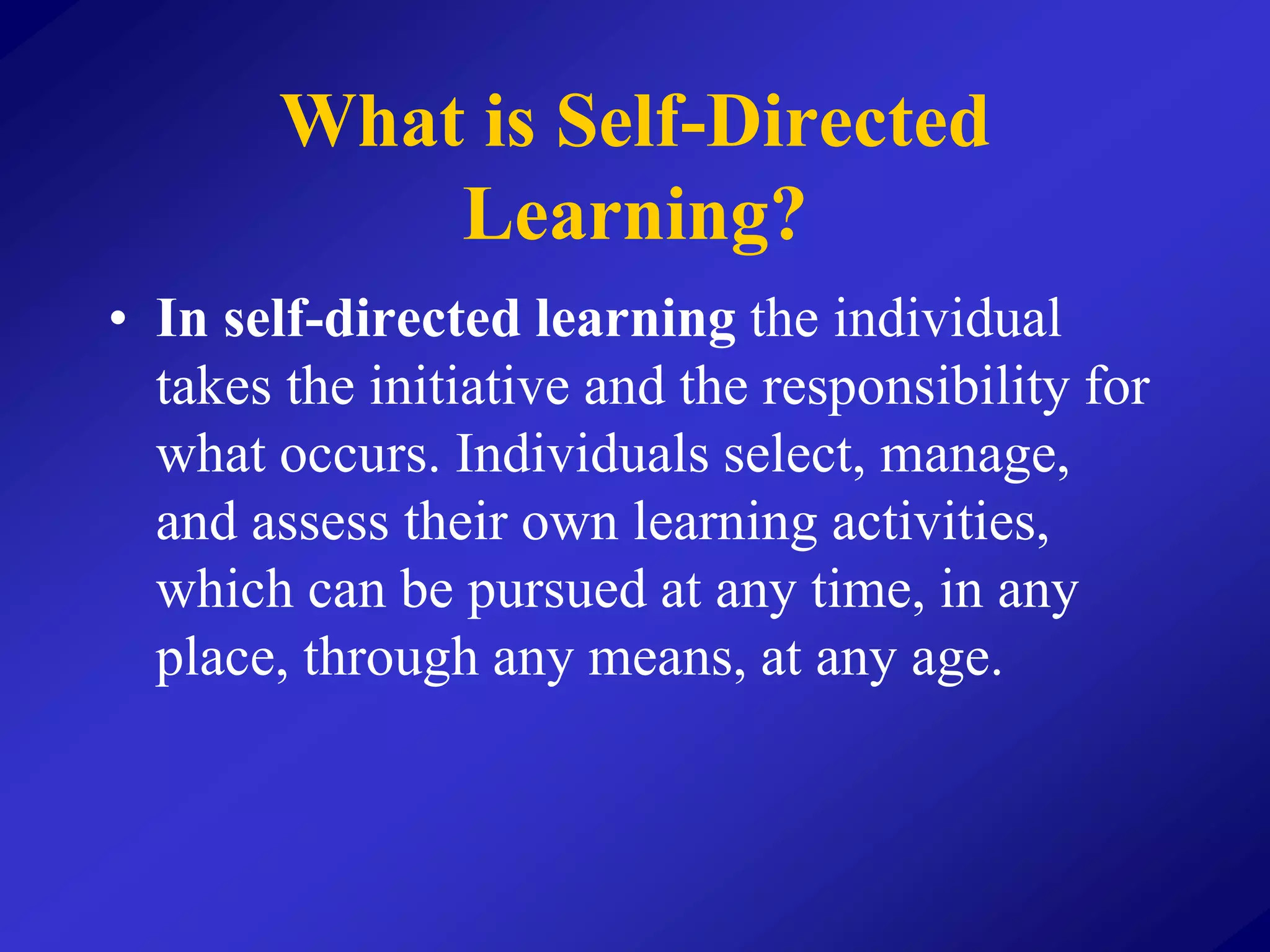
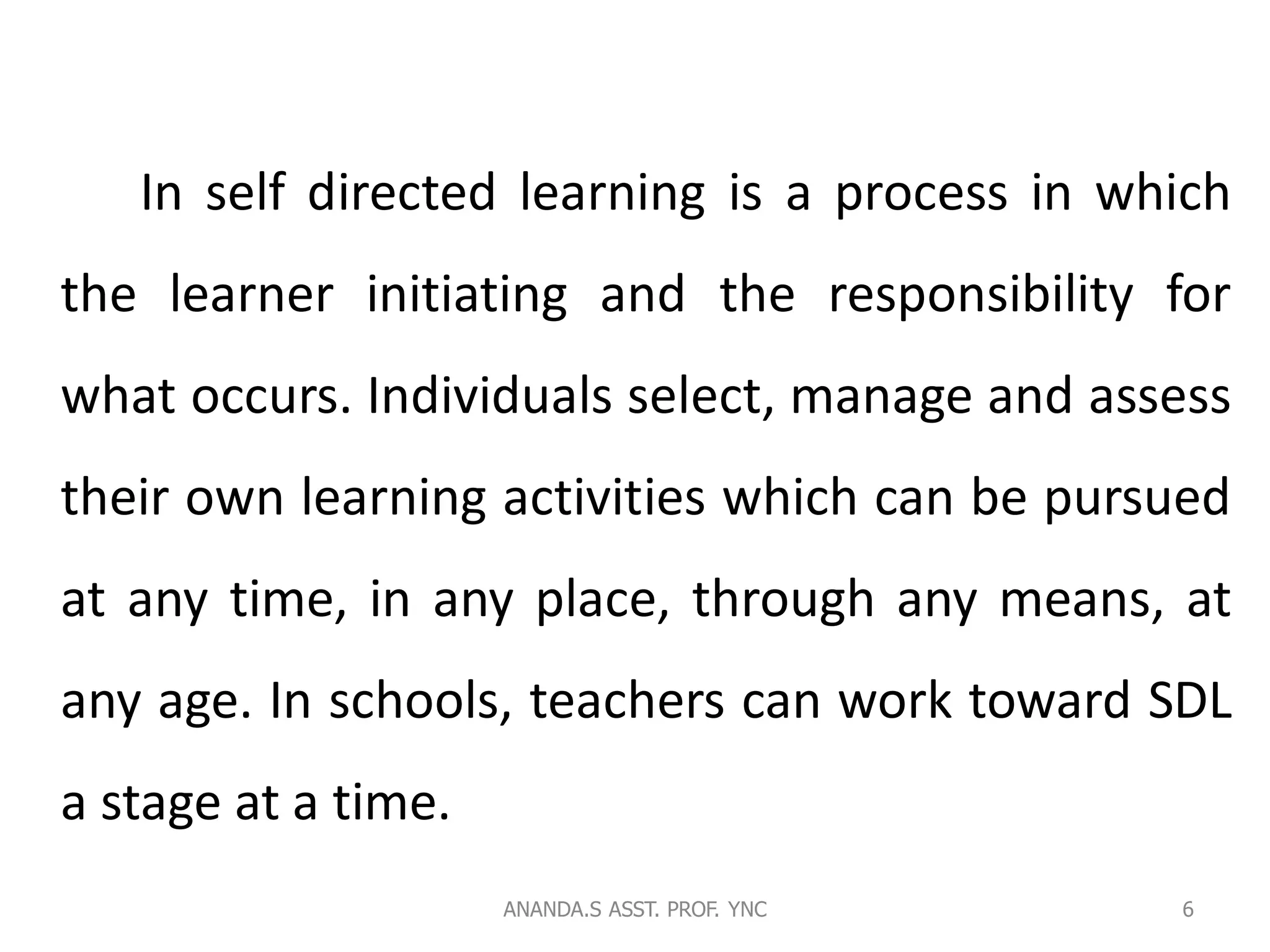
Self-directed learning (SDL) in higher education is an instructional approach where students take primary responsibility for diagnosing their learning needs, formulating educational goals, identifying resources, selecting learning strategies, and evaluating their academic outcomes. Facilitated by university faculty, SDL shifts the student role from passive content consumer to active, autonomous scholar, cultivating lifelong adaptability and critical thinking.
Contents
Defining Self-Directed Learning in the University Context
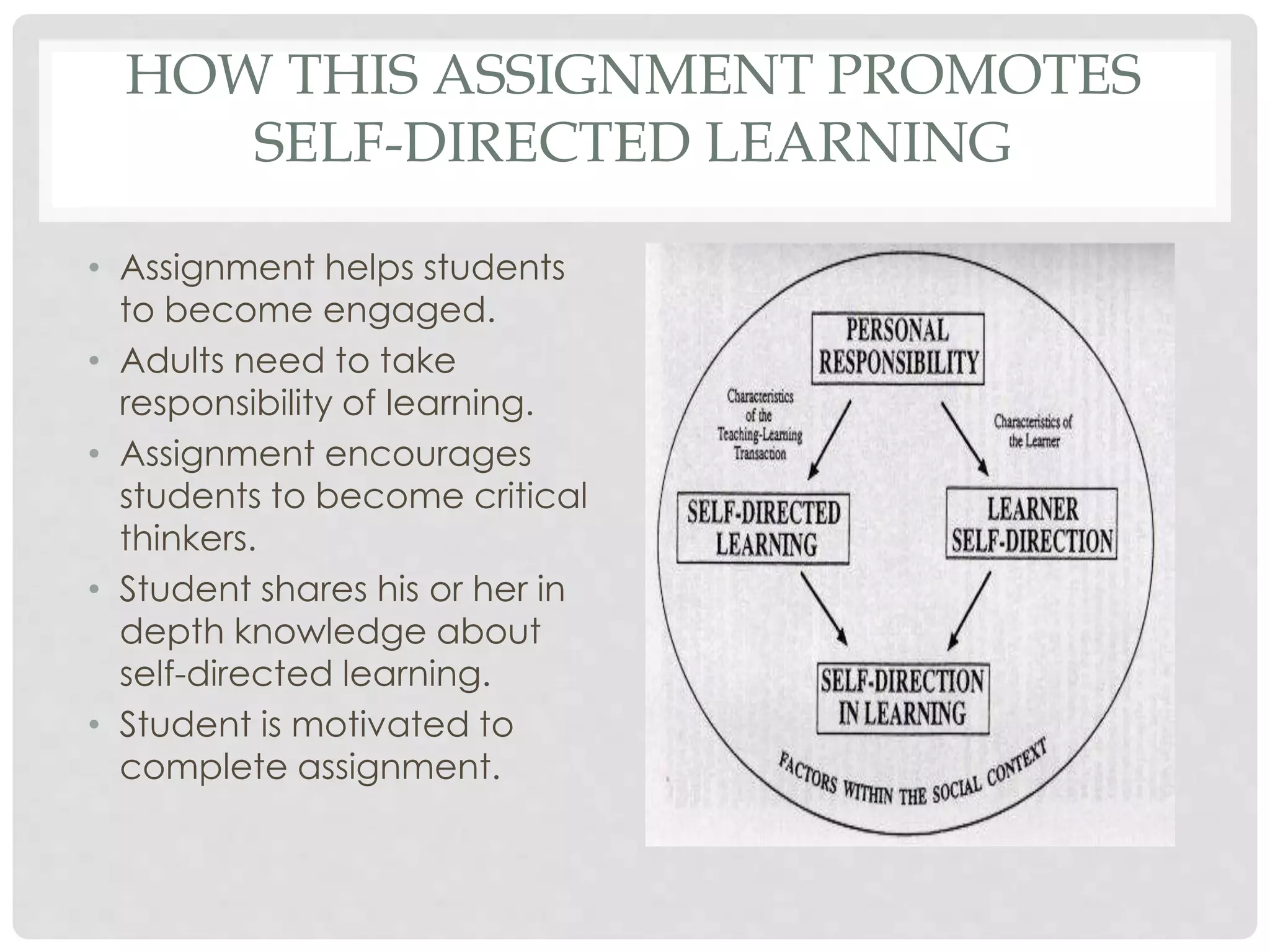
Self-directed learning in higher education represents a conceptual and practical departure from traditional pedagogical structures. Grounded in adult learning theory—most notably pioneered by Malcolm Knowles—SDL defines a process in which individuals initiate and guide their own learning experiences with or without the help of others. In higher education, this framework balances learner autonomy with institutional rigor, preparing students for dynamic professional environments where continuous skill acquisition is essential.
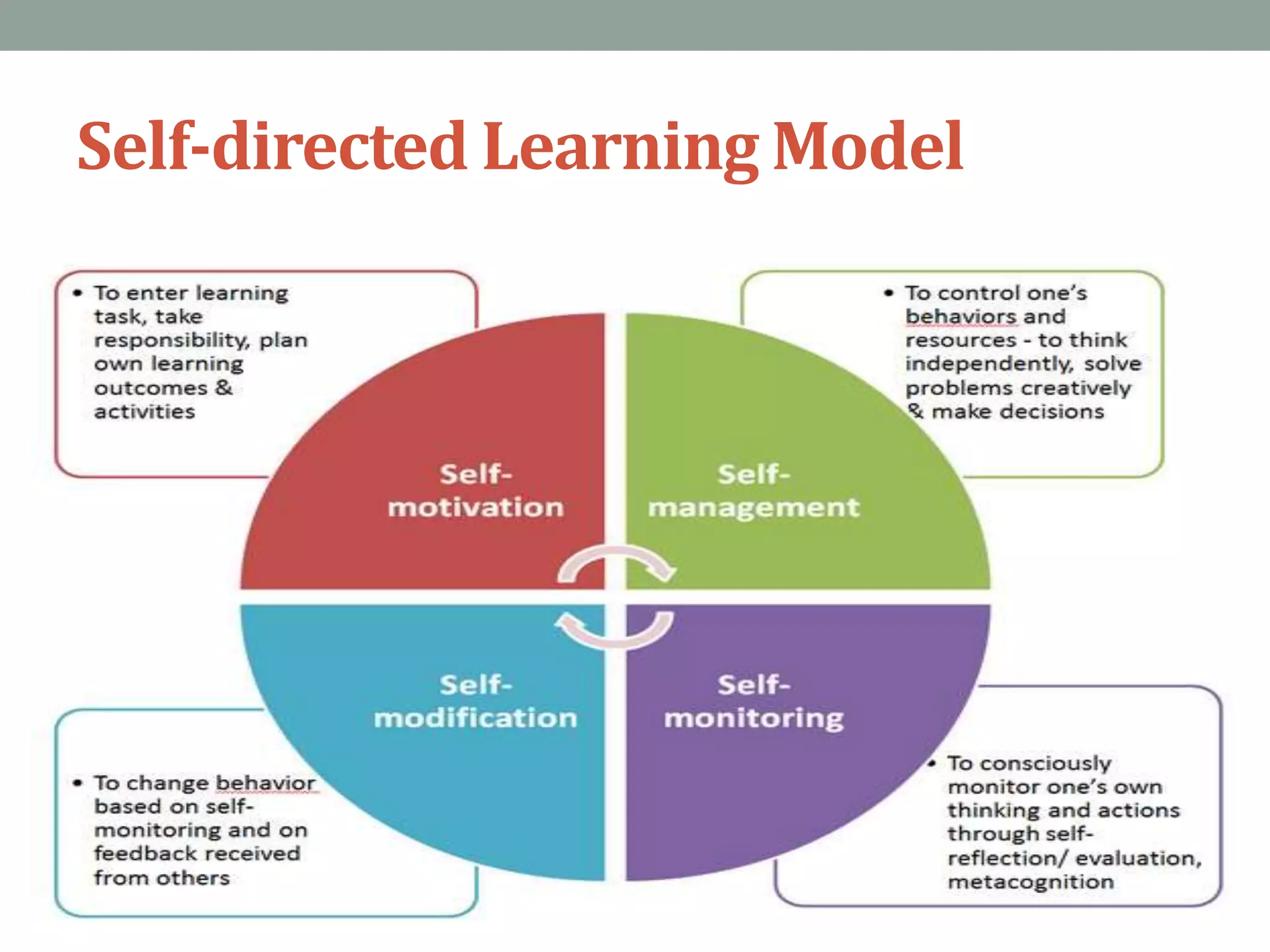
Rather than treating learning as a linear transmission of knowledge from professor to student, SDL views higher education as an ecosystem of guided inquiry. Students analyze their existing competencies, identify knowledge gaps, establish measurable academic targets, and construct custom pathways to reach those objectives. This pedagogical model relies heavily on metacognition—the ability to think about one's own thinking—and self-regulated learning (SRL) strategies, which include time management, goal setting, and emotional self-regulation during challenging academic tasks.
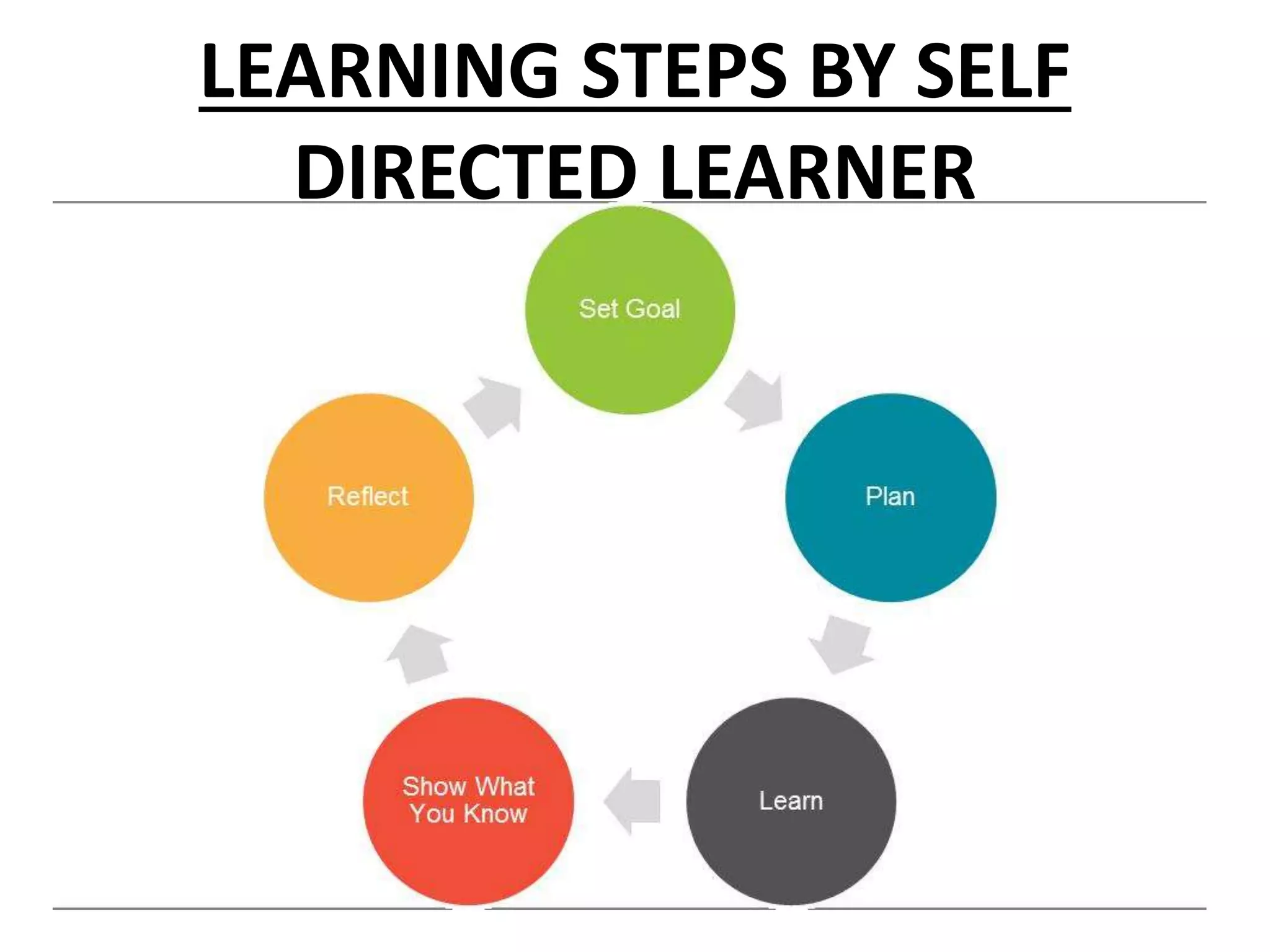
The Self-Directed Learning Cycle
- Assess Needs
- Set Goals
- Select Strategies
- Implement Learning & Practice
- Evaluate Results
Integrating SDL into higher education does not mean abandoning structure or removing faculty oversight. Instead, it alters the balance of academic agency. Higher education institutions that adopt SDL provide scaffolded frameworks where faculty design robust learning environments, curate research tools, and offer targeted mentorship while granting students autonomy over the pacing, inquiry direction, and synthesis of their work.
Core Pillars of Self-Directed Learning Frameworks
To operate effectively within a university environment, self-directed learning relies on four foundational pillars. These pillars transform abstract concepts of autonomy into structured academic practices.
1. Diagnosis of Learning Needs
Before engaging in self-directed research or coursework, students must systematically evaluate what they already know and what skills or theoretical knowledge they lack. This diagnostic phase involves self-assessment tools, diagnostic quizzes, and baseline reflective writing. By recognizing specific learning gaps, students avoid redundant study and focus their effort on required competencies.
2. Formulating Clear Learning Objectives
Once needs are identified, students convert broad academic requirements into specific, actionable learning goals. Effective SDL frameworks encourage goals aligned with taxonomy frameworks (such as Bloom's Taxonomy), moving beyond lower-order memorization to higher-order synthesis, evaluation, and application. Objectives are often formalized through learning contracts—written agreements between the student and instructor detailing what will be learned, how it will be accomplished, and how success will be measured.
3. Strategy Selection and Resource Curation
Autonomous learners must navigate scholarly databases, peer-reviewed journals, open educational resources (OER), and empirical research rather than relying solely on a single assigned textbook. Instructors teach students how to critically evaluate sources for authority, methodology, and relevance, ensuring that self-guided research maintains academic integrity. Students then select appropriate methodological strategies, such as conducting literature reviews, performing lab simulations, or engaging in field interviews.
4. Metacognitive Monitoring and Self-Evaluation
The final pillar requires continuous reflection and evaluation. Students monitor their comprehension throughout the learning cycle, adjusting strategies if a conceptual obstacle arises. Upon completing a project or module, learners assess their final work against predetermined rubrics and criteria, reflecting on both the content mastered and the effectiveness of their chosen learning methods.
Instructional Strategies for Educators and Curriculum Designers
Transitioning a university curriculum toward self-directed learning requires deliberate instructional design. Educators must scaffold learning environments so students build self-efficacy before working entirely independently.
The Flipped Classroom Model
In a flipped classroom, foundational lectures and reading materials are reviewed independently by students before class sessions. In-person time is dedicated to collaborative problem-solving, debates, case analyses, and peer review. This structure requires students to take responsibility for primary knowledge acquisition, while classroom time allows faculty to address advanced misconceptions and facilitate deeper analysis.
Problem-Based and Inquiry-Based Learning
Problem-Based Learning (PBL) presents students with complex, real-world scenarios that lack a single correct solution. Working individually or in small self-directed teams, students identify what information they need to resolve the problem, locate relevant literature, synthesize findings, and propose evidence-based solutions. This approach mirrors post-academic workplace expectations, driving engagement through authentic inquiry.
Learning Contracts and Modular Pathways
Learning contracts serve as explicit operational agreements between students and instructors. A standard learning contract includes:
- Target Learning Objectives: Detailed statements of planned academic accomplishments.
- Learning Strategies and Resources: Specific books, articles, datasets, or fieldwork to be completed.
- Target Deliverables: Artifacts such as research papers, software applications, or policy briefs demonstrating mastery.
- Validation Criteria: Clear rubrics and benchmarks used for assessment.
- Timeline and Milestones: Target dates for draft submissions, peer reviews, and final evaluation.
Modular pathways allow students to complete learning units at a flexible pace, selecting elective modules that align with their specific academic interests and career tracks while satisfying core degree requirements.
Re-Defining Faculty Roles: From Lecturer to Learning Facilitator
In an SDL environment, faculty move from delivering authoritative lectures to serving as learning facilitators, research mentors, and cognitive coaches. Facilitators design learning environments, establish academic standards, ask probing questions, and offer constructive feedback. This transition requires professional development for faculty, shifting pedagogical focus from content delivery to process facilitation. Research indexed in the ERIC Database consistently indicates that institutional support for faculty coaching significantly improves student persistence and academic outcomes in self-directed programs.
Technology Integration in Self-Directed Environments
Modern technology platforms provide essential infrastructure for scaling self-directed learning across diverse student demographics and higher education delivery models.
Modern Technology Architecture for SDL
- Institutional LMS
- Core Syllabi
- Competency Rubrics
- Personal Learning Env. (PLE)
- Research curation tools
- Reference managers
- AI & Adaptive Engines
- Custom skill paths
- Socratic tutoring
- Digital E-Portfolios
- Formative reflection
- Authentic capstone proof
Learning Management Systems (LMS) and Personal Learning Environments (PLEs)
Advanced platforms like Canvas, Moodle, and Blackboard support self-directed pathways through conditional release mechanisms, competency-based tracking, and integrated resource libraries. Concurrently, universities encourage students to build Personal Learning Environments (PLEs)—individual digital ecosystems composed of bookmarking tools, reference managers (such as Zotero or Mendeley), note-taking databases, and collaborative workspaces.
Generative AI and Adaptive Learning Technologies
Adaptive learning software analyzes student performance data in real time, adjusting content difficulty and offering customized remediation when misconceptions are detected. Generative AI tools serve as Socratic dialogue partners, helping students brainstorm research questions, debug code, and check their understanding of complex texts. To maintain academic rigor, institutions establish clear guidelines regarding ethical AI usage, framing these tools as study aids rather than substitutes for critical evaluation.
Digital E-Portfolios
E-Portfolios allow self-directed learners to collect, organize, and showcase academic artifacts accumulated over their degree programs. By featuring draft revisions, reflective essays, code repositories, and research reports, digital portfolios provide authentic evidence of conceptual growth, technical mastery, and metacognitive progression.
Comparative Matrix: Traditional Instruction vs. Self-Directed Learning
The following table highlights the operational, structural, and pedagogical differences between traditional teacher-led instruction and self-directed learning frameworks in higher education.
| Dimension | Traditional Teacher-Led Instruction | Self-Directed Learning (SDL) Framework |
|---|---|---|
| Primary Ownership | Instructor determines pace, topic order, and materials. | Student actively designs goals, strategies, and resource selection under faculty guidance. |
| Role of Faculty | Lecturer and primary source of knowledge authority. | Learning facilitator, mentor, and designer of inquiries. |
| Role of Student | Receiver and consumer of structured content. | Active inquirer, goal-setter, and self-evaluator. |
| Curriculum Structure | Fixed syllabi with standardized, chronological delivery. | Flexible, modular pathways utilizing learning contracts and inquiry projects. |
| Motivation Mechanism | Primarily extrinsic (grades, deadlines, attendance requirements). | Intrinsic curiosity combined with clear personal and career goals. |
| Assessment Approach | High-stakes summative exams and standardized quizzes. | Authentic assessments, e-portfolios, reflective logs, and rubrics. |
| Resource Dependency | Assigned textbooks and course readers. | Curated academic literature, open educational resources, datasets, and field sources. |
| Skill Acquisition Focus | Topic-specific knowledge and retention. | Metacognitive awareness, lifelong learning capabilities, and problem-solving skills. |
Assessing Self-Directed Learning Outcomes
Evaluating self-directed learning requires assessment strategies aligned with independent thought and self-regulation. Traditional standardized tests often fail to capture metacognitive growth, research autonomy, and synthesis capabilities.
Multi-Tiered Assessment Framework
- Self-Assessment: Reflection & Metacognitive Logs
- Peer Assessment: Constructive Feedback Rubrics
- Faculty Evaluation: Competency-Based Capstone Artifacts
Authentic and Competency-Based Assessment
Authentic assessment tasks require students to apply knowledge to real-world tasks, such as authoring a policy analysis, publishing a peer-reviewed undergraduate study, developing software, or creating a community intervention plan. Evaluation focuses on demonstrated competency in core domain learning outcomes rather than time spent in seat or rote memorization.
Formative Reflective Logs and Process Documentation
To assess the process of learning rather than just the final product, instructors incorporate reflective logs, research journals, and progress updates into course requirements. Students document their strategic decisions, explain how they resolved research roadblocks, and analyze how their thinking evolved during the project.
Self and Peer Assessment Protocols
Involving students in the evaluation process develops critical judgment. Using structured, criterion-referenced rubrics, students assess their own final deliverables alongside work produced by peers. This process trains students to recognize academic quality, identify methodological flaws, and receive constructive feedback objectively. The Quality Matters organization provides research-backed standards for rubrics that support objective self and peer evaluation in higher education settings.
Overcoming Common Implementation Barriers
While self-directed learning offers clear long-term benefits, higher education institutions frequently face operational and psychological challenges when scaling these models.
Addressing Variations in Student Readiness
Not all incoming university students possess the self-efficacy, time-management habits, or research background required for fully autonomous study. Students transitioning directly from highly structured secondary education environments may feel overwhelmed by unstructured assignments.
Solution: Implement a model of gradual release of responsibility. In introductory courses, faculty provide explicit frameworks, detailed timelines, and direct instruction. As students progress into upper-division coursework, structural scaffolding is incrementally reduced, allowing students to assume greater autonomy over project design and execution.
Gradual Release of Responsibility Model
- Direct Instruction: Faculty-led, high structure
- Guided Practice: Collaborative inquiry & workshops
- Independent SDL: Student-driven research & project
Institutional and Accreditation Constraints
University degree programs must comply with regional accreditation standards, state learning outcomes, and credit-hour requirements. Highly rigid curricular models can constrain the flexibility required for true self-directed study.
Solution: Embed SDL within existing accreditation parameters through hybrid designs. Core learning outcomes remain standardized across course sections, but the pathways, source materials, and practical artifacts used by students to demonstrate mastery remain self-directed.
Managing Faculty Workload
Facilitating individualized learning contracts and providing ongoing feedback on independent projects can require significantly more faculty time than grading standardized examinations.
Solution: Utilize small-group mentoring models, structured peer feedback protocols, and automated diagnostic tools within the university LMS to streamline routine tracking and ensure faculty workload remains sustainable.
Frequently Asked Questions
What is the difference between self-directed learning and distance or online learning?
Distance or online learning refers to the delivery channel and geographical location of instruction, which can still be completely teacher-led and rigid. Self-directed learning refers to the pedagogical framework governing ownership and autonomy over goals, resources, and evaluation, regardless of whether instruction occurs online, in a physical classroom, or in a hybrid format.
How do educators maintain academic rigor in a self-directed learning environment?
Rigor is maintained through robust assessment criteria, explicit competency frameworks, and ongoing faculty monitoring. Students work with instructors to establish learning contracts that meet or exceed standard course learning outcomes. Final mastery is verified using comprehensive rubrics, authentic capstone deliverables, and oral defenses.
Can self-directed learning be applied to STEM and technical disciplines?
Yes. In STEM fields, SDL is frequently integrated through Problem-Based Learning (PBL), inquiry-based laboratory courses, and capstone engineering projects. While foundational concepts (such as mathematics or safety protocols) may require direct instruction, students apply these fundamentals through self-directed research, algorithm design, and experimental engineering.
What key skills do university students need before engaging in self-directed learning?
Students benefit from baseline competencies in time management, information literacy (evaluating peer-reviewed academic sources), goal setting, basic metacognitive strategies, and written communication. Institutions often foster these prerequisite skills through first-year seminar courses and library instruction programs.
How do learning contracts function in larger university classes?
In large enrollment settings, instructors often utilize modular learning contract templates. These templates define core required competencies while offering standardized elective choices for research questions, source formats, and deliverable types, balancing student autonomy with manageable grading structures.
Practical Recommendations for Higher Education Leaders and Educators
To successfully implement self-directed learning frameworks within academic programs, faculty, department chairs, and instructional designers should adopt the following actionable practices:
- Conduct Readiness Audits: Utilize validated assessment instruments, such as the Self-Directed Learning Readiness Scale (SDLRS), to gauge student and departmental preparedness before launching autonomous curricula.
- Scaffold Autonomy Incrementally: Avoid dropping students into unstructured learning environments without preparation. Build self-directed exercises into introductory courses and expand autonomy as students progress through their academic program.
- Establish Standardized Learning Contract Templates: Provide clear, institutional templates for learning contracts that clearly define expectations for objectives, timelines, resources, and assessment rubrics.
- Invest in Professional Development: Offer workshops through university centers for teaching and learning to help faculty shift comfortably from traditional lecturing to learning facilitation, coaching, and authentic assessment design.
- Leverage Library and Technological Resources: Partner with academic librarians to integrate information literacy modules into the curriculum, ensuring students can effectively search, critique, and utilize scholarly repositories.
Image Gallery