The Richest Home in the World: Analyzing Antilia and the Concept of Extreme Property Value
The title of "the richest home in the world" is most widely and consistently attributed to Antilia, the private residence of billionaire Mukesh Ambani in Mumbai, India. Valued at estimates exceeding $2 billion as of 2026, the 27-story...
The title of "the richest home in the world" is most widely and consistently attributed to Antilia, the private residence of billionaire Mukesh Ambani in Mumbai, India. Valued at estimates exceeding $2 billion as of 2026, the 27-story skyscraper is defined not only by its market appraisal but by its unparalleled construction costs, bespoke amenities, and the sheer logistical complexity of maintaining a single-family high-rise in an urban center.
Contents
Defining the Richest Home: Valuation vs. Marketability
Determining the "richest" home is a complex task because the real estate market rarely sees transactions involving properties of such unique magnitude. Unlike standard residential real estate, where prices are driven by comparable sales data, properties like Antilia fall into a category of bespoke assets.
Valuation for such properties is typically derived from three primary factors: construction and material costs, land value in a prime metropolitan location, and the cost of proprietary technology integration. When discussing the richest home, the focus is almost exclusively on replacement value—the cost required to build the structure today—rather than what the property might fetch on an open market, as such homes are rarely listed for sale.
The Architectural and Structural Specifications of Antilia
Located on Altamount Road in Mumbai, Antilia is a 400,000-square-foot structure designed to withstand a magnitude 8.0 earthquake. The architectural firm Perkins and Will, along with Hirsch Bedner Associates, designed the building with a focus on verticality, which is essential given the scarcity and high cost of land in South Mumbai.
The building features:
- Residential Levels: The top floors serve as the family’s primary residence, offering panoramic views of the Arabian Sea and the city skyline.
- Infrastructure: The home includes three helipads, a 168-car garage, a theater with a seating capacity of 50, multiple swimming pools, a spa, a gymnasium, and a snow room designed to provide a respite from Mumbai’s tropical heat.
- Sustainability and Maintenance: A dedicated staff of over 600 individuals is required to manage the daily operations, maintenance, and security of the facility. The operational overhead for such a building is akin to managing a five-star hotel.
Comparing Global Ultra-Luxury Properties
While Antilia holds the title for the highest estimated construction and valuation cost for a single-family dwelling, other properties globally challenge the definition of "richest" based on different metrics such as historic significance, land size, and luxury interior finishes.
| Property | Location | Primary Distinction |
|---|---|---|
| Antilia | Mumbai, India | Highest construction/replacement cost (~$2B+) |
| Buckingham Palace | London, UK | State-owned; highest cultural/historical valuation |
| Villa Leopolda | French Riviera | Massive land area and historical provenance |
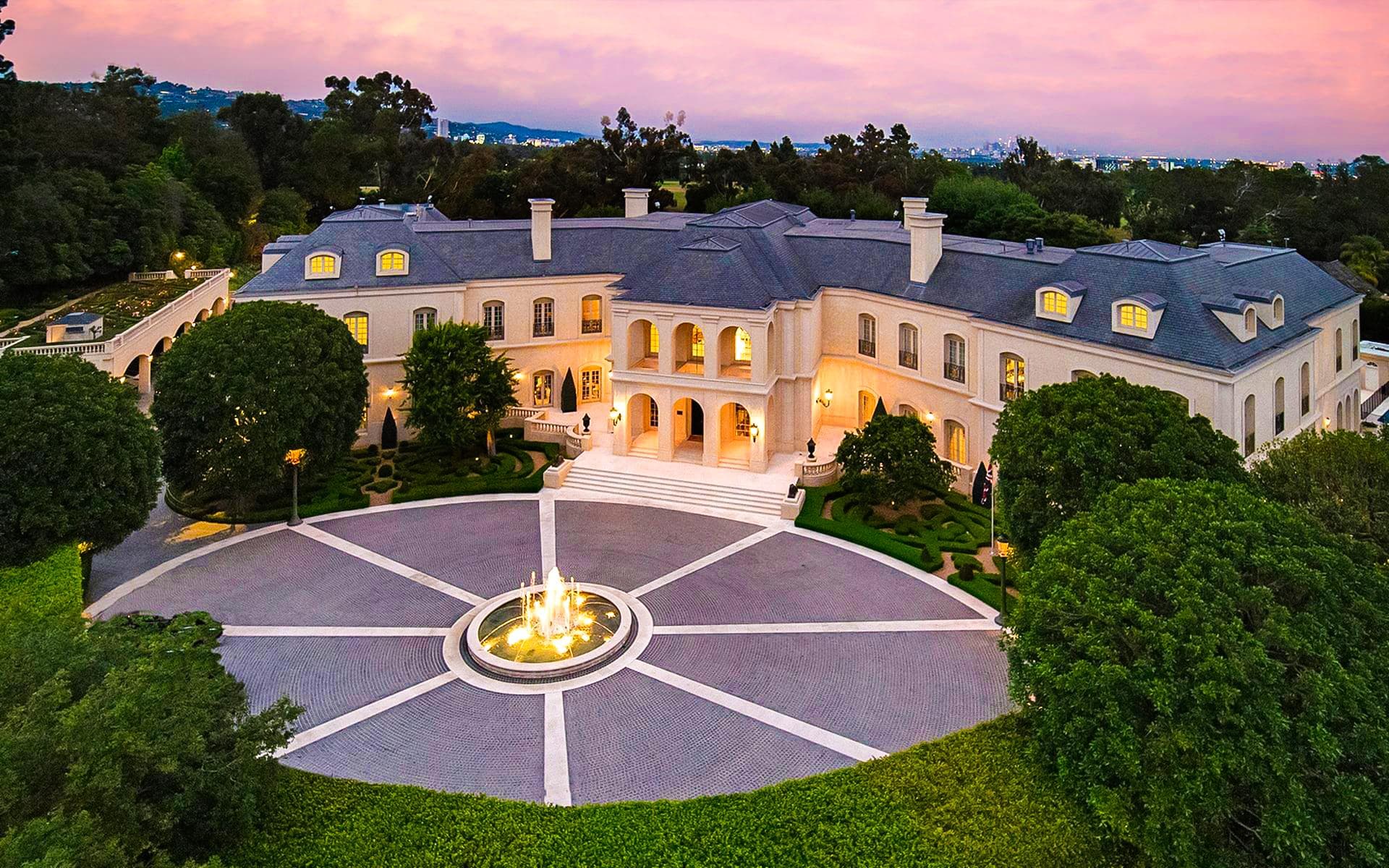
| The One | Bel Air, USA | Record-breaking private residence listing price |
It is critical to distinguish between government-owned properties and private residences. While Buckingham Palace is arguably the most valuable real estate globally, it is not a "home" in the traditional sense of private, billionaire-owned residential real estate. Similarly, estates like Villa Leopolda derive their value from centuries of history and vast, exclusive plots of land, whereas Antilia’s value is rooted in high-end, modern engineering and extreme urban density.
The Logistics of Extreme Residential Infrastructure
Owning the richest home in the world involves more than just acquisition; it requires complex operational management. The logistical requirements for a 27-story, 570-foot tall private home present challenges that do not exist in conventional luxury housing.
Energy Management and Utilities
A building of this scale requires its own power substation and sophisticated HVAC systems to ensure climate control across massive, varying ceiling heights. The environmental footprint of such a structure is significant, often requiring custom-built, state-of-the-art energy recovery systems to manage utility consumption.
Security and Privacy Engineering
For a property of this profile, security is not an afterthought but an integrated design feature. This includes biometric access controls, advanced surveillance networks, and blast-resistant materials. The integration of these systems requires constant updates to firmware and hardware to remain effective against evolving security threats, which adds to the recurring "cost" of the home.
Legal and Regulatory Context
When analyzing high-value residential properties, one must consider the legal frameworks of the host jurisdiction. In India, the regulation of high-rise private construction involves stringent fire safety norms, height restrictions, and floor space index (FSI) calculations.
The approval process for Antilia involved navigating complex zoning laws in a densely populated metropolis. Potential owners or developers of similar high-value projects must account for:
- Zoning Compliance: Ensuring the structural design adheres to local density regulations.
- Labor Laws: Managing the extensive staff required for property maintenance, which entails strict adherence to local employment and contract law.
- Taxation: High-value residences are subject to significant property taxes, often calculated on the basis of built-up area and prime location premiums.
Common Misconceptions Regarding Global Property Wealth
A frequent error in media coverage is the conflation of "selling price" and "intrinsic value." When a property like "The One" in Bel Air hits the market with a massive asking price, that price is often a reflection of developer ambition and speculative debt load rather than the inherent cost of the materials or land.
Furthermore, the "richest" home status is often contested by temporary market fluctuations. A mansion might be listed for $500 million in a high-demand year, but if it remains unsold for years, the true market value is effectively undefined. Antilia remains the most cited example because its value is anchored in its tangible, finished, and operational state, rather than a speculative listing price.
Frequently Asked Questions
Is Antilia the most expensive home ever sold?
No. Antilia was built, not purchased on the market. Consequently, it does not hold the record for a single, recorded "sale" price. That record is typically held by various historic estates or modern ultra-luxury developments that have exchanged hands via private, confidential transactions.
Does the cost of the home include its interior contents?
Generally, valuations for the "richest home" include the architectural structure and permanent fixtures. Movable assets, such as high-value art collections, antique furniture, and luxury vehicles stored within the garage, are typically excluded from real estate appraisals unless specifically noted in a valuation audit.
How is the maintenance of such a home managed?
Management is typically handled through a dedicated family office or a professional property management firm. This involves coordinating specialized technicians for the climate control systems, landscaping teams, custodial staff, and private security contractors, functioning similarly to the management of a large, high-end commercial complex.
Are there other homes that challenge Antilia for this title?
Some properties, such as the Palace of Versailles or Buckingham Palace, would command significantly higher prices if they were ever offered for sale due to their historical and cultural significance. However, because these are not private homes, they are excluded from the "richest private residence" category.
Why is the maintenance staff for such a home so large?
The staff count is necessitated by the vertical nature of the home. Maintaining 27 floors of varying functions—from gardens that require specialized irrigation to technical floors housing mechanical systems—requires round-the-clock shift work, which inflates the total headcount compared to a traditional expansive estate on a horizontal plot of land.
Conclusion and Strategic Observation
The title of "the richest home in the world" highlights the intersection of extreme capital and architectural ambition. For those analyzing real estate as an asset class, Antilia serves as a unique case study in how private wealth can overcome urban density constraints through vertical engineering.
When evaluating or investing in ultra-luxury real estate, focus on the structural durability, the potential for long-term maintenance costs, and the local regulatory environment. The true value of such a property lies not in its ability to be sold, but in its ability to provide a tailored, highly specific environment for its owner, supported by the immense infrastructure required to maintain it in a world-class city.
Image Gallery