What Exemptions Exist for Mandatory Liability Auto Insurance in Alabama
In Alabama, exemptions for mandatory liability auto insurance primarily include vehicles owned by government entities, implements of husbandry, trailers, and vehicles covered by a certificate of self-insurance or a $50,000 cash bond. A...
In Alabama, exemptions for mandatory liability auto insurance primarily include vehicles owned by government entities, implements of husbandry, trailers, and vehicles covered by a certificate of self-insurance or a $50,000 cash bond. Additionally, vehicles not operated on public highways or those regulated by the Public Service Commission may also qualify for specific exemptions from standard registration-based insurance requirements.
Contents
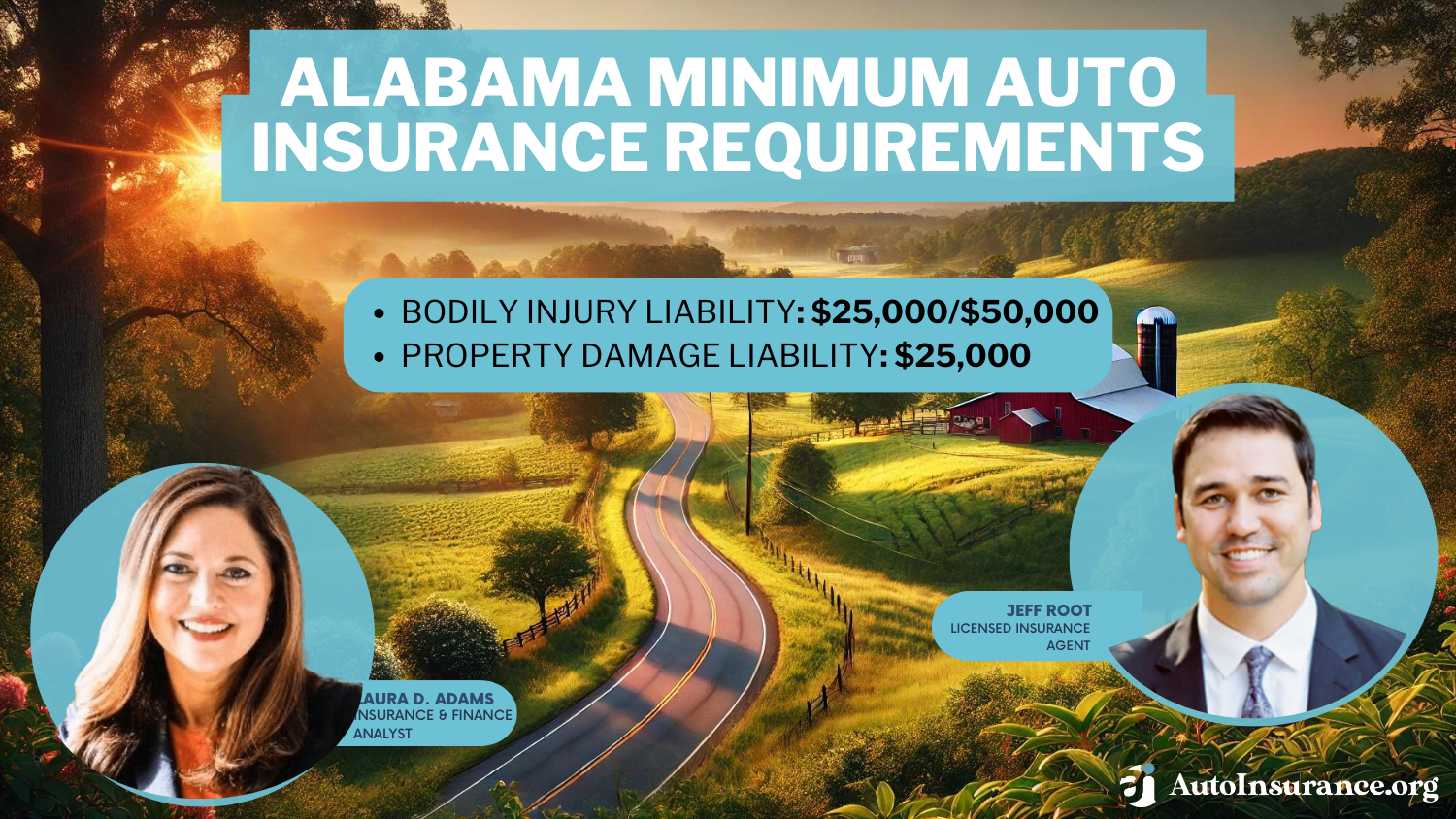
Under the Alabama Mandatory Liability Insurance (MLI) Act, specifically Section 32-7A-3 of the Code of Alabama 1975, every motor vehicle registered in the state must be covered by a liability insurance policy. As of 2026, the minimum coverage limits remain $25,000 for bodily injury per person, $50,000 for bodily injury per accident, and $25,000 for property damage. However, the law recognizes that certain specialized vehicles, ownership structures, and usage scenarios do not fit the standard insurance model. Understanding these exemptions is critical for fleet owners, farmers, and collectors to avoid unnecessary registration suspensions and reinstatement fees.
Government and Public Entity Exemptions
One of the most significant exemptions to the Alabama MLI law applies to vehicles owned by various levels of government. This exemption is rooted in the principle of sovereign immunity and the fact that government entities typically have dedicated funds or self-insurance pools to handle liability claims, making private commercial insurance redundant for registration purposes.
Federal and State-Owned Vehicles
Vehicles owned by the United States government or any state government are exempt from Alabama’s mandatory liability insurance requirements. This includes vehicles used by federal agencies, such as the Postal Service, as well as state-owned vehicles operated by departments like the Alabama Department of Transportation (ALDOT). Because these entities are backed by the "full faith and credit" of the government, they are not required to provide proof of private insurance to the Alabama Department of Revenue (DOR) to maintain registration.
Political Subdivisions
The exemption extends to political subdivisions of the State of Alabama. This category encompasses vehicles owned by:
- Counties: Utility trucks, sheriff’s department vehicles, and administrative cars.
- Municipalities: City police cruisers, fire trucks, and public works vehicles.
- Local Boards: Vehicles owned by school boards or local utility boards.
While these vehicles are exempt from the MLI law's requirement to carry a private insurance policy, they are still subject to liability rules. Most municipalities participate in risk management pools, such as those managed by the Alabama League of Municipalities, to cover potential claims.
Alternative Financial Responsibility Exemptions
Alabama law provides a path for individuals or corporations to opt out of traditional insurance policies by proving they have the financial means to cover potential damages themselves. This is not common for the average driver but is a standard practice for large corporations and wealthy individuals.
Certificate of Self-Insurance
Under Section 32-7-34, any person or entity in whose name more than 25 motor vehicles are registered may qualify as a self-insurer. To obtain a certificate of self-insurance from the Alabama Law Enforcement Agency (ALEA), the owner must demonstrate a financial status that ensures their ability to pay judgments obtained against them.
Once ALEA issues this certificate, the vehicles under that entity's name are exempt from the requirement to carry an individual private liability insurance card. This is particularly relevant for large commercial fleets and rental car companies operating within the state in 2026.
Cash Bonds and Securities
An individual may be exempt from the requirement to purchase a commercial policy if they deposit a bond or cash with the State Treasurer. As of the current 2026 guidelines, this requires a deposit of $50,000 in cash or securities (such as government bonds). Upon making this deposit, the State Treasurer issues a certificate which the owner can provide to the Department of Revenue. This certificate serves as the legal equivalent of a liability policy, exempting the specific vehicles listed from the standard MLI verification process.
Exemptions Based on Vehicle Type and Use
The Alabama MLI law is specifically designed for motor vehicles intended for use on public highways. Therefore, many vehicles that do not meet the definition of a "motor vehicle" under the Act or are used exclusively for non-highway purposes are exempt.
Implements of Husbandry and Farm Equipment
Alabama has a robust agricultural sector, and the law provides specific exemptions for "implements of husbandry." This includes tractors, combines, and other specialized machinery used primarily in agricultural operations. These vehicles are exempt even if they occasionally travel on public roads to move from one field to another. However, it is important to note that a standard pickup truck used on a farm is not an implement of husbandry and must still be insured if it is registered for highway use.
Special Mobile Equipment
This category includes vehicles not designed for the transportation of persons or property and only incidentally operated or moved over a highway. Examples include:
- Road construction and maintenance machinery (e.g., asphalt spreaders, ditch-digging apparatus).
- Well-boring apparatus.
- Forklifts and warehouse equipment.
- Certain types of cranes used in construction.
Since these vehicles are not primarily used for travel, they do not fall under the mandatory insurance umbrella required for standard passenger and commercial transport vehicles.
Trailers and Unpowered Vehicles
The Alabama MLI law applies to "motor vehicles," which are defined as self-propelled vehicles. Consequently, trailers, semi-trailers, and pole trailers are exempt from the mandatory liability insurance requirement. While the towing vehicle must be insured, the trailer itself does not require a separate liability policy. However, owners should be aware that while the law doesn't require it, most insurance contracts extend the towing vehicle's liability to the trailer, provided the trailer is properly disclosed to the insurer.
Regulatory and Common Carrier Exemptions
Vehicles that are already subject to rigorous federal or specialized state regulation are often exempt from the general MLI requirements to avoid "double-regulation."
Public Service Commission (PSC) Jurisdiction
Vehicles operated under the jurisdiction of the Alabama Public Service Commission or the Federal Motor Carrier Safety Administration (FMCSA) are exempt from the standard MLI filing requirements. These are typically "for-hire" motor carriers, such as commercial buses or interstate trucking fleets. These entities must already carry significant liability insurance (often $750,000 or more) to satisfy their regulatory permits. Because they are monitored through the PSC or federal systems, they are excluded from the Alabama Department of Revenue’s standard Online Insurance Verification System (OIVS) requirements.
Non-Operated and Stored Vehicles
A common point of confusion in 2026 involves vehicles that are registered but not currently being driven. The Alabama MLI law only mandates insurance for vehicles "operated" on public highways.
The Stored Vehicle Status
If a vehicle is undergoing restoration, is in seasonal storage, or is otherwise not being driven on public roads, the owner is not technically required to maintain liability insurance. However, the Alabama Department of Revenue’s OIVS system regularly polls insurance companies to verify coverage for all registered tags. If a vehicle is registered but the system finds no insurance, the owner will receive a notice.
To avoid penalties, owners must:
- Surrender the License Plate: If the vehicle will not be used for an extended period, the most secure way to claim an exemption is to surrender the tag to the local licensing official.
- Affidavit of Non-Use: If a notice of suspension is received for a stored vehicle, the owner can provide an affidavit stating the vehicle was not operated during the period in question. However, this only waives the penalty; it does not exempt the owner from needing insurance once the vehicle returns to the road.
Summary of Alabama MLI Exemptions
The following table summarizes the primary categories of vehicles and owners exempt from the Alabama Mandatory Liability Insurance Act requirements as of 2026.
| Category | Type of Exemption | Primary Requirement/Condition |
|---|---|---|
| Government | Federal, State, County, Municipal | Must be owned by the public entity. |
| Agricultural | Implements of Husbandry | Must be specialized farm machinery (e.g., tractors). |
| Financial | Self-Insurance | Owner must have 25+ vehicles and ALEA approval. |
| Financial | Cash Bond / Securities | $50,000 deposit with the State Treasurer. |
| Industrial | Special Mobile Equipment | Incidental highway use only (e.g., forklifts). |
| Commercial | PSC or FMCSA Regulated | Must carry specific regulatory liability limits. |
| Non-Motorized | Trailers and Semi-trailers | Excluded from the "self-propelled" definition. |
| Static | Stored/Non-Operated Vehicles | Must not be driven on any public highway. |
Legal Consequences of Claiming False Exemptions
While exemptions exist, misrepresenting a vehicle's status to avoid insurance premiums carries heavy risks. In 2026, Alabama continues to utilize high-speed automated license plate readers (ALPR) and real-time OIVS checks. If a driver claims a vehicle is "stored" or qualifies as "special mobile equipment" while using it for daily commuting, they face:
- Registration Suspension: The first violation results in a registration suspension until a $200 reinstatement fee is paid and proof of insurance is provided.
- Increased Penalties: A second or subsequent violation results in a $400 reinstatement fee and a mandatory four-month registration suspension.
- Criminal Charges: Operating a vehicle without insurance is a Class C misdemeanor in Alabama, which can lead to fines of up to $500 for a first offense and $1,000 for subsequent offenses, along with potential jail time.
Frequently Asked Questions
Do motorcycles qualify for an exemption in Alabama?
No. Motorcycles are considered motor vehicles under Alabama law and are subject to the same $25/50/25 mandatory liability insurance requirements as passenger cars. There are no exemptions based on the number of wheels or the size of the engine for highway-registered cycles.
Are antique or "vintage" vehicles exempt from insurance?
Generally, no. If an antique vehicle is registered with a permanent "Antique" plate and is driven on public roads—even if only for club events or parades—it must carry liability insurance. The only way an antique car is exempt is if it is strictly a "show car" that is never driven on public highways and is transported via trailer.
I am a member of the military stationed in Alabama; am I exempt?
Active-duty military members are not exempt from the requirement to have liability insurance. However, Alabama law allows non-resident military personnel to maintain their valid home-state insurance and registration. If the vehicle is registered in Alabama, it must meet Alabama's minimum liability limits, regardless of the owner’s military status.
Is a vehicle exempt if it is only driven on private property?
Yes. The Mandatory Liability Insurance Act specifically applies to vehicles operated on public highways. If a vehicle is used exclusively on private land (for example, a "yard truck" at a private warehouse or a dirt bike on a private track), it does not need to be registered or insured under the MLI law. However, the moment that vehicle touches a public road, the exemption ceases.
Does a "Certificate of Financial Responsibility" from another state work?
Alabama generally recognizes valid liability insurance from other states for visitors. However, for permanent residents or those registering a vehicle in Alabama, the insurance must be issued by an insurer licensed to do business in Alabama so that it can be verified through the OIVS. Self-insurance certificates from other states must be vetted by the Alabama Department of Revenue to ensure they meet the $50,000 threshold.
Next Steps for Alabama Vehicle Owners
If you believe your vehicle qualifies for an exemption, do not simply stop paying your insurance premiums. The Alabama Department of Revenue (DOR) manages insurance compliance through an automated system. If you fall under an exemption category—such as a large fleet owner seeking self-insurance or a farmer using specialized equipment—you should contact the Alabama Department of Revenue, Motor Vehicle Division, to ensure your vehicle is correctly coded in their database. For those using the cash bond method, documentation must be filed with the State Treasurer first. Always keep physical or digital copies of your exemption certificates (such as a PSC permit or a self-insurance card) inside the vehicle to present to law enforcement during a traffic stop.
Image Gallery