Why Mailchimp Beats Most Email Marketing Software for Growing Teams
Mailchimp maintains its market leadership for growing teams by blending an intuitive user interface with an increasingly sophisticated AI-driven Marketing CRM. While competitors often force a choice between simplicity and power, Mailch...
Mailchimp maintains its market leadership for growing teams by blending an intuitive user interface with an increasingly sophisticated AI-driven Marketing CRM. While competitors often force a choice between simplicity and power, Mailchimp’s 2026 ecosystem offers a seamless transition from basic newsletters to complex, automated customer journeys, backed by deep financial integrations through Intuit.
Contents
The Evolution of Mailchimp: From Email Tool to Growth Platform
For years, Mailchimp was primarily recognized for its user-friendly newsletter templates and its iconic mascot. However, the platform's trajectory shifted significantly following its acquisition by Intuit. By 2026, Mailchimp has successfully transitioned into a full-scale Marketing CRM (Customer Relationship Management) platform. This evolution is the primary reason it outperforms most email marketing software for teams in a growth phase.
Growing teams typically face a common "breaking point" where their initial, simple email tool can no longer handle complex audience segmentation or multi-channel coordination. Conversely, high-end enterprise solutions often prove too cumbersome and expensive, requiring dedicated engineers to manage. Mailchimp occupies the "Goldilocks zone." It provides the sophisticated data architecture of an enterprise tool—such as predictive demographics and behavioral tagging—without sacrificing the "drag-and-drop" accessibility that allows a small marketing team to move fast.
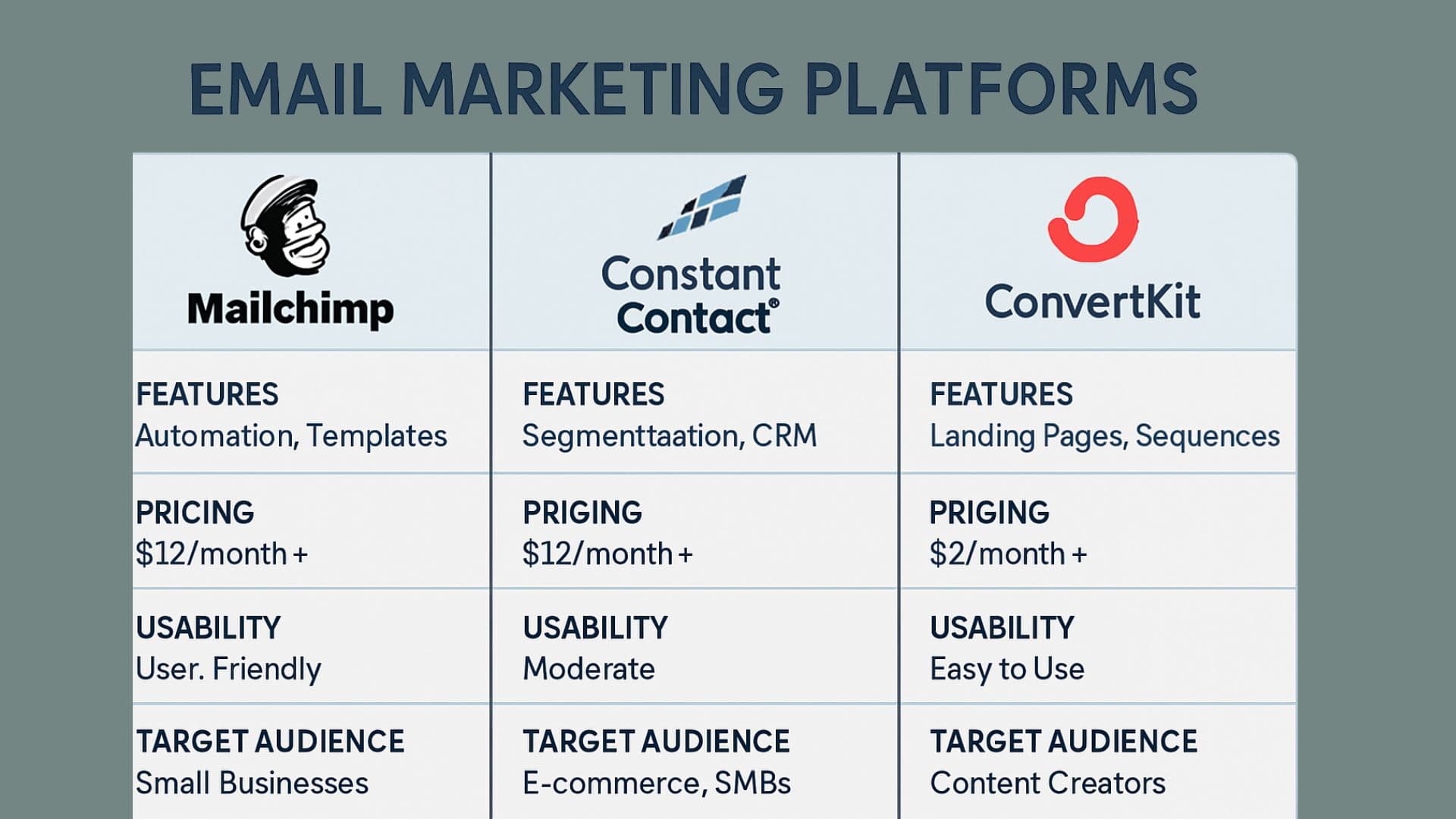
The integration with the broader Intuit ecosystem, specifically QuickBooks and TurboTax, has provided Mailchimp with a data advantage that standalone competitors like MailerLite or Constant Contact lack. For a growing business, the ability to sync financial data with marketing efforts allows for a literal "closed-loop" reporting system where teams can see exactly how an email campaign translates into bottom-line revenue.
Scalability that Matches Team Velocity
One of the most significant challenges for a growing team is "software out-growth." It is disruptive and costly to migrate an entire database and automation set to a new provider every time the subscriber count hits a new milestone. Mailchimp’s tiered structure is specifically designed to prevent this friction.
Tiered Functionality for Every Stage
Mailchimp offers four distinct tiers: Free, Essentials, Standard, and Premium. For a team that is scaling, the Standard Plan is often the sweet spot. It introduces the Customer Journey Builder, which uses logic-based branching to send emails based on user behavior. As the team grows into the Premium Plan, they gain access to advanced features like multivariate testing and unlimited seats, which are essential for larger marketing departments with specialized roles.
Managing Contact Growth Costs
While Mailchimp has been criticized in the past for its pricing structure as contact lists grow, the platform justifies this cost through audience management tools. Growing teams often accumulate "dead weight" in their lists—subscribers who haven't opened an email in years. Mailchimp’s built-in cleaning tools and "Predicted Likelihood to Purchase" segments allow teams to focus their budget only on the contacts most likely to convert, effectively lowering the cost-per-acquisition (CPA).
Advanced Automation Without the Technical Debt
Many "powerful" email platforms require a steep learning curve or knowledge of liquid syntax and custom coding to create complex automations. Mailchimp’s Customer Journey Builder democratizes this power.
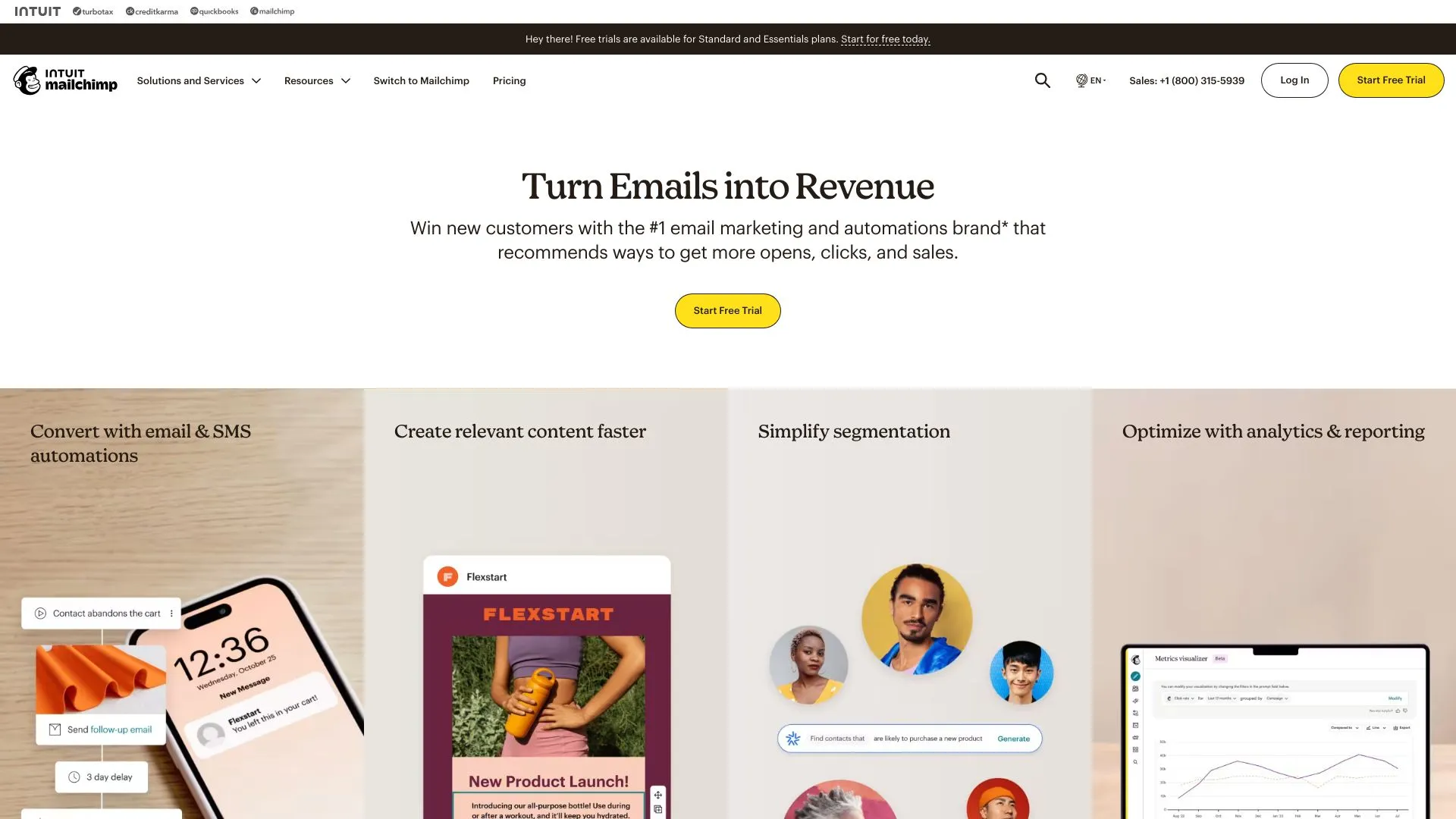
For a growing team, time is the most valuable resource. Mailchimp’s visual automation builder allows a marketing manager to set up a "Welcome Series," "Abandoned Cart Recovery," and "Post-Purchase Follow-up" in a single afternoon. These journeys can be triggered by specific API events, such as a user clicking a link in a specific campaign or a change in their CRM status.
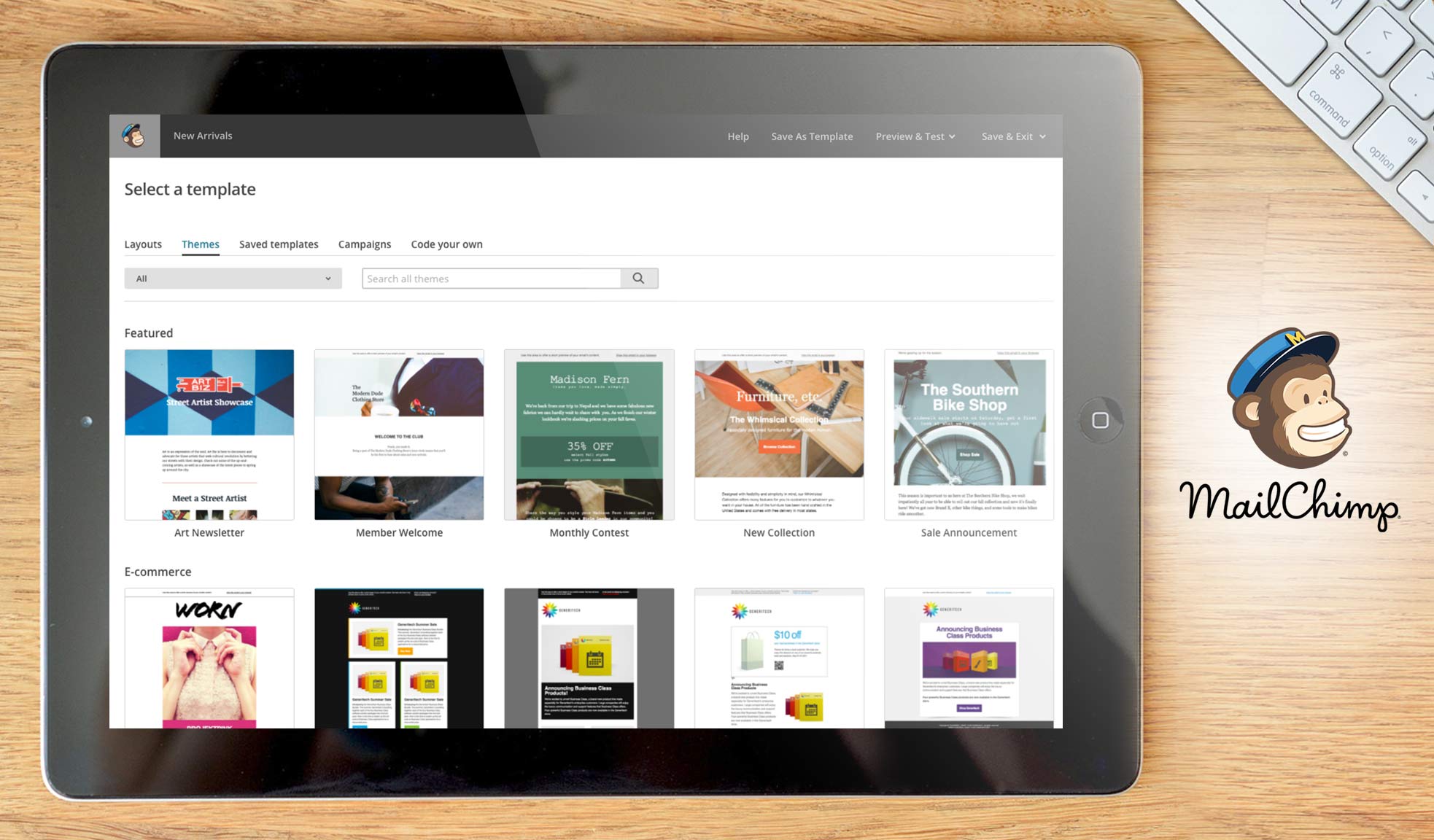
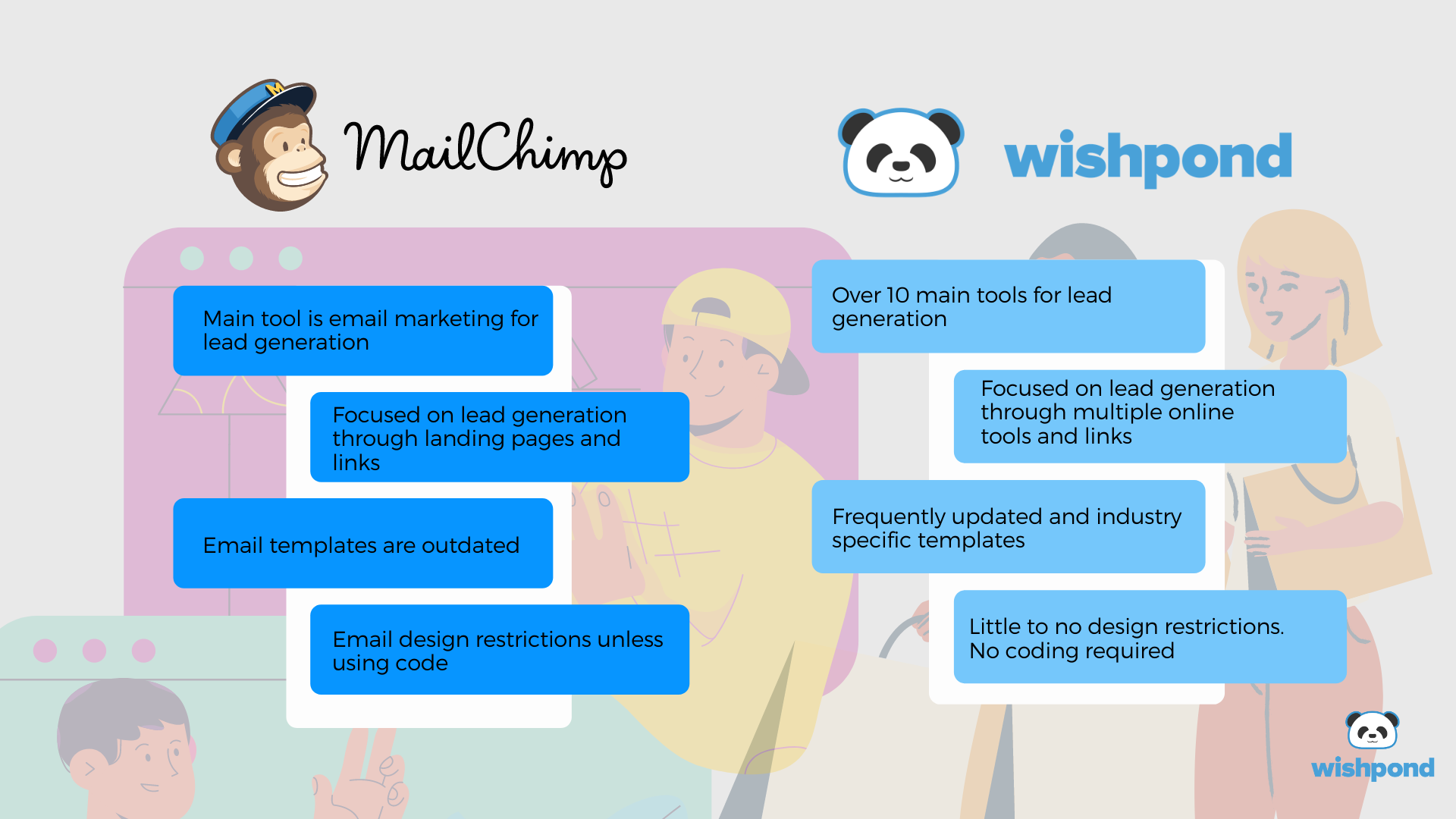
The platform also offers Pre-built Journeys. These are data-backed templates based on millions of successful campaigns across various industries. Instead of starting from scratch, a team can deploy a proven strategy and then tweak the specifics to fit their brand voice. This "plug-and-play" sophistication is why Mailchimp frequently beats more technical competitors like ActiveCampaign in team-wide adoption rates.
Predictive Analytics and AI: The Intuit Assist Advantage
As of 2026, artificial intelligence is no longer a luxury feature; it is the engine of effective marketing. Mailchimp has integrated Intuit Assist, a generative AI and predictive analytics tool, directly into its workflow. This is a game-changer for teams that do not have the budget for a dedicated data scientist.
Generative Content and Optimization
Intuit Assist doesn't just help write subject lines. It analyzes a brand’s previous high-performing content and suggests entire layouts, images, and copy blocks that align with the brand's established identity. Furthermore, the Content Optimizer provides real-time feedback on how a draft compares to industry benchmarks for readability and call-to-action (CTA) effectiveness.
Predictive Intelligence
Mailchimp’s AI goes beyond what happened in the past to predict what will happen next. It uses "lookalike" modeling to help growing teams find new customers who behave similarly to their best existing customers. For teams trying to scale their reach, this predictive power reduces the "guesswork" often associated with testing new audience segments.
Collaboration and Multi-User Management
Growth inevitably leads to more people involved in the creative and approval process. A major reason Mailchimp beats competitors like AWeber or GetResponse for teams is its robust multi-user permission system.
In a growing team, you might have a freelance designer, a junior copywriter, a marketing manager, and a CEO who wants final approval. Mailchimp allows for specific user roles:
- Owners and Admins: Full control over billing and account settings.
- Managers: Can manage audiences and create campaigns but cannot change billing.
- Authors: Can create and edit campaigns but cannot send them.
- Viewers: Can only see reports and analytics.
This hierarchy prevents accidental deletions or unapproved sends, which are common risks when multiple people share a single login—a common practice in lower-tier software. Additionally, the Comments feature within the campaign builder allows team members to leave feedback directly on a draft, streamlining the internal review process.
The Ecosystem Advantage: Integration Depth
A marketing tool is only as good as the data flowing into it. Mailchimp boasts over 300 integrations, ranging from e-commerce giants like Shopify and WooCommerce to niche productivity tools like Canva and Typeform.
| Feature Category | Mailchimp (Standard/Premium) | Most Mid-Market Competitors | Why It Matters for Growth |
|---|---|---|---|
| E-commerce Sync | Deep integration with real-time ROI tracking. | Often requires third-party tools (Zapier). | Directly links marketing spend to revenue. |
| AI Capabilities | Intuit Assist (Generative & Predictive). | Basic subject line generators. | Saves hours on content creation and segmentation. |
| CRM Functionality | Native Marketing CRM with behavioral tags. | Often just a flat list of names/emails. | Allows for hyper-personalization at scale. |
| Team Access | Up to unlimited seats with role-based permissions. | Often limited to 3-5 users per account. | Supports organizational expansion. |
| Multi-Channel | Integrated Social Ads, SMS, and Postcards. | Usually restricted to email only. | Provides a unified brand experience. |
For a growing team, the "App Directory" ensures that as you add new tools to your tech stack (e.g., a new helpdesk like Zendesk or a webinar platform like Zoom), Mailchimp can almost certainly talk to them. This prevents the creation of "data silos" where customer information is trapped in different platforms.
Handling the Complexity of Global Growth
When a team grows, it often expands into new geographic markets. This brings two major challenges: time zones and compliance.
Mailchimp’s Timewarp feature ensures that an email scheduled for 9:00 AM reaches the recipient at 9:00 AM in their local time, regardless of where they are in the world. For a global team, this is non-negotiable for maximizing open rates.
From a compliance perspective, Mailchimp has invested heavily in maintaining GDPR, CCPA, and anti-spam standard adherence. Their forms automatically include the necessary checkboxes and legal language required in different jurisdictions. For a growing team, running afoul of international privacy laws is a significant risk; Mailchimp effectively acts as a "compliance guardrail."
Addressing the Limitations
No software is perfect, and it is important for growing teams to understand where Mailchimp might not be the best fit. For teams that require high-volume cold outreach, Mailchimp is not the solution. Its Terms of Service strictly prohibit purchased lists and prioritize "opt-in" marketing to protect its sender reputation.
Additionally, while the interface is user-friendly, the sheer number of features can be overwhelming for a brand-new user. However, Mailchimp addresses this through its Mailchimp Academy, which provides free certification and training for team members to get up to speed quickly.
FAQs
Is Mailchimp too expensive for small teams?
Mailchimp offers a free tier for those just starting, but its value proposition is higher for "growing" teams. While the per-contact cost can be higher than budget competitors, the time saved through AI automation and the increased revenue from advanced segmentation usually results in a higher overall ROI.
Can Mailchimp handle SMS marketing as well?
Yes, as of 2026, Mailchimp has fully integrated SMS marketing into its Customer Journey Builder. This allows teams to create "omnichannel" experiences where a customer might receive an email if they don't click an SMS, or vice versa, all managed from a single dashboard.
How does Mailchimp compare to HubSpot?
HubSpot is a more comprehensive "Sales and Marketing" platform, but it often comes with a much higher price tag and a significantly steeper learning curve. Mailchimp is generally preferred by teams that want to focus on "Marketing-led growth" without the overhead of a full-scale sales CRM like HubSpot.
Is my data safe with Mailchimp?
Mailchimp employs industry-standard encryption and security protocols. Being part of Intuit, it adheres to the same stringent data privacy and security standards as QuickBooks, making it one of the most secure marketing platforms available for business data.
Does Mailchimp offer 24/7 support?
Paid plans include 24/7 email and chat support, while the Premium Plan provides priority phone support. This is crucial for growing teams that cannot afford downtime during a major product launch or seasonal sale.
Practical Recommendation for Growing Teams
If your team is currently feeling the limitations of a "basic" email tool—perhaps you find it difficult to segment your audience, or you are manually sending follow-up emails—the best next step is to audit your current list health.
Next Action: Sign up for a trial of the Mailchimp Standard Plan. Use the Customer Journey Builder to automate one high-impact sequence, such as a "Re-engagement Campaign" for users who haven't purchased in 90 days. Monitor the revenue attribution for 30 days to quantify the value of the platform's advanced logic before fully migrating your entire marketing operation.
Image Gallery