The Fastest Train in Europe: Operational Speeds, Infrastructure, and Future Outlook
Europe hosts some of the most advanced high-speed rail networks in the world, with commercial passenger trains routinely exceeding 300 kilometers per hour (km/h) across dedicated corridors. While top speeds vary by country, infrastruct...
Europe hosts some of the most advanced high-speed rail networks in the world, with commercial passenger trains routinely exceeding 300 kilometers per hour (km/h) across dedicated corridors. While top speeds vary by country, infrastructure limits, and rolling stock engineering, the title of the fastest train in regular commercial service belongs to operators in countries like Spain, France, and Italy, where high-speed rail forms the backbone of intercity transit.
Contents
Understanding High-Speed Rail Classifications in Europe
To evaluate what constitutes the fastest train in Europe, it is essential to look at the standardization metrics defined by international railway bodies. The European Union and the International Union of Railways (UIC) classify high-speed rail according to infrastructure types and operational velocities. Generally, a line is considered high-speed if it is newly built for speeds equal to or greater than 250 km/h, or if it is specially upgraded for speeds around 200 to 220 km/h.
However, operational speed—the actual speed passengers experience during a scheduled timetable—differs significantly from maximum design speed or absolute world records set during testing phases. While experimental trains like France's TGV POS have reached an astounding 574.8 km/h on a specialized test track, commercial passenger services are bound by safety regulations, signaling limitations, track wear, and energy efficiency parameters. Therefore, examining the fastest train in Europe requires separating promotional milestones from everyday commuter and intercity realities.
Furthermore, geographical topography plays a profound role in determining how fast a train can travel. Flat terrain, such as the plains of northern and southern Spain or the northern reaches of France, allows for long stretches of straight track where high speeds can be maintained for hours. Conversely, mountainous regions like Switzerland, Austria, and parts of Italy require sweeping curves, steep gradients, and numerous tunnels, which inherently restrict maximum velocities despite the presence of state-of-the-art rolling stock.
The Leading Contenders: Commercial Speed Champions
When analyzing commercial timetables across the continent, a few specific operators and train models consistently rank at the top of the velocity spectrum.
Spain's AVE and Ouigo/Iryo Networks (Renfe Class 103 and Alstom/Hitachi Fleets)
Spain boasts the largest high-speed rail network in Europe—known as the Alta Velocidad Española (AVE)—surpassing even France in total track kilometers. The standard operational speed on major trunk lines, such as the Madrid-Barcelona and Madrid-Seville corridors, reaches up to 300 km/h, with certain segments designed and cleared for 310 km/h (193 mph).
The Velaro E (Renfe Class 103), manufactured by Siemens, and the S-103 units are prime examples of this high-tier capability. Additionally, the entrance of open-access operators like Iryo (using Frecciarossa 1000 units) and SNCF's Ouigo has intensified competition, keeping commercial speeds at the absolute ceiling of European operational guidelines.
France's TGV (Train à Grande Vitesse)
France pioneered modern European high-speed rail with the launch of the TGV network in 1981. Today, high-speed LGV (Lignes à Grande Vitesse) lines accommodate trains running at commercial speeds of 320 km/h (199 mph) on sections of the LGV Est and LGV Sud-Est.
While the maximum scheduled operational speed of 320 km/h places French TGV services among the very fastest in commercial operation globally, the average point-to-point speed is sustained by robust power-to-weight ratios and dedicated overhead catenary systems designed to handle immense electrical loads at high velocities.
Italy's Frecciarossa 1000 and Italo
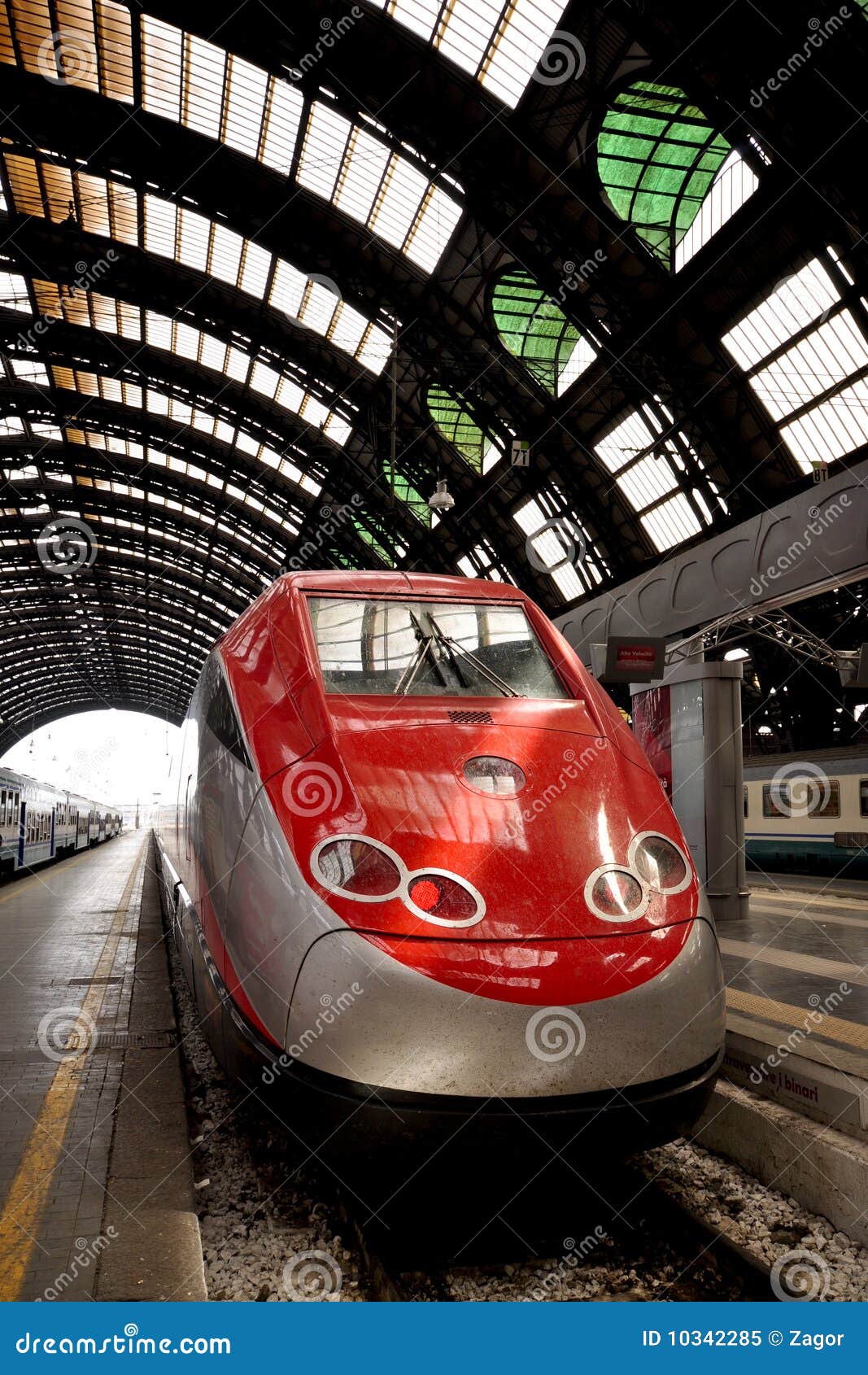
Italy's primary high-speed operator, Trenitalia, fields the Frecciarossa 1000 (ETR 400), operated in conjunction with private competitor NTV under the Italo brand. The Frecciarossa 1000 has a homologated maximum speed of 360 km/h, although current regulatory frameworks cap commercial operations at 300 km/h due to signaling constraints and tunnel aerodynamics. Nevertheless, its acceleration curves and technical design make it one of the most mechanically advanced high-speed units currently deployed in passenger service.
Comparative Overview of European High-Speed Rail Systems
The table below outlines the primary high-speed train networks in Europe, highlighting their maximum commercial speeds, typical operational ranges, and rolling stock models.
| Country / Operator | Train Model | Max Commercial Speed | Typical Infrastructure Type | Notable Corridors |
|---|---|---|---|---|
| France (SNCF) | TGV Duplex / Euroduplex | 320 km/h (199 mph) | Dedicated LGV Lines | Paris – Lyon, Paris – Strasbourg |
| Spain (Renfe / Iryo) | Velaro E (S-103) / ETR 1000 | 310 km/h (193 mph) | Dedicated AVE Lines | Madrid – Barcelona, Madrid – Valencia |
| Italy (Trenitalia / NTV) | Frecciarossa 1000 | 300 km/h (186 mph) | Direttissima & High-Speed Lines | Milan – Rome, Turin – Naples |
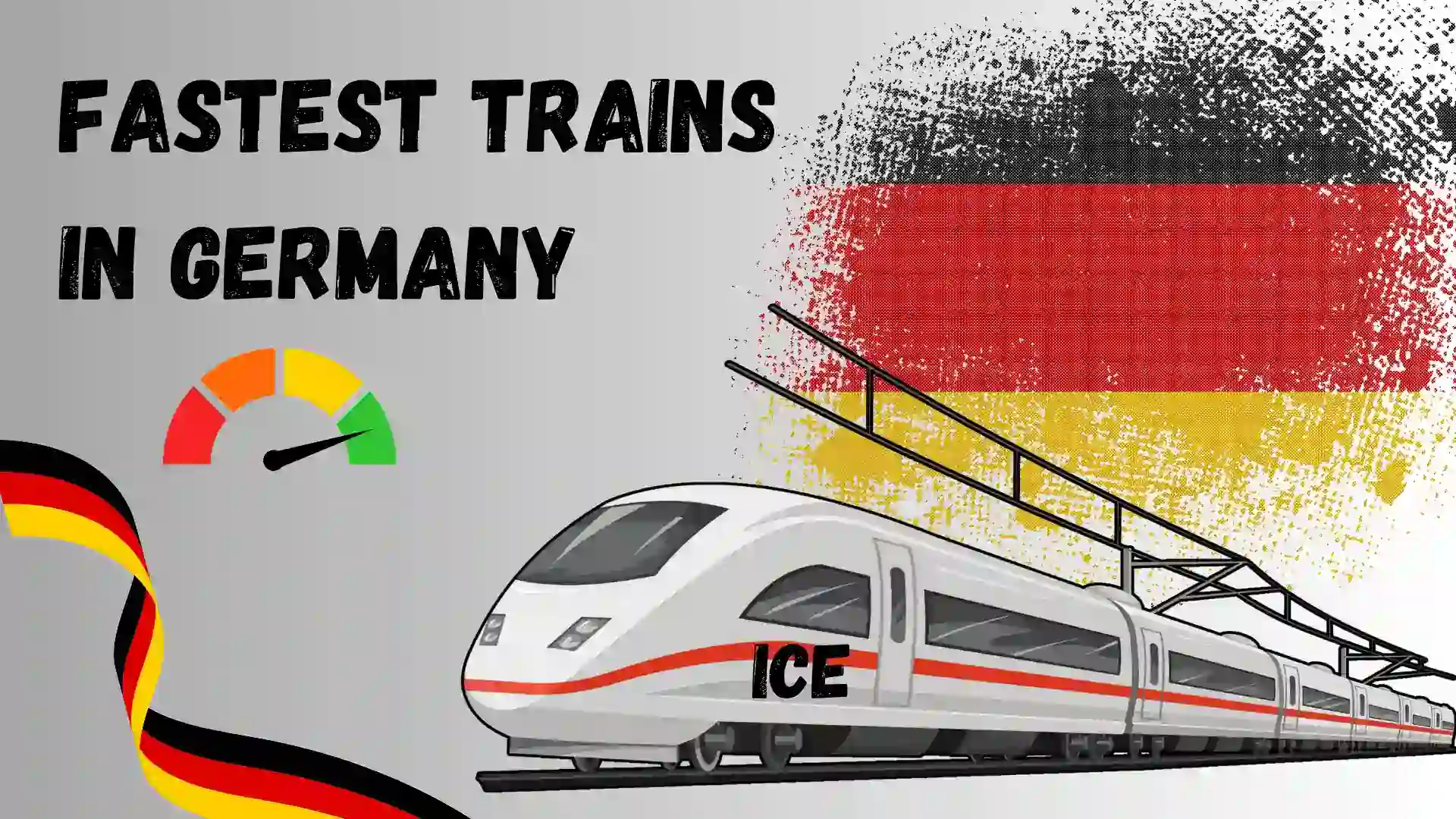
| Germany (Deutsche Bahn) | ICE 3 / ICE 4 | 300 km/h (186 mph) | Neubaustrecke (New Lines) | Cologne – Frankfurt, Munich – Berlin |
| UK / International (Eurostar) | Eurostar e320 / e300 | 300 km/h (186 mph) | High-Speed 1 & LGV | London – Paris, London – Brussels |
Technical and Engineering Challenges of Ultra-High-Speed Rail
Achieving and maintaining speeds above 300 km/h requires solving complex engineering problems across multiple disciplines, ranging from electrical power distribution to aerodynamic design.
Aerodynamics and Pressure Waves
When a train travels at 300 km/h or more, aerodynamic drag increases exponentially. To combat air resistance, modern high-speed trains feature heavily streamlined noses, smooth undercarriages, and sealed inter-car gangways. Furthermore, when these trains enter tunnels at high speeds, they create sudden pressure waves that can cause structural stress on the train and discomfort to passengers' ears. Engineers must design specialized pressure-sealing systems for the passenger cabins and construct wide-bore tunnels equipped with pressure-relief shafts.
Power Supply and Catenary Interaction
High-speed trains draw immense amounts of electrical energy from overhead wires (catenaries) via pantographs. At 300 km/h and above, maintaining continuous physical contact between the pantograph head and the overhead wire is exceptionally difficult. Mechanical vibrations, wind, and thermal expansion can cause the wire to oscillate, leading to arcing, power loss, and premature wear of both the wire and the pantograph carbon strips. European networks utilize advanced dynamic tensioning systems and specialized alloy wires to ensure a stable electrical supply.
Signaling and Safety Systems
At high velocities, human reaction times are insufficient to respond to traditional trackside signals. Consequently, Europe has heavily invested in the European Rail Traffic Management System (ERTMS) and its subset, the European Train Control System (ETCS). ETCS Level 2 and Level 3 utilize continuous digital radio communication (GSM-R moving toward FRMCS) to transmit movement authorities and speed limits directly to the train's cab, allowing automated train protection (ATP) systems to intervene immediately if a driver fails to decelerate.
Economic, Environmental, and Operational Factors
While speed is a primary marketing metric for railway operators, the economic and environmental realities of high-speed rail dictate how networks are planned and subsidized.
Energy Efficiency Compared to Aviation
High-speed rail is significantly more energy-efficient per passenger-kilometer than short-haul commercial aviation, provided the grid is powered by low-carbon energy sources such as nuclear, wind, or solar. However, energy consumption per train-kilometer scales steeply with speed due to aerodynamic drag. Operating a train at 320 km/h consumes substantially more electricity than operating it at 250 km/h, prompting some railway planners to optimize for average end-to-end journey times rather than peak instantaneous velocities.
Integration with Conventional Networks
A major operational bottleneck for high-speed trains is their eventual transition onto conventional, older rail networks as they approach major city centers. Because older city stations have limited space and share tracks with commuter and freight trains, high-speed services often must reduce speed well before reaching their final destination. Overcoming this requires massive infrastructure investments, such as underground through-stations (e.g., Madrid's Atocha-Chamartín tunnel connection) that allow trains to pass directly beneath metropolitan areas.
Frequently Asked Questions
Which specific train holds the absolute speed record in Europe?
The absolute speed record for a conventional wheeled high-speed train is held by France's modified TGV POS trainset, which reached 574.8 km/h (357.2 mph) on April 3, 2007, on the LGV Est line. However, this was a controlled test run with specialized engineering modifications, not a commercial service.
Why do trains in Europe not run faster than 320 km/h commercially?
While trains like the Frecciarossa 1000 can technically reach 360 km/h or more, commercial speeds are capped at 300–320 km/h due to several factors: rapid increases in energy consumption, accelerated track and rolling stock wear, noise pollution restrictions near populated areas, and the limitations of current signaling and aerodynamic tunnel physics.
How does Eurostar compare to domestic high-speed lines?
Eurostar operates high-speed services connecting London to Paris, Brussels, Amsterdam, and Cologne. Its primary fleet, the Eurostar e320, has a maximum commercial speed of 300 km/h (186 mph), matching the speeds of the French LGV and UK High-Speed 1 networks it utilizes.
Are high-speed trains affected by severe weather conditions?
Yes, extreme weather can impact high-speed rail operations. High winds can restrict pantograph operations or lower speed limits on exposed viaducts. Additionally, heavy snowfall and ice can accumulate on the undercarriage or interfere with track switches, though modern winterization techniques and heated track infrastructure help mitigate these disruptions.
Practical Next Steps for Rail Travelers
For travelers seeking to experience the fastest rail networks in Europe, booking tickets well in advance through official national railway portals (such as Renfe in Spain, SNCF Connect in France, or Trenitalia in Italy) ensures access to the best pricing tiers and seat reservations, which are often mandatory on high-speed services. When planning cross-border itineraries, allow sufficient connection time at major interchange hubs, as international border checks or signaling transitions can occasionally introduce minor schedule variations.
Image Gallery