How to Calculate Paycheck Hourly: A Step-by-Step Guide for 2026
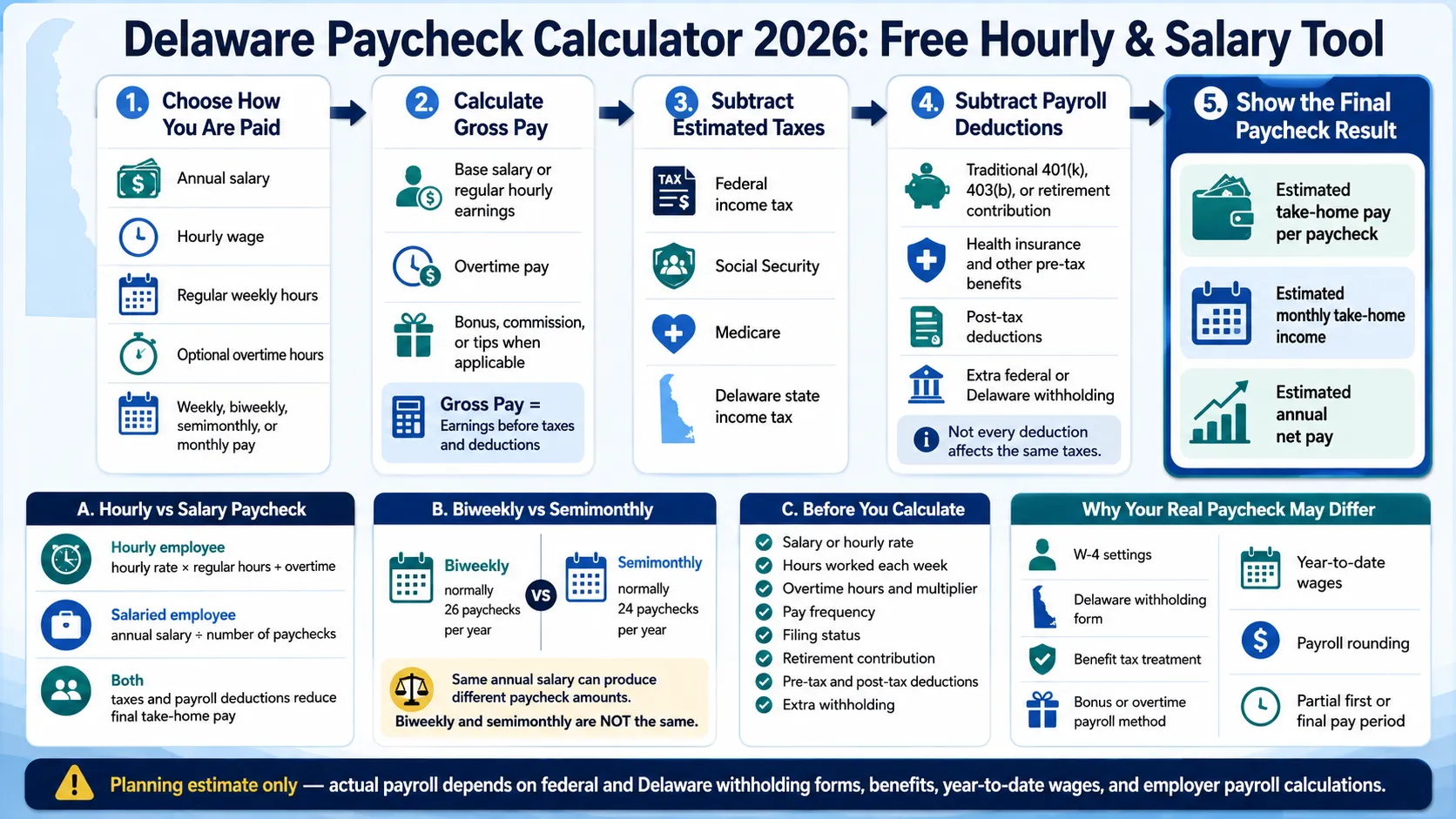
To calculate your hourly paycheck, first multiply your total hours worked by your hourly wage to determine your gross pay. From this amount, subtract pre-tax deductions (like 401k or health insurance), then deduct mandatory taxes inclu...
To calculate your hourly paycheck, first multiply your total hours worked by your hourly wage to determine your gross pay. From this amount, subtract pre-tax deductions (like 401k or health insurance), then deduct mandatory taxes including Federal Income Tax, Social Security (6.2%), Medicare (1.45%), and any applicable state or local taxes to arrive at your final net take-home pay.
Contents
Understanding the mechanics of your paycheck is essential for budgeting and financial planning. While payroll software automates this for most employers in 2026, knowing how to manually verify these figures ensures you are being paid correctly and helps you understand how changes in hours or withholdings impact your actual disposable income.
Step 1: Determining Your Gross Hourly Pay
The foundation of every paycheck is the gross pay—the total amount of money earned before any taxes or deductions are removed. For hourly employees, this calculation can be more complex than a simple "hours times rate" if overtime or shift differentials are involved.
Calculating Regular Hours
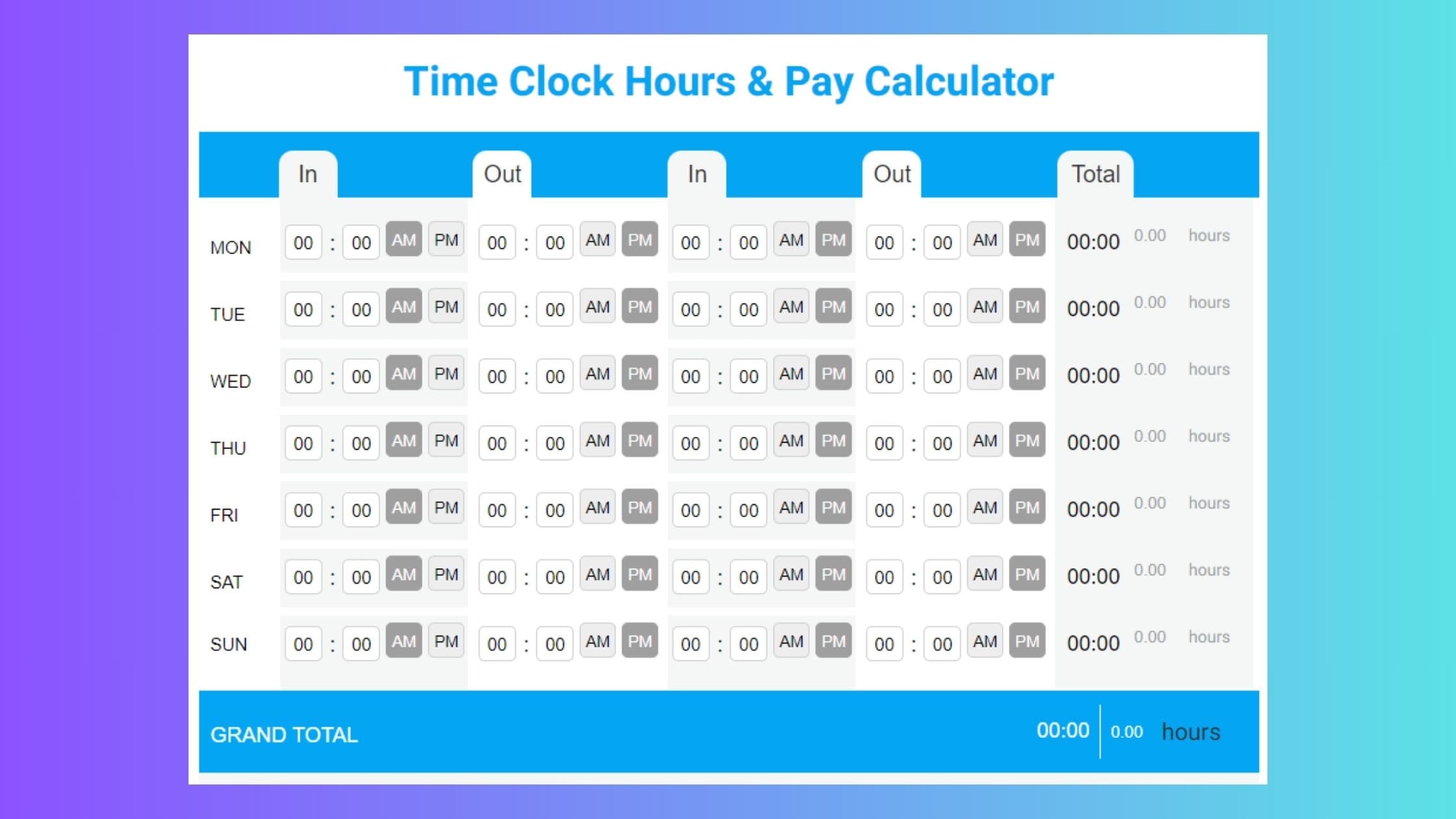
In a standard workweek, regular hours typically cap at 40. If you earn $25 per hour and work 40 hours, your regular gross pay is $1,000. It is vital to track your hours using a personal log or a time-tracking app to compare against your employer’s records, as manual entry errors remain a common source of payroll discrepancies.
Factoring in Overtime
Under the Fair Labor Standards Act (FLSA), non-exempt hourly workers must receive overtime pay for hours worked over 40 in a workweek at a rate not less than time and one-half (1.5x) their regular rate of pay.
For example, if you worked 45 hours at a $25 hourly rate:
- Regular Pay: 40 hours × $25 = $1,000
- Overtime Pay: 5 hours × ($25 × 1.5) = $187.50
- Total Gross Pay: $1,187.50
Additional Earnings
Gross pay also includes other forms of compensation. If you receive a shift differential (extra pay for working nights or weekends), bonuses, or commissions, these must be added to your regular earnings before moving to the deduction phase. For tipped employees, the calculation must ensure that the hourly wage plus tips equals at least the federal or state minimum wage.
Step 2: Subtracting Pre-Tax Deductions
Once you have your gross pay, the next step is to subtract pre-tax deductions. These are voluntary contributions that reduce your taxable income, meaning you pay federal and state income taxes on a smaller portion of your earnings.
Retirement Contributions
If you contribute to a traditional 401(k) or 403(b), these funds are taken out before taxes are calculated. In 2026, many employees utilize these accounts not only for retirement planning but also as a primary strategy for reducing their current-year tax liability.
Health and Welfare Benefits
Premiums for medical, dental, and vision insurance are typically deducted on a pre-tax basis under a Section 125 "cafeteria plan." Additionally, contributions to a Health Savings Account (HSA) or a Flexible Spending Account (FSA) are deducted here.
Example Adjustment: If your gross pay is $1,187.50 and you contribute 5% to your 401(k) ($59.38) and pay $50 for health insurance, your "Taxable Gross Pay" becomes $1,078.12.
Step 3: Calculating Mandatory Tax Withholdings
This is the most complex part of the calculation. In 2026, the government requires several types of withholdings based on federal, state, and local laws.
Federal Income Tax (FIT)
Federal withholding is determined by the information you provided on your IRS Form W-4. This form accounts for your filing status (Single, Married Filing Jointly, Head of Household), the number of dependents, and other income. The IRS uses a progressive tax bracket system, meaning different portions of your income are taxed at increasing rates.
To estimate this manually, you would refer to IRS Publication 15 (Circular E), which provides the percentage method tables for the current year.
FICA Taxes (Social Security and Medicare)
The Federal Insurance Contributions Act (FICA) consists of two parts that are generally fixed percentages:
- Social Security: 6.2% of your gross pay, up to the annual wage base limit. For 2026, the Social Security Administration sets a maximum taxable earnings limit (typically adjusted annually for inflation).
- Medicare: 1.45% of all gross pay. There is an additional 0.9% Medicare tax for individuals earning over $200,000.
Unlike federal income tax, FICA taxes are "flat" up to the cap and do not change based on your W-4 filing status.
State and Local Taxes
Depending on your location, you may also owe state income tax and occasionally local or municipal taxes. States like Florida, Texas, and Washington do not have state income tax, while states like California and New York have progressive tiers similar to the federal system. You should consult your state's Department of Revenue for specific 2026 withholding tables.
Step 4: Accounting for Post-Tax Deductions
Post-tax deductions are taken out after all taxes have been calculated and subtracted. These do not reduce your taxable income.
Common post-tax deductions include:
- Roth 401(k) Contributions: Unlike traditional 401(k)s, these are funded with after-tax dollars.
- Garnishments: Court-ordered deductions for child support, alimony, or unpaid debts.
- Union Dues: Fees paid for labor organization membership.
- Life Insurance: Supplemental life insurance policies beyond what the employer provides for free.
Step 5: The Final Calculation (Net Pay)
The final figure on your paycheck is your net pay. The formula summarizes as follows:
Gross Pay - Pre-Tax Deductions - Mandatory Taxes - Post-Tax Deductions = Net Pay
2026 Hourly Pay Comparison Table
The following table provides an estimate of weekly take-home pay based on a 40-hour workweek, assuming a standard deduction for a single filer with no significant pre-tax benefits. Note: These are estimates and will vary by state.
| Hourly Rate | Weekly Gross Pay | Estimated FICA (7.65%) | Estimated Fed Tax (10-12%) | Estimated Net Pay (Weekly) |
|---|---|---|---|---|
| $15.00 | $600.00 | $45.90 | $42.00 | $512.10 |
| $20.00 | $800.00 | $61.20 | $68.00 | $670.80 |
| $25.00 | $1,000.00 | $76.50 | $95.00 | $828.50 |
| $35.00 | $1,400.00 | $107.10 | $165.00 | $1,127.90 |
| $50.00 | $2,000.00 | $153.00 | $290.00 | $1,557.00 |
Common Mistakes When Calculating Hourly Pay
When manual calculations don't match your pay stub, the error often lies in one of the following areas:
1. Miscounting Hours
Always verify that your "hours worked" matches the period on the stub. Many employers pay in arrears (e.g., the check you receive on Friday is for work done the previous week). Ensure you aren't comparing this week's hours to last week's pay.
2. Holiday Pay and PTO
If you took time off, ensure the hours are coded correctly as Paid Time Off (PTO) or Sick Time. Some employers pay a different rate for holidays, or they may not count PTO hours toward the 40-hour threshold required for overtime.
3. Filing Status Discrepancies
If you recently married, divorced, or had a child, your W-4 might be outdated. In 2026, even minor changes in tax law or standard deductions can mean your old withholding settings are no longer optimal, leading to either a smaller paycheck or a surprise bill at tax time.
4. De Minimis Fringes and Taxable Benefits
Sometimes, employers add "imputed income" to your paycheck. For example, if your employer provides more than $50,000 in group term life insurance, the value of the excess coverage is considered a taxable benefit. This can slightly increase your tax withholding even though your cash gross pay remains the same.
Frequently Asked Questions
Does overtime put me in a higher tax bracket?
Only the money earned within the higher bracket is taxed at the higher rate. In the U.S. progressive tax system, earning more through overtime will never result in you taking home less total money than you would have without the overtime, though a larger percentage of those specific overtime dollars may be withheld for taxes.
How do I calculate my paycheck if I am a tipped worker?
As a tipped employee, your employer may take a "tip credit." This means they pay you a lower direct hourly wage (at least $2.13 federally, though much higher in many states in 2026) as long as your tips make up the difference to reach the minimum wage. Your paycheck will show your hourly wage minus taxes on both the hourly wage and the tips you reported.
What is the Social Security wage base for 2026?
The Social Security wage base is the maximum amount of earnings subject to the 6.2% Social Security tax. While the exact figure is adjusted annually by the Social Security Administration based on national average wage indices, it typically increases every year. Once you earn above this limit in a calendar year, your net paycheck will increase because the 6.2% deduction stops.
Why is my take-home pay different every period?
If your hours are consistent, check for "floating" deductions. Some insurance premiums are deducted only twice a month. If you are paid bi-weekly, you will have two months a year with three paychecks; in those "magic" months, certain monthly deductions might not be taken from the third check, resulting in a higher net amount.
Final Recommendation
To ensure your hourly paycheck is always accurate, maintain a digital folder of your pay stubs and cross-reference them with your own time logs. If you notice a persistent discrepancy, contact your HR or payroll department immediately. For those looking to project their income for the remainder of 2026, using the IRS Tax Withholding Estimator is the most reliable way to adjust your W-4 and ensure your take-home pay aligns with your annual tax obligations.
Image Gallery