Understanding the Distinction: Why Net Profit and Net Income Are Not Identical
While often used interchangeably in casual boardroom conversation or informal financial reporting, net profit and net income are not identical terms in the strict context of financial accounting and business valuation. Although both re...
While often used interchangeably in casual boardroom conversation or informal financial reporting, net profit and net income are not identical terms in the strict context of financial accounting and business valuation. Although both represent the bottom line of a business’s operational performance, they often diverge based on the scope of the calculation, the accounting standards applied (such as GAAP or IFRS), and whether the organization is evaluating a specific product segment or the enterprise as a whole.
Contents
Defining the Core Concepts
To understand why these terms are distinct, one must look at how they originate on a financial statement. Net income is the formal, GAAP-compliant figure reported at the very bottom of an Income Statement. It represents the total profit of an entire entity after all revenues, gains, expenses, and losses—including operating costs, interest, taxes, and extraordinary items—have been accounted for. It is the definitive "bottom line" for the corporation as a whole.
Net profit, conversely, is a broader term that describes the profitability of a specific segment, project, or department. While net income is a rigid accounting standard, net profit is frequently used as a management tool to analyze efficiency. A manager might refer to the "net profit" of a single product line, which involves allocating specific indirect costs to that product to see if it is viable in isolation. Because net profit is often used in internal management accounting, it may exclude certain head-office expenses or corporate overheads that are mandatory in the calculation of net income.
The Scope of Calculation
The primary reason these terms are not identical lies in the "scope of entity" and the "breadth of expenses."
Total Entity vs. Segmented Analysis
Net income is fundamentally an entity-wide metric. It is the result of the total organizational activity. When shareholders or the SEC review a 10-K, they are looking for net income. Net profit is frequently utilized for internal performance monitoring. If a company operates three distinct divisions, the leadership team will calculate the net profit of each division to decide where to allocate capital. However, these segment-level net profits do not always equal the total net income when summed, as central corporate costs—such as legal department salaries or enterprise software licenses—might be left out of the segmental calculation.
Treatment of Extraordinary Items
In many corporate contexts, "net profit" is treated as the profit from ordinary activities, while "net income" includes the impact of extraordinary or non-recurring events, such as the sale of a significant business unit, litigation settlements, or restructuring charges. Therefore, a company might report a healthy net profit from its core operations but show a significantly lower or even negative net income due to these "below-the-line" adjustments.
Comparative Framework: Key Differences
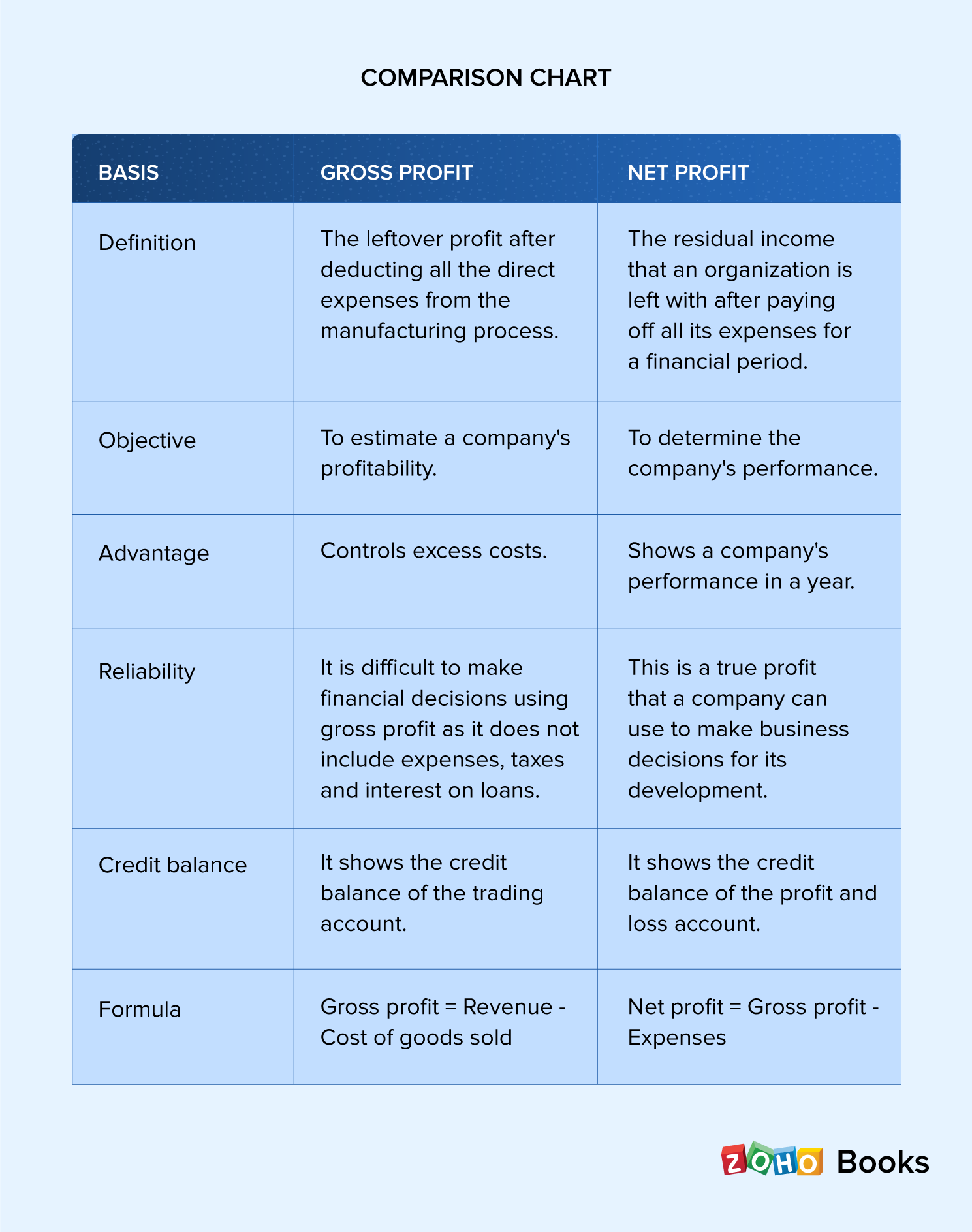
The following table summarizes the structural differences between these two metrics to assist in financial analysis.
| Feature | Net Income | Net Profit (Segment/Operational) |
|---|---|---|
| Primary Audience | External: Shareholders, IRS, Banks | Internal: Managers, Stakeholders |
| Accounting Basis | Strict GAAP/IFRS Standards | Flexible (Internal Management Rules) |
| Entity Scope | Entire Corporation | Specific Department, Project, or Unit |
| Inclusion of Overhead | Includes all corporate allocations | May exclude non-attributable overhead |
| Legal Status | Official reporting requirement | Internal analytical figure |
Why the Distinction Matters for Business Owners
For a business owner or executive, failing to differentiate between these two terms can lead to dangerous strategic errors. If you mistake the "net profit" of a high-performing product line for the "net income" of the entire business, you may inadvertently ignore the massive weight of corporate overhead or interest expenses that are currently masking the true performance of the total company.
1. Operational Efficiency
By isolating the net profit of specific business segments, you can identify which areas of your company are actually subsidizing others. If a division is showing a positive net profit but the company is showing a negative net income, the aggregate overhead costs are likely too high to be supported by the current margin structure.
2. Tax and Compliance Requirements
Financial regulators require net income to be calculated using rigorous methods to prevent the obfuscation of losses. Because net profit is often a management construct, it cannot be used for tax filings or bank loan compliance. Attempting to report "net profit" as a proxy for "net income" to a financial institution can lead to allegations of misrepresentation, as the two calculations serve fundamentally different reporting purposes.
3. Investor Communication
When speaking with investors, precision is essential. Using "net profit" when you actually mean "net income" makes the speaker appear technically illiterate. Investors expect management to clearly distinguish between operational performance (often summarized as net profit before corporate allocations) and the final financial position of the firm (net income).
Common Pitfalls in Financial Reporting
A frequent error involves the "double-counting" or "exclusion" of indirect costs. When companies grow, they often develop centralized departments—HR, IT, and Finance—that do not directly generate revenue. If these departments are not properly allocated, the sum of the "net profits" of individual business units will appear much higher than the actual "net income" of the firm.
Another issue arises in the timing of recognition. Under accrual accounting, net income is subject to strict rules regarding when revenue is recognized and when expenses are matched. Management-led "net profit" reports sometimes use simplified models that may not follow these strict matching principles, leading to a disconnect between the monthly management report and the quarterly financial statement.
Essential Next Steps for Financial Clarity
To ensure your financial reporting is accurate and useful, follow these practical steps:
- Establish Standard Definitions: Define exactly what your internal "net profit" includes and excludes. Ensure that your management team understands that this figure is an internal analytical tool, not a public financial metric.
- Reconciliation: Periodically reconcile your segment-level net profit reports with the official net income reported on your financial statements. If there is a large, unexplained gap, investigate the allocation of overhead costs.
- Professional Oversight: Consult with a Certified Public Accountant (CPA) or a qualified financial controller to ensure your reporting processes align with relevant financial standards. This is particularly important for entities requiring audits or those seeking external financing.
Disclaimer: This article is for informational purposes only and does not constitute professional accounting, legal, or tax advice. Financial regulations vary by jurisdiction. Always consult with a qualified professional regarding your specific financial situation.
Frequently Asked Questions
Is net profit ever the same as net income?
In a very small, single-product business with no debt or complex overhead, the figures may align. However, as soon as a business adds departments, carries debt, or deals with non-recurring expenses, the two figures diverge due to the inclusion or exclusion of overhead and extraordinary items.
Should I use net profit or net income for tax purposes?
You must use net income, as reported under GAAP or the specific tax accounting rules of your jurisdiction (such as the Internal Revenue Code in the United States). Net profit, as an internal management metric, is generally not accepted for tax or regulatory reporting.
How do non-operating expenses affect the two?
Non-operating expenses, such as interest payments on debt or losses from the sale of assets, are typically deducted to arrive at net income. They are often excluded from segment-level "net profit" to show the operational strength of that specific segment, which is why the two figures often differ during periods of high debt or corporate restructuring.
Why do banks focus on net income?
Banks prioritize net income because it represents the actual surplus available to cover debt service after all obligations—including overhead, taxes, and interest—have been met. They require an standardized figure that allows for an objective comparison of different companies.
Can I track my own net profit without a professional accountant?
You can certainly track internal profitability using spreadsheets, but you should not assume those calculations meet the requirements for official financial reporting. Using a professional accountant ensures that your internal metrics are grounded in sound accounting logic and that your formal financial statements are compliant.
Image Gallery