Kerala Muslim Population Size: 2026 Demographic Insights and Trends
In 2026, the Muslim population in Kerala is estimated to be approximately 9.9 million to 10.2 million, representing roughly 27.5% to 28% of the state's total projected population of 36 million. This reflects a steady percentage increas...
In 2026, the Muslim population in Kerala is estimated to be approximately 9.9 million to 10.2 million, representing roughly 27.5% to 28% of the state's total projected population of 36 million. This reflects a steady percentage increase from the 26.56% recorded in the 2011 Census, driven by regional fertility variations and migration patterns.
Contents
Historical Trajectory of Muslim Demographics in Kerala
To understand the current population size of Muslims in Kerala, one must look at the longitudinal data provided by the decennial census of India. The Muslim community in Kerala, primarily known as Mappilas, has a history rooted in ancient trade relations with the Arabian Peninsula. Unlike many other parts of India, the growth of the Muslim population in Kerala has been characterized by social integration and a distinct linguistic identity (Malayalam).
In the 1951 Census, the first following India's independence, Muslims accounted for roughly 17.5% of Kerala's population. Over the subsequent decades, this share has grown consistently. By 1991, the figure reached 23.3%, and by 2001, it was 24.7%. The 2011 Census was a landmark, recording the Muslim population at 8,873,472 out of a total state population of 33,406,061, equating to 26.56%.
The growth observed between 2011 and 2026 is not merely a result of high birth rates—which are actually declining across all communities in Kerala—but rather a "demographic transition" where the decline in birth rates among Muslims has been slower than that of the Hindu and Christian communities. This lag creates a relative increase in the total population share even as the absolute growth rate for the community slows down.
2026 Estimates: Breaking Down the Numbers
As of 2026, the absence of a finalized 2021 Census (which was delayed due to global and domestic administrative factors) requires demographers to rely on projections from the Registrar General and Census Commissioner of India, alongside data from the National Family Health Survey (NFHS-5 and NFHS-6).
The total population of Kerala in 2026 is projected to be nearly 36 million. Based on the compound annual growth rate (CAGR) observed in previous decades and the specific Total Fertility Rates (TFR) recorded in the 2020s, the Muslim community is the only major religious group in Kerala that remains near or slightly above the replacement level of fertility (2.1), while the Hindu and Christian communities have fallen significantly below it (approx. 1.4 to 1.6).
Projected Numerical Growth
- 2011 Census: 8.87 million (Official)
- 2021 Estimate: ~9.5 million (Projected)
- 2026 Estimate: ~10.1 million (Current Projection)
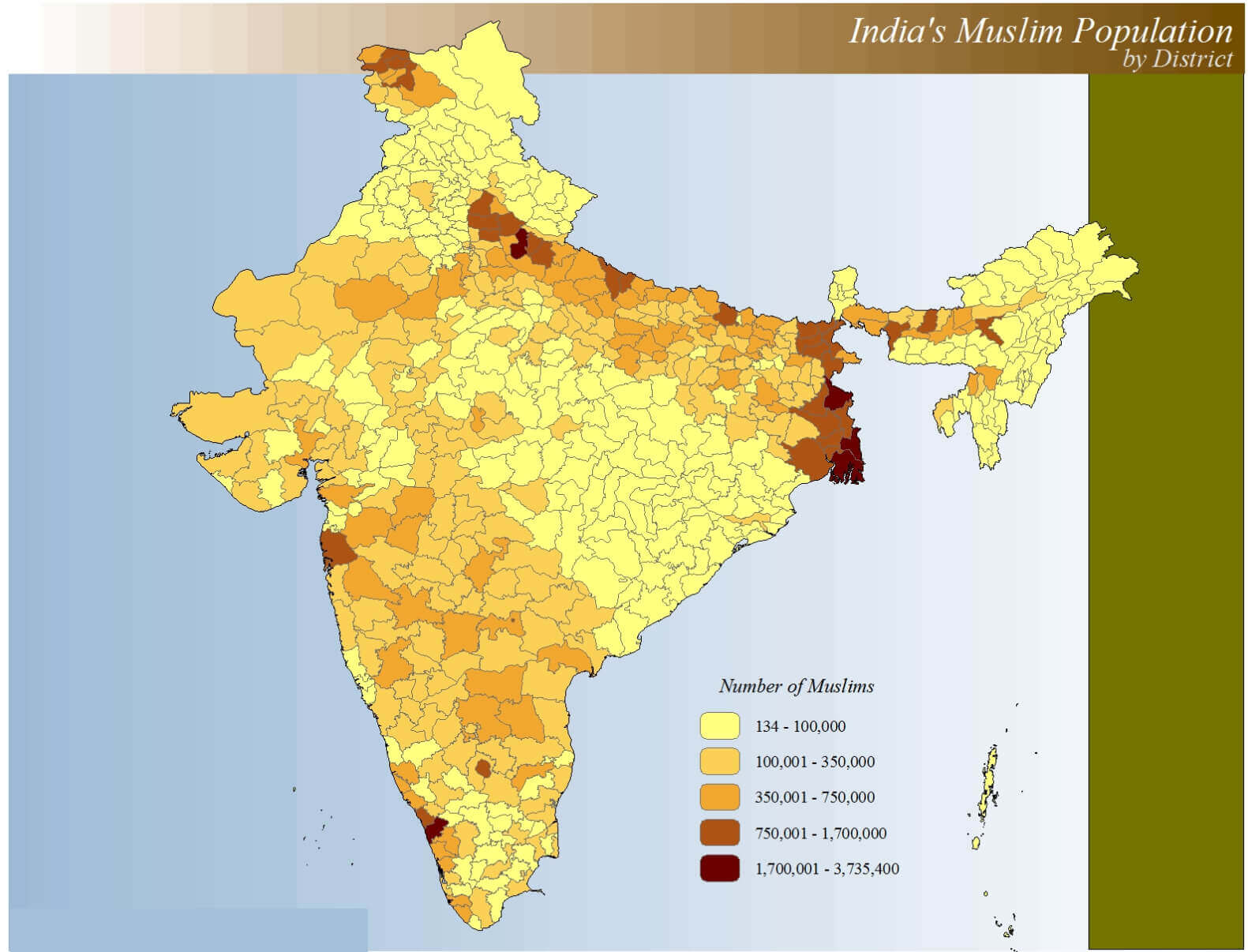
This growth is most visible in the northern districts, often referred to as the Malabar region, where the Muslim community has its highest density.
Geographic Distribution: The Malabar Concentration
The Muslim population in Kerala is not evenly distributed. There is a heavy concentration in the northern districts, which historically formed part of the Malabar District under British rule. In contrast, the southern districts of Travancore and the central Cochin region have significantly lower percentages of Muslims.
The Dominance of Malappuram
Malappuram district remains the heart of the Muslim community in Kerala. According to the 2011 Census, Muslims constituted over 70% of the district's population. In 2026, this concentration remains stable, with Malappuram being the most populous district in the state. The demographic weight of this single district significantly influences the statewide percentage.
District-Level Estimated Distribution (2026 Projections)
The following table provides an estimated breakdown of the Muslim population percentage across key districts based on historical trends and 2026 projections.
| District | Estimated Muslim % (2026) | Primary Concentration Areas |
|---|---|---|
| Malappuram | 71.5% | Ponnani, Manjeri, Tirur |
| Kozhikode | 40.2% | Kozhikode City, Vadakara |
| Kasaragod | 38.1% | Kasaragod Town, Hosdurg |
| Kannur | 30.5% | Thalassery, Kannur City |
| Wayanad | 29.8% | Kalpetta, Mananthavady |
| Palakkad | 29.5% | Mannarkkad, Ottapalam |
| Ernakulam | 16.2% | Aluva, Perumbavoor |
| Thiruvananthapuram | 14.1% | Vizhinjam, Beemapally |
| Kollam | 19.8% | Karunagappally, Kollam City |
Factors Influencing Demographic Shifts
Several socio-economic and biological factors contribute to the current size and growth rate of the Muslim population in Kerala as of 2026.
1. Total Fertility Rate (TFR)
Kerala is famous for its "demographic transition," being the first state in India to reach sub-replacement fertility levels. However, this transition happened at different speeds for different communities. According to the National Family Health Survey (NFHS-5), the TFR for Muslims in Kerala was approximately 2.25, compared to 1.5 for Hindus and 1.6 for Christians. While the Muslim TFR is also declining, the gap between the communities results in a gradual shift in the overall population share.
2. Improvements in Healthcare and Life Expectancy
The Muslim community in Kerala has seen significant improvements in infant mortality rates and maternal health over the last two decades. High levels of institutional deliveries and immunization in districts like Malappuram have led to higher survival rates, contributing to steady natural population growth.
3. The "Gulf" Migration Impact
The migration of Kerala Muslims to Gulf Cooperation Council (GCC) countries (Saudi Arabia, UAE, Qatar, etc.) has profound demographic implications. While the migrants themselves remain Indian citizens and are counted in the census, the economic remittances they send back have significantly improved the socio-economic status of the community. Wealthier families tend to have better access to healthcare, though historically, higher income often correlates with lower birth rates—a trend that is beginning to manifest in the younger, educated Muslim middle class of 2026.
Socio-Economic Profile and Educational Evolution
In 2026, the narrative surrounding the Kerala Muslim population has shifted from purely numerical growth to socio-economic development. For decades, the community was viewed as educationally backward compared to the Syrian Christians or upper-caste Hindus of the state. However, the last 15 years have seen a massive "educational revolution" within the community.
Higher Education Trends
The establishment of the Aligarh Muslim University (AMU) off-campus centre in Malappuram and the proliferation of self-financing professional colleges by Muslim educational trusts (such as the MEA and MES) have drastically increased the number of Muslim graduates. By 2026, the gap in primary and secondary education enrollment between Muslims and other communities has virtually closed.
Economic Status
The community has a strong presence in the retail, construction, and jewelry sectors. The Malabar region has transformed into a commercial hub, with cities like Kozhikode and Perinthalmanna seeing massive infrastructure development fueled by community-led enterprises. This economic stability supports a growing population that is increasingly urbanized.
Comparative Analysis with Other Communities
In the broader context of Kerala's demographics, the Muslim population is the only major group showing a positive percentage growth trend.
- Hindu Population: Estimated to have declined from 54.7% in 2011 to approximately 52% in 2026. This is largely due to very low TFR and significant out-migration to other Indian states and abroad.
- Christian Population: Estimated to have declined from 18.4% in 2011 to roughly 17% in 2026. The Christian community in Kerala has the lowest birth rates and the highest rates of permanent emigration to Western nations (Europe, Canada, Australia).
As a result, the Muslim community's role in Kerala’s political and social fabric has expanded. The Indian Union Muslim League (IUML) and other community organizations play a pivotal role in the state's coalition politics, reflecting the community’s demographic weight.
FAQs about the Kerala Muslim Population
Which district in Kerala has the largest Muslim population?
As of 2026, Malappuram remains the district with the largest Muslim population, both in terms of absolute numbers and percentage (over 70%). It is also the most populous district in the entire state of Kerala.
Is the Muslim population in Kerala increasing or decreasing?
The Muslim population is increasing in absolute numbers and as a percentage of the total population. However, the rate of growth (the decadal growth rate) is actually decreasing as the community follows the statewide trend toward smaller family sizes and higher age at marriage.
How does Kerala's Muslim population share compare to the national average?
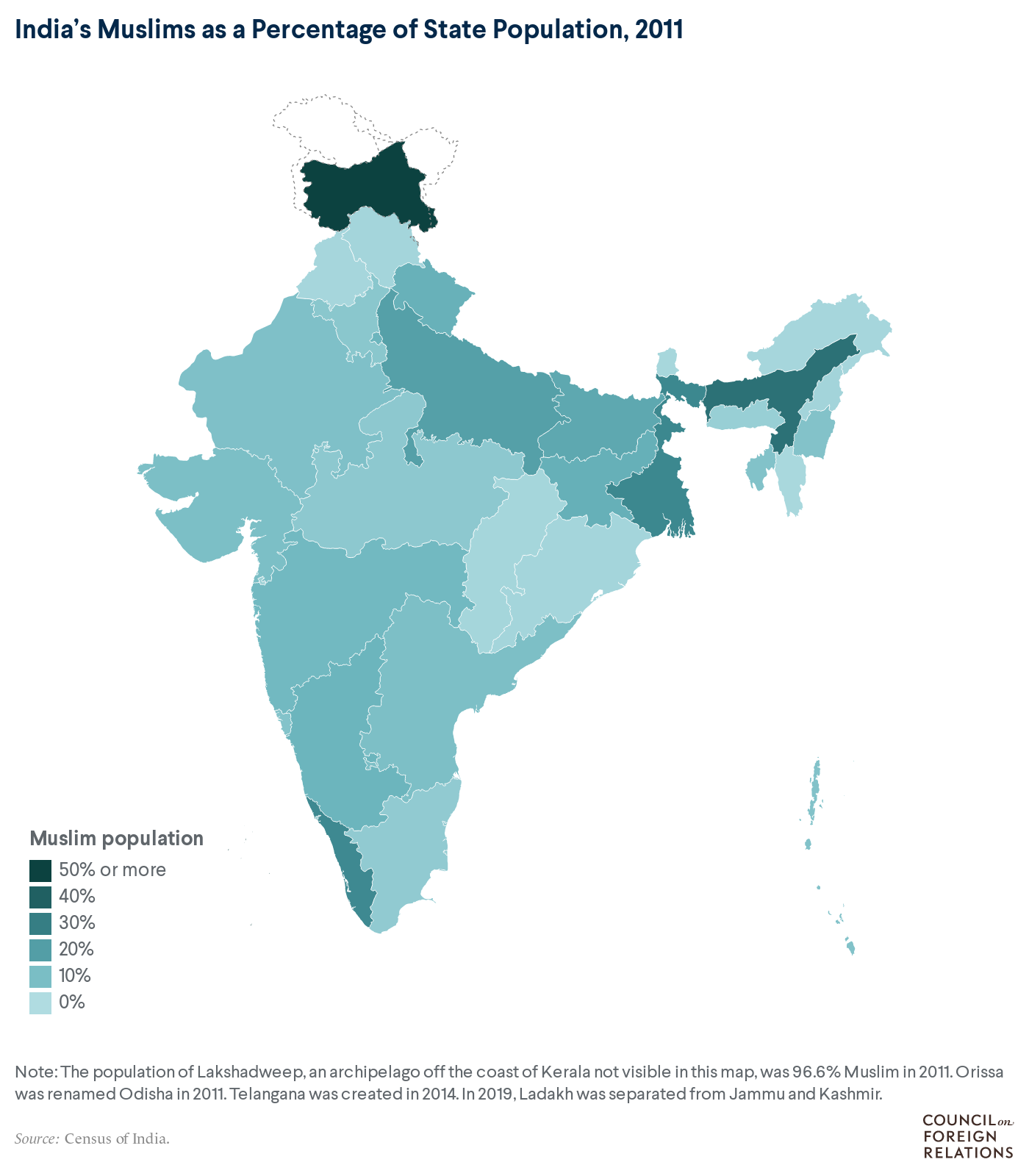
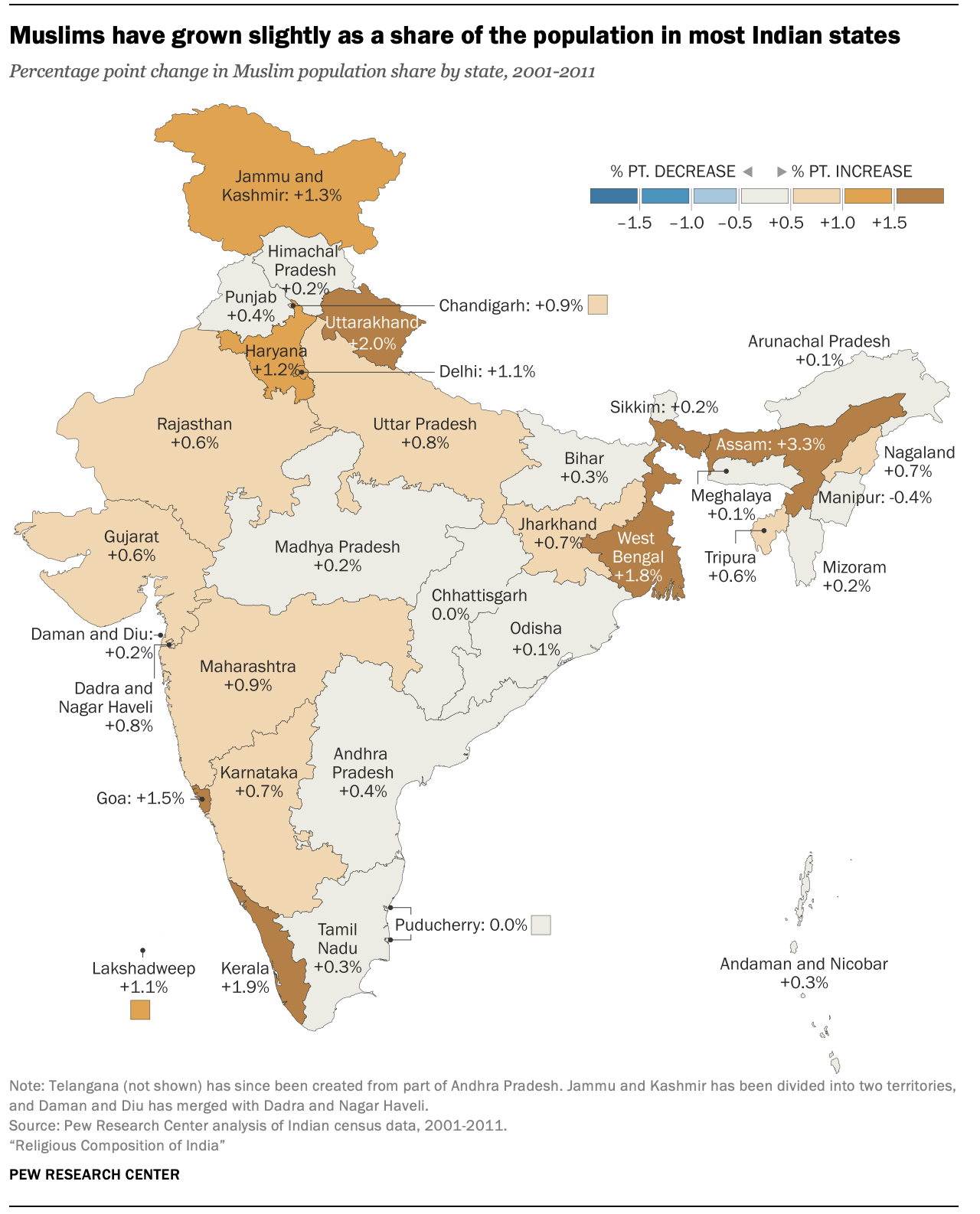
Kerala’s Muslim population share (approx. 27.5%) is significantly higher than the Indian national average, which was 14.2% in the 2011 Census and is estimated to be around 15-16% in 2026. Kerala has one of the highest concentrations of Muslims among Indian states, surpassed only by Jammu & Kashmir and Assam.
What is the primary language of Muslims in Kerala?
Unlike Muslims in North India who often speak Urdu, the Muslims of Kerala (Mappilas) primarily speak Malayalam. In some northern border areas like Kasaragod, there is also a significant population that speaks Beary or Tulu, but Malayalam remains the dominant linguistic and cultural identifier.
What was the Muslim population in the 2011 Census?
The official 2011 Census recorded 8,873,472 Muslims in Kerala, which was 26.56% of the state's population at that time.
Practical Recommendations for Researchers
For those seeking to utilize Kerala's demographic data for academic or policy purposes in 2026, it is essential to look beyond raw numbers.
- Consult NFHS-6 Reports: For the most accurate current fertility and health metrics, the National Family Health Survey remains the gold standard in the absence of a recent census.
- Analyze Local Body Data: Kerala's robust Panchayati Raj system maintains birth and death registers at the local level (Grama Panchayats), which offer a more granular view of demographic shifts than state-level projections.
- Factor in Migration: Any study of Kerala's population must account for the "floating population" of overseas workers, as this significantly impacts the "resident" versus "citizen" population counts.
By 2026, the Muslim community in Kerala stands as a demographic and socio-economic powerhouse, characterized by a transition from traditional agrarian and trade roles to modern professional and entrepreneurial sectors, all while maintaining a distinct cultural identity within the pluralistic fabric of the state.
Image Gallery