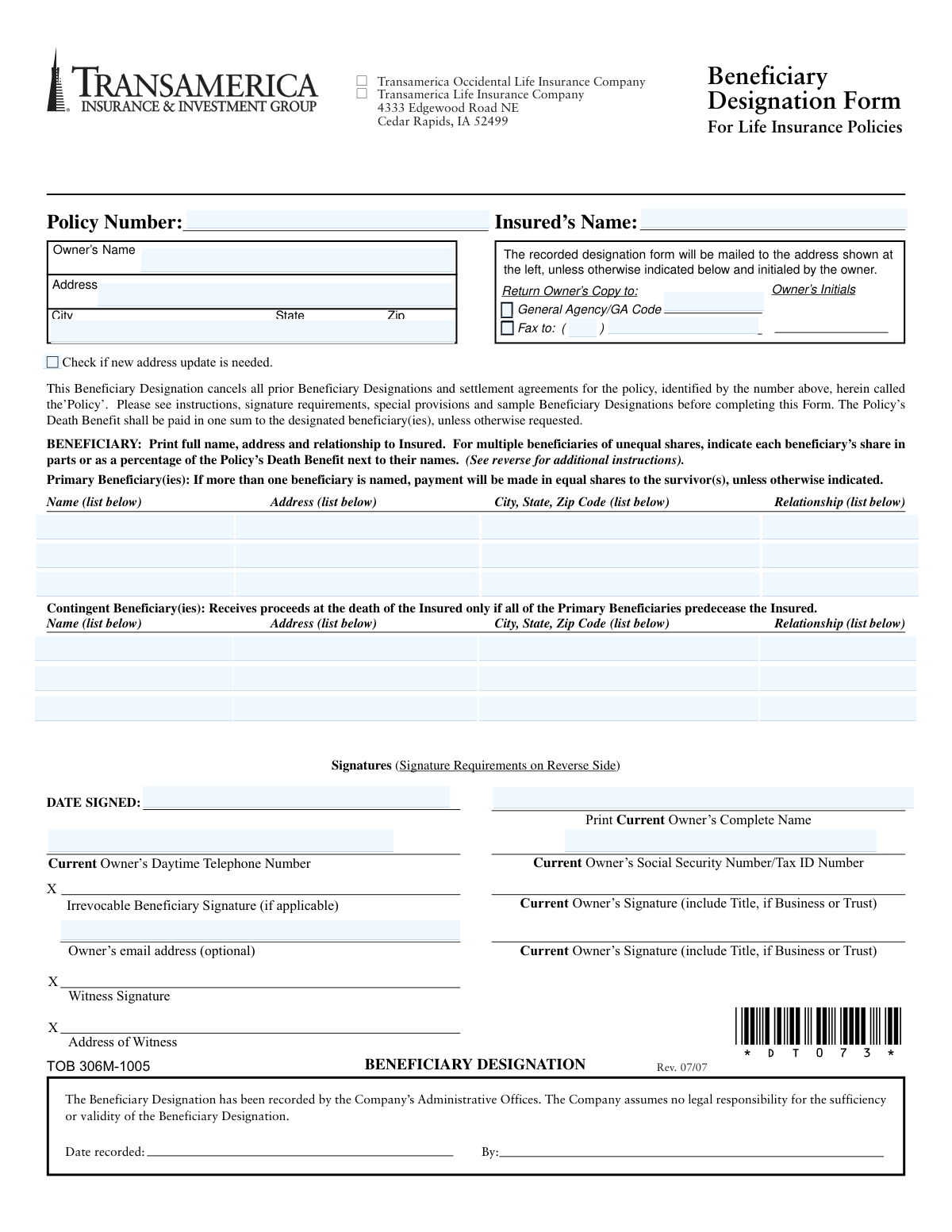
How Life Insurance Beneficiary Designation Rules Are Evolving
In 2026, life insurance beneficiary designation rules are evolving toward greater digital integration, stricter anti-fraud verification, and updated state statutes that prioritize clear intent over outdated paperwork. Modern shifts foc...
In 2026, life insurance beneficiary designation rules are evolving toward greater digital integration, stricter anti-fraud verification, and updated state statutes that prioritize clear intent over outdated paperwork. Modern shifts focus on automatic revocation during divorce, the supremacy of federal ERISA guidelines over state laws in group policies, and the use of specialized trusts to protect vulnerable heirs.
Contents
The landscape of life insurance is no longer a static "set it and forget it" environment. As financial technology integrates more deeply with estate planning law, the mechanics of how we name, update, and verify beneficiaries have undergone significant refinement. These changes aim to reduce litigation, ensure the prompt payout of death benefits, and accommodate increasingly complex modern family structures. Understanding these evolving rules is critical for policyholders to ensure their assets reach the intended hands without legal interference.
The Digital Transformation of Beneficiary Designations
The most visible evolution in 2026 is the near-universal adoption of digital-first beneficiary management. While the Uniform Electronic Transactions Act (UETA) and the federal ESIGN Act have long provided a legal framework, insurance carriers have recently shifted from "allowing" digital updates to "requiring" them for modern policy types.
Electronic Signatures and Intent Verification
As of 2026, the legal standard for "intent" has been bolstered by multi-factor authentication (MFA) and biometric verification. In the past, a contested beneficiary change often hinged on the authenticity of a physical signature. Today, insurers use encrypted audit trails—tracking IP addresses, time stamps, and biometric IDs—to prove that a policyholder made a change knowingly and without duress. This shift has significantly lowered the success rate of "undue influence" claims in probate court, as the digital record provides more robust evidence than a mere ink signature.
Real-Time Integration with Estate Planning Portals
Modern life insurance policies now frequently offer API integrations with digital estate planning platforms. This allows policyholders to sync their beneficiary designations with their wills or living trusts. However, a critical rule remains: the contractual designation on file with the insurance company almost always supersedes instructions left in a will. The evolution here is in the "push" technology—when a user updates a trust in an estate portal, the portal prompts a simultaneous update to the life insurance carrier, reducing the "disconnect" that often leads to legal disputes.
The Supremacy of ERISA in Group Life Insurance
A major point of evolution, and often a source of confusion, is the distinction between individual policies and employer-provided (group) life insurance. Group policies are governed by the Employee Retirement Income Security Act of 1974 (ERISA), a federal law that often preempts state regulations.
The "Plan Documents" Rule
Federal courts, including the U.S. Supreme Court in cases like Egelhoff v. Egelhoff, have consistently held that plan administrators must follow the plan documents regardless of state law. In 2026, this rule is more strictly enforced than ever. Even if a state has a law that automatically revokes a spouse’s beneficiary status upon divorce, that law may not apply to an ERISA-governed policy.
If a policyholder forgets to remove an ex-spouse from a work-provided policy, the insurance company is legally obligated to pay that ex-spouse, regardless of the divorce decree, unless the designation was formally changed in the plan's records. This highlights a critical evolution in consumer education: the realization that "state law protections" do not apply to all life insurance assets.
Automatic Revocation Statutes and State-Level Nuances
For individual policies not governed by ERISA, state laws are becoming more aggressive in protecting policyholders from administrative oversight. Many states have updated their versions of the Uniform Probate Code (UPC) to include "revocation-upon-divorce" statutes.
Section 2-804 of the Uniform Probate Code
By 2026, an increasing number of jurisdictions have adopted or strengthened Section 2-804, which treats a divorce as if the ex-spouse had predeceased the policyholder. This automatically nullifies the ex-spouse's status as a beneficiary. However, the evolution of these rules has created a patchwork of compliance.
- Retroactive Application: Some states apply these laws retroactively to policies purchased before the law was passed, while others do not.
- Contingent Beneficiaries: Modern rules now clarify that if the primary beneficiary (the ex-spouse) is revoked by law, the proceeds must skip directly to the contingent beneficiary, rather than falling into the estate (which can trigger probate).
The "Slayer Rule" Expansions
Legal evolution has also touched the "Slayer Rule," which prevents a beneficiary from collecting proceeds if they are responsible for the insured's death. In 2026, several states have expanded these rules to include "elder abuse" or "financial exploitation." If a beneficiary is found civilly liable for the significant financial abuse of the policyholder, they may be legally barred from receiving the death benefit, even if they had no hand in the policyholder's death.
Modernizing Trusts as Beneficiaries
As tax laws and wealth transfer strategies evolve, the use of Irrevocable Life Insurance Trusts (ILITs) has become more nuanced. In 2026, naming a trust as a beneficiary is often preferred for high-net-worth individuals to keep the death benefit out of the taxable estate.
The Rise of "See-Through" Provisions
Following the ripple effects of the SECURE Act 2.0 and subsequent Treasury regulations, the way insurance proceeds interact with trusts has changed. While the "stretch" provisions of IRAs were curtailed, life insurance remains a powerful tool for providing liquidity to a trust. The rules now emphasize "Qualified Disclosable Beneficiaries." When a trust is named as the beneficiary, the insurance company requires specific documentation to ensure the trust’s underlying beneficiaries are identifiable, which prevents the policy proceeds from being taxed at the higher trust tax rates unnecessarily.
Protecting Minor Children and Special Needs Heirs
A persistent rule that has been refined in 2026 is that insurance companies cannot pay death benefits directly to minors. If a minor is named without a court-appointed guardian or a designated custodian under the Uniform Transfers to Minors Act (UTMA), the funds will be held by the state or the insurer until the child reaches 18 or 21. The evolution here is in the "Smart Designation" forms used by carriers, which now often force the policyholder to name a custodian at the time of designation to avoid costly court interventions.
Comparison of Beneficiary Designation Types (2026 Standards)
The following table outlines the legal treatments and common outcomes for different designation strategies under current 2026 guidelines.
| Designation Type | Legal Priority | Impact of Divorce (Non-ERISA) | Probate Requirement | Best For |
|---|---|---|---|---|
| Primary Individual | Highest | Often revoked by state law | None (direct payout) | Spouses, adult children |
| Contingent | Secondary | Becomes primary if primary is revoked | None | Backup security |
| Revocable Trust | High | Subject to trust terms | None | Centralized estate control |
| Irrevocable Trust (ILIT) | Absolute | Not affected (separate entity) | None | Estate tax mitigation |
| The Estate | Lowest | Subject to probate | Full Probate required | NOT recommended |
| Minor (No Custodian) | High (Legal Hold) | N/A | Possible Guardianship Case | To be avoided |
Anti-Fraud Measures and the Unclaimed Life Insurance Benefits Act
State regulators have significantly increased the burden on insurance companies to find beneficiaries. The evolution of the Unclaimed Life Insurance Benefits Act requires insurers to regularly cross-reference their policyholder lists with the Social Security Administration’s Death Master File (DMF).
Proactive Outreach Requirements
In 2026, insurers can no longer simply wait for a claim to be filed. If an insurer identifies that a policyholder has passed away, they are legally required to perform "due diligence" to locate the beneficiaries. This has led to stricter requirements for policyholders to provide more than just a name—Social Security numbers, current addresses, and phone numbers for beneficiaries are now standard requirements during the designation process to facilitate these proactive searches.
Managing Complex Designations: Per Stirpes vs. Per Capita
The technical language used in designations has become a focal point for avoiding family litigation. In 2026, insurers provide clearer definitions of how funds are split among descendants.
- Per Stirpes (By Branch): If a named child predeceases the policyholder, that child’s share passes down to their own children. This is the evolving preference for families who want to ensure their grandchildren are protected.
- Per Capita (By Head): If a named child predeceases the policyholder, their share is divided equally among the other surviving named beneficiaries.
The "evolution" here is in the software; designation interfaces now use visual diagrams to show policyholders exactly how money will flow if a beneficiary dies, reducing the likelihood of "unintentional disinheritance."
Common Pitfalls in the 2026 Regulatory Environment
Despite the evolution of rules designed to help, many policyholders fall into modern traps:
- The "Silent" ERISA Policy: Many employees assume their work policy follows the same rules as their personal policy. As mentioned, the failure to update a group policy after a divorce is the #1 cause of life insurance litigation in 2026.
- Disqualifying Government Benefits: Naming a person with a disability as a direct beneficiary can inadvertently disqualify them from Supplemental Security Income (SSI) or Medicaid. The modern rule is to name a Special Needs Trust as the beneficiary instead.
- Vague Designations: Using terms like "my children" instead of specific names can lead to delays, especially in cases involving stepchildren or children born out of wedlock. Modern carriers often reject "class designations" that are not precisely defined.
FAQ: Evolving Beneficiary Rules
Can I name my pet as a life insurance beneficiary?
No. Legally, pets are considered property and cannot own assets or enter into contracts. To provide for a pet, you must name a human "Pet Guardian" or, more effectively, create a Pet Trust and name that trust as the beneficiary. This ensures the funds are used specifically for the animal's care under legal oversight.
Does a will override my life insurance beneficiary designation?
In almost all cases, no. Life insurance is a "non-probate asset" and is governed by a private contract between you and the insurer. Even if your will says "I leave everything to Person A," if your life insurance policy names "Person B," the insurance company is legally bound to pay Person B.
What happens if I don't name a beneficiary?
If no beneficiary is named, or if all named beneficiaries predecease the policyholder, the death benefit typically defaults to the Estate of the Insured. This is the worst-case scenario because the funds must then go through probate, where they are subject to creditor claims and legal fees, and the payout can be delayed by months or years.
How often should I review my beneficiary designations?
Legal experts in 2026 recommend a "Life Event Review." You should check your designations after every marriage, divorce, birth of a child, or death in the family. At a minimum, a review every three years is advised to ensure the names and contact information on file are current and compliant with any new state laws.
Can a creditor seize my life insurance death benefit?
In most states, death benefits paid to a named beneficiary (like a spouse or child) are protected from the policyholder's creditors. However, once the money is in the beneficiary's bank account, it may be reachable by the beneficiary's creditors. If creditor protection for the heir is a concern, naming a "Spendthrift Trust" as the beneficiary is a common 2026 strategy.
Practical Recommendation
To navigate the evolving rules of life insurance beneficiary designations, your first action should be to audit your employer-provided policies. Because these are governed by federal ERISA law, they do not offer the same "automatic" protections that your state might provide for individual policies. Ensure you have a primary and at least one contingent beneficiary named. If you are using a trust, consult with an estate attorney to ensure the trust language aligns with current tax codes. Finally, always provide your insurer with the Social Security numbers of your beneficiaries; this is the most effective way to ensure the company can locate them and pay the claim promptly in 2026.
Image Gallery