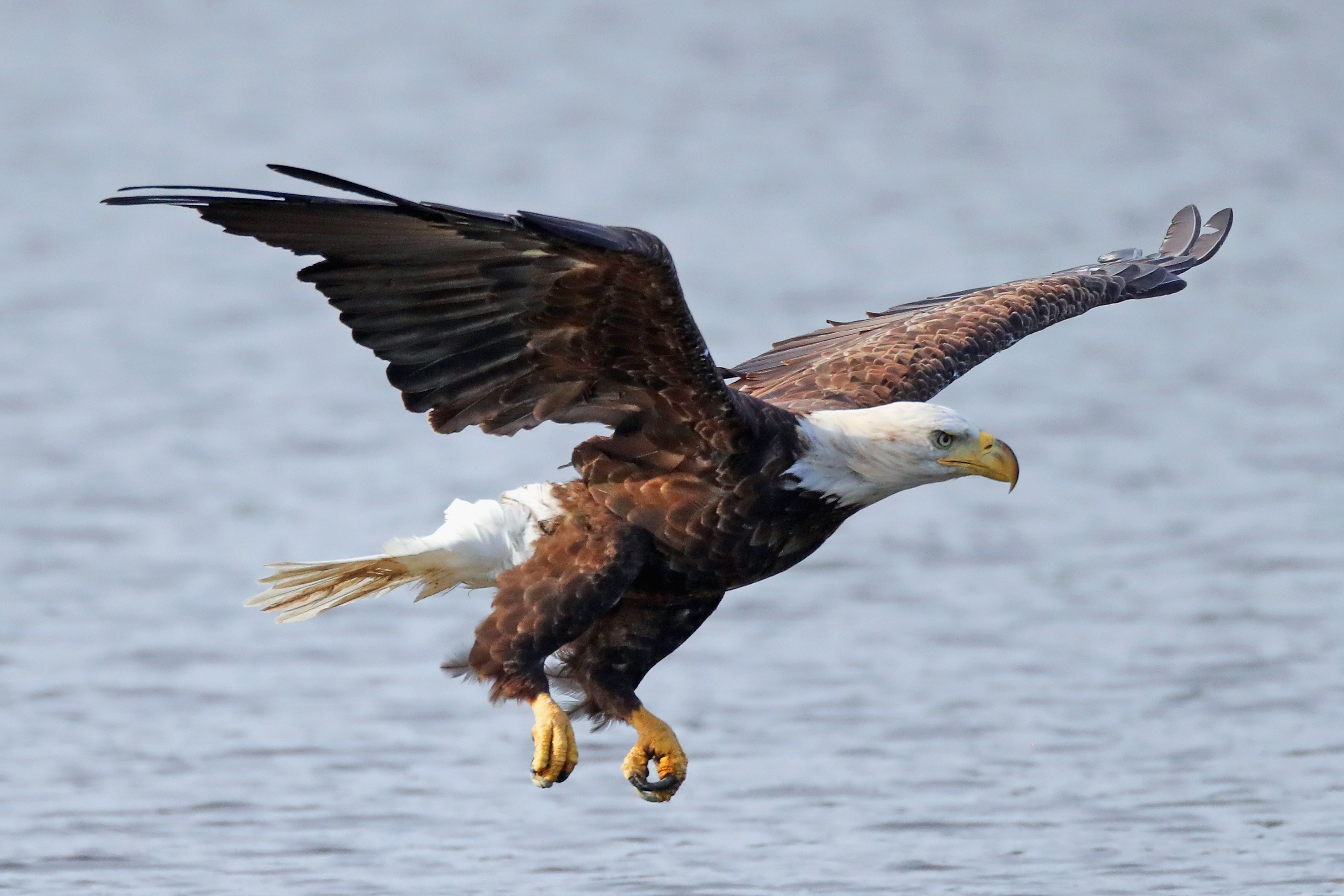
The United States Bald Eagle in Changing Skies: Conservation Status and Future Outlook
As of 2026, the United States bald eagle (Haliaeetus leucocephalus) represents one of the most successful wildlife recovery stories in history, with populations in the lower 48 states exceeding 316,000 individuals. While no longer clas...
As of 2026, the United States bald eagle (Haliaeetus leucocephalus) represents one of the most successful wildlife recovery stories in history, with populations in the lower 48 states exceeding 316,000 individuals. While no longer classified as an endangered species, the bald eagle now navigates "changing skies" defined by climate-driven habitat shifts, emerging viral threats, and the complexities of sharing airspace with rapidly expanding renewable energy infrastructure.
Contents
The Modern Population Landscape (2026)
The resurgence of the bald eagle is a testament to the efficacy of the Endangered Species Act and the 1972 ban on the pesticide DDT. In the mid-20th century, the species plummeted to a mere 417 nesting pairs in the contiguous United States. By the mid-2020s, that number has stabilized and expanded into regions where the birds had not been seen for a century.
This expansion is not merely a return to historical nesting grounds but an adaptation to human-altered landscapes. Bald eagles are increasingly found nesting in suburban environments, near golf courses, and along busy waterways. This "urbanization" of the species demonstrates high behavioral plasticity, although it increases the frequency of human-wildlife conflicts. Conservationists in 2026 focus less on basic survival and more on the quality of habitat and the long-term health of the ecosystem services that support these apex predators.
Environmental Pressures and the Impact of Climate Change
The phrase "changing skies" refers significantly to the meteorological and phenological shifts caused by a warming planet. Bald eagles are highly sensitive to changes in their primary food sources—mainly fish and waterfowl—which are directly affected by water temperature and ice cover.
Phenological Mismatch
One of the most pressing concerns for raptor biologists in 2026 is the potential for phenological mismatch. This occurs when the timing of an eagle’s nesting cycle no longer aligns with the peak availability of prey. In many northern states, earlier spring thaws are changing the migration patterns of fish species like alewives and salmon. If eagles hatch their chicks before or after these pulses of high-protein food, fledgling survival rates can drop significantly.
Habitat Loss and Range Shifting
As sea levels rise and coastal erosion intensifies, traditional nesting sites in coastal regions are being lost. Bald eagles require large, sturdy trees—often "super-canopy" trees that stand taller than the surrounding forest—to support their massive nests, which can weigh over a ton. In the interior United States, increased frequency of extreme weather events, including supercells and high-wind derechoes, has led to a higher rate of "nest blowouts," where entire structures and often the season's brood are lost in a single storm.
Emerging Biological and Chemical Threats
Despite their robust numbers, bald eagles face invisible threats in 2026 that require constant monitoring by the U.S. Fish and Wildlife Service (USFWS) and state agencies.
Avian Influenza (HPAI)
The Highly Pathogenic Avian Influenza (HPAI) H5N1, which saw a major global surge starting in 2022, remains a significant variable in eagle mortality. Unlike many other bird species that may carry the virus with limited symptoms, bald eagles are highly susceptible. Because they are both hunters and scavengers, they often contract the virus by feeding on infected waterfowl carcasses. Continued surveillance is necessary to ensure that localized outbreaks do not reverse the population gains made over the last several decades.
The Persistence of Lead Poisoning
Lead poisoning remains the leading cause of non-natural mortality in bald eagles. This occurs primarily when eagles scavenge the remains of game animals left by hunters who use lead-based ammunition. Even a fragment of lead the size of a grain of rice is enough to cause neurological failure, starvation, and death in an adult eagle.
The transition to non-lead ammunition (such as copper or bismuth) has been a central policy focus. Organizations like the American Bird Conservancy advocate for voluntary hunter-led initiatives to reduce the lead load in the environment. In 2026, several states have implemented education programs to demonstrate the ballistic equivalence of modern non-lead alternatives, though a federal ban on lead ammunition remains a point of significant legislative debate.
Navigating the Clean Energy Transition
As the United States aggressively pursues carbon neutrality, the "changing skies" are increasingly filled with wind turbines. This creates a unique challenge for eagle conservation: balancing the need for carbon-free energy with the protection of a federally protected species.
Wind Energy and Incidental Take
Bald eagles are protected under the Bald and Golden Eagle Protection Act (BGEPA), which prohibits the "taking" of eagles without a permit. In the context of wind energy, a "take" usually refers to an accidental collision with a turbine blade.
By 2026, the technology used to mitigate these risks has advanced significantly. Many wind farms now employ AI-driven camera systems that can identify an approaching eagle from several kilometers away. When an eagle is detected, the system can automatically trigger "curtailment," slowing or stopping the specific turbines in the bird’s flight path.
| Feature | Historical Threat (Pre-2007) | Modern Challenge (2026 Context) |
|---|---|---|
| Primary Toxin | DDT (Eggshell thinning) | Lead (Neurological damage) |
| Legal Status | Endangered Species Act | Bald & Golden Eagle Protection Act |
| Main Mortality | Illegal Shooting/Persecution | Infrastructure Collisions/HPAI |
| Population Goal | Preventing Extinction | Maintaining Genetic Diversity |
| Habitat Focus | Wilderness Preservation | Suburban & Human-Altered Landscapes |
The Legal Framework: BGEPA and Beyond
The legal landscape for the bald eagle is governed by two primary federal statutes: the Migratory Bird Treaty Act (MBTA) and the Bald and Golden Eagle Protection Act (BGEPA). While the eagle was removed from the List of Endangered and Threatened Wildlife in 2007, these laws provide stringent protections that are still strictly enforced in 2026.
Under BGEPA, it is illegal to disturb an eagle. "Disturb" is defined as agitating or bothering a bird to a degree that causes injury, interferes with normal breeding or feeding behavior, or results in nest abandonment. For developers, homeowners, and researchers, this means adhering to strict buffer zones—typically 330 to 660 feet—around active and alternate nests during the breeding season.
The U.S. Fish and Wildlife Service manages a permit system that allows for the limited "incidental take" of eagles where the activity is associated with an otherwise lawful action. These permits require applicants to implement "Advanced Conservation Practices" (ACPs) to minimize their impact on the population.
Frequently Asked Questions
Do bald eagles migrate in the winter?
Bald eagles are opportunistic migrants. In regions where water remains open and food is available year-round, many eagles are residents. However, birds nesting in the northern United States and Canada will move south when lakes and rivers freeze over. They often congregate in large numbers below hydroelectric dams, where the churning water keeps the river ice-free and provides a steady supply of stunned fish.
How long do bald eagles live in the wild?
In the wild, a bald eagle that survives its first few precarious years can live to be 20 to 30 years old. The oldest recorded bald eagle in the wild was at least 38 years old. In 2026, tracking technology and banding programs continue to provide more precise data on longevity and the specific factors that contribute to adult mortality.
Why are their nests so large?
Bald eagles exhibit high "nest site fidelity," meaning they return to the same nest year after year. Each season, the pair adds new sticks, grass, and lining to the structure. Over decades, these nests can reach diameters of 10 feet and depths of 20 feet. These massive structures are essential for protecting the brood from predators and providing a stable platform in high-wind environments.
What should I do if I find an injured bald eagle?
You should never attempt to handle an injured bald eagle yourself, as their talons and beaks can cause severe injury. Contact your state wildlife agency or a licensed raptor rehabilitation center immediately. Federal law requires that only permitted individuals handle these birds. In 2026, most states have dedicated hotlines for reporting sightings of injured or deceased eagles.
Is it legal to keep an eagle feather?
No. Under the Bald and Golden Eagle Protection Act, it is illegal for unauthorized individuals to possess any part of a bald eagle, including feathers, nests, or eggs. There is a specific exception for enrolled members of federally recognized Native American tribes, who may obtain feathers for religious and cultural purposes through the National Eagle Repository.
Recommendations for Citizen Conservation
While the bald eagle has made a remarkable recovery, its future in "changing skies" depends on continued public engagement. Individuals can contribute to the species' stability through several actionable steps:
- Use Non-Lead Ammunition: If you hunt, transition to copper or other non-lead projectiles to prevent secondary poisoning of eagles and other scavengers.
- Respect Buffer Zones: Use binoculars or long-range camera lenses to observe eagles. If a bird changes its behavior (e.g., stops feeding or begins vocalizing) because of your presence, you are too close.
- Support Habitat Preservation: Protect large-growth trees near water bodies and support local land trusts that prioritize riparian (riverside) corridors.
- Report Sightings: Use platforms like eBird to log sightings, which helps biologists track population shifts and habitat usage in real-time.
The bald eagle remains a resilient symbol of the American wilderness. By addressing the modern challenges of lead toxicity, climate shifts, and energy infrastructure, we can ensure that these magnificent birds continue to thrive in the skies of 2026 and beyond.
Image Gallery