Why the Right CRM Software for Service Industry Matters
The right Customer Relationship Management (CRM) software is the critical infrastructure that transforms a service-oriented business from a reactive operation into a proactive, data-driven enterprise. For the service industry, where th...
The right Customer Relationship Management (CRM) software is the critical infrastructure that transforms a service-oriented business from a reactive operation into a proactive, data-driven enterprise. For the service industry, where the "product" is often an intangible expertise or a time-bound task, a specialized CRM ensures operational continuity by integrating scheduling, field service management, and client communication into a single source of truth that drives retention and scales profitability.
Contents
The Fundamental Shift in Service-Sector CRM Requirements
In 2026, the service industry encompasses a vast range of businesses, from professional services like legal and consulting firms to field services such as HVAC, landscaping, and specialized maintenance. Unlike retail or manufacturing, where the CRM tracks physical inventory and one-off transactions, a service-based CRM must track time, human resources, and ongoing relationships.
The "right" CRM matters because it addresses the unique perishability of services. An unsold hour of a consultant’s time or an empty slot in a technician’s schedule is revenue lost forever. General-purpose CRMs often lack the specific modules required to manage these nuances. When a firm selects a platform specifically designed for the service sector, it moves beyond basic contact management into the realm of Professional Services Automation (PSA) or Field Service Management (FSM). This distinction is vital for maintaining margins in a competitive, high-inflation environment where labor costs represent the largest expense.
Enhancing the Customer Experience Through Precision
In a service-driven economy, customer experience (CX) is the primary differentiator. Because the client cannot "see" the service before it is rendered, trust is the currency of the transaction. The right CRM builds this trust through transparency and consistency.
Automated Communication and Reliability
Client frustration often stems from a lack of communication. A specialized CRM automates the touchpoints that matter: appointment reminders, technician tracking (Uber-style "on-my-way" notifications), and post-service follow-ups. By 2026, these are no longer "premium" features but baseline expectations. A system that fails to provide real-time updates leads to increased churn. Conversely, the right CRM ensures that no client feels forgotten, which directly correlates with higher Net Promoter Scores (NPS).
Personalization at Scale
Service providers often deal with recurring needs. Whether it is a quarterly tax audit or bi-annual HVAC maintenance, the right CRM stores historical data that allows for hyper-personalization. When a service agent answers a call and immediately sees the client’s full service history, previous pain points, and even personal preferences, the interaction shifts from a cold transaction to a trusted partnership. This level of detail is impossible to maintain manually as a business grows.
Driving Operational Efficiency and Profitability
Efficiency in the service industry is defined by the utilization rate of the workforce. The right CRM software acts as the central coordinator for these resources, ensuring that the right person is at the right place at the right time with the right tools.
Optimization of Resource Allocation
Modern service CRMs utilize AI-driven dispatching. Instead of a manual dispatcher trying to juggle 20 technicians, the CRM analyzes traffic patterns, technician skill sets, and job priority to create the most efficient route. This reduces fuel consumption, minimizes vehicle wear and tear, and allows for more billable hours per day. For professional services, this translates to better project management, ensuring that senior partners are not bogged down by tasks that could be handled by associates.
Streamlining the Lead-to-Cash Cycle
The right CRM bridges the gap between the sales team and the billing department. In many service businesses, there is a significant delay between "work completed" and "invoice sent." Specialized software allows technicians or consultants to generate invoices and accept payments on-site or immediately upon project milestone completion. By integrating with accounting software like QuickBooks or Xero, the CRM reduces "Days Sales Outstanding" (DSO), which is crucial for maintaining healthy cash flow.
Data-Driven Growth and Predictive Analytics
By 2026, data has become the most valuable asset for service providers. The right CRM does more than just record what happened; it predicts what will happen next.
- Predictive Maintenance: For field services, the CRM can analyze equipment data to predict when a customer’s system is likely to fail, allowing the business to sell a proactive maintenance contract rather than waiting for an emergency call.
- Customer Lifetime Value (CLV) Forecasting: The software can identify which segments of the customer base are the most profitable and which are costing the business money. This allows leadership to refine their marketing strategy to target high-value leads.
- Churn Prediction: Using machine learning, the right CRM can flag accounts that show signs of dissatisfaction—such as a sudden decrease in service calls or delayed payments—allowing the account management team to intervene before the client cancels.
Comparing CRM Types for the Service Industry
Choosing the "right" software requires understanding the different categories of CRM available in 2026. The following table highlights the differences between horizontal, field-service specific, and professional-service specific platforms.
| Feature | Horizontal CRM (Generic) | Field Service CRM (FSM) | Professional Services CRM (PSA) |
|---|---|---|---|
| Primary Focus | Sales pipeline & marketing | Dispatching & mobile workforce | Project accounting & billable hours |
| Scheduling | Basic calendar sync | Geographic/Route optimization | Resource/Skill-based leveling |
| Inventory | Minimal/External | Vehicle-level parts tracking | Usually N/A (focuses on labor) |
| Mobile Access | Browser/Basic App | Offline-first native app | Time-tracking focused app |
| Billing | Standard invoicing | On-site payment & work orders | Complex recurring/milestone billing |
| Best For | General sales teams | HVAC, Plumbing, Electricians | Legal, Marketing, Consultants |
Integration in the 2026 Tech Stack
The right CRM does not exist in a vacuum. It must serve as the hub for a wider ecosystem of business tools. In 2026, the interoperability of software is a non-negotiable requirement for efficiency.
- IoT Integration: For service industries dealing with physical assets (like property management or industrial repair), the CRM must ingest data from Internet of Things (IoT) sensors. When a boiler’s pressure exceeds a threshold, the CRM should automatically trigger a work order.
- API-First Architecture: The software must allow for seamless data flow between the CRM, the marketing automation platform, and the Enterprise Resource Planning (ERP) system. This prevents "data silos," where different departments have conflicting information about the same customer.
- Compliance and Privacy: With the tightening of data protection laws globally, the right CRM must have built-in compliance features for GDPR, CCPA, and industry-specific regulations like HIPAA for medical services. This includes automated data encryption and simplified "right to be forgotten" protocols.
Avoiding Common Implementation Mistakes
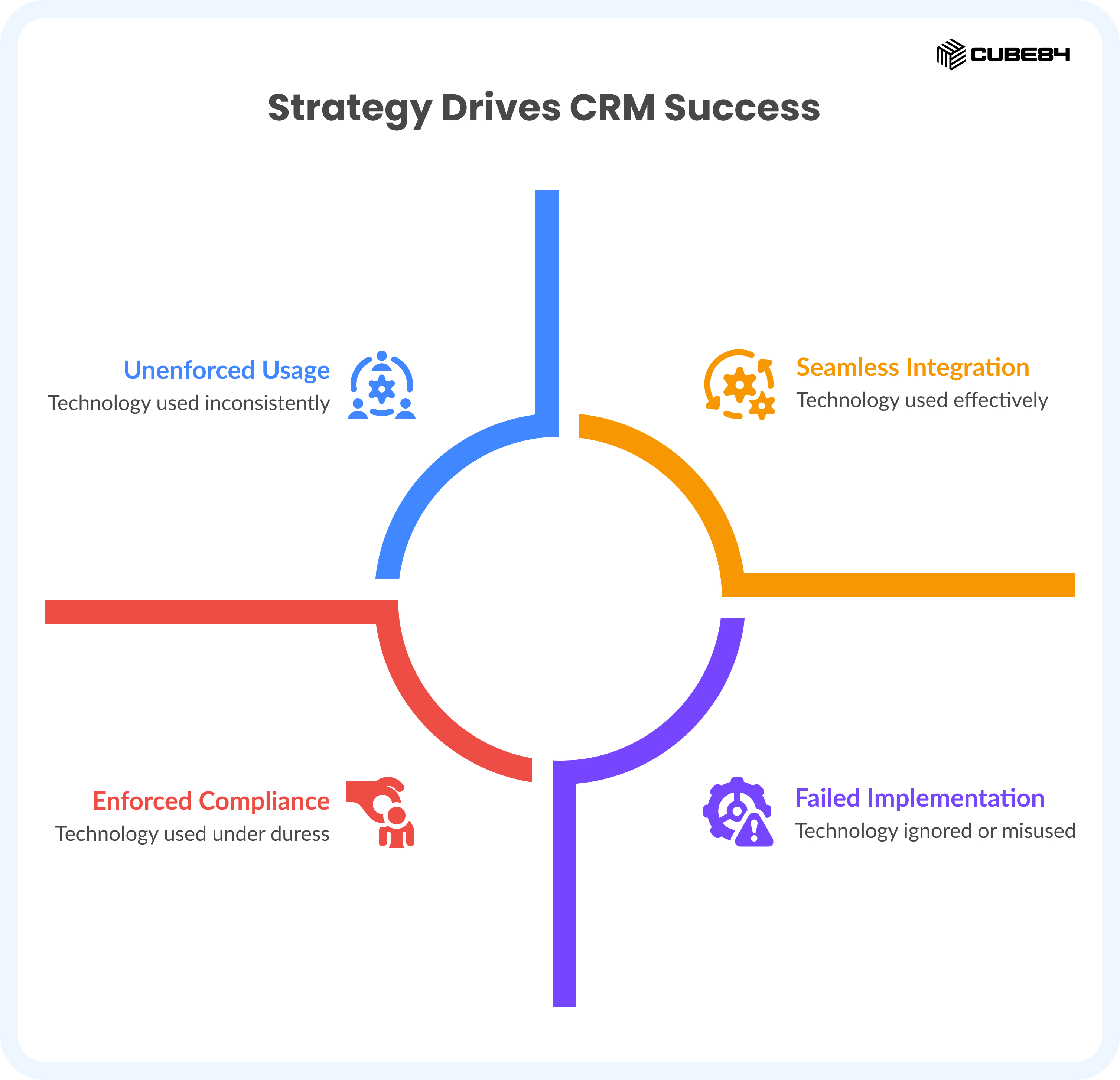
Even the "right" software will fail if the implementation is flawed. Service businesses often make the mistake of choosing a system based on price rather than "Total Cost of Ownership" (TCO).
- Over-Customization: A common pitfall is trying to force a new CRM to mimic a legacy, broken process. The right CRM often brings "best practice" workflows that the business should adapt to, rather than the other way around.
- Poor Data Hygiene: Migrating "dirty" data—duplicate records, outdated contact info, and incomplete histories—into a new CRM will result in poor adoption. The transition period should be used to scrub data thoroughly.
- Lack of Training: Service staff, especially those in the field, may be resistant to new technology if it feels like "big brother" surveillance. The right CRM should be presented as a tool that makes their jobs easier, not just a management reporting tool.
FAQs
How does a service-specific CRM differ from a sales CRM?
While a sales CRM focuses on the journey from prospect to closed deal, a service-specific CRM focuses on the "post-sale" lifecycle. It includes specialized modules for scheduling, dispatching, work order management, and recurring service contracts that a standard sales-focused CRM (like a basic version of Salesforce or Pipedrive) may not offer without expensive third-party plugins.
Is a cloud-based CRM better for the service industry?
Yes, cloud-based (SaaS) CRMs are standard in 2026 because they provide real-time data access to field technicians and remote consultants. On-premise solutions are rarely viable for the service industry due to the high cost of maintenance and the lack of mobility, which is essential for any business where staff are not tethered to a desk.
Can a small service business benefit from a high-end CRM?
Absolutely. Many modern CRMs offer tiered pricing. A small business can start with core features like contact management and basic scheduling and then activate advanced features like AI-dispatching or automated marketing as they scale. The key is choosing a platform that is "scalable," so you don't have to switch systems as you grow.
How does the right CRM help with employee retention?
Employee burnout is a major issue in the service sector. The right CRM reduces administrative burden—the "paperwork" that many service professionals dislike. When technicians or consultants have clear schedules, all the information they need at their fingertips, and automated tools for reporting, their job satisfaction increases, leading to lower turnover.
What is the ROI of a service-specific CRM?
The Return on Investment (ROI) typically comes from three areas: increased billable efficiency (doing more work with the same staff), higher customer retention (lowering the cost of acquisition), and reduced administrative overhead. Most service businesses see a full return on their CRM investment within 12 to 18 months of successful implementation.
Strategic Recommendation
For service providers in 2026, the choice of CRM is a strategic decision that defines the company's ceiling for growth. Businesses should prioritize platforms that offer deep vertical integration for their specific sub-industry—such as specialized Field Service Management for trades or Professional Services Automation for consultants.
The next step for any service leader is to conduct a "process audit" to identify where manual data entry or communication gaps are currently leaking revenue. Once these gaps are identified, select a CRM that automates those specific pain points, ensuring that the software adapts to your growth trajectory rather than becoming a bottleneck.
Image Gallery