Navigating On the Spot Questions in Home Security Assessments
When security professionals, technicians, or auditors arrive for an on-the-spot assessment, they typically look for immediate vulnerabilities in perimeter hardening, entry point integrity, and surveillance coverage. Preparing for these...
When security professionals, technicians, or auditors arrive for an on-the-spot assessment, they typically look for immediate vulnerabilities in perimeter hardening, entry point integrity, and surveillance coverage. Preparing for these inquiries requires a clear understanding of your property’s current technical specifications, your risk profile, and the operational limitations of your existing security infrastructure to ensure an accurate, gap-free evaluation.
Contents
Understanding the On-the-Spot Security Inquiry
In the context of home security, an "on-the-spot question" usually refers to an immediate, live inquiry made by a security installer, insurance surveyor, or law enforcement crime prevention officer during an in-person site visit. Unlike a planned, comprehensive audit that might take weeks, these questions are designed to establish the status quo of your security posture.
These interactions are critical because they dictate the scope of the recommendations you receive. Whether a technician is asking about the battery life of a smart lock or a surveyor is querying the UL-rating of your safe, your ability to provide factual information directly influences the effectiveness of your home’s defense strategy.
Core Categories of Security Questioning
When a professional evaluates your home, they generally categorize their inquiries into four distinct buckets. Understanding these allows you to prepare documentation and visual evidence ahead of time.
1. Structural Perimeter Integrity
These questions focus on the physical shell of the house. You should be prepared to answer:
- Door Materials: Are they solid core, wood, or metal?
- Strike Plate Reinforcement: Do your exterior doors have extended strike plates secured with 3-inch screws?
- Window Hardware: Are secondary locking mechanisms, such as sash pins or window bars, installed on ground-level accessible windows?
2. Electronic Surveillance and Detection
This category involves the technical specifications of your smart home ecosystem. Professionals will often ask:
- Power Redundancy: Does your system rely solely on Wi-Fi, or is there a cellular backup?
- Storage Latency: Are recordings stored locally on an NVR (Network Video Recorder) or in the cloud?
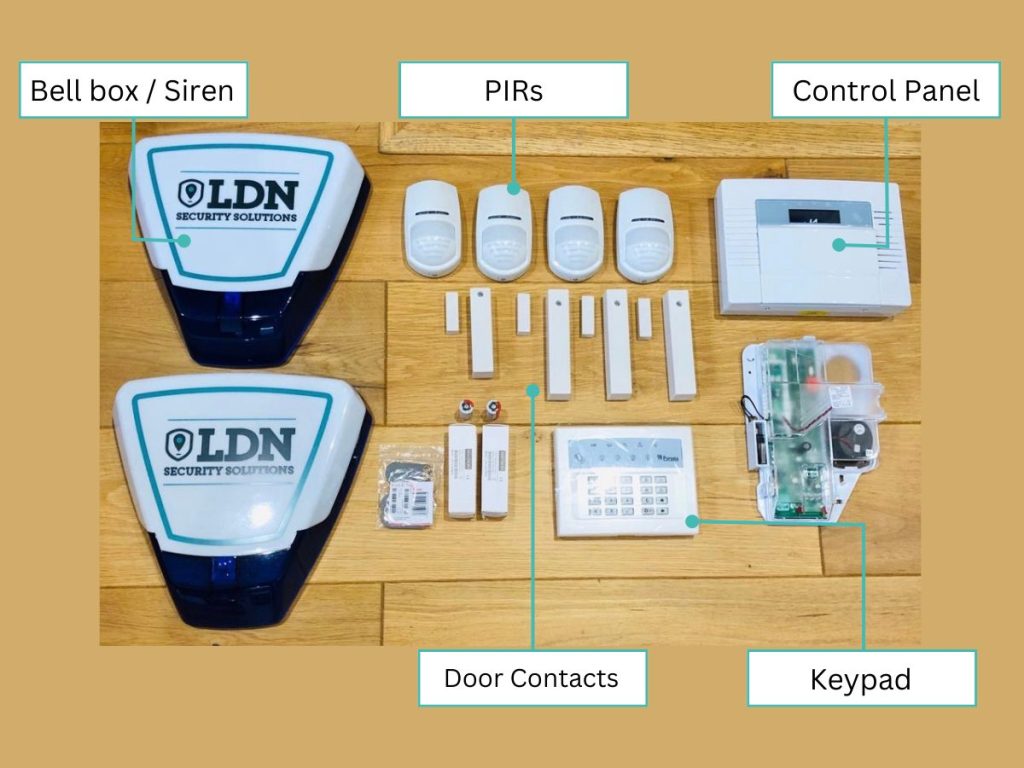
- Sensor Coverage: Are PIR (Passive Infrared) sensors placed in high-traffic corridors, and are they adjusted to ignore pet movement?
3. Lighting and Visibility
Visibility is a deterrent. You may be asked:
- Motion Activation: Are exterior lights dusk-to-dawn or motion-activated?
- Blind Spots: Are there areas of the property (such as side alleys or behind detached garages) where current lighting fails to reach?
4. Historical Incident Reporting
An auditor may ask about past attempts or local crime trends. Be prepared to discuss any prior unauthorized entry attempts, even if they were unsuccessful, as these indicate specific target vulnerabilities.
Preparing for a Security Audit: A Checklist
To handle these questions with confidence, organize your information before the professional arrives. Having a "home security binder" or a digital folder containing the following items can save significant time:
- Manufacturer Manuals: Keep PDFs or physical booklets for all cameras, alarm panels, and smart locks.
- Installation Dates: Know when your equipment was last serviced. Most lithium-ion batteries in home sensors have an effective lifespan of 2–5 years.
- Account Credentials: Have the details for your monitoring service provider ready, but do not provide administrative passwords to the physical installer unless necessary for system pairing.
- Property Blueprints or Sketches: A simple drawing indicating window locations and sensor placements is often more useful to a technician than a walkthrough.
Comparison of Security Response Readiness
| Category | Typical Question | Goal of Question | Your Preparation |
|---|---|---|---|
| Connectivity | "What happens if the internet fails?" | Verify system reliability | Identify cellular backup status |
| Physical | "Are these door hinges exposed?" | Determine forced entry risk | Confirm if pins are interior-facing |
| Lighting | "Is the porch light on a timer?" | Assess deterrence efficacy | Test motion-activation response |
| Monitoring | "Is this a self-monitored system?" | Establish response speed | Note your subscription tier details |
Troubleshooting Common Evaluation Gaps
Often, homeowners struggle with "on-the-spot" questions because they are unaware of the technical limitations of their own systems. A common issue is signal degradation. If a professional asks why a camera is failing to reach a specific zone, they are inquiring about signal strength (dBm levels) relative to your router. If you cannot answer this, the professional may provide an inaccurate suggestion, such as recommending a more expensive camera when a simple Wi-Fi range extender would suffice.
Another frequent gap is false alarm mitigation. If your system is frequently triggered by wind or small animals, the technician will ask about the sensitivity settings of your motion detectors. Knowing how to access these settings—or whether your system uses dual-technology sensors (combining PIR and microwave detection)—is vital for maintaining security while reducing false positives.
Legal and Safety Limitations
It is important to recognize that a home security professional is not a law enforcement officer. They cannot force you to disclose sensitive information, such as the location of a wall safe or the contents of your home inventory for insurance purposes. However, withholding information can lead to incomplete risk assessments.
Always verify the identity of the person asking questions. In 2026, security companies increasingly use digital verification badges sent to your smartphone via SMS or an official app prior to the technician’s arrival. If an individual arrives without prior notice or cannot verify their credentials through the service’s official portal, do not answer questions regarding the layout or security vulnerabilities of your home.
FAQ: Addressing Common Concerns
How should I answer if I don't know the technical specs of my system? Always be honest about your lack of knowledge. A professional would prefer you say, "I am not sure of the model number, but here is the purchase invoice," rather than guessing. Providing the original invoice or receipt allows the professional to look up the exact specifications themselves.
Are questions about my daily routine relevant to security? Yes. Technicians often ask about occupancy patterns to program "Away" modes or to recommend scheduling for smart lighting that mimics home activity. This is standard procedure to maximize the effectiveness of automated deterrence.
What if the professional suggests a product I can't afford? You are under no obligation to accept a quote on the spot. Ask the professional to explain the function of the proposed device first. Once you understand the function, you can research alternative products that perform the same task at a different price point.
Can I refuse to answer questions about my alarm system? You have the right to withhold any information you feel compromises your privacy. However, keep in mind that the professional’s ability to "harden" your home is limited by the data you provide. If you choose not to share system details, inform them that you would prefer a general assessment rather than a system-specific one.
Does a 2026 security assessment differ from older ones? Modern assessments place much higher emphasis on cybersecurity. Expect questions regarding your router’s firmware updates, the use of two-factor authentication (2FA) on your security accounts, and the security of your smart home network, which were less common a decade ago.
Next Steps for Property Security
If you have an upcoming assessment, spend 30 minutes walking your perimeter with a notepad. Identify where your lighting is insufficient, which doors feel "soft" or insecure, and locate the master control panel for your alarm system. Gathering this data beforehand transforms a stressful, on-the-spot interrogation into a productive consultation that yields a genuine improvement in your home's safety.
Image Gallery