Lake Erie Temperature in Buffalo NY Explained
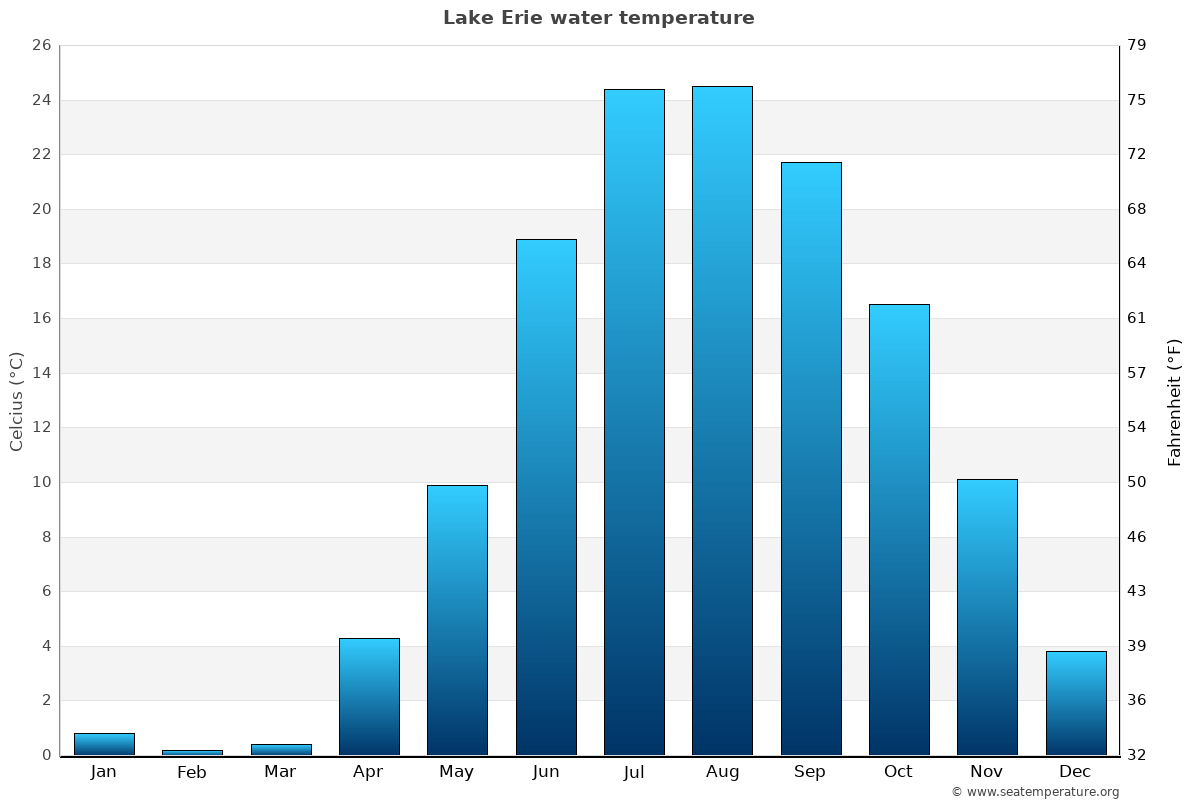
Lake Erie water temperatures in Buffalo fluctuate from near-freezing in winter to peaks of 75°F–80°F (24°C–27°C) in late summer. As the shallowest Great Lake, Erie warms and cools faster than its peers, significantly influencing Wester...
Lake Erie water temperatures in Buffalo fluctuate from near-freezing in winter to peaks of 75°F–80°F (24°C–27°C) in late summer. As the shallowest Great Lake, Erie warms and cools faster than its peers, significantly influencing Western New York's weather, including the timing of lake effect snow and the onset of the spring "lake breeze" cooling effect.
Contents
The Seasonal Temperature Cycle of Lake Erie at Buffalo
Understanding the thermal behavior of Lake Erie requires looking at it as a giant heat battery. Because Buffalo sits at the easternmost tip of this relatively shallow basin, it experiences the most dramatic cumulative effects of the lake’s seasonal energy shifts.
Winter: The Period of Ice and Isothermal Uniformity
By January and February, Lake Erie often reaches its annual minimum temperature. In a typical year, the water temperature hovers between 32°F and 34°F (0°C to 1°C). Because freshwater is densest at 39.2°F (4°C), the lake undergoes a cooling process where the surface water sinks as it cools until the entire water column reaches that density. Once the whole lake is 39°F, further cooling stays at the surface, eventually leading to ice formation.
As of 2026, ice cover remains a high-variability factor. When the lake freezes over, it effectively "shuts off" the moisture supply for lake effect snow. However, the temperature of the water remains just at the freezing point beneath the ice, acting as a massive heat sink that prevents the surrounding air in Buffalo from warming up too quickly in early spring.
Spring: The "Lake Ice" Hangover
In March and April, while inland areas like Amherst or Orchard Park may see temperatures climb into the 50s or 60s, the Buffalo waterfront remains chilled by the "Lake Ice Hangover." Even after the ice boom (a chain of logs placed at the mouth of the Niagara River) is removed, the water temperature rises very slowly.
During this period, the water is often significantly colder than the air. This creates a "thermal bar," a zone of sharp temperature transition. For Buffalo residents, this results in the famous lake breeze—a wall of cold air that can drop temperatures by 15 degrees in minutes as it moves inland. The water typically struggles to reach 50°F (10°C) until late May or early June.
Summer: Rapid Warming and Stratification
Once the sun’s angle increases and the days lengthen, Lake Erie’s shallow nature becomes its defining characteristic. By July and August, the surface temperature near Buffalo frequently hits 75°F (24°C), and in particularly warm summers, it can approach 80°F (27°C).
During the summer, the lake becomes stratified. A warm upper layer (the epilimnion) sits on top of a cold, dense bottom layer (the hypolimnion). The transition zone between them is the thermocline. In the shallow eastern basin near Buffalo, this stratification can be disrupted by strong winds, leading to "upwelling" events where deep, cold water is pushed to the surface, causing a sudden 10-to-20-degree drop in swimming temperatures at local beaches like Woodlawn or Bennett Beach.
Fall: Heat Retention and the Snow Machine
September and October are when the lake holds the maximum amount of stored energy. While the air temperature begins to drop, the water remains warm, often staying in the 60s well into October. This temperature differential is the primary engine for Western New York’s notorious lake effect snow.
As cold, Arctic air masses move over the still-warm water, the lake transfers heat and moisture into the lower atmosphere. This creates unstable air that rises and condenses into heavy snow bands. The "snow machine" is most active when the difference between the water temperature and the air temperature at about 5,000 feet (the 850mb level) is at least 13°C (23°F).
Why Lake Erie Is Unique: Depth and Volume Factors
To explain the temperature of Lake Erie at Buffalo, one must compare it to the other Great Lakes. Lake Erie is the shallowest of the five, with an average depth of only 62 feet. In contrast, Lake Superior has an average depth of 483 feet.
| Characteristic | Lake Erie (Eastern Basin) | Lake Ontario | Lake Superior |
|---|---|---|---|
| Avg. Summer Peak | 75°F - 80°F | 70°F - 74°F | 55°F - 65°F |
| Typical Winter Status | Frequent total ice cover | Rarely freezes over | Partial ice cover |
| Warming Rate | Very Fast | Moderate | Slow |
| Avg. Depth | 62 ft (Total Lake) | 283 ft | 483 ft |
Because there is less volume to heat, the sun's energy can penetrate a larger percentage of the water column in Lake Erie. This leads to the highest average temperatures of any Great Lake, making it the most popular for swimming but also the most susceptible to environmental issues like harmful algal blooms (HABs), which thrive in warm, nutrient-rich water.
The Buffalo Effect: How Water Temperature Shapes Local Weather
The temperature of the lake doesn't just affect swimmers; it dictates the daily life of Buffalo residents through several distinct meteorological phenomena.
Lake Effect Snow Mechanics
The most critical period for Buffalo is when the lake temperature is between 45°F and 55°F in late autumn. If a cold front brings air at 20°F over 50°F water, the evaporation rate is massive. This is why Buffalo often sees its most intense blizzards in November and December, before the lake has had a chance to cool down or freeze. Once the lake temperature drops to near 32°F or ice covers the surface, the moisture source is cut off, and the "lake effect" season typically ends or diminishes significantly.
The Spring "Lake Breeze" and Microclimates
In the spring, the cold water creates a high-pressure bubble over the lake. As the land warms up, the air rises, and the cold air from the lake rushes in to fill the void. This creates a microclimate where the "City Line" of Buffalo might be 45°F while the suburbs of East Aurora or Clarence are 60°F. This serves as a natural air conditioner for the city in the summer but can be a frustration for gardeners waiting for the last frost, as the lake breeze can actually keep the immediate shoreline from dipping into a hard freeze during late spring nights.
Measuring the Water: Where the Data Comes From
When checking the "Lake Erie temperature in Buffalo," data usually comes from one of three primary sources:
- The Buffalo Water Intake (The "Roundhouse"): Located near the entrance to the Niagara River, this provides some of the most consistent year-round readings because the intake is located deep enough to avoid surface fluctuations but close enough to the city to be relevant.
- NOAA Buoy 45142: This buoy is located in the eastern basin. It provides real-time data on wave height and water temperature during the navigation season (typically April through November).
- NDBC Station BUFM3: Located at the Buffalo Harbor, this station provides atmospheric and water temperature data used by the National Weather Service Buffalo office.
The readings you see on the news are often surface temperatures. It is important to note that the temperature at the bottom of the lake (where fish like walleye and perch congregate) can be 20 degrees cooler than the surface during the height of July.
Environmental and Economic Impacts of Temperature Shifts
The thermal state of Lake Erie has direct consequences for the economy of Western New York.
- Shipping and Navigation: The Port of Buffalo relies on the Great Lakes shipping lanes. The temperature of the lake determines when ice will form, which in turn dictates the schedule for the U.S. Coast Guard's ice-breaking operations.
- Fishery Health: Lake Erie is known as the "Walleye Capital of the World." Walleye prefer temperatures between 55°F and 70°F. When the surface gets too warm in Buffalo, the fish move deeper or migrate toward the cooler waters of the central basin.
- Algal Blooms: While more common in the Western Basin near Toledo, warm water temperatures in the Eastern Basin can contribute to localized Cladophora (green algae) growth, which can wash up on Buffalo beaches and affect water quality.
Frequently Asked Questions
When is Lake Erie warmest in Buffalo?
Lake Erie typically reaches its peak temperature in early to mid-August. During this time, the surface water near the Buffalo shoreline usually ranges between 74°F and 78°F. On rare occasions following a prolonged heatwave, temperatures at the Buffalo water intake have hit 80°F.
Does Lake Erie always freeze in Buffalo?
No, Lake Erie does not freeze every year, though it is more likely to freeze than any other Great Lake due to its shallowness. In "mild" winters, the lake may remain mostly open water, which significantly increases the risk of late-season lake effect snow storms in January and February.
Why is the water at the beach colder after a windy day?
This is caused by a process called upwelling. When strong offshore winds push the warm surface water away from the shoreline, cold water from the bottom of the lake rises to replace it. This can cause the swimming temperature at a beach like Woodlawn to drop from 75°F to 55°F in less than 24 hours.
How does the lake temperature affect the "Ice Boom"?
The Lake Erie-Niagara River Ice Boom is installed every winter to prevent large chunks of lake ice from clogging the Niagara River, which could cause flooding and damage to hydroelectric power intakes. The boom is typically removed in the spring once the ice cover on Lake Erie drops below 250 square miles, but the water temperature must remain low for the ice to persist long enough to require the boom.
Is Lake Erie getting warmer?
Long-term data from the Great Lakes Environmental Research Laboratory (GLERL) suggests a trend toward higher average summer temperatures and shorter periods of ice cover. In 2026, we continue to observe that the "winter" period of the lake is shrinking, leading to a longer window for potential lake effect snow in the autumn and earlier warming in the summer.
Recommendations for Residents and Visitors
If you are planning activities based on Lake Erie's temperature, keep the following in mind:
- For Swimmers: Wait until at least July for comfortable temperatures. Always check for upwelling reports after a high-wind event, as the water may be dangerously cold despite hot air temperatures.
- For Anglers: Use a probe to find the thermocline. In the summer, fish will congregate just above the cold, oxygen-poor bottom layer in the transition zone where temperatures are more hospitable.
- For Residents: Monitor the lake temperature in November and December. If the lake remains above 45°F and a cold snap is forecasted, ensure your snow removal equipment is ready, as the conditions for "major" lake effect snow are at their peak.
Image Gallery