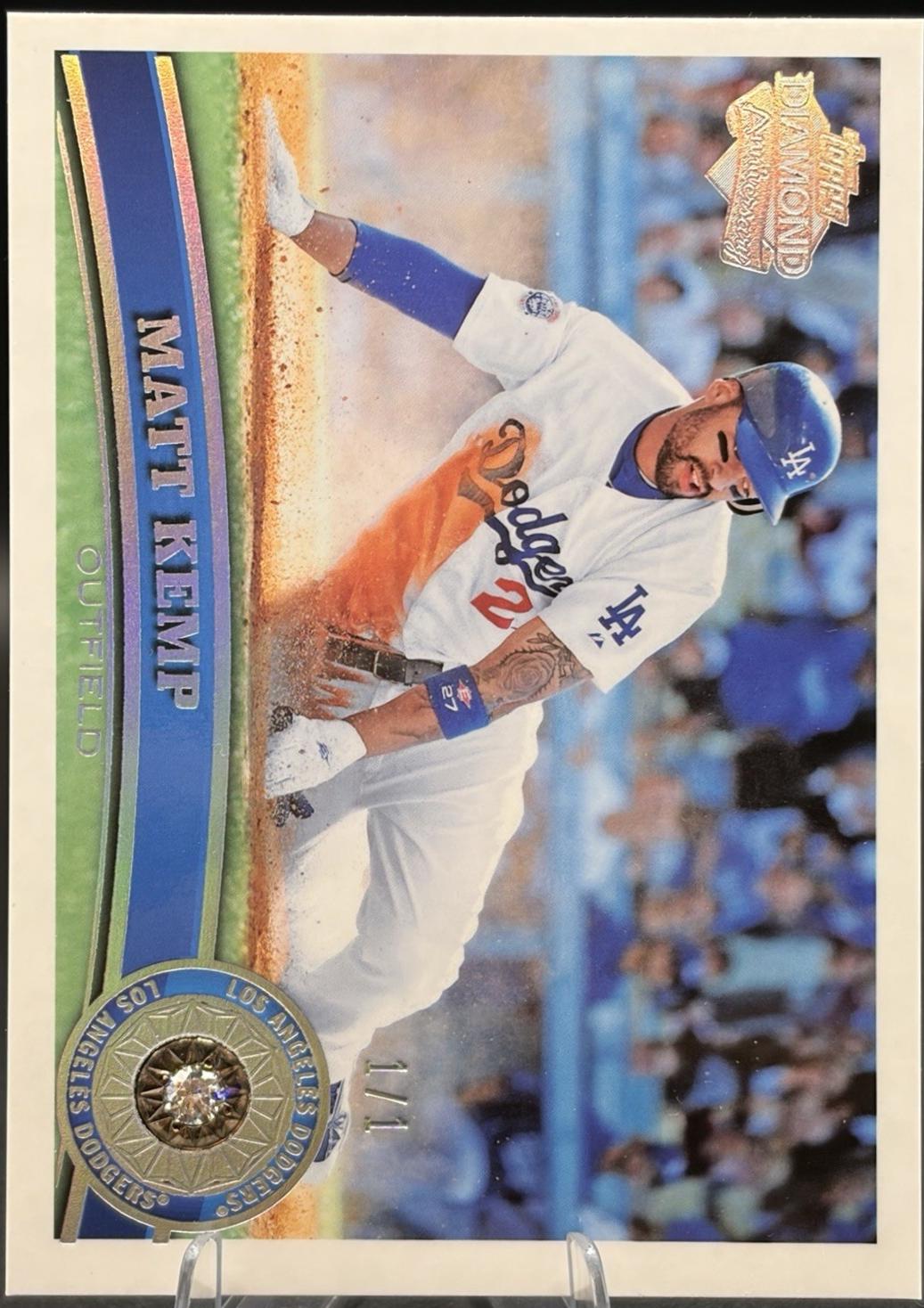
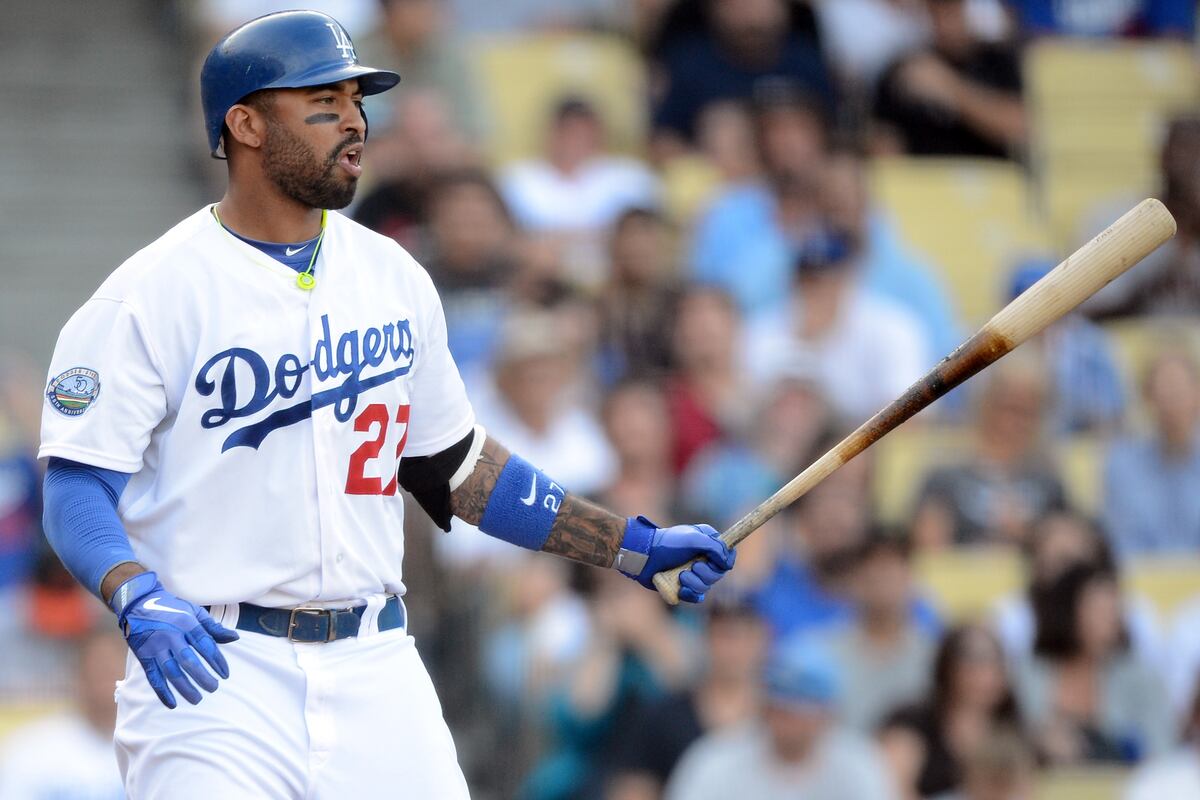
Understanding the Influence of Matt Kemp in Baseball: A Legacy of Power and Resilience
Matt Kemp’s influence on baseball stems from his status as a premier "five-tool" talent who redefined the center field position for the Los Angeles Dodgers during the early 21st century. His 2011 season remains a benchmark for individu...
Matt Kemp’s influence on baseball stems from his status as a premier "five-tool" talent who redefined the center field position for the Los Angeles Dodgers during the early 21st century. His 2011 season remains a benchmark for individual dominance, while his career illustrates the complexities of long-term mega-contracts and the evolution of player durability in the modern era.
Contents
As we look back from the perspective of 2026, Matt Kemp stands as one of the most culturally and statistically significant figures in National League history during the transition from the steroid era to the age of advanced analytics. Known affectionately as "The Bison," Kemp combined raw physical power with surprising speed, creating a blueprint for the modern athletic outfielder. His career was a tapestry of historic peaks, devastating injuries, and a late-career resurgence that solidified his reputation as a clubhouse leader. To understand his influence is to understand the evolution of the Los Angeles Dodgers franchise and the changing valuation of multi-faceted superstars.
The 2011 Season: A Performance for the Ages
The primary pillar of Matt Kemp’s influence is his historic 2011 campaign. During this season, Kemp posted numbers that had rarely been seen in the history of the National League. He finished the year with a .324 batting average, 39 home runs, and 126 RBIs, falling just one home run short of the elusive 40/40 club (40 home runs and 40 stolen bases).
Beyond the raw statistics, the 2011 season became a focal point for the MVP debate, which continues to be discussed in 2026. Kemp finished second in the National League MVP voting to Ryan Braun, a result that became controversial after Braun’s subsequent links to performance-enhancing drugs. This event influenced how fans and voters perceived "clean" greatness during a murky era of the sport. Kemp’s ability to carry a Dodgers team that was mired in ownership instability (the Frank McCourt era) provided a sense of hope and identity to a fan base that desperately needed a homegrown hero.
Redefining the Five-Tool Prototype
Before the current era of Statcast and launch angles, Matt Kemp was the physical embodiment of the "five-tool" player. Scouts define these tools as hitting for average, hitting for power, baserunning speed, throwing strength, and fielding range. Kemp’s influence on scouting was profound because he proved that a player of his size—6'4" and roughly 215 pounds—could effectively play center field at an elite level.
The Shift in Center Field Expectations
Historically, center fielders were often smaller, contact-oriented hitters. Kemp challenged this convention by providing middle-of-the-order power from a premium defensive position. This paved the way for future stars like Mike Trout and Julio Rodríguez, who are expected to provide both defensive stability and elite offensive production. Kemp’s aggressive baserunning (leading the league in total bases in 2011) forced opposing pitchers to focus on him even after the ball was no longer in play, a psychological edge that influenced how the Dodgers built their lineup around him.
The $160 Million Precedent: Economic and Roster Impact
In the autumn of 2011, the Dodgers signed Kemp to an eight-year, $160 million contract extension. At the time, it was the largest contract in National League history. This deal was a watershed moment for several reasons:
- Franchise Commitment: It signaled that the Dodgers were prepared to spend like a big-market juggernaut again, despite the ongoing sale of the team.
- Risk Assessment: The contract became a cautionary tale for front offices regarding long-term deals for players in their late 20s. As injuries began to take a toll on Kemp’s hips and hamstrings in the following years, the "back half" of the contract became a significant burden on the team's flexibility.
- Trade Value: Kemp’s contract was so massive that his eventual trade to the San Diego Padres in 2014 required complex financial maneuvering, influencing how modern GMs structure "bad contract" swaps today.
Key Career Statistics Comparison
To visualize Kemp's impact, consider his peak production against his career averages. These figures highlight why he was considered a generational talent.
| Metric | 2011 Peak Season | Career Average (Per 162 Games) |
|---|---|---|
| Home Runs | 39 | 26 |
| RBIs | 126 | 94 |
| Stolen Bases | 40 | 17 |
| Batting Average | .324 | .284 |
| OPS | .986 | .822 |
| WAR (Baseball-Reference) | 8.0 | 2.1 |
The Sabermetric Paradox: Offense vs. Defense
One of the more nuanced ways Matt Kemp influenced baseball was through the lens of advanced analytics. Kemp is often cited in the "eye test vs. analytics" debate. While fans saw a graceful athlete making sliding catches, early defensive metrics like Defensive Runs Saved (DRS) and Ultimate Zone Rating (UZR) were often critical of his route-running and range.
This discrepancy influenced how teams valued defensive positioning. The Dodgers began to realize that Kemp’s physical gifts could be better utilized with better data-driven placement. His career serves as a case study for the development of "Outs Above Average" (OAA), as analysts sought more accurate ways to measure the contributions of high-variance outfielders. Even when his defensive numbers dipped due to injuries, his offensive "Weighted Runs Created Plus" (wRC+) remained high, sparking internal league-wide discussions about whether a player's offensive ceiling could outweigh defensive liabilities.
Cultural Iconography and "The Bison"
Kemp’s influence extended far beyond the diamond. In Los Angeles, he was a celebrity in his own right, bridging the gap between Hollywood and Chavez Ravine. His high-profile relationship with pop star Rihanna and his presence at major fashion events brought a new demographic of fans to the stadium.
In an era where baseball was struggling to market its stars to younger audiences, Kemp was naturally marketable. The "Bison" nickname—earned for his thundering gait on the basepaths—became a brand. He showed that a baseball player could be a cultural icon, a lesson that the league took to heart when developing marketing strategies for the stars of the 2020s.
Resilience and the 2018 Resurgence
Perhaps the most underrated part of Kemp’s influence is his late-career evolution. After being traded multiple times (Padres, Braves) and being written off by many as "washed up," Kemp returned to the Dodgers in 2018.
His performance that year was a masterclass in professional adjustment. No longer the speed threat he once was, Kemp focused on elite pinch-hitting and leadership. He made the All-Star team and helped lead the Dodgers to a World Series appearance. This chapter of his career influenced how veteran players are valued; he proved that a former superstar could successfully transition into a supporting role, providing clubhouse stability and high-leverage production.
FAQs About Matt Kemp’s Career and Influence
Did Matt Kemp ever win an MVP award?
No, Matt Kemp never won a regular-season MVP award. He finished second in 2011 to Ryan Braun in one of the most debated votes in MLB history. He did, however, win two Gold Glove Awards and two Silver Slugger Awards, confirming his status as the best all-around player in the National League during his peak.
How did injuries affect Matt Kemp’s legacy?
Injuries to his hamstrings, shoulders, and particularly his hips significantly altered his career trajectory. After his near-40/40 season in 2011, these physical setbacks sapped his elite speed and defensive range. Without these injuries, many analysts believe Kemp would have been a perennial 30/30 threat and a strong candidate for the Hall of Fame.
What was Matt Kemp’s "Bison" nickname about?
The nickname was given to him by a teammate (Darren Dreifort) during his rookie season. It referred to his large physical stature and the way he looked like a stampeding bison when running the bases. The name stuck and became a central part of his identity among Dodgers fans.
Why was his trade to the San Diego Padres significant?
The 2014 trade was a "blockbuster" that signaled a total philosophy shift for the Dodgers under new management. It involved the Dodgers eating a significant portion of his salary to acquire younger talent, a move that set the stage for the deep roster depth that defined the Dodgers' dominance throughout the late 2010s and early 2020s.
Is Matt Kemp considered a Hall of Famer?
While Kemp was one of the best players in baseball for a five-year stretch, his career totals (287 home runs, .284 average) generally fall short of the traditional Hall of Fame benchmarks. However, his influence is often cited in the "Hall of Very Good," and his 2011 season remains one of the greatest individual years not to be rewarded with an MVP.
Practical Recommendation for Fans and Analysts
To truly appreciate Matt Kemp’s influence, one should study the Dodgers' 2011 game logs alongside his Statcast-era data from 2018. This comparison provides a technical look at how a player can adapt their swing mechanics and approach as their physical tools evolve. For those looking to understand the modern "power-speed" dynamic, Kemp’s 2011 highlights serve as a foundational study in biomechanics and athletic efficiency. As we move further into the 2020s, his career remains the primary reference point for the high-ceiling, high-risk nature of the modern baseball superstar.
Image Gallery