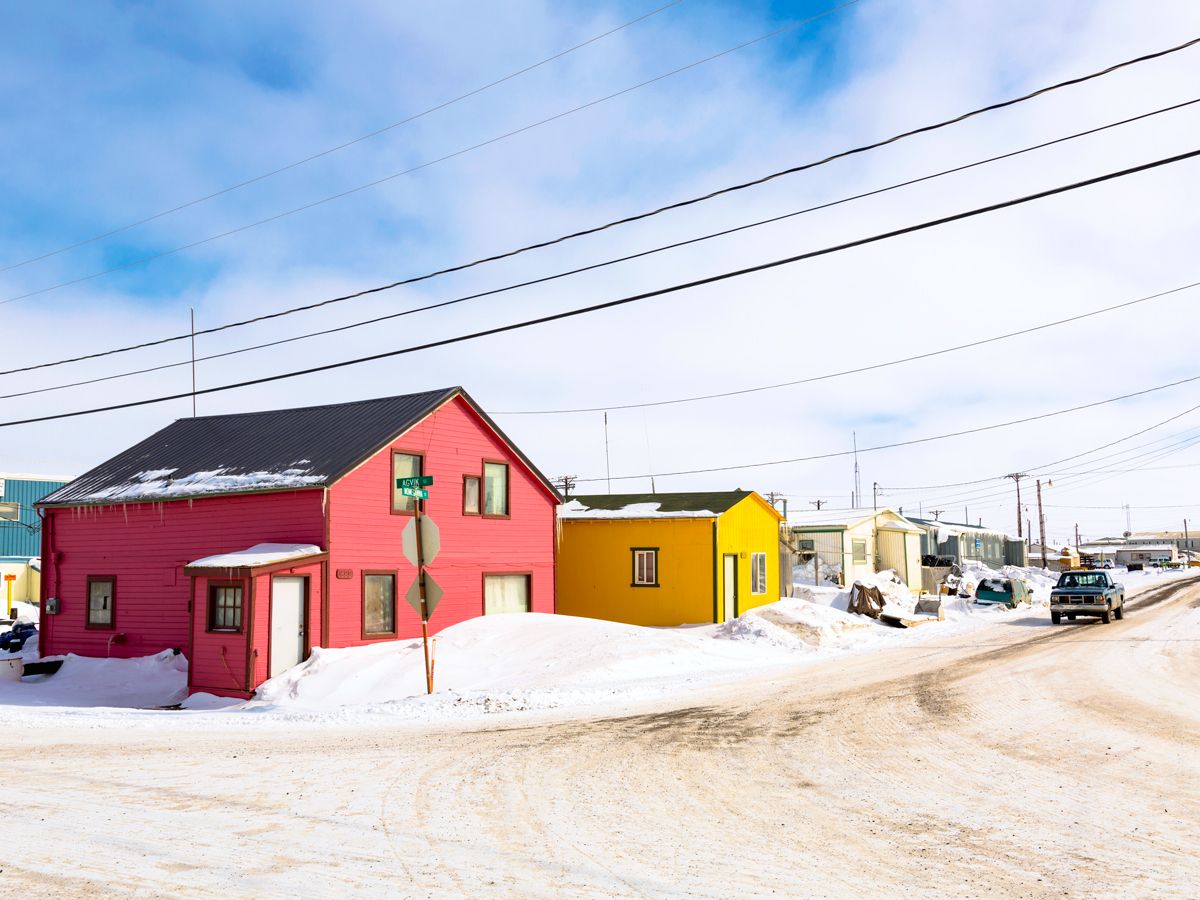
Alaska's 24-Hour Darkness Explained: The Science, Locations, and Daily Life Behind Polar Night
Alaska's 24-hour darkness, technically known as polar night, occurs because Earth is tilted 23.5 degrees on its rotational axis, causing the Northern Hemisphere to lean away from the Sun during winter. This complete absence of direct s...
Alaska's 24-hour darkness, technically known as polar night, occurs because Earth is tilted 23.5 degrees on its rotational axis, causing the Northern Hemisphere to lean away from the Sun during winter. This complete absence of direct sunlight affects only regions located north of the Arctic Circle, such as Utqiaġvik, while southern Alaskan cities maintain several hours of daylight daily.
Contents
The Earth Science Behind Polar Night
To understand why parts of Alaska experience weeks without sunrise, one must examine Earth's astronomical alignment. Earth rotates on an axis tilted at approximately 23.5 degrees relative to its orbital plane around the Sun. As the planet completes its annual orbit, this tilt shifts which hemisphere receives direct solar radiation.
During the Northern Hemisphere's winter—culminating in the December solstice—the North Pole reaches its maximum tilt away from the Sun. Because of this angle, the curvature of Earth physically blocks sunlight from reaching the highest latitudes.
The boundary line where this optical phenomenon begins is the Arctic Circle, situated at approximately 66°33′ N latitude. Any location north of this imaginary line experiences at least one 24-hour period where the Sun does not cross above the horizon. The further north a location sits, the longer its period of continuous winter darkness lasts:
- At the Arctic Circle (66.5° N): The Sun remains below the horizon for exactly 24 hours on the winter solstice.
- At High Arctic Latitudes (71° N and above): The Sun remains continuously below the horizon for over two months.
- At the Geographic North Pole (90° N): The Sun sets in late September and does not rise again until late March, creating a single six-month night.
Myth vs. Reality: Does All of Alaska Go Dark?
A widespread misconception is that the entire state of Alaska plunges into pitch-black night throughout the winter months. In reality, Alaska covers over 660,000 square miles across varied latitudes, meaning winter light levels differ dramatically depending on where you stand.
Only the northernmost regions of the state—primarily the North Slope and parts of the Northwest Arctic—experience true polar night. Major population centers in central and southern Alaska sit well south of the Arctic Circle and receive sunlight every day of the year, albeit in abbreviated amounts during December and January.
Utqiaġvik (Formerly Barrow)
Located at 71.29° N latitude, Utqiaġvik is the northernmost city in the United States. It experiences the state's most dramatic polar night. The Sun sets in mid-November and does not rise above the horizon again until late January—a period lasting roughly 64 to 66 consecutive days.
Fairbanks and the Interior
Fairbanks rests at 64.84° N latitude, roughly 115 miles south of the Arctic Circle. Because it sits south of the line, Fairbanks does not experience polar night. On the winter solstice (around December 21), Fairbanks receives approximately 3 hours and 42 minutes of direct daylight, bounded by prolonged periods of morning and evening twilight.
Anchorage and Southcentral Alaska
Anchorage sits further south at 61.21° N latitude. On the shortest day of the year, Anchorage records roughly 5 hours and 27 minutes of daylight. While the winter days are noticeably short and the sun stays low on the southern horizon, the city never comes close to 24 hours of darkness.
Juneau and the Inside Passage
In Southeast Alaska, Juneau (58.30° N) enjoys over 6 hours and 20 minutes of daylight on the winter solstice, exhibiting winter light patterns similar to Northern Europe or southern Canada.
Is Polar Night Pitch Black for 24 Hours?
Another common misconception is that polar night translates to continuous, ink-black darkness. Even in communities like Utqiaġvik that experience weeks without a formal sunrise, residents do not live in constant darkness. Instead, they experience daily periods of twilight.
Twilight occurs when the Sun sits just below the horizon, allowing atmospheric scattering to reflect sunlight down onto Earth's surface. Astronomers classify twilight into three distinct phases based on the Sun's angle below the horizon:
- 0°: Horizon (Sunrise/Sunset)
- Civil Twilight (Sun 0° to 6° below horizon)
- -6°
- Nautical Twilight (Sun 6° to 12° below horizon)
- -12°
- Astronomical Twilight (Sun 12° to 18° below horizon)
- -18°
- Complete Astronomical Darkness
- Civil Twilight (0° to 6° below horizon): The Sun is close enough to the horizon that natural light is sufficient for terrestrial activities without artificial lighting. Sky conditions display vibrant shades of blue, pink, and deep orange.
- Nautical Twilight (6° to 12° below horizon): The horizon remains faintly visible, and brighter stars appear. Artificial illumination is required for outdoor navigation and work.
- Astronomical Twilight (12° to 18° below horizon): The horizon is no longer distinguishable, but subtle solar scattering still prevents the sky from achieving absolute astronomical darkness.
During the peak of polar night in Utqiaġvik, solar noon brings the Sun to approximately 4.5 degrees below the horizon. This position places the region firmly in civil twilight for three to four hours around mid-day. During this window, the sky glows with a twilight hue—often referred to as the "blue hour"—providing enough illumination to see clearly across the landscape without streetlights.
Furthermore, snow cover acts as a natural reflector, magnifying moonlight, starlight, and artificial street lighting across the terrain.
Winter Light Profiles Across Key Alaskan Locations
The table below outlines latitude, polar night status, and winter solstice light availability for major regions across Alaska:
| Location | Latitude | Experiences Polar Night? | Winter Solstice Sunlight Hours | Solstice Civil Twilight Duration | Duration of Continuous Dark/Twilight Period |
|---|---|---|---|---|---|
| Utqiaġvik (Barrow) | 71.29° N | Yes | 0 hours, 0 minutes | ~3 hours (solar noon) | Mid-November to late January (~65 days) |
| Kotzebue | 66.90° N | Yes | 0 hours, 0 minutes | ~4.5 hours | Late December (~1 to 3 days) |
| Fairbanks | 64.84° N | No | ~3 hours, 42 minutes | ~2 hours, 15 minutes | None (Daily sunrise occurs year-round) |
| Anchorage | 61.21° N | No | ~5 hours, 27 minutes | ~1 hour, 45 minutes | None (Daily sunrise occurs year-round) |
| Juneau | 58.30° N | No | ~6 hours, 21 minutes | ~1 hour, 15 minutes | None (Daily sunrise occurs year-round) |
Data synthesized from physical solar calculation models hosted by the NOAA Global Monitoring Laboratory.
Human Adaptation: Living and Thriving in Extended Darkness
Living through weeks of low sunlight or complete polar night presents psychological and physiological challenges. Human circadian rhythms—the internal body clock regulating sleep, hormone production, and mood—are heavily reliant on natural light exposure.
Circadian Rhythm and Seasonal Affective Disorder (SAD)
When exposure to blue-spectrum sunlight decreases, the brain produces higher levels of melatonin during the day, leading to persistent fatigue. Concurrently, serotonin production often drops, which can trigger Seasonal Affective Disorder (SAD), a clinical form of seasonal depression characterized by lethargy, mood changes, and sleep disruption.
To maintain physical and mental well-being throughout the dark months, Alaskans utilize several daily strategies:
Light Therapy: Bright light therapy boxes emitting 10,000 lux of white light are widely used in homes and offices. Exposure to this light for 20–30 minutes every morning suppresses daytime melatonin release and helps stabilize sleep cycles.
Vitamin D3 Supplementation: Reduced solar radiation prevents human skin from synthesizing adequate Vitamin D. Health guidelines in Arctic regions routinely recommend daily Vitamin D supplements to maintain bone health and immune function.
Active Daily Schedules: Maintaining strict routines for sleeping, eating, and exercising helps reinforce circadian stability when natural light markers are absent.
Outdoor Recation and Community Culture: Rather than isolating indoors, local communities embrace winter culture through snowmobiling, cross-country skiing, dog sledding, and aurora borealis viewing. Communities in high latitudes host winter festivals, lighting ceremonies, and gatherings to foster social connection.
Reduced Sunlight Exposure
- Increased Daytime Melatonin Levels
- Decreased Brain Serotonin Levels
- Circadian Rhythm Disruption / SAD
- Bright Light Therapy
- Vitamin D3 Supplementation
- Active Daily Routine
Visiting Northern Alaska in Winter: Practical Advice
Traveling to high-latitude destinations like Utqiaġvik, Fairbanks, or Brooks Range communities during the winter months requires careful planning.
- Understand Atmospheric Conditions: Do not expect total blackout conditions during midday hours. Plan outdoor photography and sightseeing during the 3-hour twilight period surrounding solar noon to capture light reflections on snow.
- Pack High-Output Illumination: Headlamps and flashlights with cold-weather lithium batteries are essential safety equipment when navigating outside city limits.
- Prepare for Cold Extremes: Polar night coincides with severe sub-zero temperatures. Layering with high-grade synthetic or wool base layers, windproof parkas, insulated boots rated to -40°F, and facial protection is required for safe outdoor exposure.
- Monitor Solar Activity for Auroras: Extended dark skies create ideal conditions for viewing the aurora borealis. Northern lights displays can be observed whenever the sky is clear and astronomical twilight or night prevails.
Frequently Asked Questions
Which Alaskan cities experience 24 hours of total darkness?
Only communities located north of the Arctic Circle experience polar night. The largest city with extended 24-hour sunlessness is Utqiaġvik (formerly Barrow). Smaller remote communities like Kaktovik, Point Hope, and Kotzebue also experience varying lengths of polar night depending on their exact latitude.
When does 24-hour darkness start and end in Utqiaġvik?
In Utqiaġvik, the Sun sets around November 18 or 19 and does not rise above the horizon again until January 22 or 23. This creates a period of roughly 64 to 66 days where the Sun remains entirely below the line of the horizon.
How do people sleep during polar night?
Alaskans maintain regulated sleep schedules by using artificial circadian management. They use light box therapy in the morning to wake up their neurological system, rely on blackout shades to block localized street illumination at night, and maintain consistent sleeping and waking times throughout the season.
Is the northern lights (Aurora Borealis) visible during polar night?
Yes. Extended winter darkness provides optimal conditions for viewing the aurora borealis. Provided the weather yields clear skies, the lack of solar light allows high-latitude auroral displays—caused by solar wind interacting with Earth's magnetosphere—to be visible even during early afternoon hours.
Does Anchorage go completely dark in winter?
No. Anchorage sits well south of the Arctic Circle at 61.21° N. On the winter solstice, Anchorage receives about 5 hours and 27 minutes of direct daylight, along with additional morning and evening civil twilight, ensuring daily sunlight year-round.
Practical Takeaway
Alaska's 24-hour winter darkness is an astronomical phenomenon governed strictly by Earth's 23.5-degree axial tilt and restricted to regions north of the Arctic Circle (66.5° N). Rather than enduring non-stop, pitch-black night, areas like Utqiaġvik experience daily periods of civil twilight that illuminate the snow-covered landscape in vivid hues.
If you plan to live in or travel to Arctic Alaska during winter, prioritize regular bright-light exposure, supplement Vitamin D, dress for severe sub-zero conditions, and take advantage of midday twilight windows for travel and outdoor recreation.
Image Gallery