Tesla Model Y AWD Horsepower Explained: Ratings, Dual Motors, and Real-World Performance
The Tesla Model Y All-Wheel Drive (AWD) delivers between 384 and 480 horsepower, depending on the specific trim and software configuration. The Long Range AWD typically produces approximately 384 horsepower, while the Performance varia...
The Tesla Model Y All-Wheel Drive (AWD) delivers between 384 and 480 horsepower, depending on the specific trim and software configuration. The Long Range AWD typically produces approximately 384 horsepower, while the Performance variant reaches roughly 455 to 480 horsepower. These figures represent the combined output of the front and rear electric motors.
Contents
For years, Tesla has diverged from traditional automotive marketing by focusing on acceleration times and range rather than peak horsepower. However, as we navigate the 2026 automotive landscape, understanding the "true" power behind the world’s best-selling electric SUV is essential for buyers and enthusiasts alike. Because electric motors deliver torque instantly, the horsepower in a Model Y AWD feels significantly different from a traditional internal combustion engine (ICE) vehicle. This guide breaks down the technical specifications, motor architecture, and the variables that influence how much power is actually reaching the pavement.
The Architecture of Tesla Dual Motor AWD
To understand Tesla Model Y AWD horsepower, one must first understand the "Dual Motor" system. Unlike traditional AWD systems that use a heavy driveshaft and a transfer case to move power from a single engine to all four wheels, the Model Y uses two independent electric motors.
Front vs. Rear Motor Dynamics
The Model Y AWD utilizes two distinct types of motors to balance efficiency and performance. In the rear, Tesla employs a Permanent Magnet Synchronous Motor (PMSM). This motor is highly efficient and serves as the primary drive unit under most cruising conditions. In the front, Tesla typically uses an Induction Motor.
The induction motor is unique because it can be completely de-energized when not needed, reducing "drag" and increasing overall vehicle range. When you demand full power or the traction control system detects wheel slip, the front motor engages instantly. This "digital" torque distribution allows the Model Y to adjust power between the front and rear wheels in as little as 10 milliseconds.
The Role of the Inverter
The horsepower output is not just a result of the motors themselves but also the inverters that feed them. The inverter converts Direct Current (DC) from the battery into Three-Phase Alternating Current (AC) for the motors. The Model Y Performance variant often utilizes a more robust rear inverter (typically rated for higher amperage) than the Long Range model, which is a primary reason for its significantly higher horsepower rating despite having a similar physical motor footprint.
Tesla Model Y Long Range AWD Horsepower
The Long Range AWD is the most popular configuration of the Model Y. As of 2026, it remains the benchmark for balancing utility and speed.
Base Performance Specs
In its standard factory configuration, the Model Y Long Range AWD produces a combined output of approximately 384 to 390 horsepower. This power is distributed with a slight rear-bias to maintain the sporty handling characteristics Tesla is known for. With this power, the vehicle can sprint from 0 to 60 mph in 4.8 seconds.
The "Acceleration Boost" Upgrade
One of the most unique aspects of Tesla ownership is the ability to "download" more horsepower. For a one-time fee (historically $2,000), Long Range AWD owners can purchase the Acceleration Boost. This software unlock increases the peak power output by optimizing the inverter settings and allowing more current to flow to the motors.
With the Acceleration Boost, the horsepower jumps to approximately 440 to 450 hp, and the 0-60 mph time drops from 4.8 seconds to 4.2 seconds. This makes the Long Range AWD nearly as fast as the Performance model in daily driving scenarios, though it lacks the higher top speed and specialized track hardware.
Tesla Model Y Performance Horsepower
The Model Y Performance is designed for those who want supercar-level acceleration in a family-sized crossover.
Peak Output and Thermal Management
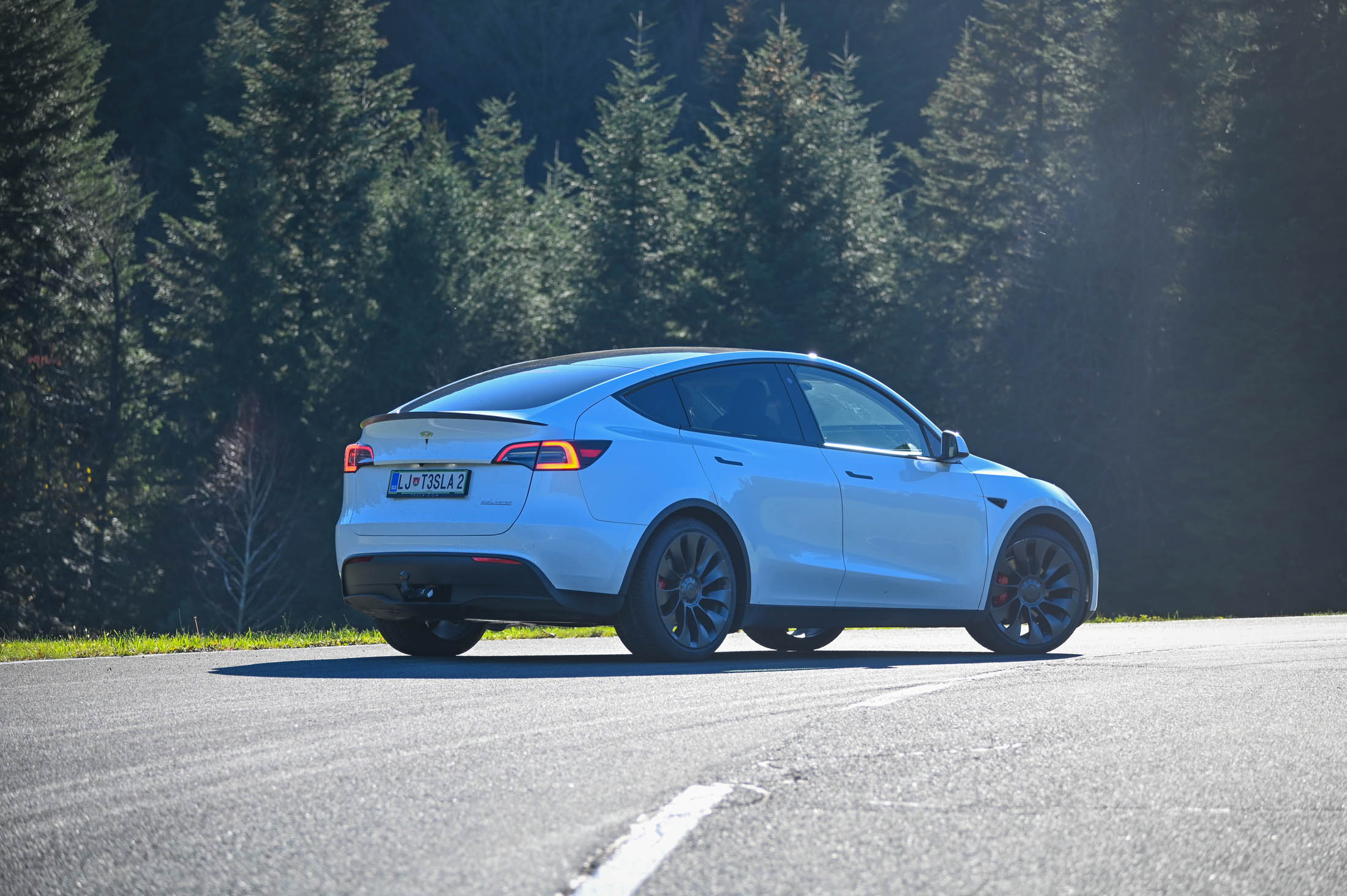
The Model Y Performance produces a combined peak output of approximately 455 to 480 horsepower. Some independent dynamometer tests have shown peak bursts even higher, reaching near 500 hp when the battery is at a high state of charge (SoC) and optimal temperature.
The Performance trim achieves this through:
- High-Output Inverters: Allowing for greater current draw from the battery.
- Enhanced Thermal Management: The cooling system is optimized to handle the heat generated by rapid power discharge.
- Software Mapping: A more aggressive "throttle" map that prioritizes immediate torque delivery over maximum efficiency.
This power allows the Model Y Performance to achieve a 0-60 mph time of 3.5 seconds (standard 1-foot rollout applied). In 2026, even with newer competitors in the market, this remains an industry-leading figure for the compact SUV segment.
Horsepower vs. Torque: The Electric Advantage
While horsepower is the headline figure, torque is what provides the "pinned to your seat" feeling in a Tesla. The Model Y AWD produces roughly 376 lb-ft of torque in the Long Range trim and over 470 lb-ft in the Performance trim.
Because electric motors produce 100% of their peak torque at 0 RPM, the Model Y AWD can utilize its horsepower more effectively at low speeds than an ICE vehicle. In a gas-powered car, the engine must "rev up" to reach its power band, often requiring downshifts. In the Model Y, the 384+ horsepower is available the moment you touch the accelerator, providing a level of responsiveness that traditional horsepower ratings fail to fully capture.
Technical Factors Influencing Real-World Horsepower
The horsepower of a Tesla is not a static number. Unlike a gas car, where the engine's mechanical limits are relatively fixed, an EV's power is governed by the chemical and electrical state of the battery pack.
State of Charge (SoC)
Horsepower in a Model Y AWD is highest when the battery is between 80% and 100%. As the battery voltage drops (as the battery is depleted), the amount of power the battery can physically "push" to the motors decreases. A Model Y at 10% battery will not produce the same peak horsepower as it does at 90%.
Battery Temperature
The Tesla thermal management system works to keep the battery in an ideal window (usually between 30°C and 50°C for performance). If the battery is too cold, the internal resistance increases, limiting the horsepower output. This is why Tesla introduced "Track Mode" and battery pre-conditioning, which warms the battery specifically to unlock maximum horsepower for spirited driving or Supercharging.
| Model Variant | Estimated Horsepower | 0-60 MPH (Seconds) | Top Speed (MPH) | Primary Motor Type |
|---|---|---|---|---|
| Long Range AWD | 384 hp | 4.8s | 135 mph | Dual Motor (Induction/PMSM) |
| Long Range (w/ Boost) | ~450 hp | 4.2s | 135 mph | Dual Motor (Induction/PMSM) |
| Performance AWD | 455-480 hp | 3.5s | 155 mph | Dual Motor (High-Output) |
| Standard Range (RWD) | ~295 hp | 6.6s | 135 mph | Single Motor (Rear) |
Comparing Tesla Horsepower to Competitors
In the 2026 market, the Model Y AWD faces stiff competition from brands like Hyundai, Ford, and Rivian. When comparing horsepower, it is vital to look at the power-to-weight ratio.
The Tesla Model Y AWD weighs approximately 4,400 lbs. Its ~390 horsepower gives it a highly competitive ratio. For comparison, the Ford Mustang Mach-E Premium AWD offers similar horsepower (~346 hp) but often feels slightly less urgent due to different motor mapping and weight. The Hyundai IONIQ 5 AWD delivers roughly 320 horsepower, positioning it slightly below the Model Y Long Range in raw output, though its 800V architecture allows for faster sustained power delivery during rapid charging cycles.
Sustainable Power and Efficiency
A common misconception is that higher horsepower automatically leads to significantly lower range. While the Model Y Performance has a slightly lower EPA range than the Long Range (due primarily to its larger, heavier 21-inch wheels and stickier tires), the motors themselves are incredibly efficient.
Tesla’s use of silicon carbide inverters reduces energy loss during the DC-to-AC conversion. This means more of the battery's energy goes toward producing horsepower rather than being wasted as heat. In 2026, the Model Y continues to lead the class in "miles per gallon equivalent" (MPGe), proving that high horsepower and high efficiency are no longer mutually exclusive.
FAQ
Can I increase my Model Y AWD horsepower after purchase?
Yes, if you own the Long Range AWD variant, you can purchase the "Acceleration Boost" via the Tesla mobile app. This software-only update increases the peak horsepower by approximately 50-60 hp and reduces your 0-60 mph time by half a second. The Performance model already operates at peak hardware capacity and does not offer a further boost.
Why does Tesla not list horsepower on their official website?
Tesla prefers to market "user-end" results such as 0-60 mph times and range. Horsepower in EVs is complicated to calculate because it depends on the battery's discharge rate, the inverter's limits, and the motor's capabilities. Tesla's philosophy is that the experience of the speed matters more to the consumer than the technical SAE horsepower rating.
Does the Model Y AWD horsepower decrease as the car gets older?
The electric motors themselves are unlikely to lose power over time, as they have very few moving parts. However, as the battery pack ages and undergoes "degradation," its internal resistance may increase slightly. This could marginally reduce the peak power output (horsepower) during full-throttle acceleration, though most owners will not notice a significant difference over the first 100,000 miles.
Is the horsepower different between the 5-seat and 7-seat Model Y?
No, the horsepower is determined by the drivetrain (motors, inverters, and battery). Whether you have the 5-seat or 7-seat interior configuration, the horsepower remains the same for that specific trim (Long Range or Performance). However, the 7-seat version is slightly heavier, which may marginally affect acceleration times even if horsepower is identical.
How does cold weather affect the Model Y's horsepower?
Cold weather increases the internal resistance of the battery cells, which limits how much current they can discharge quickly. This results in a temporary reduction in available horsepower until the battery warms up. Tesla mitigates this by using the heat pump and motor waste heat to warm the battery while driving or via pre-conditioning.
Practical Recommendation
If you are choosing between Model Y AWD variants based on power, the Long Range AWD with the Acceleration Boost is often considered the "sweet spot" for most drivers in 2026. It provides roughly 450 hp—plenty for safe highway merging and spirited driving—while maintaining the comfort of 19-inch or 20-inch wheels and a longer driving range. However, if you prioritize track-ready performance, upgraded brakes, and the highest possible top speed, the Performance AWD remains the definitive choice for maximum horsepower.
Image Gallery