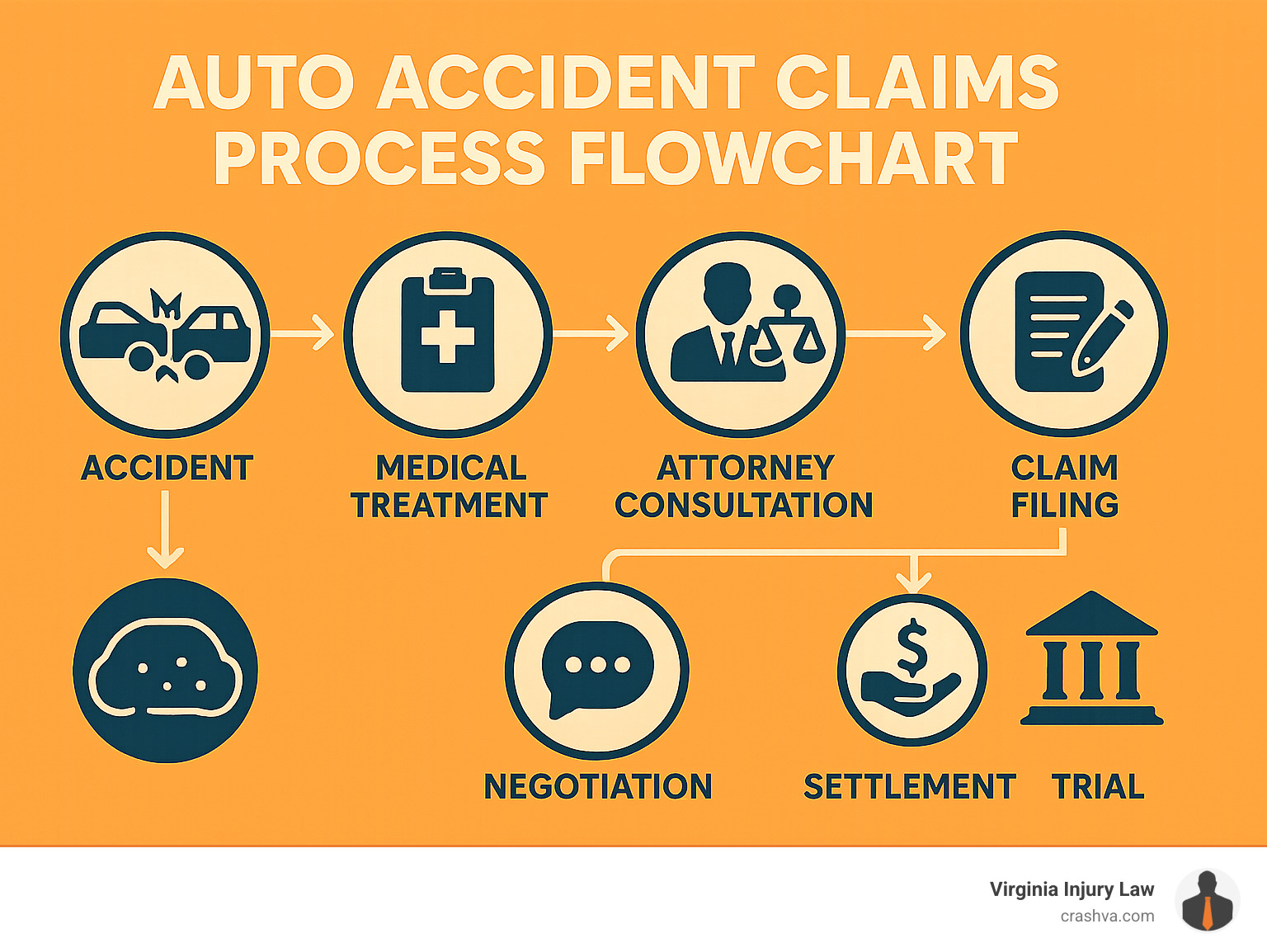
Navigating Iowa Auto Accident Insurance Claims: Rules, Process, and Legal Limits
Filing Iowa auto accident insurance claims requires understanding the state’s fault-based insurance system, modified comparative negligence rules, and statutory deadlines. To receive compensation, injured drivers must prove another par...
Filing Iowa auto accident insurance claims requires understanding the state’s fault-based insurance system, modified comparative negligence rules, and statutory deadlines. To receive compensation, injured drivers must prove another party’s liability, document damages thoroughly, comply with state reporting mandates, and file claims within strict legal timeframes.
Contents
How Auto Insurance Claims Work in Iowa
Iowa operates under a traditional tort (fault-based) system for motor vehicle crashes. Unlike "no-fault" states where drivers rely primarily on their own insurance policy for minor medical bills regardless of who caused the collision, Iowa requires the party at fault for an accident to cover the resulting financial and physical damages.
When a collision occurs on an Iowa roadway, the injured party has three main avenues for recovering damages:
- Third-Party Claim: Filing a claim directly with the at-fault driver’s insurance carrier.
- First-Party Claim: Filing a claim with their own insurance company under collision, Medical Payments (MedPay), or Uninsured/Underinsured Motorist (UM/UIM) coverage.
- Civil Lawsuit: Filing a personal injury or property damage lawsuit against the negligent driver in an Iowa District Court.
- Auto Accident Occurs in Iowa
- Third-Party Claim (At-Fault Insurer)
- First-Party Claim (Your Own Insurer)
- Settlement Negotiations
- Civil Lawsuit (If unresolved)
Modified Comparative Fault Rule (51% Bar Rule)
Iowa enforces a modified comparative fault rule codified under Iowa Code § 668.3. This rule governs how financial liability is distributed when more than one party shares responsibility for an accident.
Under Iowa law:
- The 51% Bar: A claimant cannot recover any financial damages if they are found to be 51% or more at fault for the collision.
- Proportional Reduction: If a claimant is 50% or less at fault, they can recover damages, but the total award is reduced by their exact percentage of fault.
Example Scenario
If an insurer or jury determines your total financial damages (medical bills, lost wages, vehicle repair) equal $100,000, but finds you were 20% responsible for speeding through an intersection while the other driver ran a stop sign:
- Your recoverable damages are reduced by 20% ($20,000).
- You receive $80,000.
- If you were found 51% responsible, you receive $0.
Insurance adjusters evaluate crash scenes, police reports, and witness statements specifically to assign fault percentages. Establishing clear liability early in the claim process is critical to avoiding a reduction or denial of coverage.
Mandatory Auto Insurance Requirements in Iowa
Drivers operating motor vehicles in Iowa must maintain financial responsibility under Iowa Code Chapter 321A. Most drivers satisfy this requirement by purchasing an auto liability insurance policy that meets or exceeds the state minimum financial responsibility limits.
Minimum Liability Coverage Limits
The legal minimum auto liability limits in Iowa are structured as 20/40/15:
- $20,000 for bodily injury or death of one person in a single accident.
- $40,000 total for bodily injury or death of two or more people in a single accident.
- $15,000 for injury to or destruction of property of others in a single accident.
While these minimum limits satisfy legal operating requirements, modern medical expenses and vehicle replacement costs frequently exceed minimum limits. If an at-fault driver's policy limit is exhausted, the injured party can pursue the driver personal assets or rely on supplemental insurance options.
Key Optional and Supplemental Coverages
To protect against underinsured or uninsured motorists, Iowa policyholders can add several optional coverages:
- Medical Payments (MedPay): Covers immediate medical expenses for the policyholder and passengers regardless of who caused the accident.
- Uninsured Motorist (UM) Coverage: Pays for medical bills and damages if hit by a driver who lacks auto insurance or a hit-and-run driver. Iowa law requires insurers to offer UM coverage, though drivers may reject it in writing.
- Underinsured Motorist (UIM) Coverage: Supplemental coverage that pays out when the at-fault driver’s liability policy limits are insufficient to cover total medical costs and severe injuries.
- Collision Coverage: Pays to repair or replace your vehicle after a crash, regardless of fault, subject to a deductible.
- Comprehensive Coverage: Covers non-collision physical damage, such as hail, theft, animal strikes, or vandalism.
Key Steps to Take After an Accident in Iowa
Taking immediate, deliberate steps after a crash helps protect physical safety and preserves crucial evidence for insurance claims and legal proceedings.
1. Secure the Scene and Call Emergency Services
Check for injuries and call 911 immediately. If vehicle movement is possible and safe, move clear of active traffic corridors to avoid secondary crashes.
2. File an Official Police Report
Law enforcement officers from local police departments, county sheriff offices, or the Iowa State Patrol will document physical evidence, interview drivers, and issue an official accident report. This report serves as a foundational piece of evidence for insurance adjusters.
3. Report the Crash to the Iowa DOT (If Required)
Under Iowa law, if a crash is not investigated by law enforcement and results in injury, death, or total property damage of $1,500 or more, drivers must submit an official accident report (Form 433002) to the Iowa Department of Transportation within 72 hours.
4. Gather Scene Evidence
If safe to do so, document the incident scene thoroughly:
- Take photographs of all vehicle damage, license plates, skid marks, road conditions, weather, traffic signals, and physical injuries.
- Exchange names, contact details, driver’s license numbers, and insurance policy numbers with all involved parties.
- Obtain names and phone numbers of neutral eyewitnesses.
5. Seek Medical Evaluation Immediately
Obtain prompt medical evaluation at an urgent care or emergency department, even if injuries seem minor. Traumatic brain injuries, soft tissue damage, and internal bleeding often exhibit delayed symptoms. Immediate medical documentation creates a direct legal connection between the collision and your injuries.
6. Notify Insurance Carriers Promptly
Notify your auto insurance carrier of the crash. Be truthful regarding facts, but avoid speculating on fault or giving recorded statements to the opposing party’s insurer before reviewing your rights.
Comparing Claim Options: First-Party vs. Third-Party Claims
Understanding whether to file a claim through your own insurance provider or the opposing driver's carrier depends on fault clarity, policy limits, and immediate financial needs.
| Claim Feature | First-Party Claim (Your Insurer) | Third-Party Claim (At-Fault Insurer) |
|---|---|---|
| Primary Dependency | Your own policy terms and optional coverages. | Proof that the other driver was at fault. |
| Deductibles | Applicable for Collision coverage (reimbursable via subrogation). | No deductible applied to your payout. |
| Payout Speed | Typically faster for vehicle repairs and immediate MedPay. | Often slower; requires liability investigation. |
| Fault Consideration | Collision/MedPay pays regardless of who caused the crash. | Subject to Iowa’s 51% modified comparative fault rule. |
| Rental Car Provision | Paid if you carry Rental Reimbursement coverage. | Paid by third-party insurer if liability is accepted. |
| Pain and Suffering | Not covered under standard First-Party policies. | Recoverable if third-party liability is established. |
Subrogation Process
If your own insurance carrier pays for vehicle repairs or medical expenses under first-party coverage while another driver is at fault, your insurer will pursue subrogation. This is the legal process where your insurer seeks reimbursement from the at-fault driver's insurance company. If successful, your insurer typically refunds your collision deductible.
Deadlines and Statutes of Limitations in Iowa
Strict statutory limits dictate how long injured parties have to settle a claim or initiate legal action following an auto accident in Iowa. Missing these legal deadlines generally forfeits the right to recover compensation.
- Date of Auto Accident
- 2-Year Deadline: Personal Injury Claims (Iowa Code § 614.1(2))
- 5-Year Deadline: Property Damage Claims (Iowa Code § 614.1(4))
Statute of Limitations for Personal Injury
Under Iowa Code § 614.1(2), the statute of limitations for personal injury claims arising from a vehicle crash is two years from the exact date of the accident. A lawsuit must be formally filed in court prior to the expiration of this two-year window.
Statute of Limitations for Property Damage
Under Iowa Code § 614.1(4), claims limited strictly to property damage (such as vehicle repair costs or total loss replacement) have a five-year statute of limitations.
Claims Involving Government Entities
If an accident involves a vehicle owned or operated by a city, county, or state government agency in Iowa (for example, a municipal bus or state snowplow), shorter notice deadlines apply under the Iowa Municipal Tort Claims Act or Iowa State Tort Claims Act. Formal administrative notices must often be served within 180 days of the occurrence.
Navigating Common Challenges in Iowa Insurance Claims
Insurance adjusters work to minimize claim payouts for their employers. Claimants frequently encounter obstacles during negotiations.
1. Allegations of Shared Fault
Because of Iowa’s 51% bar rule, liability adjusters frequently attempt to assign partial fault to the claimant. For instance, an adjuster might argue that you were traveling 5 mph over the speed limit or failed to take evasive action, attempting to reduce their payout by 20% to 30%—or push your fault past 50% to deny the claim entirely. Countering these assertions requires objective evidence such as crash reconstruction analysis, traffic camera video, and witness statements.
2. Pre-Existing Injury Arguments
Insurers often request historical medical records to assert that physical pain stems from a pre-existing health condition rather than the collision. Clear medical opinions from treating physicians are required to distinguish prior health history from acute injuries caused by the crash.
3. Lowball Initial Settlement Offers
Insurers may offer quick, low-value settlements before the full scope of your medical treatment, long-term rehabilitation, or lost wage impact is known. Accepting an initial settlement offer requires signing a liability release, which permanently bars you from seeking additional financial recovery for future accident-related complications.
Frequently Asked Questions
What should I do if the driver who hit me in Iowa is uninsured?
If you are involved in a collision with an uninsured driver, you can file a claim under your own policy’s Uninsured Motorist (UM) coverage if you carry it. You may also pursue a civil lawsuit directly against the at-fault driver, though collecting judgments from uninsured individuals can be difficult if they lack recoverable assets.
Does Iowa law require drivers to carry MedPay coverage?
No. Medical Payments (MedPay) coverage is optional in Iowa. Insurance carriers are required to offer it, but policyholders can elect to decline it. MedPay covers medical bills for you and your passengers up to the selected policy limit regardless of fault.
How does vehicle total loss work in Iowa?
Under Iowa standards, an insurance carrier typically declares a vehicle a total loss when the estimated cost of repairs plus the scrap/salvage value equals or exceeds the vehicle's Actual Cash Value (ACV) immediately prior to the crash. If declared a total loss, the insurer pays the ACV minus any applicable deductible.
Can I recover compensation if I was partially at fault for an accident in Iowa?
Yes, provided your percentage of fault is 50% or less. Under Iowa’s modified comparative fault law, your monetary recovery will be reduced by your share of fault. If you are found 51% or more at fault, you cannot recover any compensation from the other driver.
How long does an auto insurance company in Iowa have to process a claim?
Under standards monitored by the Iowa Insurance Division, insurers must acknowledge claims promptly, conduct timely investigations, and approve or deny claims within a reasonable timeframe (typically within 30 days of receiving completed proof-of-loss documentation), unless legitimate investigation delays exist.
Practical Action Plan for Claimants
To protect your financial recovery following an auto accident in Iowa:
- Document Everything: Maintain an organized record containing police reports, medical records, billing statements, repair estimates, and written communications with adjusters.
- Complete Required Filings: Ensure Iowa DOT Form 433002 is completed and submitted within 72 hours if law enforcement did not investigate a qualifying accident ($1,500+ damage or injuries).
- Avoid Unrecorded Statements: Do not provide recorded statements to the opposing party's insurance adjuster before evaluating your total damages and legal options.
- Monitor Legal Deadlines: Keep track of the two-year personal injury statute of limitations and short notice windows for claims involving government entities.
- Seek Professional Evaluation: If facing disputed liability, high medical expenses, or severe injuries, consult a qualified personal injury attorney licensed in Iowa to evaluate your options.
Disclaimer: This guide is intended for informational and educational purposes only and does not constitute formal legal advice. Consult a licensed legal professional in Iowa regarding specific statutory questions or complex insurance claims.
Image Gallery