The Complete Seattle Seahawks Chris Carson Injury Timeline
Chris Carson’s career with the Seattle Seahawks was defined by a relentless, physical running style that led to several significant injuries, most notably a season-ending broken ankle in 2017, a hip fracture in 2019, and a chronic neck...
Chris Carson’s career with the Seattle Seahawks was defined by a relentless, physical running style that led to several significant injuries, most notably a season-ending broken ankle in 2017, a hip fracture in 2019, and a chronic neck condition known as cervical stenosis in 2021. This final condition ultimately forced his retirement from the NFL in July 2022, after he failed to receive medical clearance for contact.
Contents
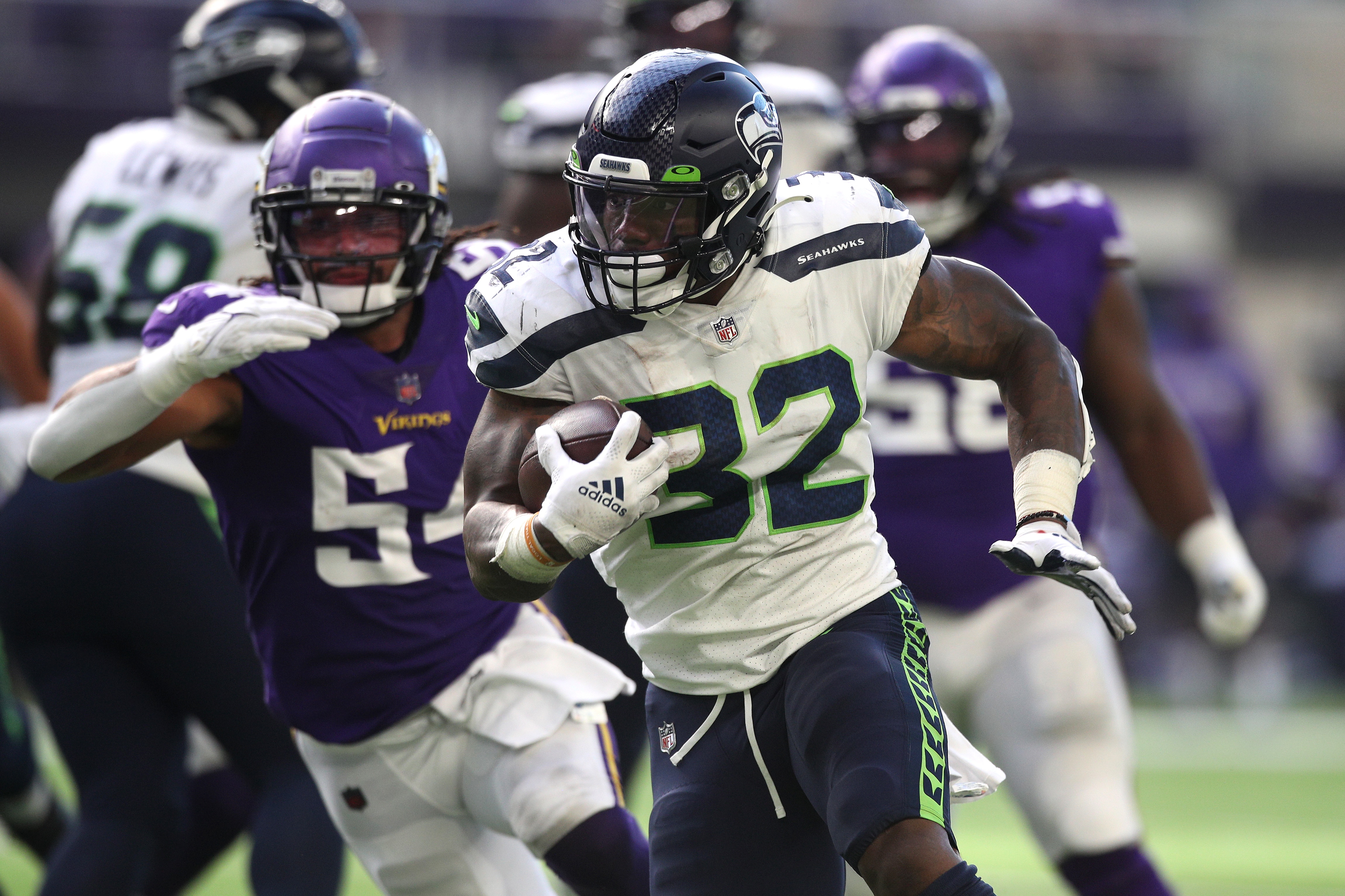
Throughout his tenure in Seattle, Chris Carson was the engine of Pete Carroll’s "run-first" offense. Despite being a seventh-round draft pick out of Oklahoma State in 2017, Carson quickly ascended to the starting role due to his "violent" running style—a term often used by coaches to describe his ability to initiate and absorb contact. However, that same style contributed to a mounting list of physical setbacks that eventually cut a promising career short. As we look back from 2026, Carson’s timeline serves as a poignant reminder of the physical toll the running back position extracts from even the most durable athletes.
2017: The Promising Start and the First Major Setback
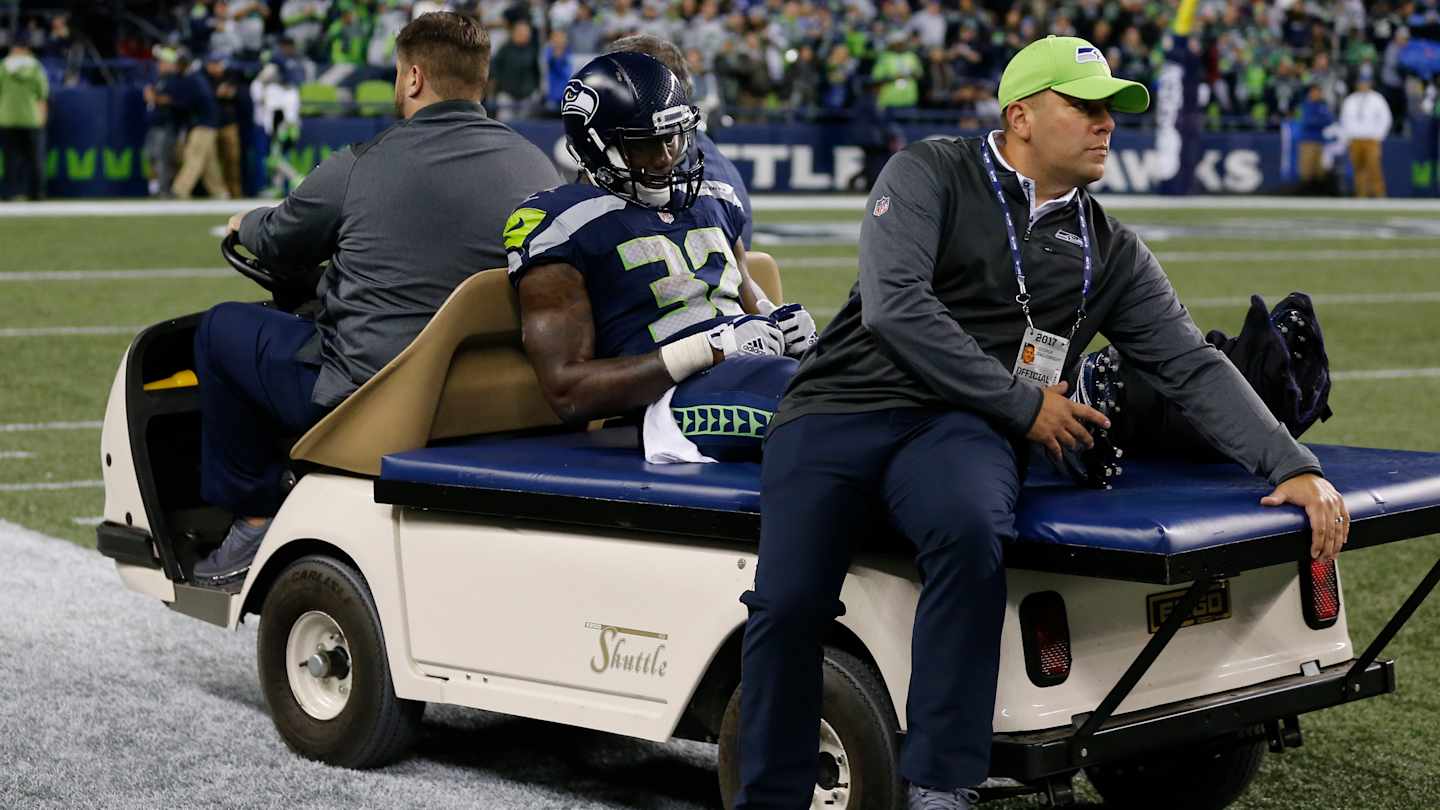
Chris Carson entered the NFL with a chip on his shoulder, but his rookie season was abruptly halted just as it was gaining momentum. In Week 4 of the 2017 season, during a matchup against the Indianapolis Colts, Carson suffered a devastating lower-leg injury. While being tackled, his leg caught awkwardly in the turf, resulting in a high-ankle sprain and a fractured fibula.
The injury required immediate surgery to stabilize the bone and repair the ligament damage. At the time, the Seahawks were struggling to find a consistent successor to Marshawn Lynch, and Carson’s emergence had been a bright spot. Being placed on Injured Reserve (IR) so early in his career raised questions about whether a seventh-round pick could recover his explosiveness. This injury set the tone for a career that would be a constant battle between elite performance and medical rehabilitation.
2018: Resilience and the 1,000-Yard Milestone
The 2018 season was Carson’s most resilient year, proving he could bounce back from major surgery. However, he was not entirely escape-free from the injury report. He missed two games during the season due to lingering hip and groin issues. These were largely considered "wear-and-tear" injuries common for a back who averaged over 18 carries per game.
Despite these minor hurdles, Carson finished the season with 1,151 rushing yards and nine touchdowns. This was the first time a Seahawks runner had eclipsed the 1,000-yard mark since Lynch in 2014. The hip issues he faced this year were precursor warnings to the more severe hip trauma he would face the following season, though at the time, they were managed through rest and specialized physical therapy.
2019: The Hip Fracture Catastrophe
In 2019, Carson established himself as one of the premier power backs in the league, but the season ended in heartbreak. During a Week 16 loss to the Arizona Cardinals, Carson suffered a fractured hip. Unlike a typical muscle strain, this was a bone injury that occurred without a direct, high-impact collision, pointing toward the immense torque and pressure his running style placed on his pelvic structure.
The timing was disastrous for the Seahawks, who were heading into the playoffs. Without Carson (and with backup Rashaad Penny also injured), the team was forced to bring Marshawn Lynch out of retirement for a postseason run. Carson’s recovery from the hip fracture was grueling. It did not require surgery—a rarity for such an injury—but it necessitated months of non-weight-bearing rest to allow the bone to heal naturally. This injury was a turning point, as it sparked concerns about his long-term structural durability.
2020: Managing the Midfoot Sprain
Carson entered the 2020 season on the final year of his rookie contract, playing for his future. In Week 7 against the Arizona Cardinals, he suffered a midfoot sprain (Lisfranc-related). While it wasn't a full tear of the Lisfranc ligament, it was severe enough to sideline him for four games.
Foot injuries are notoriously difficult for running backs because they sap the "cut" ability and explosive drive. Carson eventually returned, finishing the season with 681 yards in 12 games. His performance was enough for the Seahawks to reward him with a two-year, $10.425 million contract extension in early 2021. However, the physical toll was beginning to accumulate, leading to the most significant injury of his life just months later.
2021: The Career-Ending Neck Injury
The 2021 season began with high expectations, but it would be the last time Chris Carson wore a Seahawks uniform. After playing only four games, Carson began experiencing significant neck discomfort. Initially diagnosed as a "neck strain," the reality was far more serious.
After multiple consultations with specialists, it was revealed that Carson was suffering from cervical stenosis. This is a condition involving the narrowing of the spinal canal in the neck, which can lead to nerve compression and, in high-impact sports, a high risk of permanent paralysis.
The Failed Comeback (2022)
Carson underwent "cervical fusion" surgery late in 2021 with the hope of returning for the 2022 season. He spent the entire 2022 offseason attempting to rehab and regain full range of motion. However, during the mandatory physical in July 2022, the Seahawks' medical staff could not clear him for contact. Because the vertebrae had not fused in a way that guaranteed his safety on the field, the risk of a "stinger" or a more catastrophic spinal cord injury was too high.
On July 26, 2022, the Seattle Seahawks officially released Chris Carson with a "failed physical" designation. This move allowed Carson to collect several million dollars in injury protection benefits under the NFL’s Collective Bargaining Agreement, effectively marking his retirement from professional football.
Technical Deep Dive: Understanding Cervical Stenosis in the NFL
Cervical stenosis is particularly dangerous for NFL players because of the "axial loading" that occurs during head-on collisions. When a player lowers their head to initiate contact—a hallmark of Carson’s style—the force is transmitted directly through the cervical spine.
- Pathophysiology: In Carson's case, the narrowing of the canal meant there was less "cushion" (cerebrospinal fluid) around the spinal cord. Any sudden shift or impact could cause the vertebrae to pinch the cord.
- The Fusion Procedure: Carson’s surgery involved fusing two or more vertebrae together using bone grafts and metal hardware. While this stabilizes the neck, it also reduces flexibility and increases the stress on the discs above and below the fusion site.
- The "Why" Behind Retirement: The Seahawks' medical team, led by Dr. Ed Khalfayan, has historically been conservative with neck injuries (as seen with Cliff Avril and Kam Chancellor). For Carson, the lack of "space" around the cord meant that one wrong hit could end his ability to walk.
Chris Carson Injury Timeline Summary Table
| Season | Injury Type | Games Missed | Impact/Outcome |
|---|---|---|---|
| 2017 | Fractured Fibula / Ankle | 12 | Season-ending surgery; IR placement. |
| 2018 | Hip / Groin Strain | 2 | Managed with PT; still reached 1,000 yards. |
| 2019 | Fractured Hip | 2 + Playoffs | Season-ending; healed without surgery. |
| 2020 | Midfoot Sprain | 4 | Limited mobility; played through lingering pain. |
| 2021 | Cervical Stenosis (Neck) | 13 | Career-ending; required spinal fusion surgery. |
| 2022 | Failed Physical | All | Officially retired from the NFL in July 2022. |
The Legacy of Carson’s Physicality
As of 2026, Chris Carson remains a beloved figure in Seattle sports history. His injury timeline is not just a list of medical reports, but a testament to a player who maximized every ounce of his physical potential. His absence forced the Seahawks to pivot their offensive strategy, leading to the drafting of Kenneth Walker III, who brought a different, more elusive style to the backfield.
Carson finished his career with 3,502 rushing yards and 24 rushing touchdowns in just 49 games. His average of 4.6 yards per carry ranks among the best in franchise history for players with more than 500 attempts. While injuries shortened his career, his peak years provided the Seahawks with the identity they needed during the post-Legion of Boom transition era.
Frequently Asked Questions
Did Chris Carson ever play again after his 2021 neck injury? No. While he attempted a comeback during the 2022 offseason and underwent surgery, he was never medically cleared by the Seattle Seahawks' training staff to return to the field. He officially retired in July 2022.
What is the "failed physical" designation Carson received? The "failed physical" designation is a procedural move that allows a team to release a player who is no longer able to perform due to injury. For Carson, this was a beneficial designation as it triggered specific injury protection clauses in his contract, ensuring he received his guaranteed money and additional insurance benefits.
Was Chris Carson's hip injury related to his neck injury? There is no direct medical link between a hip fracture and cervical stenosis. However, sports kinesiologists often note that compensations for lower-body injuries (like his ankle and hip) can change a runner's posture and impact distribution, which may indirectly increase the strain on the upper spine over time.
How many 1,000-yard seasons did Chris Carson have? Chris Carson recorded two consecutive 1,000-yard rushing seasons. He rushed for 1,151 yards in 2018 and 1,230 yards in 2019. He likely would have had a third in 2020 had he not missed four games due to a foot injury.
Final Recommendation for Fans and Researchers
For those looking to understand the long-term impacts of NFL injuries, Chris Carson's case is a primary example of how a high-impact playing style can lead to early retirement. Fans interested in his post-football life can follow his community work in the Seattle area, where he remains active in youth sports and health advocacy.
Image Gallery