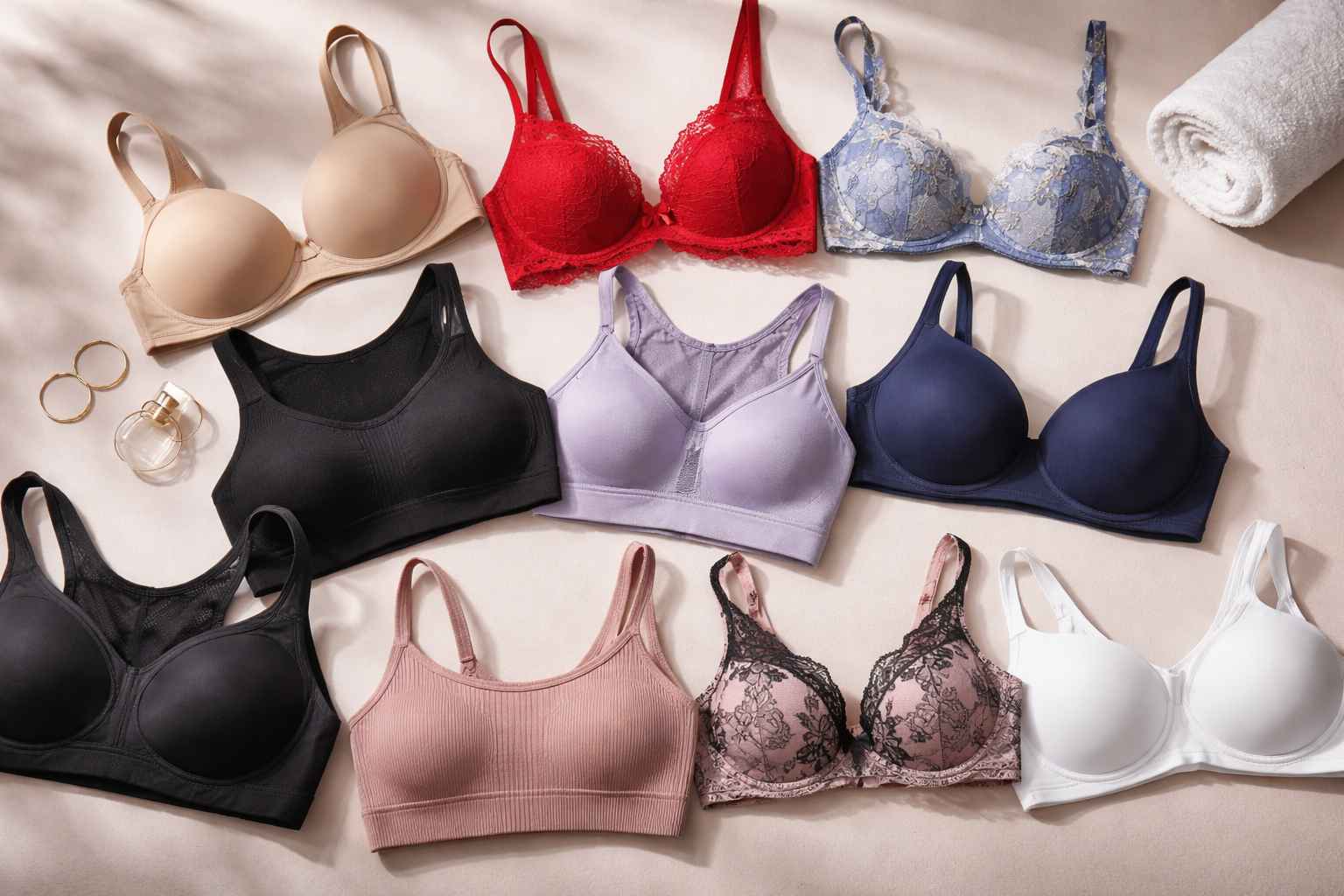
How to Buy the Right Size Bra for Comfort
To buy the right size bra for comfort, you must accurately measure your snug underbust for the band size and your leaning overbust for the cup size. Focus on the band for 80% of the support, ensure the center gore lays flat against you...
To buy the right size bra for comfort, you must accurately measure your snug underbust for the band size and your leaning overbust for the cup size. Focus on the band for 80% of the support, ensure the center gore lays flat against your sternum, and select cup shapes that match your unique breast projection and root width.
Contents
Buying a bra that offers genuine comfort is often a frustrating journey of trial and error. For many, the traditional "professional fitting" experience results in a bra that feels restrictive by midday or fails to provide adequate support. As of 2026, the apparel industry has moved toward more inclusive sizing, but the fundamental physics of bra fitting remain the same. Comfort is not just about the size on the label; it is the intersection of accurate measurements, breast shape awareness, and material science. When a bra fits correctly, it should feel like a supportive second skin rather than a structural burden.
The Foundation of Support: Measuring for the Modern Era
The most common mistake in bra shopping is relying on the "Plus Four" method, an antiquated system where four or five inches are added to the underbust measurement to determine the band size. This method typically results in a band that is too large and cups that are too small, leading to the "boob hat" effect where the bra sits on top of the tissue rather than encapsulating it. For maximum comfort, your measurements must be precise and taken without a padded bra.
Step 1: Determining Your Band Size
The band provides the vast majority of a bra’s support. To find your size, wrap a soft measuring tape directly under your breasts, where the bra band normally sits. The tape should be level around your torso and pulled "snug," which means firm but not painfully tight. In 2026, experts recommend taking three underbust measurements: loose, snug, and tight (exhaled). This helps determine how much "squish" or ribcage padding you have, which influences whether you prefer a firmer or stretchier band. If your snug underbust is 32 inches, your starting band size is 32.
Step 2: Determining Your Cup Size
Cup size is a relative measurement of volume, not a fixed dimension. To find your cup size, measure the fullest part of your bust. For many, the most accurate reading is taken while leaning forward at a 90-degree angle. This ensures that all breast tissue, including tissue that may have migrated toward the underarms, is accounted for. Subtract your snug underbust measurement from your leaning overbust measurement. Each inch of difference generally represents one cup size:
- 1 inch = A
- 2 inches = B
- 3 inches = C
- 4 inches = D
- 5 inches = DD (E)
- 6 inches = DDD (F)
Beyond the Tape: The Crucial Role of Breast Shape
Two individuals can have the exact same measurements but require entirely different bra styles due to breast shape. Ignoring shape is the primary reason why "technically correct" sizes often feel uncomfortable.
Projection vs. Shallowness
Breast projection refers to how far the tissue extends from the chest wall when supported. Projected breasts need cups with a deeper "pocket," often found in seamed, unlined bras. Shallow breasts have tissue spread over a wider area of the chest and often find comfort in molded "T-shirt" bras or balconettes. If a projected person wears a shallow bra, they will experience "orange-in-a-glass" syndrome—where the cup is large enough but the shape is too flat, causing the bra to slide down.
Root Width and Height
The "root" is the area where the breast tissue attaches to the chest. A wide root extends toward the armpit, requiring wider underwires to avoid poking the tissue. A narrow root requires narrower wires to prevent the bra from digging into the ribcage or underarm. Similarly, if you have a "full-on-bottom" shape, you may find that the tops of cups gap even if the size is correct; a "full-on-top" shape may experience "quad-boobing" (tissue spilling over the top) in balconette styles.
The Anatomy of a Perfect Fit: Visual and Physical Cues
Once you have a starting size, you must evaluate the fit of the specific garment. Not all brands use the same scaling, and a 34G in one brand may fit like a 36F in another. Use these checkpoints to verify comfort:
- The Band: It should be level all the way around your torso. If it arches up in the back, the band is too large, and the weight of your breasts is pulling it forward. You should be able to fit two fingers under the band comfortably.
- The Gore: In a wired bra, the center piece between the cups (the gore) must touch your sternum. If it "floats," the cups are likely too small or too shallow, preventing the wires from sitting where they belong.
- The Underwires: These should encapsulate the entirety of the breast tissue. If the wire is sitting on breast tissue at the sides or in the center, it can cause long-term discomfort and even tissue damage.
- The Cups: There should be no wrinkling (cups too large) and no bulging (cups too small). Pay close attention to the area near the strap; if tissue is spilling out toward your armpit, you may need a larger cup or a "side support" style.
Solving the "Sister Size" Mystery
If you find a bra you love but the band is too tight while the cups fit perfectly, you cannot simply go up a band size. If you move from a 32D to a 34D, the cup volume actually increases. To maintain the same volume while changing the band, you must use "Sister Sizing."
| Current Size | Goal: Looser Band (Same Volume) | Goal: Tighter Band (Same Volume) |
|---|---|---|
| 32D | 34C | 30DD |
| 34DD | 36D | 32DDD |
| 36G | 38DDD | 34H |
| 30F | 32E | 28FF |
| 38C | 40B | 36D |
The "Scoop and Swoop": A Mandatory Technique
Even the most expensive, perfectly sized bra will feel uncomfortable if it is not worn correctly. The "scoop and swoop" is a method used to ensure all breast tissue is positioned inside the underwire and cup.
To do this, lean forward slightly and reach into the opposite cup with your hand. Gently pull the breast tissue from the underarm area toward the center of the cup. Repeat on the other side. You may find that after scooping, your "perfectly fitting" bra suddenly overflows, indicating you actually need a larger cup size. This technique prevents the underwire from resting on breast tissue, which is the leading cause of "stabbing" sensations and bra-related pain.
Fabric and Construction: Material Comfort in 2026
By 2026, textile technology has advanced to provide support without the rigidity of the past. When shopping for comfort, consider the following:
- Moisture-Wicking Linings: For those with sensitive skin or who live in humid climates, bras with bamboo or specialized micro-modal linings reduce chafing and heat rashes.
- Power Mesh Bands: Look for bands reinforced with power mesh. This material provides firm support while remaining breathable and resisting the "stretching out" that causes bras to lose their fit over time.
- Seamed vs. Seamless: While seamless molded bras look smooth under clothes, they are often the least comfortable for projected shapes because they lack the structure to lift. Seamed bras use multiple pieces of fabric to mimic the natural curve of the body, often providing better weight distribution.
- Hardware Quality: Check the hooks and sliders. In 2026, high-quality brands use nickel-free or coated hardware to prevent skin irritation.
Common Fitting Problems and Troubleshooting
| Symptom | Primary Cause | Solution |
|---|---|---|
| Straps digging into shoulders | Band is too large; shoulders are carrying the weight. | Decrease band size; increase cup size. |
| Straps slipping off | Narrow shoulders or cups are too wide. | Try a racerback or a "center-pull" strap style. |
| Underwire poking underarm | Wires are too wide or cups are too tall. | Look for "narrow root" or "half-cup" styles. |
| Band riding up the back | Band is too large. | Go down one band size and up one cup size. |
| Gapping at the top of the cup | Cup is too large or too "full-on-top" for your shape. | Try a balconette or a smaller cup size. |
FAQ
How often should I remeasure my bra size?
You should measure yourself at least once every six months or after any significant lifestyle change. Weight fluctuations, hormonal shifts, and changes in exercise routines can all alter breast volume and ribcage expansion. Even a five-pound change can shift your fit from comfortable to restrictive.
Why does my bra fit perfectly in the morning but feel tight at night?
Human bodies naturally fluctuate throughout the day due to water retention and digestion. Many people find their ribcage expands slightly by the evening. If this is a recurring issue, consider using a bra extender for evening wear or choosing bras with high-elastane content in the band.
Is it possible to be comfortable in an underwired bra?
Yes. Discomfort from underwires is almost always a result of incorrect sizing or shape matching. When a wire is the correct width and height, it should sit in the "inframammary fold" (where the breast meets the chest) and be virtually unnoticeable. If it pokes or prods, it is likely sitting on breast tissue rather than around it.
Does a larger cup size always mean "bigger" breasts?
No. Cup size is merely a ratio. A 30D actually has less volume than a 36A. Thinking of a "D" as "large" is a misconception that leads many people to buy cups that are far too small, resulting in compressed tissue and discomfort.
When should I replace my bras?
Most bras have a lifespan of 6 to 12 months if worn regularly. Once the elastic in the band begins to degrade, it can no longer provide the necessary 80% support, shifting the weight to your straps and causing neck and shoulder pain. If you have to use the tightest hook to get a snug fit, it is time for a replacement.
Practical Recommendation
To achieve long-term comfort, stop shopping by the number you "think" you are and start shopping by the fit of the garment. Begin by taking three underbust measurements and a leaning overbust measurement to establish a baseline. When trying on a new bra, always perform the "scoop and swoop" and check that the gore sits flat. If you find a brand that fits your shape well, stick with it, as consistency across brands is rare. For your next step, visit a specialist boutique that carries a wide range of cup depths rather than a standard department store, as specialized retailers are more likely to stock the shape-specific options necessary for true comfort.
Image Gallery