Understanding the CNN Aftermarket Ecosystem
The CNN aftermarket ecosystem refers to the specialized secondary market of pre-trained models, hardware accelerators, optimization tools, and integration services that support Convolutional Neural Networks. It allows enterprises to de...
The CNN aftermarket ecosystem refers to the specialized secondary market of pre-trained models, hardware accelerators, optimization tools, and integration services that support Convolutional Neural Networks. It allows enterprises to deploy sophisticated computer vision and image processing solutions without the prohibitive costs of original research or training foundational models from scratch.
Contents
The Anatomy of the CNN Aftermarket
By 2026, the landscape of Artificial Intelligence has shifted from a focus on general-purpose large language models to highly specialized, efficient computer vision systems. At the heart of this shift is the Convolutional Neural Network (CNN). While original research into CNN architectures—such as the seminal work on ResNet or EfficientNet—remains the domain of elite academic and corporate labs, the vast majority of commercial value is generated in the aftermarket.
The aftermarket ecosystem is a multi-layered structure designed to bridge the gap between a raw mathematical architecture and a functioning industrial application. It encompasses four primary pillars:
- Model Repositories: Marketplaces and libraries providing pre-trained weights.
- Hardware Acceleration: Specialized silicon (NPUs, TPUs, GPUs) optimized for convolutional math.
- Optimization Frameworks: Software that compresses models for real-world deployment.
- Data and Labeling Services: The secondary market for high-quality, domain-specific training sets.
Understanding this ecosystem is essential for CTOs and developers who need to balance the "build vs. buy" equation. In the current 2026 market, "buying" components of the CNN ecosystem is almost always more cost-effective than building from the ground up.
Hardware Acceleration and the Silicon Ecosystem
The most tangible part of the CNN aftermarket is the hardware. While general-purpose CPUs can execute the matrix multiplications required by CNNs, they are inefficient at scale. The aftermarket has responded with a tiered hardware hierarchy tailored to specific deployment environments.
Discrete GPUs and Cloud Infrastructure
NVIDIA remains the dominant force in the high-end aftermarket. By 2026, architectures like the Blackwell and subsequent generations have become the standard for training-intensive aftermarket tasks. However, the aftermarket isn't just about the chips; it's about the CUDA ecosystem. Developers rarely interact with the silicon directly; they use the "aftermarket" of libraries like cuDNN, which provide highly tuned implementations of standard convolution operations.
The Rise of the NPU (Neural Processing Unit)
In the mobile and automotive sectors, the aftermarket has shifted toward dedicated NPUs. These are smaller, low-power chips designed specifically to execute the 2D convolutions typical of image recognition. Companies like Qualcomm and Apple have integrated these into their "System on a Chip" (SoC) designs. For a developer, the aftermarket task here is quantization—the process of converting 32-bit floating-point models into 8-bit or 4-bit integers that these NPUs can handle with extreme efficiency.
Pre-trained Models: The Foundational Assets
The "product" in the CNN aftermarket is often the model weights themselves. Training a CNN to recognize 1,000 different objects from the ImageNet database costs thousands of dollars in compute time and requires millions of labeled images. In the aftermarket, these pre-trained "backbones" are available for free or through commercial licenses.
Transfer Learning as an Economic Driver
The primary technique utilized in the CNN aftermarket is Transfer Learning. Instead of training a model from zero, a developer takes a pre-trained backbone—like a YOLO (You Only Look Once) variant or a Vision Transformer (ViT) hybrid—and "fine-tunes" the final layers on a specific dataset.
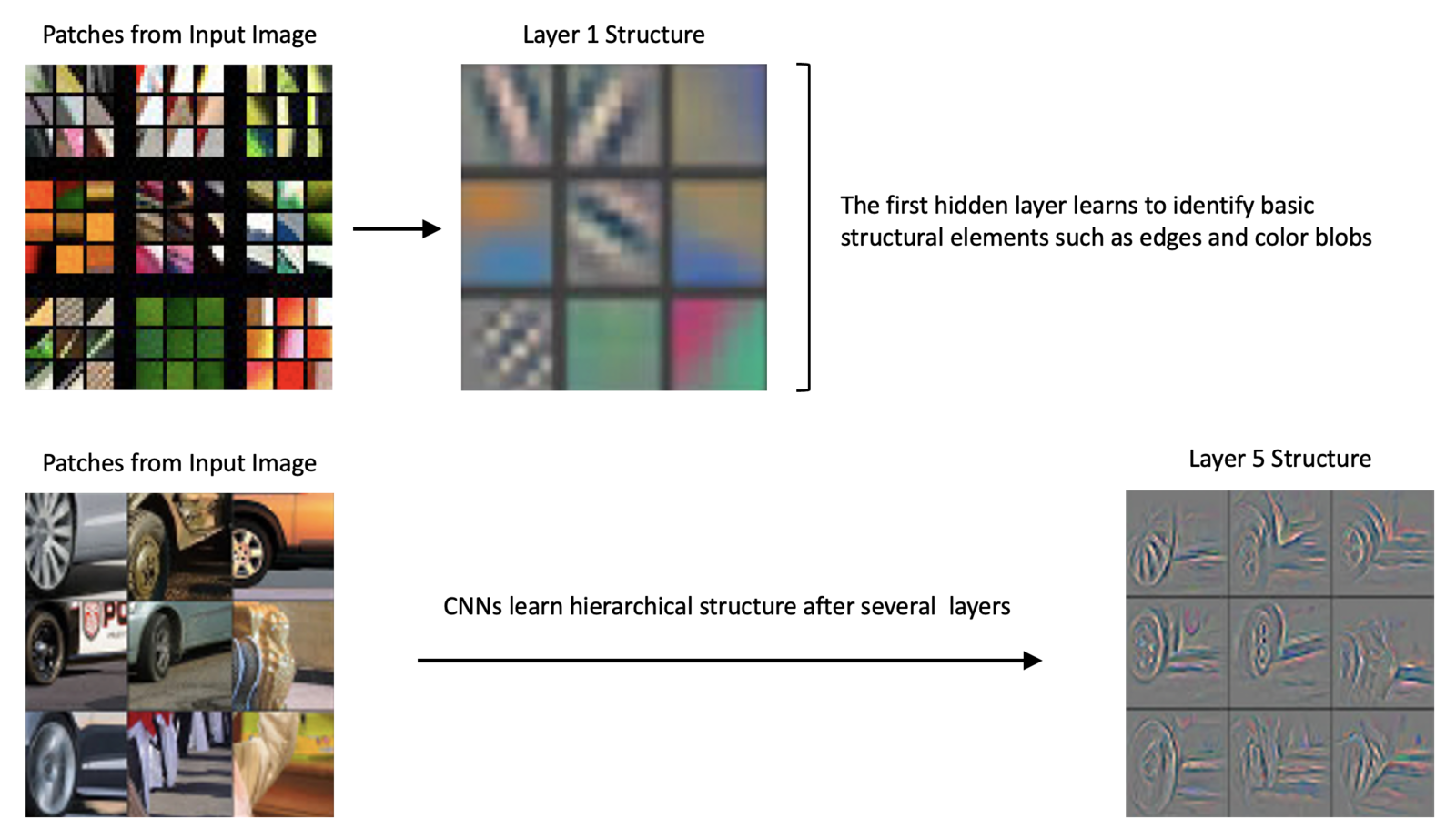
For example, a medical imaging company doesn't need to teach a model what a "line" or a "curve" is; a standard CNN backbone already knows that from seeing millions of regular photos. The aftermarket value lies in taking that general knowledge and focusing it on specific tasks, such as identifying anomalies in X-rays or detecting defects in semiconductor manufacturing. Platforms like Hugging Face have become the "department stores" of this ecosystem, hosting thousands of specialized variants of core CNN architectures.
Software Tools and Optimization Frameworks
A raw CNN model is often too large and slow for practical use. The aftermarket provides a robust suite of tools designed to "shrink" these models without significant loss of accuracy. This segment of the ecosystem is critical for edge computing, where memory and power are limited.
Model Conversion and Interoperability
The ONNX (Open Neural Network Exchange) format acts as the universal language of the CNN aftermarket. It allows a model trained in PyTorch to be exported and run on an Intel chip using the OpenVINO toolkit or on an NVIDIA chip using TensorRT.
Pruning and Distillation
Two advanced aftermarket techniques have gained significant traction in 2026:
- Weight Pruning: Identifying and removing redundant connections in the neural network that contribute little to the final output. This reduces the file size and increases inference speed.
- Knowledge Distillation: Using a large, complex "teacher" model to train a much smaller "student" model. The student model learns to mimic the teacher's behavior, providing a high-performance, lightweight alternative suitable for IoT devices.
The Role of Data Services and Synthetic Data
No CNN can function without data, and the data aftermarket has evolved significantly. In the early days of AI, data labeling was a manual, grueling process. In 2026, the ecosystem has matured to include Synthetic Data Generation.
If a company is developing a CNN for autonomous forklifts in a warehouse, they may not have enough real-world footage of accidents to train the model effectively. The aftermarket now offers high-fidelity 3D environments (using engines like Unreal or Unity) to generate thousands of "synthetic" images of rare edge cases. This data is then sold as a specialized training set, allowing the CNN to learn scenarios it might never encounter during a traditional data collection phase.
Cost Considerations and Resource Allocation
Navigating the CNN aftermarket requires an understanding of the total cost of ownership (TCO). While many models are "free" (open source), the costs accumulate in the integration and maintenance phases.
| Ecosystem Component | Typical Entry Cost (2026) | Ongoing Requirements | Primary Benefit |
|---|---|---|---|
| Open Source Backbones | $0 (License-free) | Fine-tuning compute | Rapid prototyping and community support. |
| Cloud Inference (SaaS) | $0.01 - $0.05 per 1k images | Monthly API fees | Zero infrastructure management; easy scaling. |
| Edge Hardware (NPU) | $10 - $200 per unit | Firmware updates | Low latency, privacy, and offline capability. |
| Labeling Services | $0.50 - $2.00 per image | Quality assurance | High-accuracy "ground truth" for niche tasks. |
| Optimization Tools | $0 (Open Source) to $50k+ (Enterprise) | Technical expertise | Significant reduction in hardware requirements. |
Implementation Roadmaps and Best Practices
To successfully leverage the CNN aftermarket, organizations should follow a structured adoption path. The risk of the aftermarket is "component sprawl," where different parts of the stack become incompatible or overly complex.
- Define the Constraints: Before selecting a model, determine the target hardware. A model destined for an iPhone will require different aftermarket optimizations than one destined for an AWS P5 instance.
- Select a Proven Backbone: In 2026, standardizing on well-supported architectures like YOLOv10 or ResNet-50 derivatives is safer than using experimental papers. These models have the most robust aftermarket support for conversion and troubleshooting.
- Evaluate License Compliance: Many "open" models have restrictive licenses (e.g., CC BY-NC 4.0), which prohibit commercial use. The aftermarket includes legal audit tools to ensure that weights and data are used legally.
- Prioritize MLOps: Once a model is deployed, its performance can "drift" as real-world conditions change (e.g., a camera lens gets dirty or lighting conditions shift). The aftermarket offers monitoring tools specifically for vision models to detect these drops in accuracy.
Common Pitfalls in the Aftermarket
One of the most frequent mistakes is over-optimization. Developers often spend months pruning a model to save a few kilobytes of space, only to find that the target hardware has more than enough memory.
Another risk is data leakage. When using third-party data services, it is possible for the training data to be too similar to the validation data, leading to "overfitting." This creates a model that looks perfect in the lab but fails in the real world. The aftermarket response to this has been the rise of independent validation and verification (IV&V) services that audit CNN performance using proprietary "hidden" datasets.
Frequently Asked Questions
What is the difference between a CNN backbone and a full model?
A backbone is the primary feature extractor of the network—the part that understands shapes, textures, and colors. A full model includes "heads" or final layers that perform specific tasks like classification (naming an object) or segmentation (tracing the outline of an object). In the aftermarket, you typically acquire a backbone and add your own custom head.
Is specialized hardware always necessary for CNNs?
No. For low-volume tasks or applications where latency is not critical (such as batch processing photos once a day), a standard CPU is sufficient. However, for real-time applications like autonomous driving or security monitoring, specialized hardware from the aftermarket is required to achieve the necessary frames-per-second (FPS).
How has the EU AI Act impacted the CNN aftermarket in 2026?
The EU AI Act has introduced strict transparency requirements for "High-Risk" AI systems, including many CNNs used in surveillance and healthcare. The aftermarket has adapted by providing "Explainability" tools (XAI) that help developers document how a CNN reached a specific conclusion, which is now a legal requirement for many commercial deployments in Europe.
Can I use CNNs on low-power IoT devices?
Yes, this is one of the fastest-growing segments of the ecosystem. Through a combination of 4-bit quantization and specialized micro-controllers (like the ARM Cortex-M series with Helium technology), CNNs can now run on devices with only a few hundred kilobytes of RAM, often for simple tasks like person detection or gesture recognition.
Why is PyTorch more popular than TensorFlow in the 2026 aftermarket?
While both are powerful, PyTorch has gained a larger share of the research-to-production pipeline due to its dynamic computational graph and superior developer experience. Most new "aftermarket" models are released in PyTorch first, though conversion tools like ONNX make it easy to move between frameworks.
Strategic Recommendation
For organizations entering the vision AI space in 2026, the most effective strategy is to adopt an "Aftermarket-First" approach. Rather than attempting to innovate at the architectural level, focus on excellence in data curation and model optimization. The maturity of the CNN ecosystem means that the most significant competitive advantages are no longer found in the code of the neural network itself, but in how effectively that network is tailored, compressed, and deployed within a specific industrial context. Begin by identifying a pre-trained backbone that matches your accuracy requirements, then utilize automated optimization toolchains to fit that model to your target hardware.
Image Gallery