How to Prepare for and Pass the Test for a Life Insurance License
Passing the test for a life insurance license is the definitive final step to beginning a career as a licensed insurance producer. Administered at the state level in the United States, this examination verifies your knowledge of insura...
Passing the test for a life insurance license is the definitive final step to beginning a career as a licensed insurance producer. Administered at the state level in the United States, this examination verifies your knowledge of insurance products, regulatory statutes, and ethical standards. To earn your license, you must complete a state-approved pre-licensing education course, pass a standardized proctored exam, and satisfy background and administrative requirements set by your state’s Department of Insurance.
Contents
Understanding the Life Insurance Licensing Process
The pathway to becoming a licensed life insurance agent is regulated by individual states to ensure that professionals possess the necessary competence to advise consumers on financial protection products. While each state maintains its own insurance department, the foundational structure of the licensing process is consistent across the nation.
Before you can schedule your test for a life insurance license, you must satisfy the "Pre-Licensing Education" (PLE) requirement. This is a mandatory block of instruction covering both general insurance principles and state-specific insurance law. The number of required hours varies significantly by state, typically ranging from 20 to 50 hours of coursework. These courses are offered by accredited providers and are designed specifically to prepare candidates for the content, format, and depth of the state examination.
Eligibility Requirements and Administrative Prerequisites
Before registering for the examination, you must confirm that you meet the baseline requirements established by your state’s regulatory body. While specific thresholds vary, the following criteria are near-universal:
- Age Requirement: You must be at least 18 years of age.
- Legal Status: You must be a legal resident of the United States.
- Course Completion: You must hold a certificate of completion from an approved pre-licensing education provider.
- Background Check: Most states require electronic fingerprinting to conduct a criminal history background check. Because this process can take several days to process, it is recommended that you complete your fingerprinting well before your test date.
Failure to complete these prerequisites will prevent you from being eligible for licensure, even if you pass the examination. Always verify the specific rules on the website of your state’s Department of Insurance, as some states grant exemptions based on professional designations (such as CLU or ChFC) or academic degrees in insurance.
Anatomy of the Life Insurance Examination
The test for a life insurance license is generally a computer-based, multiple-choice examination. Most states contract with national testing vendors, such as Pearson VUE or Prometric, to administer these exams. The exam is divided into two primary sections: the General Knowledge section and the State-Specific section.
- General Knowledge Section: This covers the fundamental mechanics of life insurance, including policy types (term, whole, universal, variable), riders, beneficiary designations, settlement options, and non-forfeiture options. It also covers the tax treatment of premiums and benefits.
- State-Specific Section: This focuses on the statutes, rules, and regulations unique to your home state. It includes topics such as marketing regulations, agent responsibilities, licensing maintenance, and the state’s Guaranty Association rules.
Comparison of Typical Examination Components
| Component | Focus Area | Complexity |
|---|---|---|
| Product Knowledge | Policy types, riders, and provisions | Moderate to High |
| Legal/Regulatory | State laws and administrative procedures | High (requires memorization) |
| Ethics | Professional conduct and fiduciary duty | Moderate |
| Underwriting | The process of risk assessment and classification | Moderate |
Strategic Preparation and Study Habits
Because the test is comprehensive, effective preparation involves more than just reading the textbook once. Most successful candidates follow a structured study plan that integrates multiple learning modalities.
First, utilize the "Exam Content Outline" provided by your state’s testing vendor. This document identifies the exact percentage of questions allocated to each topic. Allocate your study time proportionally based on this outline. If 25% of the exam covers "Life Insurance Policies," then 25% of your study time should be dedicated to that specific area.
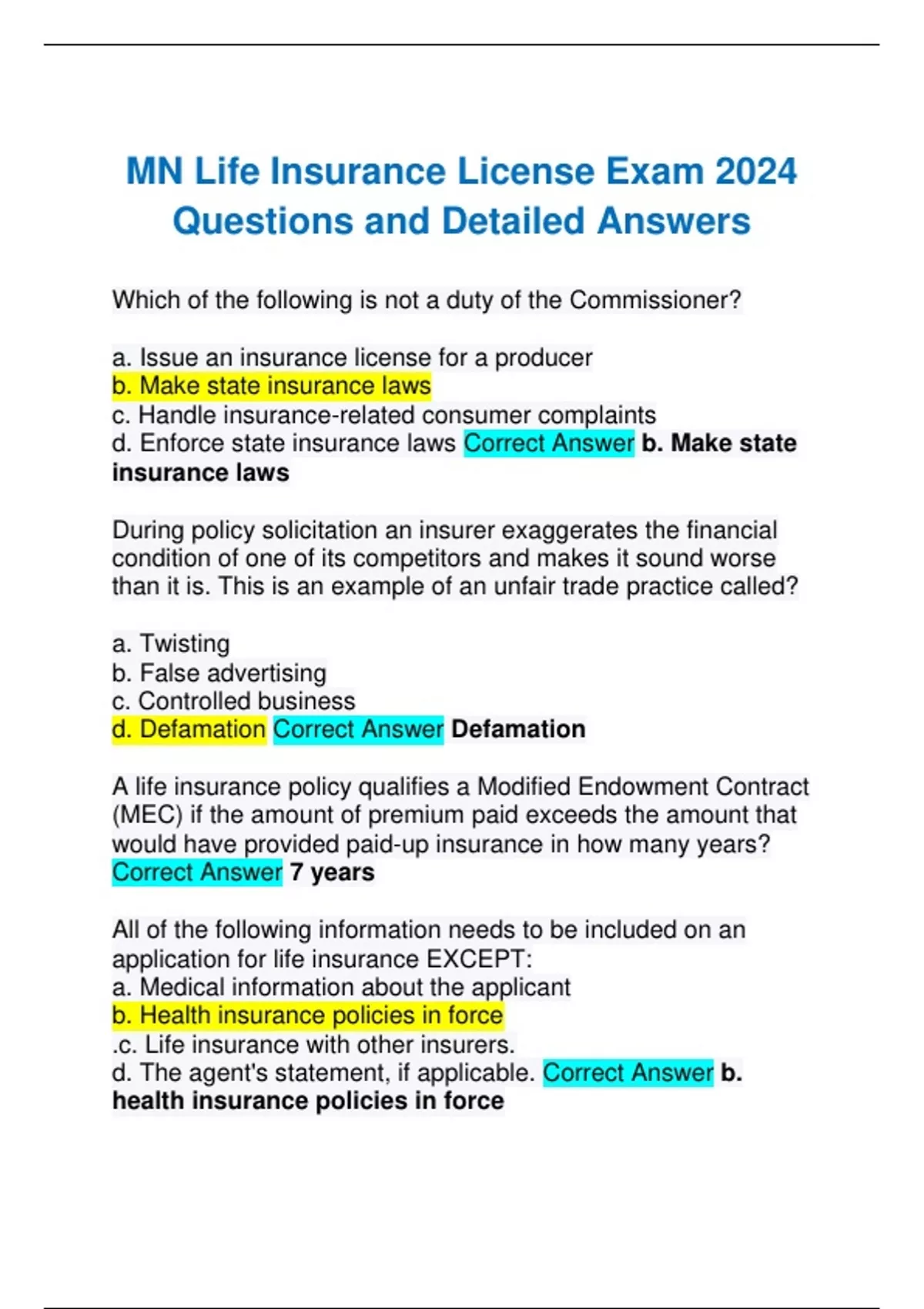
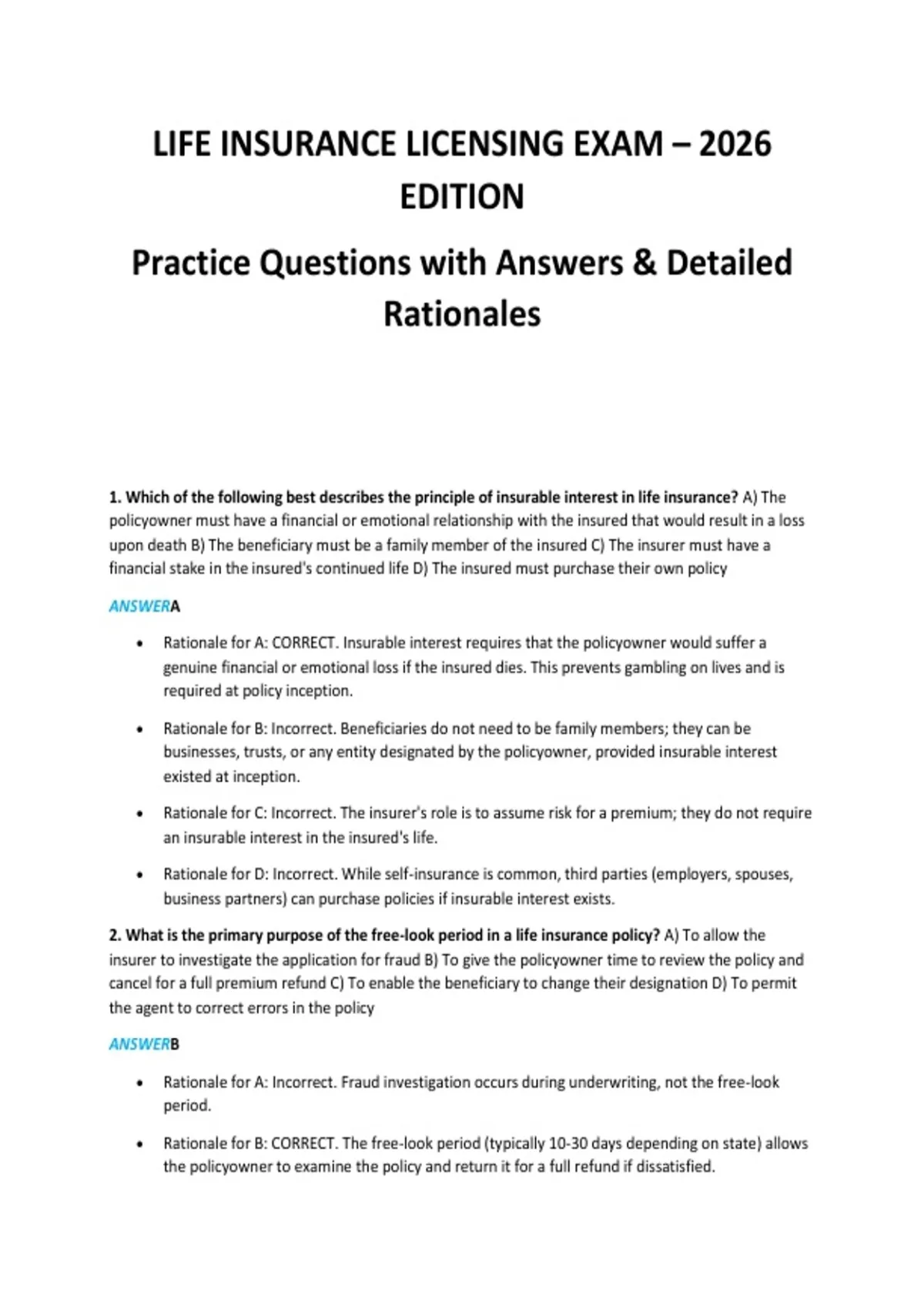
Second, prioritize active recall. Instead of merely re-reading chapters, take practice quizzes. Many pre-licensing providers offer "test simulators" that mimic the actual computer-based testing environment. Aim for consistent scores of 85% or higher on these practice exams before scheduling your final test date.
Common areas where candidates struggle include:
- Policy Provisions: Understanding the nuance between "Incontestability" and "Reinstatement" clauses.
- Taxation: Distinguishing between tax-deferred growth and tax-free distributions.
- Regulation: Memorizing the specific timeframes for reporting administrative actions to the Commissioner of Insurance.
On the Day of the Examination
On the day of the test, arrive at the facility at least 30 minutes early. You will be required to present two forms of government-issued identification, one of which must include a photo and a signature. Ensure your name on your ID matches the name used during the exam registration exactly.
The testing environment is strictly controlled. You will not be allowed to bring personal belongings, including cell phones, watches, or notes, into the testing room. You will likely be provided with a digital scratchpad or a laminated booklet and a marker for calculations. Manage your time efficiently; if you encounter a difficult question, flag it for review and move on. Attempting to force an answer for a complex calculation can deplete your time, potentially leaving you unable to reach easier questions at the end of the exam.
Frequently Asked Questions
What happens if I fail the test for a life insurance license? If you do not achieve a passing score, you are generally allowed to retake the exam. However, you must pay the exam fee again for each attempt. Some states place a limit on the number of attempts within a specific timeframe; check your state’s candidate handbook for details.
How long is my exam result valid? Once you pass the exam, your score report is usually valid for a set period, typically 90 to 180 days. You must apply for your actual producer license through the state department of insurance within this window, or you will be required to retake the exam.
Does the exam cover annuities? In many jurisdictions, the "Life" license examination includes questions regarding annuities. If your license is strictly for "Life," ensure your study materials cover the basics of annuity products, as these are often bundled into the core curriculum.
Is the test the same for every state? No. While the "General Knowledge" portion often uses a national bank of questions, the "State-Specific" portion is entirely different for every state. Always ensure your study materials correspond specifically to your state of residency.
Can I take the exam online from home? Some states offer remote, online-proctored versions of the insurance exam. Check with your state’s Department of Insurance or the testing vendor (e.g., Pearson VUE) to confirm if remote testing is an option in your jurisdiction and what technical requirements (such as camera and internet speed) are necessary.
Next Actions for Candidates
To begin your journey toward licensure, perform the following steps immediately:
- Check your State Department of Insurance website to download the official "Candidate Handbook." This is the primary source of truth for your state’s specific requirements.
- Enroll in a reputable, state-approved pre-licensing course. Do not rely on free online summaries; ensure the course provides the full curriculum required for your state.
- Schedule your examination date once you are halfway through your course. Having a set date creates a definitive deadline that encourages focused study.
- Complete your fingerprinting and background application concurrently with your study period so that administrative delays do not hold up your licensing process after you pass the test.
Image Gallery