How U.S. Bank Personal Loans Work: Rates, Requirements, and Application Guide
U.S. Bank personal loans operate as fixed-rate installment loans that allow eligible borrowers to access funds between $1,000 and $50,000 without requiring collateral. Borrowers repay the principal plus interest in fixed monthly instal...
U.S. Bank personal loans operate as fixed-rate installment loans that allow eligible borrowers to access funds between $1,000 and $50,000 without requiring collateral. Borrowers repay the principal plus interest in fixed monthly installments over terms ranging from 12 to 84 months, benefiting from zero origination fees, no prepayment penalties, and direct online prequalification.
Contents
Understanding U.S. Bank Personal Loans
A personal loan from U.S. Bank is an installment loan designed to provide lump-sum funding for various personal financial needs, such as debt consolidation, home renovation projects, major purchases, or unexpected medical expenses. When an applicant is approved, U.S. Bank disburses the total loan amount directly into the borrower's designated bank account. The borrower then repays the debt in equal monthly payments over a predetermined period.
Unlike revolving lines of credit or credit cards, standard personal loans have a fixed end date and fixed interest rates. This structure ensures that your monthly payment remains consistent throughout the entire life of the loan, protecting you from interest rate fluctuations in the broader financial market.
Key Types of Personal Financing Offered by U.S. Bank
U.S. Bank provides several personal borrowing options depending on your financial profile, relationship with the bank, and borrowing needs:
- Unsecured Personal Loans: The primary loan product requiring no collateral. Loan amounts range from $1,000 to $50,000 for qualifying applicants. Approval and interest rates depend entirely on creditworthiness, income, and financial history.
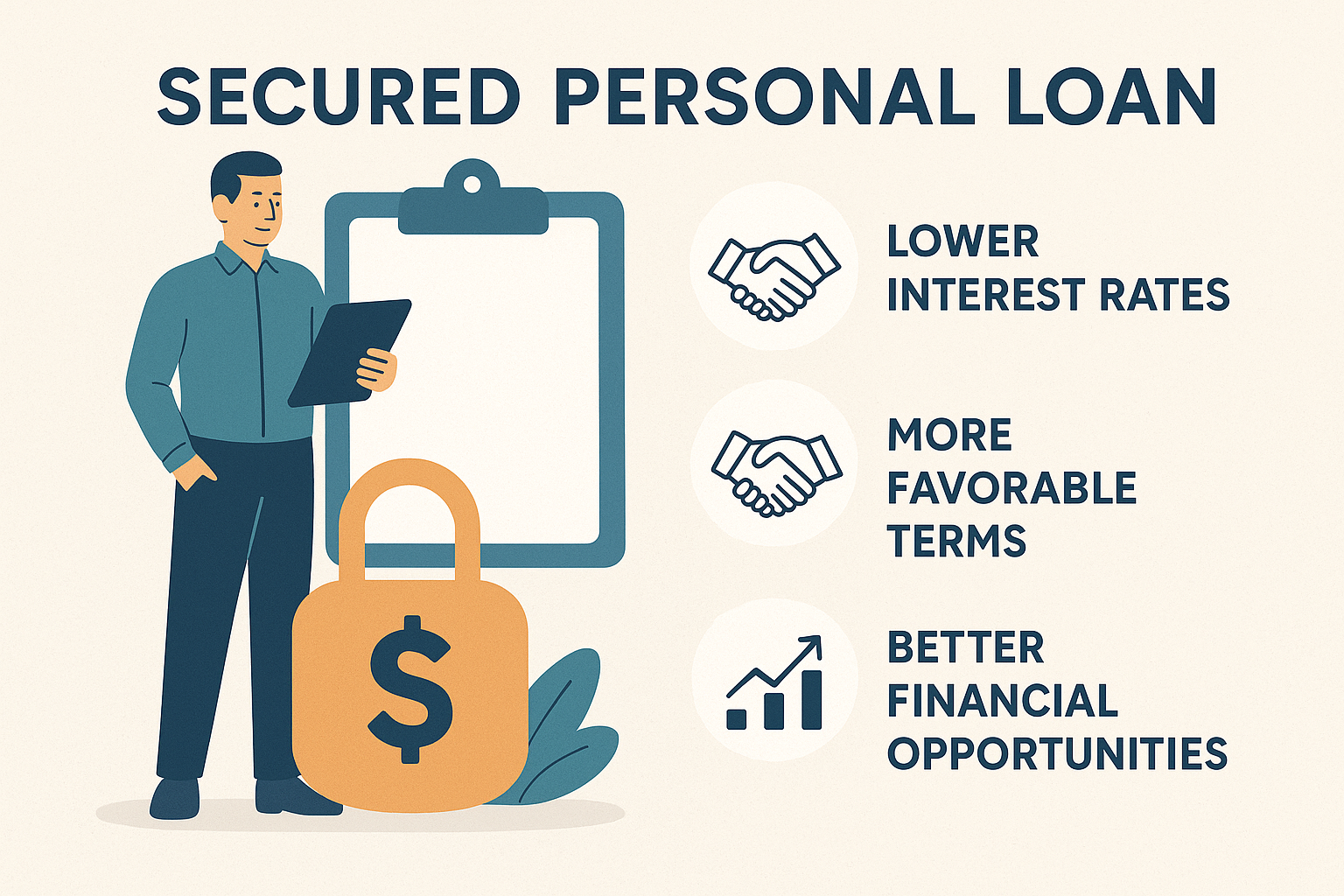
- Secured Personal Loans: Designed for borrowers who prefer to back their loan with financial assets, such as a U.S. Bank Certificate of Deposit (CD) or savings account. Secured options often unlock lower interest rates or higher borrowing limits for individuals building or rebuilding credit.
- Personal Lines of Credit: A revolving borrowing facility where you can draw funds up to an approved limit as needed, repay, and borrow again. Interest is paid only on the amount actively drawn.
- U.S. Bank Simple Loan: A specialized short-term borrowing option exclusively for existing U.S. Bank checking customers. It offers smaller amounts (typically $100 to $1,000) repaid over three months with a simple flat fee per $100 borrowed, serving as an alternative to high-cost payday loans.
Interest Rates, Fees, and Financial Terms
Understanding the cost structure of a U.S. Bank personal loan is critical before submitting an application. The overall cost of borrowing depends on the Annual Percentage Rate (APR), loan term, and repayment method.
Total Borrowing Cost = Principal + Fixed Interest (APR) - Relationship Discounts
Interest Rate Structure and APRs
U.S. Bank charges fixed annual percentage rates (APRs) on its personal loans. Your specific rate is determined by several factors:
- Credit Score and Credit History: Applicants with top-tier credit scores (740 and above) qualify for the lowest advertised APRs.
- Debt-to-Income (DTI) Ratio: A lower DTI ratio signals to lenders that you can comfortably manage additional monthly debt payments.
- Loan Term: Shorter loan repayment windows (e.g., 12 to 36 months) frequently carry lower interest rates compared to extended terms (60 to 84 months).
- Autopay Discount: U.S. Bank offers an interest rate discount (typically 0.50% APR) for borrowers who set up automatic monthly payments from an eligible U.S. Bank checking or savings account.
Fee Breakdown: What You Pay and What You Avoid
One of the primary advantages of standard personal loans from U.S. Bank is a transparent, low-fee structure:
- No Origination Fees: U.S. Bank does not charge an upfront administrative or processing fee to set up standard personal loans. The full approved amount goes directly toward your financial goal.
- No Prepayment Penalties: Borrowers can pay off their loan balance early—either through larger monthly payments or a lump-sum payment—without incurring extra charges or penalties. Paying early reduces the total interest paid over the life of the loan.
- Late Payment Fees: If a scheduled monthly payment is missed or delayed beyond the grace period, U.S. Bank assesses a late fee. Keeping an active automatic payment schedule helps prevent accidental missed payments.
Eligibility Criteria and Borrower Requirements
To qualify for a U.S. Bank personal loan, applicants must satisfy specific credit, income, and legal standards established under Federal Reserve and federal consumer lending regulations.
Standard Qualification Criteria
- Minimum Credit Score: While U.S. Bank does not publish a rigid minimum cutoff for all products, a credit score of 660 or higher is generally recommended for unsecured loan approval. Higher scores (720+) secure significantly better interest rates.
- Age and Legal Status: Applicants must be at least 18 years old (or the legal age of majority in their state), possess a valid Social Security Number (SSN) or Individual Taxpayer Identification Number (ITIN), and maintain legal U.S. residency.
- Income and Employment Stability: You must demonstrate a steady income stream sufficient to cover existing financial obligations along with the new loan payment. W-2 earnings, self-employment revenue, pensions, and Social Security are acceptable income sources.
- Debt-to-Income (DTI) Ratio: U.S. Bank evaluates your total monthly debt obligations relative to your gross monthly income. Most conventional underwriting guidelines prefer a DTI ratio under 36% to 45%.
Customer Relationship Advantages
While non-customers can apply for personal loans at U.S. Bank, existing deposit account holders often experience distinct advantages:
- Faster Approval and Disbursement: Existing checking or savings clients often receive instant or same-day loan decisions because the bank can quickly verify account history and cash flow.
- Higher Loan Limits: Customers with established banking relationships may qualify for higher unsecured borrowing limits or competitive promotional rates.
- Autopay Discount Eligibility: The 0.50% APR discount requires an active U.S. Bank deposit account for automatic debit scheduling.
Step-by-Step Application and Funding Process
Applying for a personal loan through U.S. Bank follows a straightforward procedure that can be completed online, via the U.S. Bank mobile app, or at a physical branch location.
Step 1: Prequalification (Soft Credit Check)
Before formally submitting an application, prospective borrowers can use the online prequalification tool.
- How It Works: Enter basic personal details, desired loan amount, purpose, and income.
- Credit Impact: Prequalification uses a soft credit inquiry, which does not impact your credit score.
- Outcome: You receive an estimate of potential loan amounts, terms, and APR ranges for which you likely qualify.
Step 2: Formal Application Submission
Once you select a preferred rate and loan term, you convert your prequalification into a formal application.
- Required Documentation: Prepare digital copies of government-issued photo ID (driver's license or passport), proof of income (recent pay stubs, W-2 forms, or tax returns), and bank statements.
- Credit Impact: The formal application triggers a hard credit inquiry, which may temporarily lower your credit score by a few points, as governed by the Federal Trade Commission guidelines on credit reporting.
Step 3: Underwriting and Document Verification
U.S. Bank’s underwriting team verifies the submitted documentation, reviews your credit report from major credit bureaus (Equifax, Experian, or TransUnion), and assesses your debt stability. In many automated online cases, approval occurs within minutes; manual reviews may take 1 to 3 business days.
Step 4: Final Loan Agreement and Closing
Upon approval, U.S. Bank presents a final loan disclosure statement under the Truth in Lending Act (TILA). This document outlines:
- The exact Annual Percentage Rate (APR).
- The total finance charges over the term.
- The total amount financed and payment schedule.
- Due dates and payment options.
Review these terms carefully before electronically signing the agreement.
Step 5: Loan Funding and Disbursement
Once signed, funds are disbursed:
- U.S. Bank Checking/Savings Account: Funds are frequently deposited on the same business day or within 24 hours.
- External Financial Institution Account: Automated Clearing House (ACH) transfers to an external bank typically take 1 to 3 business days to clear.
Comparing U.S. Bank Personal Loan Options
To select the right financing product, compare how U.S. Bank's primary personal credit offerings differ in structure, limits, and ideal use cases.
| Feature | Standard Unsecured Loan | Secured Personal Loan | Personal Line of Credit | U.S. Bank Simple Loan |
|---|---|---|---|---|
| Loan Amount Range | $1,000 – $50,000 | $1,000 – $50,000+ | $1,000 – $25,000+ | $100 – $1,000 |
| Collateral Required | None | Yes (CD or Savings) | None | None |
| Interest Type | Fixed APR | Fixed APR | Variable APR | Flat fee per $100 |
| Repayment Term | 12 to 84 months | 12 to 60 months | Revolving draw period | 3 fixed monthly payments |
| Origination Fee | $0 | $0 | $0 (Annual fee may apply) | $0 upfront fee |
| Prequalification Available | Yes | In-branch / Online | Yes | No (App-based offer) |
| Best For | Debt consolidation, major events | Borrowers building credit | Ongoing flexible expenses | Small emergency cash needs |
Best Strategic Uses for a U.S. Bank Personal Loan
Personal loans offer flexibility, but using them strategically optimizes your financial health and minimizes total interest expense.
1. High-Interest Debt Consolidation
Consolidating high-interest credit card balances into a lower fixed-rate personal loan is one of the most common applications. By rolling multiple revolving credit balances into one installment loan, borrowers can:
- Lower their overall average interest rate.
- Simplify finances into a single predictable monthly payment.
- Establish a clear date by which the debt will be completely paid off.
2. Major Home Improvements and Repairs
Homeowners frequently use unsecured personal loans for medium-sized home repairs, roof replacements, or appliance upgrades. Because personal loans do not require using your home as collateral—unlike Home Equity Lines of Credit (HELOCs)—your property is not directly placed at risk of foreclosure in the event of default.
3. Unexpected Medical Expenses
Medical bills, dental procedures, or elective health treatments not covered by insurance can be spread out over manageable monthly installments, avoiding late fees from healthcare providers or collection agencies.
Common Mistakes to Avoid When Borrowing
To get the most value from a U.S. Bank personal loan, avoid these common financial missteps:
- Borrowing More Than Necessary: Taking out a larger loan amount than required increases total interest charges over time. Calculate your exact need before submitting your request.
- Ignoring the Impact of Loan Terms: Choosing a longer loan term (e.g., 72 months) lowers your required monthly payment, but significantly increases the total interest paid compared to a 36-month term.
- Missing Autopay Setup: Failing to enroll in automatic payments forfeits the 0.50% APR interest discount, resulting in higher monthly interest costs.
- Accumulating New Credit Card Debt Post-Consolidation: If you use a personal loan to pay off revolving credit cards, avoid charging new expenses onto those cleared cards. Doing so creates a dangerous dual-debt burden.
Frequently Asked Questions
Does applying for a U.S. Bank personal loan affect my credit score?
Checking your rate via U.S. Bank’s online prequalification tool uses a soft credit pull, which does not affect your credit score. However, once you accept an offer and formally submit your application, U.S. Bank performs a hard credit inquiry, which may cause a temporary drop of a few points on your credit profile.
How fast can I get funds from a U.S. Bank personal loan?
If you hold an existing U.S. Bank checking or savings account and complete the application online, funds can often be disbursed into your account on the same business day or within 24 hours of approval. For funds transferred to an external financial institution, delivery typically takes 1 to 3 business days.
Can I pay off my U.S. Bank personal loan early without penalties?
Yes. U.S. Bank personal loans carry no prepayment penalties. You can make extra principal payments or clear your entire remaining balance at any time before the end of your loan term to save on interest costs.
What credit score do I need for a U.S. Bank personal loan?
While U.S. Bank evaluates multiple factors—including income, employment stability, and debt-to-income ratio—a credit score of 660 or higher generally yields better approval odds for an unsecured loan. Scores of 720 and above are typically required to secure the lowest advertised interest rates.
Can I use a U.S. Bank personal loan for small business expenses?
U.S. Bank personal loans are intended primarily for personal, family, or household purposes, such as debt consolidation or home projects. For commercial operations, inventory, or startup capital, business owners should explore dedicated U.S. Bank business loans or business lines of credit.
Practical Recommendation: Next Steps for Borrowers
If you are considering a personal loan from U.S. Bank, follow this action plan to secure the most favorable borrowing terms:
- Review Your Credit Report: Obtain your free credit reports from the major credit bureaus to check for errors and assess your current credit score before applying.
- Calculate Total Debt-to-Income (DTI): Ensure your current income comfortably supports your existing obligations plus the estimated new loan payment.
- Utilize Prequalification: Use U.S. Bank's soft credit check tool online to preview your estimated APR and loan terms without risking your credit score.
- Compare Loan Options: Measure U.S. Bank’s offers against other financial institutions, paying close attention to APRs, fee structures, and repayment windows as recommended by the Consumer Financial Protection Bureau guide on personal loans.
- Set Up Autopay Upon Approval: Link an eligible U.S. Bank account immediately after loan closing to lock in the 0.50% APR relationship discount and ensure timely monthly payments.
Image Gallery