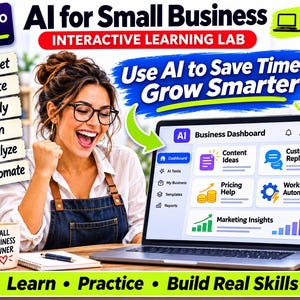
Comprehensive Business Tutorials for 2026: A Guide to Strategic Growth and Operational Mastery
Business tutorials are structured educational resources designed to guide entrepreneurs and professionals through specific tasks, from initial entity formation to advanced scaling strategies. In 2026, these tutorials emphasize data-dri...
Business tutorials are structured educational resources designed to guide entrepreneurs and professionals through specific tasks, from initial entity formation to advanced scaling strategies. In 2026, these tutorials emphasize data-driven decision-making, AI integration, and sustainable operations, providing actionable steps to help users solve complex organizational challenges and improve overall commercial efficiency.
Contents
Identifying the Core Categories of Business Tutorials
The landscape of business education has shifted toward highly specialized, modular learning. To effectively navigate business tutorials, one must first identify which stage of the business lifecycle requires the most urgent attention. Broadly, these resources fall into four primary categories: foundational planning, financial management, digital transformation, and operational scaling.
Foundational planning tutorials focus on the mechanics of starting a venture. This includes drafting lean business plans, conducting competitive market analysis, and navigating the legal requirements of 2026, such as updated digital privacy compliance and ESG (Environmental, Social, and Governance) reporting standards. These tutorials are essential for those transitioning from an idea to a registered entity, ensuring that the structural groundwork is compliant and resilient.
Financial management tutorials represent the technical core of business education. They guide users through the intricacies of cash flow forecasting, tax optimization strategies for small-to-medium enterprises (SMEs), and the nuances of decentralized finance (DeFi) integration where applicable. Understanding these tutorials is critical for maintaining solvency and securing funding, as they often include walkthroughs for preparing "investor-ready" documentation.
Top Platforms for Verified Business Tutorials in 2026
In 2026, the quality of a tutorial is often dictated by the platform's vetting process and the real-world experience of the instructors. Selecting the right platform depends on whether you require academic accreditation, technical certifications, or practical, high-speed execution guides.
| Platform | Primary Focus | Best For | 2026 Pricing Model |
|---|---|---|---|
| LinkedIn Learning | Professional Skills & Leadership | Corporate Employees & Mid-level Managers | Monthly Subscription / Enterprise |
| Coursera | Academic Foundations & Specialized Certificates | Aspiring Entrepreneurs & Career Switchers | Per Course or Annual Plus Membership |
| SBA Learning Center | Regulatory Compliance & Government Contracting | US-based Small Business Owners | Free (Government Funded) |
| Harvard Business Review (HBR) | Strategic Theory & Case Studies | Senior Executives & Decision Makers | Tiered Digital Access |
| Udemy for Business | Specific Technical Tools (CRM, ERP, AI) | Individual Contributors & Technical Teams | Individual Course Purchase |
Choosing between these platforms requires an assessment of your learning style. For instance, the U.S. Small Business Administration (SBA) provides highly localized tutorials that are indispensable for understanding regional tax incentives and federal loan programs. Conversely, Coursera partners with top-tier universities to provide theoretical depth that is necessary for long-term strategic positioning.
How to Implement Tutorial Knowledge into Real-World Operations
The most significant challenge in business education is the "implementation gap"—the space between finishing a tutorial and applying the knowledge to a live company. To bridge this, a systematic approach to execution is required.
Step 1: Gap Analysis and Prerequisite Assessment
Before engaging with a business tutorial, perform a gap analysis. Identify the specific bottleneck in your organization. If your customer acquisition cost (CAC) is rising, seek out tutorials on predictive analytics and AI-driven marketing automation. Ensure you have the necessary prerequisites; for example, a tutorial on advanced financial modeling may require a pre-existing mastery of dynamic spreadsheet functions or specific accounting software like QuickBooks or Xero.
Step 2: Environment Setup and Simulation
Never apply new technical business strategies directly to your primary operations without testing. Most high-quality tutorials in 2026 recommend using "sandbox" environments. If you are learning to automate your supply chain using an Enterprise Resource Planning (ERP) system, practice the data entry and automation triggers in a non-production environment. This prevents data corruption and operational downtime.
Step 3: Incremental Rollout and KPI Tracking
Once a skill is learned, roll it out incrementally. If a tutorial teaches a new method for remote team management, implement it with one department first. Establish Key Performance Indicators (KPIs) before the rollout to measure the impact. Compare the "pre-tutorial" performance data against the "post-tutorial" results to verify the ROI of the time spent learning.
Technical Depth: Mastering Financial Modeling and Digital Infrastructure
As we move through 2026, business tutorials have become increasingly technical. It is no longer sufficient to understand basic bookkeeping; modern tutorials now cover the integration of automated data pipelines and real-time financial dashboards.
Technical financial tutorials often focus on "Scenario Analysis." These guides teach business owners how to build models that account for various economic conditions, such as fluctuating interest rates or supply chain disruptions. By mastering these tutorials, a business owner can move from reactive management to proactive strategy.
Furthermore, digital infrastructure tutorials are no longer relegated to the IT department. Business owners must now understand the architecture of their tech stack. Tutorials covering API integrations between CRM (Customer Relationship Management) platforms and marketing automation tools are vital. They ensure that data flows seamlessly across the organization, reducing manual entry errors and providing a "single source of truth" for business intelligence.
Avoiding Common Mistakes in Self-Paced Business Training
While business tutorials are accessible, they carry the risk of "information overload" or the application of outdated tactics. One common mistake is the "Shiny Object Syndrome," where entrepreneurs jump from one tutorial to another without fully implementing the previous lesson.
Another frequent pitfall is ignoring the "Contextual Limit" of a tutorial. A guide on scaling a SaaS (Software as a Service) company might not be applicable to a localized brick-and-mortar retail business. Always verify that the case studies used in the tutorial align with your industry's specific margins, regulatory environment, and customer behavior.
Finally, many learners fail to check the publication date or the instructor’s credentials. In the fast-moving economy of 2026, a digital marketing tutorial from 2023 may be fundamentally obsolete due to changes in search engine algorithms or data privacy laws. Always prioritize tutorials updated within the current calendar year or those that focus on timeless principles of economic theory and organizational psychology.
Evaluating the Cost-Benefit of Paid vs. Free Tutorials
The "free" business tutorial market on platforms like YouTube is vast, but it often lacks the depth and accountability of paid programs. When deciding whether to invest in a paid tutorial, consider the complexity of the task.
- Low Complexity (e.g., setting up a basic social media profile): Free tutorials are generally sufficient. The risk of error is low, and the steps are standardized.
- High Complexity (e.g., Preparing for an Series A funding round or implementing a GDPR-compliant data architecture): Paid, accredited tutorials are a prerequisite. The cost of a mistake in these areas far outweighs the price of a comprehensive, expert-led course.
- Strategic Mastery (e.g., Executive leadership or negotiation tactics): These often require interactive tutorials or cohort-based learning, where the value lies in peer feedback and direct instructor access.
Frequently Asked Questions
Are online business tutorials recognized by traditional lenders in 2026?
Yes, many traditional lenders and venture capital firms recognize certifications from reputable platforms like Coursera, edX, and specialized industry bodies. While they may not replace a formal degree, demonstrating ongoing professional development through verified tutorials can bolster a "Management Strength" score during credit assessments or due diligence.
How much time should a business owner dedicate to tutorials weekly?
Expert consensus in 2026 suggests the "5-hour rule," popularized by many successful founders. Dedicating five hours a week to structured learning—whether through tutorials, case studies, or technical training—ensures that your skills remain competitive and your business remains adaptable to market shifts.
Can business tutorials replace a professional consultant?
Tutorials are excellent for "how-to" execution and internal skill-building. However, they are not a replacement for a consultant when dealing with unique, high-stakes crises or highly specialized legal and tax restructuring. Tutorials provide the tools; a consultant provides the specific strategy for your unique circumstances.
How do I know if a business tutorial is up to date for 2026?
Check for mentions of current regulatory frameworks, such as the latest AI ethics guidelines or updated international trade agreements. If a tutorial does not address the impact of automated systems or the current remote/hybrid work standards, it is likely based on an outdated operational model.
Is AI integration covered in modern business tutorials?
Most high-quality tutorials in 2026 include modules on "AI Prompt Engineering for Business" and "Automated Workflow Design." These have become foundational elements of modern business education, focusing on how to leverage generative and predictive AI to reduce overhead and improve output quality.
Next Steps for Success
To maximize the value of business tutorials, start by identifying your single most significant operational weakness. Rather than browsing generic content, search for a tutorial that offers a specific solution to that problem. Once found, commit to a "Learn-Apply-Measure" cycle: learn the skill over a fixed period, apply it to a small-scale project, and measure the results before expanding. By treating tutorials as a practical toolset rather than a passive hobby, you can ensure your business remains resilient and profitable in the evolving landscape of 2026.
Image Gallery