Lake View Cemetery Famous People: Notable Graves and Visitor Guide
Lake View Cemetery in Cleveland, Ohio, serves as the final resting place for many of America’s most influential historical figures, including U.S. President James A. Garfield, industrialist John D. Rockefeller, lawman Eliot Ness, and p...
Lake View Cemetery in Cleveland, Ohio, serves as the final resting place for many of America’s most influential historical figures, including U.S. President James A. Garfield, industrialist John D. Rockefeller, lawman Eliot Ness, and pioneering mayor Carl B. Stokes. Known as Cleveland’s "Outdoor Museum," this 285-acre garden cemetery contains landmark monuments, gilded age architecture, and gravesites of iconic leaders, inventors, and cultural figures.
Contents
Understanding Lake View Cemetery: History and Disambiguation
Established in 1869, Lake View Cemetery was modeled after the Victorian garden cemetery movement pioneered by Mount Auburn Cemetery in Massachusetts. Located across Cleveland, Cleveland Heights, and East Cleveland, the site was designed not merely as a burial ground, but as an expansive park land intended to offer solace, landscape architecture, and historical education to the public.
Before exploring specific gravesites, it is essential to clarify a common search confusion. Search queries for famous burials often conflate two distinct locations:
- Lake View Cemetery (Cleveland, Ohio): The historic 285-acre garden cemetery established in 1869, housing President James A. Garfield, John D. Rockefeller, Eliot Ness, Garrett Morgan, and Carl B. Stokes.
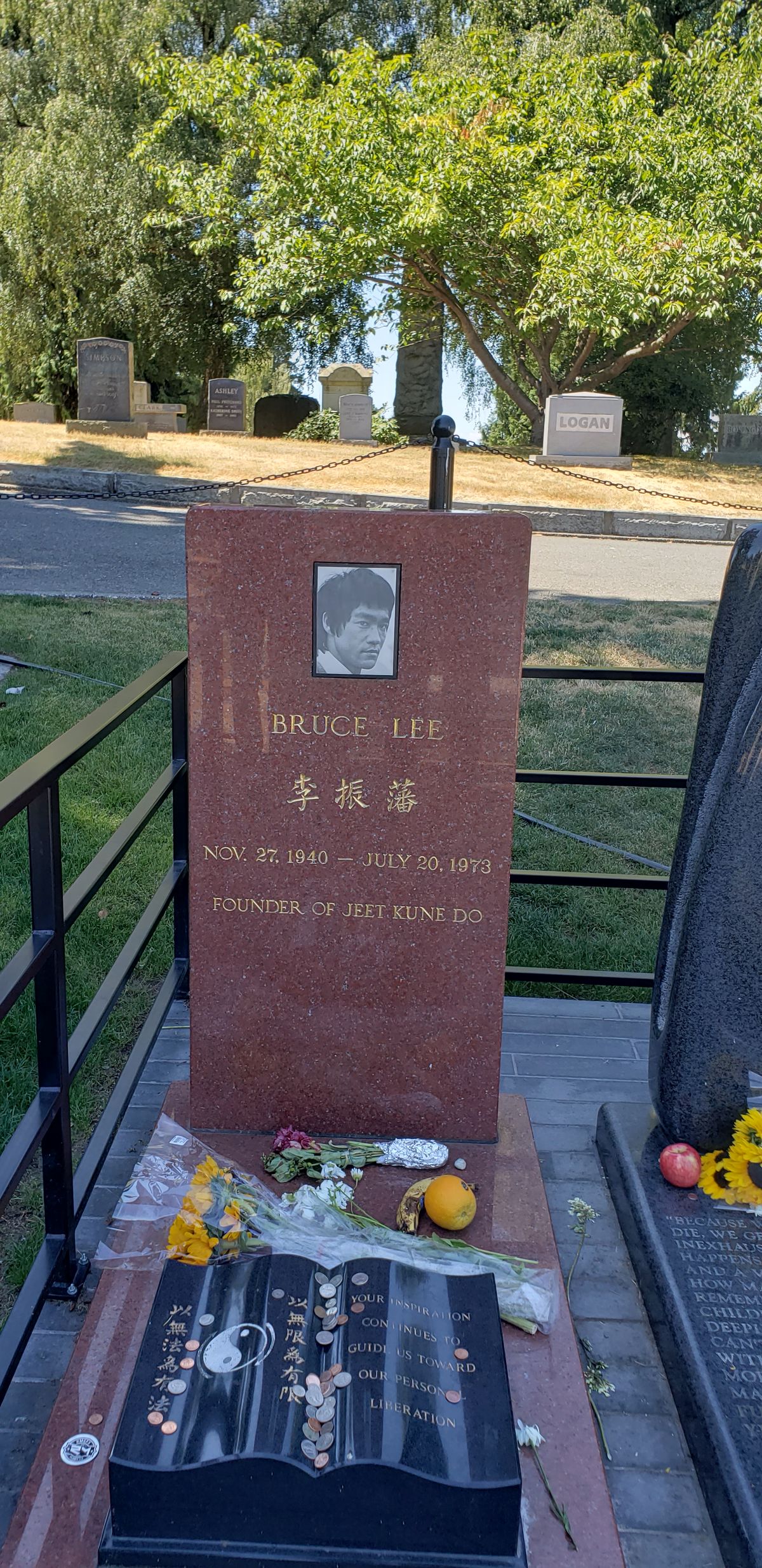
- Lakeview Cemetery (Seattle, Washington): A separate cemetery founded in 1872 (spelled as a single word), famous primarily for being the burial site of martial artist Bruce Lee and his son Brandon Lee.
This guide focuses comprehensively on the historic Lake View Cemetery in Cleveland, Ohio, detailing its most prominent historical burials, architectural features, and practical navigation advice for visitors.
Prominent Political and National Leaders
Lake View Cemetery holds the remains of statesmen who shaped American federal governance, urban politics, and national policy during pivotal eras in U.S. history.
- Garfield Monument (180 ft. Sandstone Tower)
- Memorial Hall / Reliefs
- Bust of Garfield
- Crypt Level
- Caskets: James & Lucretia Garfield
- Memorial Hall / Reliefs
President James A. Garfield
The most prominent landmark in Lake View Cemetery is the James A. Garfield National Memorial, dedicated in 1890 to honor the 20th President of the United States. Garfield was shot by assassin Charles J. Guiteau in July 1881, just four months into his presidency, and died two months later from complications.
The 180-foot-tall sandstone memorial combines Romanesque, Gothic, and Byzantine architectural styles. Designed by architect George H. Keller, the interior features:
- A central memorial hall adorned with marble columns, stained glass windows, and a marble statue of Garfield sculpted by Alexander Doyle.
- Five exterior terra-cotta bas-relief panels depicting scenes from Garfield's life as a schoolmaster, Union Army general, U.S. Congressman, President, and his public lying-in-state.
- A subterranean crypt housing the bronze caskets of President Garfield and First Lady Lucretia Garfield—making it the only presidential tomb where the caskets remain fully visible above floor level inside an open crypt.
Visitors can explore the memorial, managed in cooperation with the National Park Service James A. Garfield National Historic Site, during seasonal operating hours.
Mayor Carl B. Stokes
Elected in 1967, Carl B. Stokes made political history as the first African American mayor of a major U.S. city. During his tenure, Stokes addressed urban revitalisation, housing equity, and environmental conservation following the 1969 Cuyahoga River fire. His career later included service as a broadcast journalist, municipal judge, and U.S. Ambassador to Seychelles. Stokes was interred at Lake View Cemetery following his death in 1996, marking a significant site of American civil rights and political history.
Senator Marcus A. Hanna
Marcus A. Hanna was a powerful industrialist and U.S. Senator who reshaped American political campaigning. As the campaign manager for William McKinley in the 1896 presidential election, Hanna pioneered modern political fundraising, national public relations campaigns, and corporate political donations. His family mausoleum sits prominently within the cemetery grounds.
Industrialists, Inventors, and Philanthropists
During the late 19th and early 20th centuries, Cleveland served as an economic epicenter of American industrial growth. Many of the tycoons who built major American industries are buried at Lake View.
John D. Rockefeller
As the founder of Standard Oil and America’s first billionaire, John D. Rockefeller dominated global energy markets and later established modern corporate philanthropy through the Rockefeller Foundation. Rockefeller’s grave is marked by an unadorned, 70-foot-tall granite obelisk, carved from a single block of Vermont granite. Located in Section 10, the monument remains one of the most visited gravesites in the cemetery, where visitors frequently leave coins on the pedestal base as a tradition.
- Rockefeller Obelisk (Section 10)
- 70-ft Vermont Granite Peak
- Base (Visitors place coins here)
Garrett Morgan
Garrett Morgan was an African American inventor whose innovations significantly improved public safety and industrial workers' protection. Among his most notable inventions are:
- The Safety Hood (1914): An early precursor to the gas mask, which Morgan famously used to rescue workers trapped in a tunnel beneath Lake Erie after an explosion in 1916.
- The Three-Position Traffic Signal (1923): An automated traffic management design that added a "caution" (yellow) signal between "stop" and "go," which he later sold to the General Electric Corporation.
Morgan’s grave in Section 59 honors a legacy of pragmatic innovation that saved countless lives.
Charles F. Brush
Inventor and entrepreneur Charles F. Brush revolutionized urban infrastructure by developing practical arc lamp street lighting and early commercial dynamos. In 1879, Brush installed the world's first electric streetlights around Cleveland's Public Square, effectively launching the electric utility industry. His family plot is located near central avenues within the cemetery.
Jeptha H. Wade and the Wade Chapel
Jeptha H. Wade was a co-founder of the Western Union Telegraph Company and a major Cleveland philanthropist who donated the land for Wade Park. In 1898, his grandson built Wade Chapel in his memory.
Wade Chapel features one of the few surviving intact interiors designed entirely by Louis Comfort Tiffany and Tiffany Studios. Key elements include:
- "The Voyage of Life" Window: A massive, 9-by-13-foot stained glass window using favors of opalescent, iridescent glass.
- Favrile Glass Mosaics: Micro-mosaic wall panels depicting themes of law and prophecy, crafted from thousands of glass and gold leaf tiles.
Cultural, Medical, and Sports Figures
Lake View Cemetery also reflects America's developments in medicine, law enforcement, literature, and athletics.
Eliot Ness
Eliot Ness gained national fame as the leader of "The Untouchables," a federal law enforcement team that targeted Al Capone's bootlegging operation in Chicago during Prohibition. Ness later served as Cleveland's Safety Director in the late 1930s, modernizing the city’s police force, fighting municipal corruption, and overhauling traffic safety.
Although Ness died in Coudersport, Pennsylvania, in 1957, his ashes were brought to Lake View Cemetery in 1997 and scattered in the small pond near Wade Chapel, where a dedicated granite memorial marker now stands.
Dr. Harvey Cushing
Widely regarded as the pioneer of modern neurosurgery, Dr. Harvey Cushing developed essential surgical techniques for brain operations, introduced blood pressure monitoring to surgery, and identified Cushing’s Syndrome. His contributions established neurosurgery as an independent medical specialty.
Ray Chapman
Ray Chapman was a star shortstop for the Cleveland Indians who holds a tragic place in Major League Baseball history. In August 1920, Chapman was struck in the head by a pitch thrown by Carl Mays of the New York Yankees and died hours later. He remains the only player in MLB history to die directly from an injury sustained during a game. His death led to major rule changes, including the requirement that umpires replace dirty baseballs and the eventual adoption of protective batting helmets.
Key Burials and Locations Reference
The following table summarizes notable individuals interred at Lake View Cemetery, their primary achievements, and their locations within the grounds:
| Figure Name | Primary Claim to Fame | Historical Era | Gravesite Location |
|---|---|---|---|
| James A. Garfield | 20th U.S. President; Civil War General | 1831–1881 | Garfield Memorial (Section 23) |
| John D. Rockefeller | Founder of Standard Oil; Philanthropist | 1839–1937 | Section 10 (Obelisk) |
| Eliot Ness | Leader of "The Untouchables"; Cleveland Safety Director | 1903–1957 | Memorial Lot near Wade Pond |
| Carl B. Stokes | First African American Mayor of a major U.S. City | 1927–1996 | Section 48 |
| Garrett Morgan | Inventor of the 3-position traffic signal & safety hood | 1877–1963 | Section 59 |
| Charles F. Brush | Inventor of arc street lighting and dynamos | 1849–1929 | Section 11 |
| Harvey Cushing | Pioneer of modern neurosurgery | 1869–1939 | Section 27 |
| Ray Chapman | MLB Shortstop (Cleveland Indians); baseball historical figure | 1891–1920 | Section 42 |
| Jeptha H. Wade | Founder of Western Union; Philanthropist | 1811–1890 | Wade Family Plot (Near Wade Chapel) |
| Flora Stone Mather | Cleveland Philanthropist & Educational Benefactor | 1852–1909 | Section 12 |
Visiting Lake View Cemetery: Rules, Access, and Hours
Visiting Lake View Cemetery requires planning, as the grounds cover nearly 300 acres with distinct interior roadways and seasonal facility schedules. Complete operating guidelines can be reviewed on the official Lake View Cemetery website.
Access Points and Transportation
- Main Entrance: Located at 12316 Euclid Avenue, Cleveland, OH 44106, near University Circle.
- Secondary Gates: Entrances on Mayfield Road and Kenilworth Road are open during specific peak daytime hours.
- Navigating the Grounds: Driving inside the cemetery is permitted along paved roads. Park strictly on paved shoulders without blocking narrow historic lanes.
Operating Hours for Major Landmarks
- Cemetery Grounds: Open daily, typically from 7:30 AM to 5:30 PM (extended to 7:30 PM during summer months).
- Garfield Memorial & Wade Chapel: Open seasonally (typically April 1 through November 19), daily from 10:00 AM to 4:00 PM. Admission is free, though donations supporting preservation are accepted.
Visitor Etiquette and Guidelines
Lake View Cemetery remains an active, functioning cemetery. Visitors must follow basic behavioral guidelines:
- Maintain quiet decorum and respect ongoing funeral services or private memorial visitors.
- Gravestone rubbing is prohibited to protect fragile historic marble and sandstone markers.
- Walking, jogging, and photography are allowed, but commercial filming requires prior administrative authorization.
- Leashed pets are permitted on paved roads, provided owners clean up after them.
Frequently Asked Questions
Is Bruce Lee buried at Lake View Cemetery in Cleveland?
No. Martial artist Bruce Lee and his son Brandon Lee are interred at Lakeview Cemetery in Seattle, Washington. The Cleveland location is spelled as two words (Lake View Cemetery) and does not contain their graves.
Can you go inside the James A. Garfield Memorial?
Yes, the interior of the Garfield Memorial is open to the public seasonally between April and November. Visitors can walk into the main hall to view the stained glass windows and statue, climb to the balcony for panoramic views of Cleveland and Lake Erie, and descend into the crypt to view the caskets of President Garfield and First Lady Lucretia Garfield.
Is John D. Rockefeller's grave accessible to the public?
Yes. John D. Rockefeller’s 70-foot obelisk is located in Section 10 and is easily accessible by car or foot. Visitors are welcome to view the monument, provided they stay on marked paths and respect neighboring plots.
Are guided tours available at Lake View Cemetery?
Yes. The Lake View Cemetery Foundation offers seasonal guided walking tours, trolley tours, and specialized historical presentations covering architecture, horticulture, civil rights leaders, and industrial tycoons. Self-guided map brochures are also available at the main entrance administrative office.
How much does it cost to enter Lake View Cemetery?
General admission to Lake View Cemetery, the Garfield Memorial, and Wade Chapel is free of charge. Charitable contributions to the historic preservation foundation are welcomed at the chapel and memorial entrances.
Next Steps for Planning Your Visit
When organizing a trip to Lake View Cemetery, follow these practical recommendations:
- Check Building Schedules: Confirm seasonal operating dates for Wade Chapel and the Garfield Memorial before traveling if you wish to see Tiffany glass interiors or presidential crypts.
- Obtain a Map: Pick up a printed map at the main Euclid Avenue gatehouse or download a map from the cemetery’s official portal to locate specific section numbers easily.
- Combine with University Circle Destinations: Lake View Cemetery directly borders Cleveland's University Circle cultural district. Plan your itinerary to combine cemetery walks with visits to the Cleveland Museum of Art, Western Reserve Historical Society, or Case Western Reserve University campus.
Image Gallery