Understanding Various Loans: Features, Structure, Costs, and Borrowing Strategies
Understanding various loans requires evaluating credit categories, interest rate structures, collateral requirements, and repayment timelines. Loans fall primarily into personal, mortgage, auto, student, and business categories. Each c...
Understanding various loans requires evaluating credit categories, interest rate structures, collateral requirements, and repayment timelines. Loans fall primarily into personal, mortgage, auto, student, and business categories. Each carries distinct risk profiles, annual percentage rates (APR), and legal obligations that dictate eligibility, monthly obligations, and long-term borrowing costs.
Contents
Disclaimer: This guide is provided for educational and informational purposes only and does not constitute formal financial, legal, or tax advice. Borrowing policies, interest rates, and loan availability vary based on jurisdiction, credit profile, and market conditions.
Core Loan Mechanics: How Borrowing Works
Every loan represents a formal legal agreement where a lender provides capital to a borrower in exchange for repayment of the principal amount plus interest and fees over a designated timeframe. While financial products vary widely, three core components define how every loan operates: the balance structure, collateral requirements, and interest rate mechanisms.
Principal, Interest Rates, and Annual Percentage Rate (APR)
The principal is the actual sum of money borrowed from a lender, excluding interest or administrative charges. As repayment occurs, payments split between reducing this principal balance and covering accrued interest.
The nominal interest rate reflects the basic cost of borrowing money expressed as a percentage of the principal balance per year. However, it does not represent the true cost of credit because it excludes mandatory fees.
The Annual Percentage Rate (APR) provides a standardized measurement of the total borrowing cost per year. APR includes both the interest rate and upfront fees—such as origination fees, administrative charges, and closing costs. Comparing APRs across different lenders offers an accurate assessment of cost, as a loan with a lower interest rate may ultimately cost more if accompanied by high upfront fees.
Secured vs. Unsecured Loans
Financial institutions classify loans into secured and unsecured agreements based on asset backing:
- Secured Loans: These products require the borrower to pledge a specific asset as collateral—such as real estate, a vehicle, or savings account funds. If the borrower defaults, the lender maintains a legal claim to repossess or foreclose on the asset to recover the outstanding balance. Because collateral reduces lender risk, secured loans typically feature higher borrowing limits, longer terms, and lower interest rates.
- Unsecured Loans: These options require no collateral. Approval depends entirely on the borrower’s creditworthiness, income verification, and historical debt management. Because the lender faces higher loss risks if default occurs, unsecured loans usually carry higher interest rates, lower principal limits, and stricter approval criteria.
Fixed-Rate vs. Variable-Rate Financing
Interest rate structure determines monthly payment predictability:
- Fixed-Rate Loans: The interest rate remains constant throughout the life of the loan. Monthly principal and interest payments remain identical, protecting the borrower from rising interest rate environments. This predictability simplifies long-term budgeting.
- Variable-Rate (Adjustable-Rate) Loans: The interest rate fluctuates periodically based on a benchmark index, such as the Prime Rate or the Secured Overnight Financing Rate (SOFR), plus a designated margin set by the lender. While variable-rate loans often start with lower introductory rates than fixed options, rates can rise significantly, resulting in higher and less predictable monthly payments.
Primary Categories of Consumer and Commercial Loans
Personal Loans
Personal loans are flexible financial products typically offered as unsecured installment loans, though secured variations exist. Borrowers receive a lump-sum disbursement and repay the loan in equal monthly installments over a period ranging from two to seven years.
Common applications include credit card debt consolidation, major medical expenses, emergency home repairs, or large purchases. Interest rates vary widely based on credit scores, ranging from single-digit rates for highly qualified applicants to over 30% for high-risk credit tiers. Because personal loans do not require home equity or collateral in most cases, approval times are often fast, sometimes settling within 24 to 48 hours.
Mortgage Loans
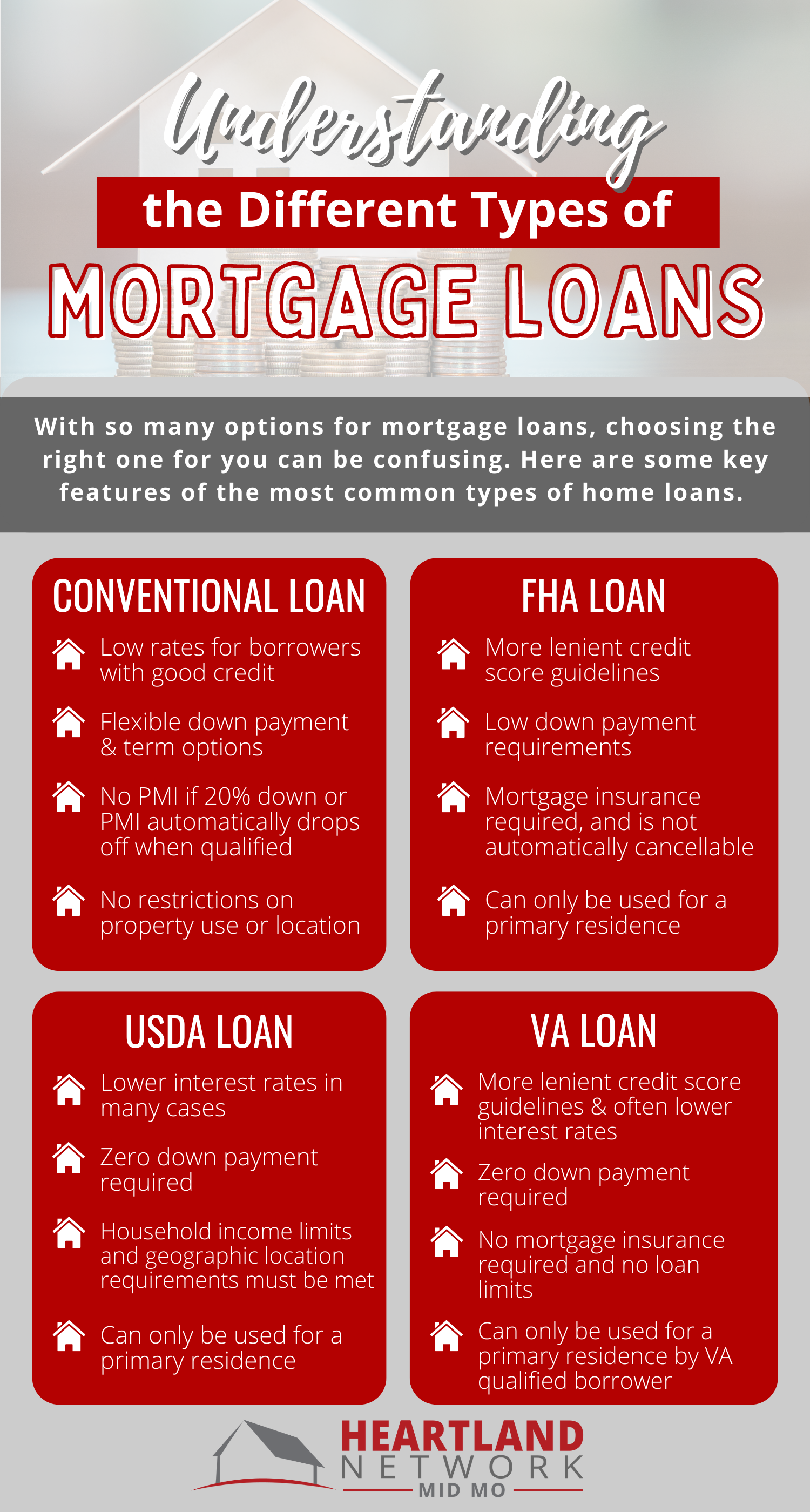
Mortgage loans are specialized, long-term secured loans designed specifically for purchasing or refinancing real estate. The property being financed serves as the collateral. Mortgages generally feature loan terms of 15 or 30 years and are divided into several primary categories:
- Conventional Mortgages: Originated by private lenders and not insured directly by federal agencies. They typically require higher credit scores and down payments between 3% and 20%. If a buyer puts down less than 20%, lenders usually require Private Mortgage Insurance (PMI) to offset lender risk.
- Government-Backed Mortgages: Programs backed by federal agencies to expand homeownership accessibility. For example, Federal Housing Administration (FHA) loans accommodate lower credit scores and down payments as low as 3.5%. Department of Veterans Affairs (VA) loans offer zero-down-payment options for eligible military personnel and veterans without requiring monthly mortgage insurance.
- Adjustable-Rate Mortgages (ARMs): Mortgages with fixed initial rates for a set period (such as 5, 7, or 10 years) that adjust annually thereafter based on prevailing economic benchmarks.
Auto Loans
Auto loans are secured installment products used to purchase new or used vehicles. The vehicle itself serves as collateral throughout the loan term, which typically ranges from 36 to 84 months. Lenders offer direct financing (obtained through banks, credit unions, or online lenders) or indirect financing (arranged through motor vehicle dealerships).
Because motor vehicles depreciate rapidly over time, long-term auto loans (such as 72 or 84 months) present financial risks. Borrowers can fall into an "unbalanced" position—where the vehicle's market value drops below the remaining principal balance. In such scenarios, purchasing Guaranteed Asset Protection (GAP) insurance is often recommended to cover the difference if the vehicle is totaled or stolen.
Student Loans
Student loans fund post-secondary education costs, covering tuition, books, fees, and living expenses. They split into two distinct financial categories:
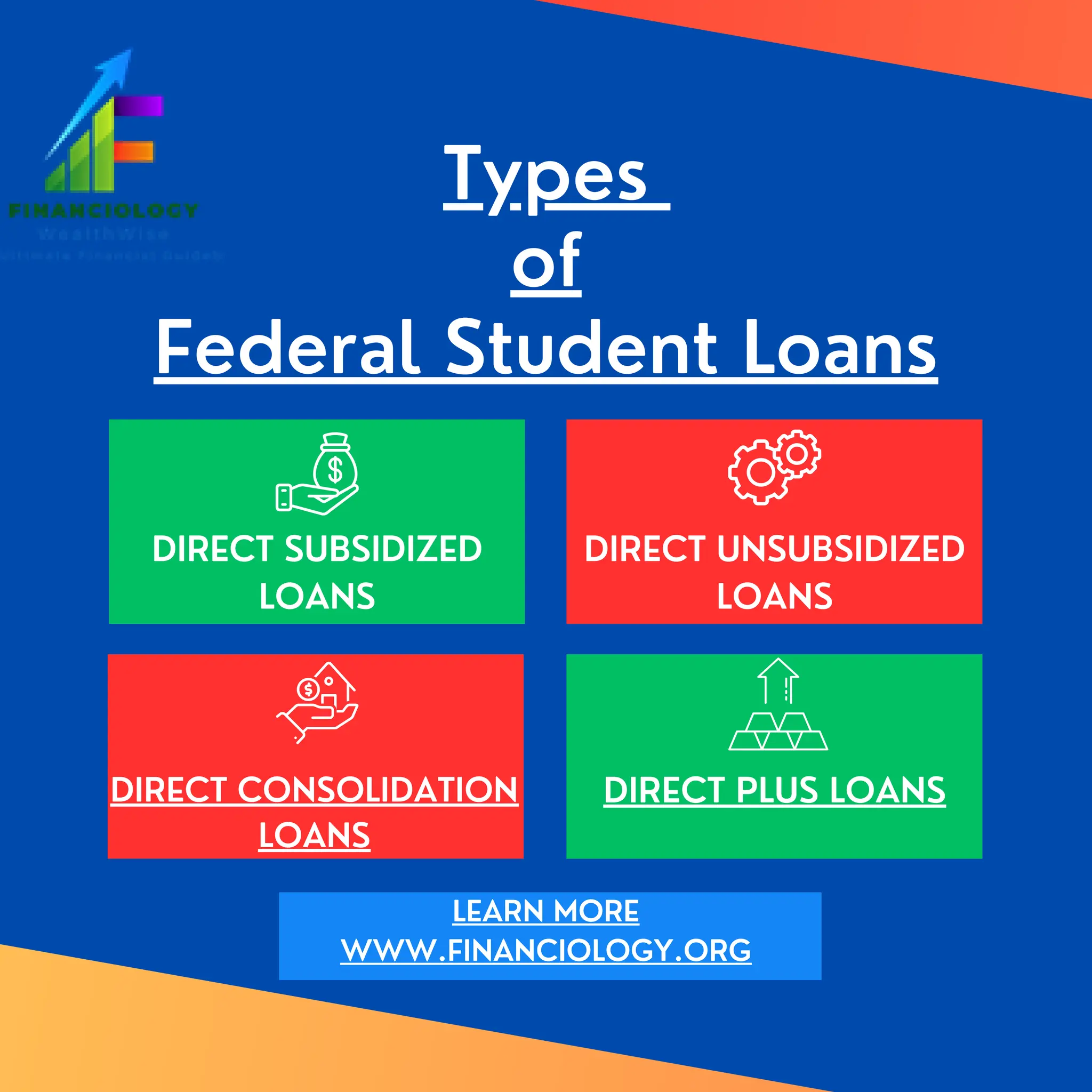
- Federal Student Loans: Issued by government bodies. These loans generally offer fixed interest rates, income-driven repayment (IDR) plans, standard options for deferment or forbearance during economic hardship, and public service loan forgiveness programs. Direct Subsidized Loans do not accrue interest while the student remains enrolled at least half-time, whereas Direct Unsubsidized Loans accrue interest immediately upon disbursement.
- Private Student Loans: Issued by commercial banks, credit unions, and private financial institutions. Approval depends on personal credit scores or the credit profile of a co-signer. Private student loans typically lack the flexible repayment, income-contingent structures, and federal forgiveness protections inherent to government loans.
Small Business Loans
Business loans provide capital to start, operate, maintain, or expand commercial enterprises. Unlike consumer credit, business lending evaluates financial performance metrics, commercial cash flows, business credit profiles, and overall industry stability.
- SBA Loans: Backed partly by government bodies such as the U.S. Small Business Administration, these loans reduce lender risk to provide small businesses with accessible term loans and lines of credit carrying competitive interest rates.
- Term Loans & Business Lines of Credit: Business term loans provide lump-sum capital for fixed-asset investments or physical expansion. Business lines of credit function as revolving facilities, allowing companies to draw funds up to a credit limit as short-term capital needs arise, paying interest only on drawn balances.
Comparing Major Loan Types
The following table summarizes structural characteristics, interest behavior, typical terms, and common applications across primary loan products.
| Loan Type | Primary Collateral | Rate Type | Standard Terms | Common Purpose | Relative Interest Rate Tier |
|---|---|---|---|---|---|
| Personal Loan | None (Unsecured) or Cash/Asset | Fixed or Variable | 2 to 7 Years | Debt consolidation, unexpected expenses, home updates | Moderate to High |
| Conventional Mortgage | Residential Real Estate | Fixed or Variable | 15 or 30 Years | Primary residence purchase or refinancing | Low to Moderate |
| Auto Loan | Vehicle Purchased | Fixed | 3 to 7 Years | Purchasing new or used motor vehicles | Low to Moderate |
| Federal Student Loan | None (Unsecured) | Fixed | 10 to 25 Years | Higher education tuition and educational costs | Low to Moderate |
| Business Line of Credit | Commercial Assets or General Lien | Variable | Revolving (1 to 5 Years) | Managing working capital, inventory, and cash flow gaps | Moderate |
Key Factors in Evaluating Loan Options
Navigating loan choices requires looking beyond basic promotional rates to evaluate underwriting requirements, fee structures, and total repayment costs.
Borrowing Process Flow: [Assess Credit Profile & DTI] ➔ [Compare APRs & Fee Disclosures] ➔ [Analyze Amortization Schedules] ➔ [Submit Application]
Credit Score and Debt-to-Income (DTI) Ratios
Underwriters evaluate creditworthiness using two core indicators:
- Credit Score: Quantitative scores (such as FICO or VantageScore) measure historic payment reliability, credit utilization, length of credit history, and recent inquiries. Higher credit scores translate to lower interest rates and higher approval likelihood.
- Debt-to-Income Ratio (DTI): Calculated by dividing total mandatory monthly debt payments by gross monthly income. Expressed as a percentage, DTI shows a borrower's capacity to handle additional monthly obligations. Lenders generally prefer a DTI ratio below 36%, though specialized mortgage programs allow higher percentages under specific compensating factors.
$$\text{DTI Ratio} = \left( \frac{\text{Total Monthly Mandatory Debt Payments}}{\text{Gross Monthly Income}} \right) \times 100$$
Fees, Penalties, and Upfront Costs
The total expense of securing capital extends beyond monthly interest calculations. Borrowers should examine loan disclosures for hidden charges:
- Origination and Underwriting Fees: Upfront administrative fees deducted from the initial loan payout or added to the principal balance, typically ranging from 1% to 8% of the total loan amount.
- Prepayment Penalties: Fees charged by certain lenders if a borrower pays off the principal balance ahead of schedule, intended to compensate the lender for lost future interest earnings.
- Late Payment and Processing Charges: Penalty fees assessed when monthly installments miss scheduled due dates or bounce due to insufficient funds.
Amortization Schedules and Total Borrowing Costs
Installment loans adhere to an amortization schedule, a complete table showing the breakdown of every periodic payment between interest costs and principal reduction.
In long-term loans, early payments skew heavily toward paying interest. As the principal balance declines over time, a larger portion of each monthly payment goes toward reducing the remaining principal. Understanding amortization helps borrowers determine the true financial impact of making extra principal payments to lower total interest costs over the life of the debt.
Common Borrowing Mistakes to Avoid
- Evaluating Loans by Monthly Payment Alone: Lenders can make a large loan look affordable by stretching repayment over a longer term (e.g., an 84-month auto loan). While the monthly payment drops, the total interest paid over the life of the loan rises significantly.
- Confusing Interest Rates with APR: Relying strictly on nominal interest rates ignores origination fees and closing costs, concealing the true annual cost of credit.
- Overlooking Prepayment Penalties: Accelerating debt payoff to eliminate interest can trigger contractual fee penalties if the loan contract includes prepayment restrictions.
- Failing to Get Pre-Qualified Across Multiple Lenders: Submitting formal, hard-credit-inquiry applications to multiple institutions in a short window can unnecessarily reduce credit scores. Utilizing soft-credit pre-qualification tools allows rate comparisons without impacting credit health.
Frequently Asked Questions
What is the main difference between an interest rate and an APR?
The nominal interest rate reflects only the basic annual cost of borrowing the principal sum. The Annual Percentage Rate (APR) incorporates both the base interest rate and mandatory lender fees (such as origination or closing charges). APR provides a comprehensive metric for comparing true borrowing costs across different lenders.
How does loan amortization work?
Loan amortization distributes debt payments over a fixed schedule. Early installment payments are applied primarily to interest charges accrued on the balance. Over time, as the principal balance decreases, a progressively higher percentage of each payment reduces the remaining principal balance until the debt is fully paid off.
Is a fixed-rate loan better than a variable-rate loan?
A fixed-rate loan offers stability because payments stay identical throughout the loan term, making it ideal during low-rate environments or for long-term debt. A variable-rate loan may offer lower initial rates, but carries the risk of rate increases if market benchmarks rise over time.
What happens if a borrower defaults on a secured loan versus an unsecured loan?
If a borrower defaults on a secured loan, the lender can take legal action to repossess or foreclose on the specific collateral asset pledged to satisfy the unpaid balance. If a borrower defaults on an unsecured loan, the lender cannot seize property directly; instead, they may send the account to collections, report delinquent payments to credit bureaus, or file a lawsuit to garnish wages or levy accounts.
How does debt consolidation work, and when is it beneficial?
Debt consolidation replaces multiple existing high-interest debts (such as credit card balances) with a single new loan that features a lower APR, a single monthly payment, and a fixed repayment timeline. It is beneficial when the new consolidation loan carries a substantially lower APR than the average of the original accounts, reducing total interest expenses and streamlining debt management.
Next Steps: Selecting and Applying for a Loan
- Review Credit Profile Metrics: Pull official credit reports from major reporting bureaus to check for inaccuracies and verify current credit scores before contacting lenders.
- Calculate Household Budget Constraints: Determine maximum affordable monthly payment thresholds by calculating your Debt-to-Income (DTI) ratio.
- Obtain Pre-Qualification Offers: Utilize soft-credit pre-qualification options through multiple credit unions, traditional banks, and online institutions to compare estimated APRs, loan terms, and fee structures.
- Examine Loan Estimates and Final Disclosures: Carefully review federal Truth in Lending Act (TILA) disclosures or equivalent documentation to verify prepayment terms, origination fees, and total lifetime borrowing costs before signing loan documents.
Image Gallery