Understanding Tamoxifen Benefits for Breast Cancer Patients: Clinical Use, Efficacy, and Long-Term Care
Tamoxifen is a foundational endocrine therapy prescribed to block estrogen signaling in hormone receptor-positive breast cancer. By binding to estrogen receptors in breast tissue, tamoxifen significantly reduces the risk of cancer recu...
Tamoxifen is a foundational endocrine therapy prescribed to block estrogen signaling in hormone receptor-positive breast cancer. By binding to estrogen receptors in breast tissue, tamoxifen significantly reduces the risk of cancer recurrence, lowers mortality rates, and provides preventive benefits for high-risk individuals, serving as a critical pillar in modern oncological care.
Contents
Medical Disclaimer: The following information is for educational purposes only and does not constitute formal medical advice. Individual treatment decisions should always be made in consultation with a qualified oncologist or healthcare provider.
What Is Tamoxifen and How Does It Work?
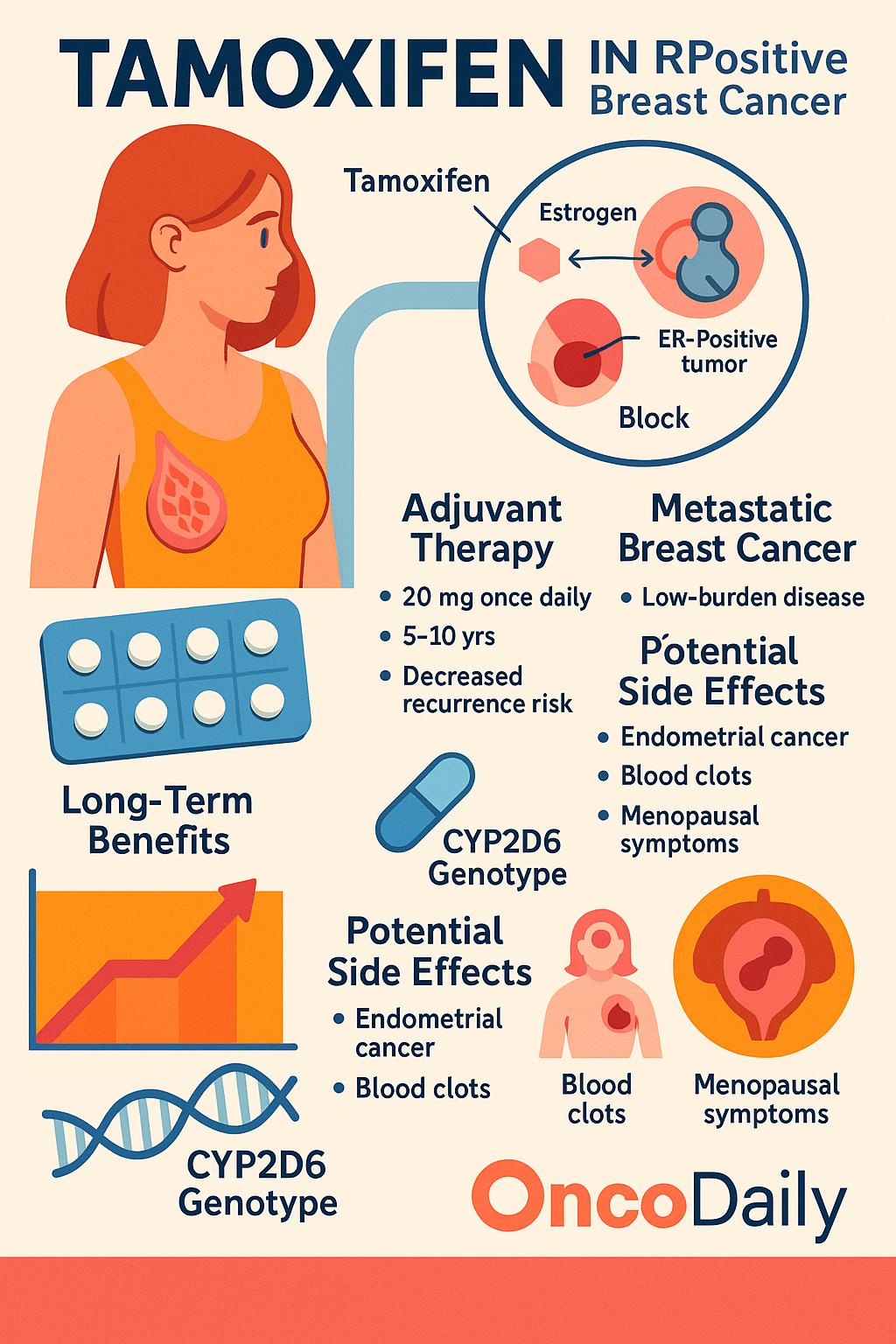
Tamoxifen belongs to a class of medications known as Selective Estrogen Receptor Modulators (SERMs). Unlike treatments that completely halt estrogen production throughout the body, SERMs exhibit tissue-specific activity. In breast tissue, tamoxifen acts as an antagonist, binding directly to estrogen receptors on cancer cells. This competitive binding prevents circulating estrogen from attaching to the receptor, thereby denying the tumor cells the chemical signal required for growth and proliferation.
To benefit from tamoxifen, a patient's breast tissue or tumor cells must express hormone receptors. Oncology teams classify tumors as Estrogen Receptor-Positive (ER-positive) or Progesterone Receptor-Positive (PR-positive) through immunohistochemistry testing of biopsy specimens. If a breast tumor lacks these receptors (ER-negative), tamoxifen is clinically ineffective, and alternative therapy protocols are pursued.
Although tamoxifen inhibits estrogen action in breast tissue, it exerts mild estrogen-like (agonist) effects in other organ systems, such as bone tissue and the cardiovascular system. This dual agonist-antagonist mechanism explains both its therapeutic benefits beyond tumor suppression and its unique profile of potential adverse effects.
Primary Clinical Benefits Across Patient Populations
The clinical application of tamoxifen spans multiple stages of breast cancer diagnosis and risk management. Decades of landmark research from global clinical trials, including meta-analyses by the Early Breast Cancer Trialists' Collaborative Group (EBCTCG), have firmly established tamoxifen as a standard of care.
- TAMOXIFEN MECHANISM OF ACTION
- Estrogen Molecules
- Blocks Access
- Tamoxifen Molecules
- Binds to ER Receptor
- Suppresses Tumor Growth Signal
- Estrogen Molecules
1. Reducing Recurrence in Early-Stage ER-Positive Breast Cancer
For patients diagnosed with early-stage, invasive ER-positive breast cancer, standard protocol involves surgical resection followed, when indicated, by radiation or chemotherapy. Following initial treatments, adjuvant (post-surgical) endocrine therapy with tamoxifen dramatically lowers the probability of local, regional, or distant disease recurrence.
Large-scale statistical analyses demonstrate that taking tamoxifen for 5 years reduces the 15-year risk of breast cancer recurrence by approximately one-third to one-half compared to no endocrine treatment. Crucially, this protective effect extends well beyond the active treatment period—a phenomenon known as the carryover effect.
2. Reducing Breast Cancer Mortality Rate
Beyond preventing tumor recurrence, tamoxifen directly improves long-term overall survival rates. Landmark clinical data show that 5 years of adjuvant tamoxifen therapy reduces breast cancer mortality rates by roughly 30% throughout the first 15 years after diagnosis. This substantial survival advantage makes tamoxifen one of the most effective targeted therapies in modern oncology.
3. Treatment of Ductal Carcinoma in Situ (DCIS)
Ductal Carcinoma in Situ represents a non-invasive condition where abnormal cells are confined to the milk ducts of the breast. Following breast-conserving surgery (lumpectomy) and radiation, tamoxifen administration helps prevent:
- Recurrence of DCIS in the affected breast (ipsilateral recurrence).
- Progression to invasive breast cancer in the affected breast.
- Development of new primary tumors in the opposite breast (contralateral breast cancer).
4. Risk Reduction in High-Risk Individuals (Chemoprevention)
For individuals who have not been diagnosed with invasive breast cancer but carry a elevated risk—due to strong family history, high-risk genetic mutations, or prior high-risk biopsy findings (such as atypical hyperplasia)—tamoxifen serves as a preventive agent.
Clinical research, including the National Surgical Adjuvant Breast and Bowel Project (NSABP) P-1 trial, demonstrated that 5 years of preventive tamoxifen therapy reduces the incidence of ER-positive invasive breast cancer by up to 50% in high-risk pre- and postmenopausal women. The National Cancer Institute (NCI) offers comprehensive risk assessment frameworks to help clinicians determine which patients meet the threshold for risk-reducing therapy.
5. Management of Metastatic Breast Cancer
In advanced or metastatic ER-positive breast cancer, tamoxifen remains a vital therapeutic option. It works to shrink established lesions or stabilize disease progression, offering clinical benefit and symptom control, particularly in premenopausal women or patients who cannot tolerate alternative systemic therapies.
Standard Treatment Duration: 5 Years vs. 10 Years
The duration of tamoxifen treatment was historically standardized at 5 years. However, clinical evidence published over the past decade has refined these parameters, introducing extended therapy options for select patient profiles.
- TAMOXIFEN DURATION TIMELINE
- Years 0 to 5: Standard 5-Year Duration
- 40-50% recurrence drop
- 30% mortality drop
- Years 5 to 10: Extended Extended Duration (High-Risk)
- Further recurrence drop (ATLAS/aTTom)
- Continued protection against contralateral disease
- Years 0 to 5: Standard 5-Year Duration
The 5-Year Benchmark
Five years of continuous daily oral tamoxifen treatment yields robust protection against cancer recurrence while balancing overall safety. For patients with low-risk, early-stage disease or significant co-morbidities, a 5-year regimen remains the standard clinical recommendation.
Extended 10-Year Therapy
Major global trials—specifically the ATLAS (Adjuvant Tamoxifen: Longer Against Shorter) and aTTom (Adjuvant Tamoxifen—To Offer More) trials—evaluated the efficacy of extending tamoxifen treatment to 10 years.
Key findings from these trials indicate:
- Lower Recurrence Rates: Extending therapy to 10 years further reduces the risk of recurrence compared to stopping at 5 years, particularly after year 10.
- Lower Mortality Rates: Patients taking tamoxifen for 10 years demonstrated a statistically significant reduction in breast cancer-specific mortality compared to those completing only 5 years.
- Patient Selection: Extended therapy is typically recommended for patients with higher node-positive disease, larger initial tumor size, or other high-risk features, provided the treatment is well tolerated.
Decisions regarding 5 versus 10 years of therapy require individualized consultation with an oncologist, weighing personal recurrence risk against potential cumulative side effects.
Secondary Benefits Beyond Oncology
Because tamoxifen functions as a partial estrogen agonist in certain non-breast tissues, patients may experience clinical secondary benefits:
Maintenance of Bone Mineral Density
In postmenopausal women, declining estrogen levels accelerate bone loss, leading to osteopenia and osteoporosis. Tamoxifen’s estrogenic activity on bone tissue helps preserve bone mineral density, reducing bone resorption markers and lowering the risk of postmenopausal vertebral and hip fractures. (Note: In premenopausal women, tamoxifen can occasionally exert a slight anti-estrogenic effect on bones, making monitoring important across different age demographics.)
Lipid Profile Modifications
Tamoxifen therapy often leads to favorable alterations in serum lipid levels, specifically causing reductions in total cholesterol and low-density lipoprotein (LDL) cholesterol levels. While it is not prescribed as a primary lipid-lowering agent, this systemic effect can provide collateral metabolic advantages.
Comparative Overview of Indications and Outcomes
The table below summarizes the key clinical applications, targeted outcomes, and standard treatment durations associated with tamoxifen therapy.
| Clinical Indication | Target Patient Population | Primary Clinical Benefit | Standard Duration | Key Considerations |
|---|---|---|---|---|
| Early-Stage ER+ Breast Cancer | Pre- and postmenopausal patients | 40-50% reduction in recurrence; 30% reduction in mortality | 5 to 10 Years | Standard of care; extended duration for node-positive/high-risk |
| Ductal Carcinoma in Situ (DCIS) | Post-lumpectomy patients | Reduces ipsilateral and contralateral recurrence risk | 5 Years | Often used following surgical resection and radiation |
| Metastatic ER+ Breast Cancer | Advanced stage patients | Tumor shrinkage, disease stabilization | Continuous until progression | Can be combined or sequenced with other therapies |
| Risk Reduction (Prevention) | High-risk individuals (gail model/genetics) | ~50% reduction in ER+ invasive cancer incidence | 5 Years | Requires baseline evaluation of thrombosis/uterine risks |
| Bone Density Protection | Postmenopausal patients | Preservation of bone mass, fracture risk reduction | Concurrent with therapy | Secondary benefit derived from SERM agonist activity |
Managing Side Effects and Patient Safety Risk Factors
While tamoxifen is generally well tolerated, its mechanism of action leads to distinct biological side effects. Managing these requires proactive care and clear communication between patients and care teams.
- TAMOXIFEN SIDE EFFECT PROFILE
- COMMON (Vasomotor/Gynecologic)
- Hot flashes & night sweats
- Vaginal discharge or dryness
- Menstrual irregularities
- Mild fatigue or mood fluctuations
- RARE BUT SERIOUS (Vascular/Uterine)
- Deep Vein Thrombosis (DVT)
- Pulmonary Embolism (PE)
- Endometrial hyperplasia/cancer
- Cataracts
- COMMON (Vasomotor/Gynecologic)
1. Vasomotor Symptoms (Hot Flashes and Night Sweats)
Vasomotor symptoms are among the most frequent side effects experienced by patients on tamoxifen. These symptoms occur because the drug interferes with hypothalamic temperature regulation.
- Management Strategies: Non-hormonal therapies, such as specific selective serotonin reuptake inhibitors (SSRIs) or serotonin-norepinephrine reuptake inhibitors (SNRIs like venlafaxine), lifestyle modifications, avoiding known triggers (caffeine, alcohol, spicy foods), and layered clothing can mitigate discomfort.
2. Thromboembolic Events (Blood Clots)
Tamoxifen increases the risk of venous thromboembolism, including Deep Vein Thrombosis (DVT) and Pulmonary Embolism (PE).
- Risk Factors: Prior history of blood clots, major surgery, prolonged immobility, or inherited clotting disorders.
- Actionable Steps: Patients must seek immediate medical attention if they experience sudden leg swelling, calf pain, chest pain, or shortness of breath. Prophylactic precautions should be taken before major surgical procedures.
3. Uterine and Endometrial Effects
In postmenopausal women, tamoxifen’s estrogenic activity in the uterus can stimulate the endometrial lining, increasing the risk of endometrial hyperplasia, polyps, and, in rare instances, endometrial cancer.
- Monitoring: Postmenopausal patients taking tamoxifen should promptly report any unexpected vaginal bleeding, spotting, or unusual discharge to their physician. Routine pelvic ultrasounds or biopsies are not recommended in asymptomatic patients, but prompt evaluation of abnormal bleeding is mandatory.
4. Ocular Changes
Long-term tamoxifen use is associated with a slightly elevated incidence of cataracts and corneal alterations. Regular comprehensive eye examinations are recommended throughout treatment to detect visual changes early.
Medication Metabolism and Interactions: The Role of CYP2D6
Tamoxifen is a pro-drug, meaning its primary therapeutic activity depends on conversion by liver enzymes into active metabolites, primarily endoxifen. The principal enzyme responsible for this metabolic pathway is CYP2D6 (Cytochrome P450 2D6).
Drug Interactions with CYP2D6 Inhibitors
Co-administration of drugs that strongly inhibit the CYP2D6 enzyme can significantly reduce the body's ability to convert tamoxifen into endoxifen, potentially diminishing its antitumor efficacy.
- Strong CYP2D6 Inhibitors to Avoid: Paroxetine, fluoxetine, and bupropion.
- Preferred Alternatives: When treating depression or severe hot flashes in tamoxifen users, clinicians typically select medications with minimal CYP2D6 inhibition, such as venlafaxine, citalopram, or gabapentin.
Patients should inform their healthcare providers of all prescription drugs, over-the-counter medications, and herbal supplements they are taking to avoid therapeutic interference.
Clinical Guidelines and Patient Best Practices
Navigating long-term tamoxifen therapy involves consistent habits, monitoring, and adherence strategies:
- Maintain Consistent Daily Dosing: Tamoxifen is typically prescribed as a single 20 mg daily oral tablet, taken with or without food. Establishing a routine (e.g., using pill organizers or smartphone alarms) supports optimal therapeutic levels.
- Never Discontinue Therapy Abruptly Without Consultation: Unmanaged side effects are a leading cause of non-adherence. If side effects become difficult to manage, speak with your clinical team about supportive care options before stopping the drug.
- Schedule Annual Gynecologic and Ophthalmologic Exams: Staying current with routine wellness checkups ensures that rare, treatable complications (such as endometrial thickening or cataracts) are identified promptly.
- Practice Safe Contraception: Tamoxifen can induce ovulation in premenopausal women, and it poses risks to fetal development. Highly effective non-hormonal barrier methods (such as copper IUDs or condoms) must be used during treatment and for several months following discontinuation.
Frequently Asked Questions
How long does it take for tamoxifen to start working in the body?
Tamoxifen begins binding to estrogen receptors within hours of taking the first dose. However, reaching steady-state concentration in the bloodstream takes approximately 3 to 4 weeks of consistent daily administration. Its protective oncological effects accumulate continuously throughout the full multi-year course of treatment.
Is tamoxifen suitable for premenopausal women?
Yes. Tamoxifen is one of the standard systemic endocrine therapies approved and proven effective for premenopausal women with ER-positive breast cancer. Unlike aromatase inhibitors—which require ovarian function suppression to work in premenopausal women—tamoxifen can function effectively regardless of active ovarian estrogen production.
What is the difference between tamoxifen and aromatase inhibitors?
Tamoxifen blocks estrogen receptors in tissue cells, whereas aromatase inhibitors (such as anastrozole, letrozole, and exemestane) block the enzyme responsible for converting other hormones into estrogen in postmenopausal women. Aromatase inhibitors eliminate circulating estrogen entirely rather than blocking receptors, and they are typically reserved for postmenopausal individuals.
Does tamoxifen cause permanent weight gain?
Clinical trials comparing tamoxifen to placebo show minimal difference in overall average weight gain between groups. While some patients experience fluid retention or metabolic shifts during endocrine therapy, significant weight alterations are generally attributable to concurrent treatments (such as chemotherapy or steroids), natural menopausal transitions, or lifestyle modifications.
What happens if I miss a dose of tamoxifen?
If you miss a dose, take it as soon as you remember. However, if it is almost time for your next scheduled dose, skip the missed dose and resume your regular daily schedule. Do not double up on doses to make up for a missed pill. Occasional missed doses will not significantly compromise long-term efficacy, but consistent daily adherence is essential for optimal protection.
Practical Recommendations and Next Actions
Understanding the benefits and requirements of tamoxifen therapy empowers patients to actively manage their breast cancer care. To ensure safety and maximize long-term health outcomes:
- Review Your Receptor Status: Confirm with your oncologist that your pathology report verifies ER-positive status prior to commencing SERM therapy.
- Audit Current Medications: Provide your physician and pharmacist with an updated list of all medications, specifically checking for CYP2D6-inhibiting antidepressants or supplements.
- Establish a Side-Effect Protocol: Work with your medical team to define clear strategies for managing hot flashes, joint discomfort, or mood alterations early in the treatment timeline.
- Report New Symptoms Promptly: Notify your care provider immediately if you experience abnormal vaginal bleeding, leg pain or swelling, sudden shortness of breath, or noticeable vision changes.
With adherence and clinical oversight, tamoxifen remains one of the most reliable and clinically proven therapies for preventing recurrence and sustaining overall survival in breast cancer care.
Image Gallery