What Triple A Renters Insurance Covers
AAA renters insurance typically covers personal property damage, personal liability, medical payments to third parties, and additional living expenses if your home becomes uninhabitable. It protects your belongings from specific "named...
AAA renters insurance typically covers personal property damage, personal liability, medical payments to third parties, and additional living expenses if your home becomes uninhabitable. It protects your belongings from specific "named perils" like fire, theft, and vandalism, while providing a financial safety net for accidents involving guests in your rental unit.
Contents
Renters insurance is often an overlooked component of a financial safety net, yet for those leasing apartments, condos, or single-family homes in 2026, it remains one of the most cost-effective ways to protect personal wealth. AAA, traditionally known for roadside assistance, offers robust renters insurance policies through its regional motor clubs and affiliated insurance companies. Because AAA operates as a federation of regional clubs (such as CSAA Insurance Group or the Auto Club Enterprises), the specific policy language may vary slightly by state, but the core protections remain consistent with the industry-standard HO-4 policy form.
Understanding exactly what is included in a AAA renters policy is essential for determining if your current coverage limits are sufficient for your lifestyle, especially as the value of personal technology and the costs of temporary housing continue to rise.
The Four Primary Pillars of AAA Renters Insurance
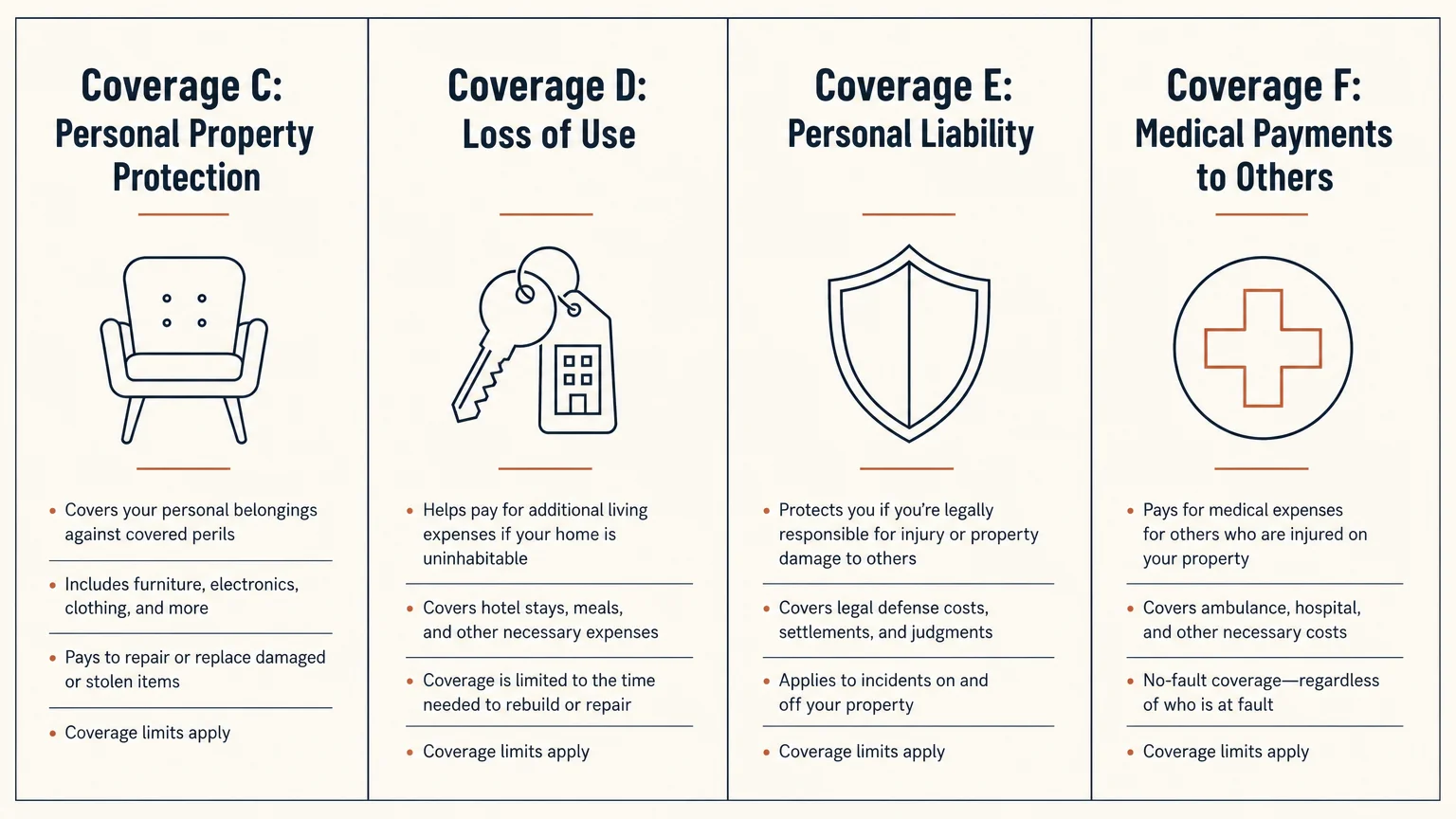
A standard AAA renters insurance policy is built on four main coverage areas. Each serves a distinct purpose, moving from protecting your physical objects to protecting your financial assets from legal action.
1. Personal Property Coverage
This is the core of the policy. Personal property coverage pays to repair or replace your belongings if they are damaged, destroyed, or stolen due to a covered peril. In 2026, this includes everything from your furniture and clothing to high-end electronics, appliances you own, and even your "work-from-home" setup.
It is important to distinguish between Replacement Cost Value (RCV) and Actual Cash Value (ACV). Most AAA policies allow you to choose between these two:
- Actual Cash Value: Pays the depreciated value of the item at the time of the loss. For example, a five-year-old laptop would only be covered for what it is worth today on the used market.
- Replacement Cost Value: Pays the amount it actually costs to buy a brand-new version of the item today. While RCV policies have slightly higher premiums, they are generally recommended to avoid significant out-of-pocket expenses during a total loss.
2. Personal Liability Protection
Liability coverage is perhaps the most critical component for long-term financial security. If a guest trips over a rug in your apartment and sues you for their injuries, or if you accidentally cause a fire that damages the landlord's building, your liability coverage steps in.
This protection is not limited to the physical confines of your rental unit. If you are traveling and accidentally cause damage to a hotel room or someone else’s property, your AAA renters liability coverage often follows you. In 2026, with legal fees and medical costs at all-time highs, many advisors suggest carrying at least $300,000 in liability coverage, though AAA typically offers limits ranging from $100,000 to $500,000.
3. Medical Payments to Others
While liability coverage handles lawsuits and major claims, "Medical Payments" coverage is designed for smaller, no-fault medical expenses. If a friend cuts their hand while helping you cook dinner, this part of the policy can pay for their ER visit or stitches without the need for a lawsuit. Coverage limits for this are usually lower, typically ranging from $1,000 to $5,000.
4. Loss of Use (Additional Living Expenses)
If a covered event, such as a fire or significant water damage, makes your rental home uninhabitable, Loss of Use coverage pays for the "extra" expenses you incur. This includes hotel bills, temporary rental costs, and even the increase in your grocery or dining bill because you no longer have access to your own kitchen. In 2026's competitive housing market, this coverage is vital as it prevents a displacement from becoming a total financial disaster.
Covered Perils: The "Named Perils" List
AAA renters insurance is a "named perils" policy. This means that for a claim to be paid, the damage must be caused by one of the specific events listed in the policy document. If an event is not listed, it is generally not covered.
Standard covered perils typically include:
- Fire and Lightning: The most common cause of catastrophic loss.
- Windstorm and Hail: Protection against external weather damage.
- Explosion: Including gas leaks or appliance malfunctions.
- Riot and Civil Commotion: Damage resulting from public unrest.
- Smoke Damage: Even if the fire was in a neighboring unit.
- Vandalism and Malicious Mischief: Intentional damage by others.
- Theft: This includes theft from your home and, often, theft of items from your vehicle or while traveling.
- Falling Objects: Such as a tree limb falling through a window.
- Weight of Ice, Snow, or Sleet: Damage to the structure that affects your property.
- Accidental Discharge of Water: Such as a burst pipe or a leaking water heater (note: this does not include external flooding).
Policy Limits and Special Sub-Limits
While your total personal property limit might be $30,000, insurance companies—including AAA—apply "sub-limits" to certain categories of high-value items. These limits exist to keep premiums low for the average consumer while requiring those with expensive hobbies or assets to buy extra protection.
Common sub-limits in 2026 AAA policies:
- Jewelry and Watches: Often capped at $1,000 to $2,500 for theft.
- Money and Securities: Typically limited to $200–$500.
- Business Property: If you run a business from home, your equipment may be capped at $2,500.
- Firearms: Usually limited to $2,000–$3,000.
- Watercraft: Small boats or trailers may have a $1,500 limit.
If you own an engagement ring or high-end camera equipment that exceeds these limits, you should look into a Scheduled Personal Property endorsement, which provides broader protection (including "mysterious disappearance") for specific items.
What AAA Renters Insurance Does Not Cover
To avoid surprises during the claims process, it is important to understand the standard exclusions. Like most carriers, AAA does not cover:
- Flooding: Damage from rising external water (e.g., heavy rain, overflowing rivers) requires a separate policy through the National Flood Insurance Program (NFIP).
- Earthquakes: In states like California or Washington, earthquake coverage must be added as a separate endorsement or policy.
- Pests and Rodents: Damage from bedbugs, cockroaches, or mice is considered a maintenance issue and is not covered.
- Nuclear Hazard or War: Standard across nearly all domestic insurance policies.
- Roommates' Belongings: Unless specifically named on the policy, your roommate’s property is not covered by your insurance. They must purchase their own policy.
- Intentional Acts: Damage you intentionally cause to the property or injuries you intentionally inflict on others.
Comparison of Coverage Levels
Depending on your regional AAA club, you may have options for "Basic," "Standard," or "Deluxe" packages. The following table illustrates how these tiers often differentiate.
| Coverage Feature | Basic / Economy | Standard / Choice | Deluxe / Premier |
|---|---|---|---|
| Personal Property | Actual Cash Value | Replacement Cost | Replacement Cost |
| Liability Limit | $100,000 | $300,000 | $500,000 |
| Medical Payments | $1,000 | $2,000 | $5,000 |
| Loss of Use | 10% of Property Limit | 20% of Property Limit | 30% of Property Limit |
| Identity Theft Rider | Not Included | Optional Add-on | Often Included |
| Deductible Options | $500 - $1,000 | $250 - $1,000 | $100 - $500 |
Leveraging AAA Discounts and Membership
One of the primary reasons renters choose AAA is the ability to bundle coverage. As of 2026, AAA members can often see significant premium reductions by combining renters insurance with their existing auto policy.
- Multi-Policy Discount: Savings can range from 5% to 15% on both premiums.
- Protective Device Discount: Installing smoke detectors, deadbolts, or a security system can lower rates.
- Claims-Free Discount: For policyholders who haven't filed a claim in the last 3–5 years.
- Paperless/Full Pay: Discounts for automated billing or paying the annual premium upfront.
How to Document Your Belongings for a Claim
A policy is only as good as your ability to prove what you owned. In 2026, AAA highly recommends using digital tools to maintain a home inventory.
- Video Walkthrough: Use your smartphone to record every room, opening drawers and closets. Narrate the age and approximate cost of items.
- Digital Receipts: Keep a folder in your email or cloud storage for major purchases (electronics, furniture, jewelry).
- The "High-Value" List: Specifically photograph serial numbers for laptops, gaming consoles, and appliances.
- Cloud Backup: Ensure your inventory is stored off-site so it isn't lost if your phone or computer is destroyed in a fire.
Frequently Asked Questions
Does AAA renters insurance cover my pet biting someone?
Yes, in most cases. Personal liability coverage typically extends to injuries caused by your pets, provided the breed is not specifically excluded by the policy. If your dog bites a guest, AAA can cover the medical bills and legal defense costs. However, some regional clubs may have "vicious dog" exclusions or require a surcharge for specific breeds.
Am I covered if my bike is stolen from outside a coffee shop?
Generally, yes. Most AAA renters insurance policies include "off-premises" coverage. This means your personal property is protected anywhere in the world, though the limit for off-premises theft is sometimes lower (e.g., 10% of your total personal property limit).
Does AAA cover damage caused by my roommate?
Usually, no. Standard renters insurance covers the policyholder and "resident relatives." Unless your roommate is your spouse or a domestic partner listed on the policy, their actions are generally not covered under your liability, and their belongings are not covered under your personal property. It is always better for each roommate to have their own individual policy.
Is identity theft covered by AAA renters insurance?
Identity theft restoration is often available as an "endorsement" or "rider" to a AAA renters policy. It does not usually cover the money stolen from you (which is a banking issue), but it pays for the costs of restoring your credit, legal fees, and the time taken off work to resolve the fraud.
How do I file a claim with AAA?
In 2026, AAA allows claims to be filed through their mobile app, online portal, or by calling their 24/7 claims hotline. You will need your policy number, a description of the event, and a police report if the claim involves theft or vandalism. An adjuster will then be assigned to evaluate the damage and determine the payout based on your coverage limits and deductible.
Final Recommendation
To ensure you are fully protected, start by calculating the total value of your belongings. Most people underestimate the cost of replacing everything they own—from socks to software—by at least 30%. Once you have a number, contact your local AAA club to obtain a quote that includes Replacement Cost Coverage and at least $300,000 in liability. Given the low cost of renters insurance (often less than $20 per month in 2026), it is one of the highest-value investments you can make in your financial stability.
Image Gallery