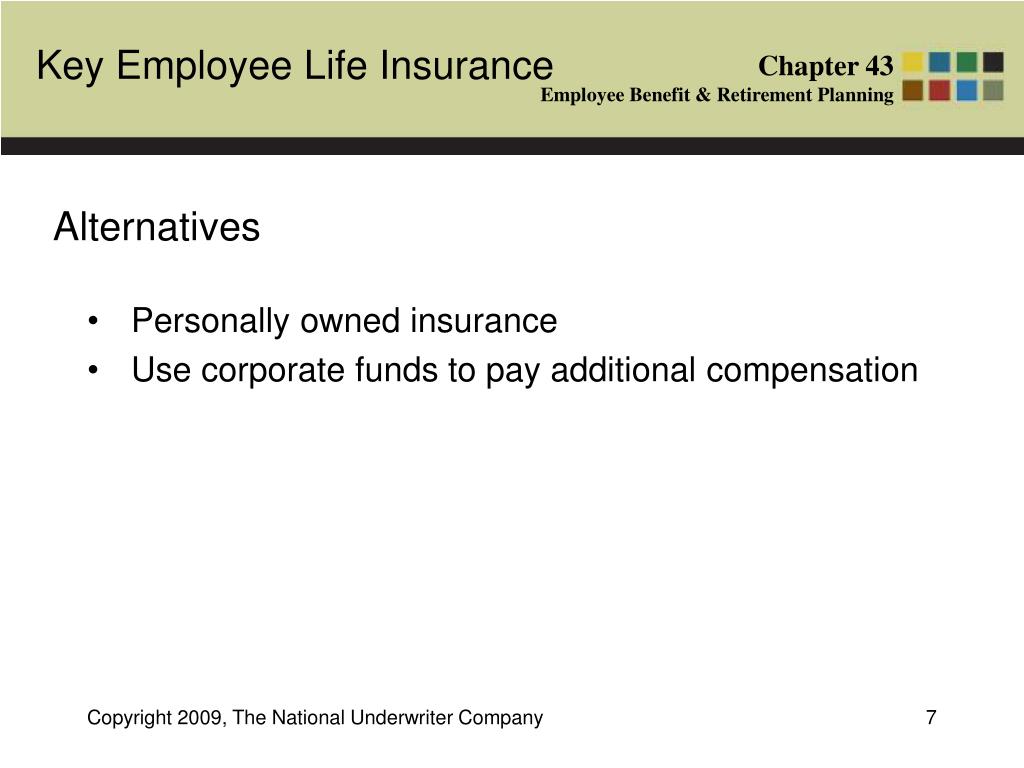
Transitioning Key Employee Life Insurance to a Personal Policy: What the Changes Entail
Transitioning a key employee life insurance policy to a personal policy involves a legal transfer of ownership (Absolute Assignment), shifting premium responsibilities to the individual, and updating beneficiary designations. This proc...
Transitioning a key employee life insurance policy to a personal policy involves a legal transfer of ownership (Absolute Assignment), shifting premium responsibilities to the individual, and updating beneficiary designations. This process often triggers significant tax implications, as the IRS typically views the policy’s fair market value as taxable compensation to the employee in the year of the transfer.
Contents
Key person life insurance—often referred to as key employee insurance—is a staple of corporate risk management. It protects a business against the financial loss of a crucial team member. However, when that employee retires, resigns, or when a business undergoes a structural change, the question arises: what happens to the policy? Rather than letting a permanent policy lapse or surrendering it for its cash value, many organizations choose to transfer the policy to the employee.
As of 2026, the regulatory and tax landscape surrounding these transfers remains complex. Moving a policy from a corporate entity to a private individual is not a simple administrative update; it is a fundamental change in the legal and financial structure of the asset. Understanding the specific changes—ranging from tax liabilities to premium structures—is essential for both the employer and the departing executive.
The Legal Shift: Transfer of Ownership and Control
The primary change when transitioning key employee life insurance is the legal ownership of the contract. While the policy is a "key person" plan, the corporation is the owner, the premium payor, and the beneficiary. The employee is merely the "insured life."
Absolute Assignment
To move the policy into the employee's name, the business must execute an Absolute Assignment. This legal document transfers all "incidents of ownership" from the corporation to the individual. Once this is signed and processed by the insurance carrier, the business no longer has any rights to the policy. They cannot borrow against the cash value, they cannot change the beneficiary, and they cannot cancel the coverage.
Change of Beneficiary
In a key person arrangement, the business is the beneficiary to offset the costs of recruiting a replacement or to pay off business debts upon the employee's death. Upon transfer, the employee gains the right to name their own beneficiaries—typically a spouse, children, or a family trust. It is a critical step that must be completed immediately after the ownership transfer to ensure the death benefit aligns with the individual's estate planning goals.
The Financial Impact: From Corporate Expense to Personal Liability
The most immediate practical change for the individual is the responsibility for premium payments. What was once a tax-deductible or capitalized corporate expense becomes a personal out-of-pocket cost.
Premium Structure and Cash Value
If the policy is a Term Life policy, the individual simply takes over the periodic payments. However, most key person transitions involve Permanent Life insurance (such as Whole Life or Universal Life) because these policies accumulate cash value.
In 2026, many executives find that the "cash value" within the policy can be used to "vanish" the premiums. If the policy is sufficiently funded, the internal dividends or interest may cover the ongoing costs of insurance, meaning the individual may not need to write a check for premiums immediately. However, if the policy is underfunded, the individual must be prepared to maintain the payment schedule to prevent the policy from lapsing.
Valuation and the IRS "Fair Market Value"
When a company gives a policy to an employee, the IRS does not see it as a "gift." It is viewed as a form of compensation. The employer must report the Fair Market Value (FMV) of the policy as income on the employee’s W-2 or 1099.
Determining FMV is more complex than simply looking at the cash surrender value. According to IRS Revenue Procedure 2005-25, the valuation must reflect the full value of the policy, which often includes the "Interpolated Terminal Reserve" plus any unearned premiums. In 2026, tax professionals continue to use these guidelines to ensure that the employee is taxed correctly on the benefit received.
Tax Consequences of the Transition
The transition triggers a "taxable event" that both parties must navigate carefully. Because the policy has value, moving it from a business to an individual is treated as a sale or a bonus.
- Income Tax for the Employee: The employee must pay ordinary income tax on the FMV of the policy. If a policy has an FMV of $100,000, an executive in a 37% tax bracket could face a $37,000 tax bill in the year of the transfer.
- Deductibility for the Employer: Generally, the corporation can deduct the value of the policy as a business expense (compensation), provided the total compensation package for the employee remains "reasonable" under IRS standards.
- The Transfer-for-Value Rule: This is a significant risk in policy transitions. Under Internal Revenue Code Section 101(a)(2), if a life insurance policy is transferred for "valuable consideration," the death benefit may become partially taxable. However, there is a crucial exception: if the policy is transferred to the insured, the death benefit remains tax-free to the beneficiaries. This makes the transition to a personal policy safer than transferring it to a third party.
Comparing Key Employee vs. Personal Policy Structures
The following table outlines the fundamental shifts that occur when a policy changes hands.
| Feature | Key Employee Policy (Corporate) | Personal Policy (Individual) |
|---|---|---|
| Owner | The Corporation / Employer | The Individual / Insured |
| Premium Payor | The Corporation | The Individual |
| Beneficiary | The Corporation | Family, Estate, or Trust |
| Taxation of Premiums | Not deductible (usually) | Paid with after-tax dollars |
| Death Benefit Status | Tax-free to the business | Tax-free to individual heirs |
| Cash Value Access | Corporate asset on balance sheet | Personal asset / Retirement source |
| Purpose | Business continuity & debt protection | Legacy planning & family security |
Procedural Steps for a Smooth Transition
To ensure the change is handled correctly in 2026, both the employer and the employee should follow a standardized protocol.
1. Board Resolution or Corporate Consent
Since a life insurance policy is a corporate asset, the transfer usually requires formal approval. A board resolution should authorize the "distribution" or "sale" of the policy to the employee. This provides a paper trail for auditors and tax authorities.
2. Request an Official Valuation
The insurance company should provide a "Form 712" or a similar valuation statement. As mentioned previously, relying on the "account balance" shown on a mobile app is insufficient for IRS compliance. The valuation must be calculated using the specific safe harbor methods defined by the Treasury.
3. Execution of Assignment Forms
The employer must contact the insurance carrier to request "Absolute Assignment" forms. Both the authorized corporate officer and the employee must sign these in the presence of a notary.
4. Updating the Beneficiary
Once the carrier confirms the change of ownership, the employee must file a Change of Beneficiary form. If this step is missed, and the employee passes away, the death benefit might still legally be directed toward the business, leading to messy legal disputes between the family and the company.
Why Employees Choose to Take Over the Policy
Despite the potential tax bill, taking over a key person policy is often a highly advantageous move for a departing executive in 2026.
- Locked-in Insurability: The policy was likely issued when the employee was younger and healthier. By taking over the existing policy, the employee keeps the original premium rate and coverage without having to undergo a new medical exam. This is especially valuable if the employee has developed health issues since the policy was first written.
- Asset Accumulation: For permanent policies, the cash value represents a significant "bucket" of conservative capital. This can be used as a supplemental retirement income stream through policy loans or withdrawals.
- Convenience: The infrastructure of the policy (the carrier, the riders, the death benefit amount) is already established. It saves the executive the time and effort of shopping for new coverage in the open market.
Common Pitfalls to Avoid
- Underestimating the Tax Bill: Employees often focus on the "free" policy and forget they need liquid cash to pay the income tax on the policy's value.
- Failing to Check for Policy Loans: If the business borrowed against the policy's cash value, that loan usually stays with the policy. The employee should ensure all loans are repaid or understand that the death benefit will be reduced by the loan balance.
- Ignoring the "Three-Year Rule": For estate tax purposes, if the insured owns the policy and dies within three years of the transfer, the death benefit might be included in their taxable estate. In 2026, with shifting estate tax exemptions, consulting an estate attorney is vital.
FAQ
Do I need a new medical exam to move a key person policy to a personal policy? No, a new medical exam is generally not required. Because the policy already exists and is simply changing owners, the insurance company’s risk remains the same. This is one of the primary benefits of taking over a corporate policy—preserving coverage regardless of current health status.
Can the company just "give" me the policy for free? Technically, yes, but the IRS will treat the fair market value of that policy as compensation. You will be taxed on that value as if you received a cash bonus of the same amount. There is no way to move a policy with cash value from a corporation to an individual without triggering a tax reporting requirement.
What happens if the policy is a Term policy with no cash value? If the policy is a pure Term policy, the transition is much simpler. Since there is no "value" to tax, the company simply assigns the ownership to you. You begin paying the premiums, and there is usually no significant income tax hit. However, many companies choose to simply cancel term policies rather than transfer them, so this must be negotiated.
Is the death benefit still tax-free after the transfer? Yes, as long as the policy is transferred directly to the insured. The "Transfer-for-Value" rule, which can make death benefits taxable, contains a specific exception for transfers to the insured person. This ensures your family receives the full death benefit without an income tax burden.
Can I transfer the policy into a Life Insurance Retirement Plan (LIRP) structure? If the key person policy is a permanent policy (like Variable Universal Life), it can function as a LIRP once it is in your name. You can continue to fund it up to the IRS Section 7702 limits to maximize tax-deferred growth and tax-free distributions during your retirement years.
Practical Recommendation
If you are an executive or a business owner looking to transition a key employee policy in 2026, your first step should be a tripartite meeting between your CPA, your estate attorney, and your insurance agent. Request a formal valuation of the policy from the insurance carrier immediately to quantify the potential tax liability. If the tax hit is too high, consider a "shared ownership" or "split-dollar" arrangement as an alternative, or negotiate a "tax gross-up" where the company provides extra cash to cover the taxes triggered by the policy transfer.
Image Gallery