2025 Schedule 1 Instructions Explained: Navigating Additional Income and Adjustments
Schedule 1 (Form 1040) is a critical supplementary document used by taxpayers to report types of income not listed on the main page of Form 1040 and to claim specific "above-the-line" adjustments to income. For the 2025 tax year, being...
Schedule 1 (Form 1040) is a critical supplementary document used by taxpayers to report types of income not listed on the main page of Form 1040 and to claim specific "above-the-line" adjustments to income. For the 2025 tax year, being filed in early 2026, understanding these instructions is essential for accurately calculating your Adjusted Gross Income (AGI).
Contents
Tax filing can often feel like a puzzle where the main Form 1040 serves as the frame, and various schedules provide the necessary pieces to complete the picture. Schedule 1, titled "Additional Income and Adjustments to Income," is arguably one of the most common attachments. It is divided into two distinct parts: Part I handles additional income streams such as business profits, gambling winnings, and unemployment compensation, while Part II focuses on deductions that reduce your total income to arrive at your AGI.
Because your AGI is the benchmark used to determine eligibility for many other tax credits and deductions, correctly following the 2025 Schedule 1 instructions is vital for minimizing your tax liability.
Understanding the Structure of Schedule 1
Schedule 1 is designed to keep the main Form 1040 concise. Instead of listing every possible niche income source or specific deduction on the first two pages of your return, the IRS moves these details to Schedule 1. The totals from Schedule 1 are then transferred back to Form 1040.
The Role of Part I: Additional Income
Part I is where you disclose money earned throughout 2025 that does not fall under standard categories like W-2 wages, simple interest, or dividends. If you received a taxable refund from state or local taxes in the previous year, earned money through a side hustle (reported on Schedule C), or won a prize in a contest, this is where that information resides.
The Role of Part II: Adjustments to Income
Part II is often more "popular" with taxpayers because it contains "above-the-line" deductions. Unlike itemized deductions (found on Schedule A), these adjustments are available to you even if you take the standard deduction. These items are subtracted from your total income to calculate your AGI. Reducing your AGI is generally more beneficial than reducing your taxable income later in the process, as a lower AGI can prevent the phase-out of other valuable tax credits.
Deep Dive into Part I: Additional Income (Lines 1–10)
For the 2025 tax year, the IRS continues to use Part I to capture a wide array of income sources. Accuracy here is paramount, as many of these lines are cross-referenced with 1099 forms sent to the IRS by third parties.
Taxable Refunds, Credits, or Offsets (Line 1)
If you itemized deductions on your 2024 return and received a refund for state or local income taxes in 2025, that refund may be taxable this year. This is a common point of confusion. If you took the standard deduction in 2024, your state tax refund is generally not taxable. However, the instructions for Line 1 require you to use a worksheet to determine exactly how much of that refund must be reported as income.
Business Income or Loss (Line 3)
This line is a "pass-through" from Schedule C. If you are a sole proprietor, a freelancer, or a gig worker, you must first calculate your net profit or loss on Schedule C and then carry that final number to Line 3 of Schedule 1. This ensures that business expenses are deducted before the income hits your 1040.
Other Income (Line 8)
Line 8 is a "catch-all" category for income that doesn't fit elsewhere. It is further broken down into several sub-letters (8a through 8z). Common items include:
- Net Operating Loss (NOL): Used to report losses from previous years that are being carried forward.
- Gambling Winnings: All winnings must be reported here. While you can deduct losses, you can only do so if you itemize on Schedule A, and only up to the amount of your winnings.
- Jury Duty Pay: If you gave your jury duty pay to your employer because they continued to pay your salary, you report the income here and then deduct it in Part II.
- Prizes and Awards: This includes everything from Nobel Prizes to a local radio station giveaway.
Digital Assets and Cryptocurrency
While the primary question regarding digital assets appears on the front of Form 1040, the financial consequences often flow through Schedule 1. If you sold or exchanged cryptocurrency for a profit in 2025, or if you received digital assets as payment for services, those amounts must be reflected in the appropriate income lines (often Line 8 or via Schedule D for capital gains).
Deep Dive into Part II: Adjustments to Income (Lines 11–26)
Part II contains the deductions that taxpayers use to lower their AGI. In 2026, as you prepare your 2025 taxes, pay close attention to the limits for these adjustments, as many are adjusted annually for inflation.
Educator Expenses (Line 11)
K-12 teachers, instructors, counselors, and principals who work at least 900 hours in a school year can deduct up to $300 (for 2025) for unreimbursed costs of books, supplies, and computer equipment. If both spouses are eligible educators and filing jointly, the limit is $600.
Health Savings Account (HSA) Deduction (Line 13)
If you contributed to an HSA with "after-tax" dollars (meaning the contributions weren't taken out of your paycheck pre-tax), you can deduct those contributions here. This requires Form 8889 to be completed first. HSAs are powerful tools because they provide a triple tax advantage: tax-deductible contributions, tax-deferred growth, and tax-free withdrawals for medical expenses.
Self-Employment Deductions (Lines 15–17)
Self-employed individuals have three major adjustments available on Schedule 1:
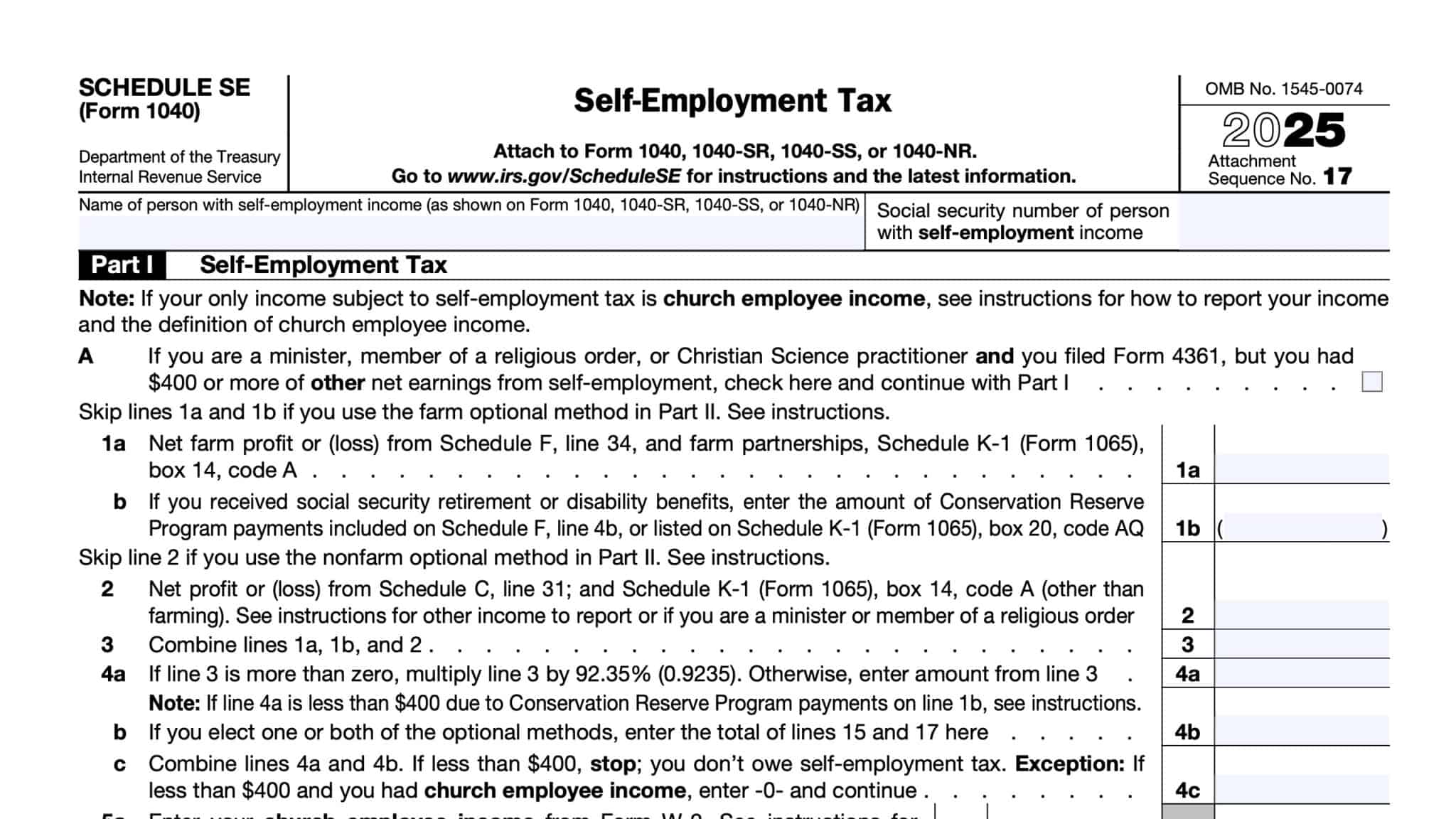
- Deductible Part of Self-Employment Tax: You can deduct 50% of the self-employment tax calculated on Schedule SE.
- Self-Employed SEP, SIMPLE, and Qualified Plans: Contributions to retirement plans for the self-employed.
- Self-Employed Health Insurance Deduction: If you were self-employed and paid for your own health insurance (and weren't eligible for an employer-sponsored plan through a spouse), you can often deduct 100% of the premiums.
Student Loan Interest Deduction (Line 21)
You can deduct up to $2,500 of interest paid on qualified student loans during 2025. This deduction is subject to phase-outs based on your Modified Adjusted Gross Income (MAGI). For 2025, the phase-out range has been adjusted for inflation, so even if you didn't qualify in previous years, you might be eligible now.
| Category | Line Number | Impact on Taxes |
|---|---|---|
| Business Income | Line 3 | Increases total income (from Schedule C) |
| Unemployment Comp | Line 7 | Taxable income (from Form 1099-G) |
| Prizes/Gambling | Line 8 | Taxable income; must report gross winnings |
| Educator Expenses | Line 11 | Reduces AGI (up to $300 per person) |
| HSA Deduction | Line 13 | Reduces AGI (requires Form 8889) |
| Student Loan Int. | Line 21 | Reduces AGI (up to $2,500 limit) |
| IRA Deduction | Line 20 | Reduces AGI (subject to income/plan limits) |
Important Considerations for 2025 Filings
As we look at these instructions from the perspective of 2026, several factors remain paramount for a successful filing.
Verification of Documentation
Before filling out Schedule 1, ensure you have gathered all "information returns." This includes Form 1099-NEC for non-employee compensation, Form 1099-MISC for other income, and Form 1098-E for student loan interest. Discrepancies between what you report on Schedule 1 and what a payer reported to the IRS are the most common triggers for automated "CP2000" notices.
The AGI Ripple Effect
It is impossible to overstate the importance of Part II (Adjustments). Your AGI (the final result on Form 1040, Line 11, which incorporates Schedule 1 totals) determines:
- The phase-out of the Child Tax Credit.
- Eligibility for the Earned Income Tax Credit (EITC).
- The 7.5% threshold for medical expense deductions on Schedule A.
- Eligibility for various education credits like the American Opportunity Tax Credit.
By maximizing your adjustments in Part II, you are not just lowering your taxable income—you are potentially opening the door to credits that can dollar-for-dollar reduce the tax you owe.
Common Mistakes to Avoid
- Reporting Gross vs. Net: On Line 8, people often try to subtract expenses directly from the income. Most of the time, expenses must be deducted elsewhere (like Schedule C or Schedule A). Part I of Schedule 1 is generally for reporting the income itself.
- Double-Dipping on Health Insurance: You cannot claim the self-employed health insurance deduction on Line 17 if you also participated in a subsidized marketplace plan and claimed the Premium Tax Credit, without complex coordination.
- Forgetting Jury Duty Pay: If you received pay for jury duty, it is taxable. However, if you had to "hand it over" to your employer in exchange for your regular salary, many forget they can deduct that exact amount in Part II (under Line 24z).
- IRA Deduction Errors: Not everyone can deduct their IRA contributions. If you or your spouse were covered by a retirement plan at work, the deduction on Line 20 is limited based on your income levels.
FAQ: 2025 Schedule 1 Instructions
Do I need to file Schedule 1 if I only have W-2 income? Generally, no. If your only income is from a standard job (W-2) and you do not have any of the specific adjustments like student loan interest or educator expenses, you likely do not need to file Schedule 1. You will only file it if you have "additional income" or "adjustments to income" to report.
Where do I report the money I made from a side hobby? If your activity is classified as a hobby rather than a business, you report the income on Schedule 1, Part I, Line 8j. Note that under current tax law, you cannot deduct hobby expenses against that income. If it is a legitimate business, you should use Schedule C and report the net profit on Line 3.
Is unemployment compensation still taxable in 2025? Yes. Unless Congress passes specific emergency legislation (which was not the case for the 2025 tax year), unemployment compensation is fully taxable at the federal level and must be reported on Schedule 1, Part I, Line 7.
Can I deduct my IRA contribution if I have a 401(k) at work? You may be able to, but it depends on your income. For 2025, the IRS has specific income "phase-out" ranges. If your income exceeds these limits and you are covered by a workplace plan, your deduction on Schedule 1, Line 20, may be reduced or eliminated.
What is the "Total" line at the end of Schedule 1 used for? The totals from Line 10 (Total Additional Income) and Line 26 (Total Adjustments to Income) are transferred directly to your Form 1040. Line 10 goes to Form 1040, Line 8, and Line 26 goes to Form 1040, Line 10. This is how the "supplemental" data finally impacts your tax calculation.
Final Recommendation
For the 2025 tax year, taxpayers should prioritize the "Adjustments to Income" in Part II. Because these deductions are available regardless of whether you itemize, they represent the most accessible way for the average filer to lower their AGI. Always cross-reference your entries with official IRS Instructions for Form 1040 to ensure you are using the most current inflation-adjusted limits. If your income involves complex "Other Income" categories or significant self-employment adjustments, consulting a tax professional or using high-quality tax software is recommended to ensure compliance and optimization.
Professional Advice Limitation: This guide is for informational purposes only and does not constitute legal, financial, or tax advice. Tax laws are subject to change, and jurisdictional rules may vary. Always consult with a qualified tax professional or refer to official IRS publications for your specific situation.
Image Gallery