Can FMLA Cover Migraines? Eligibility, Approval, and Rights Explained
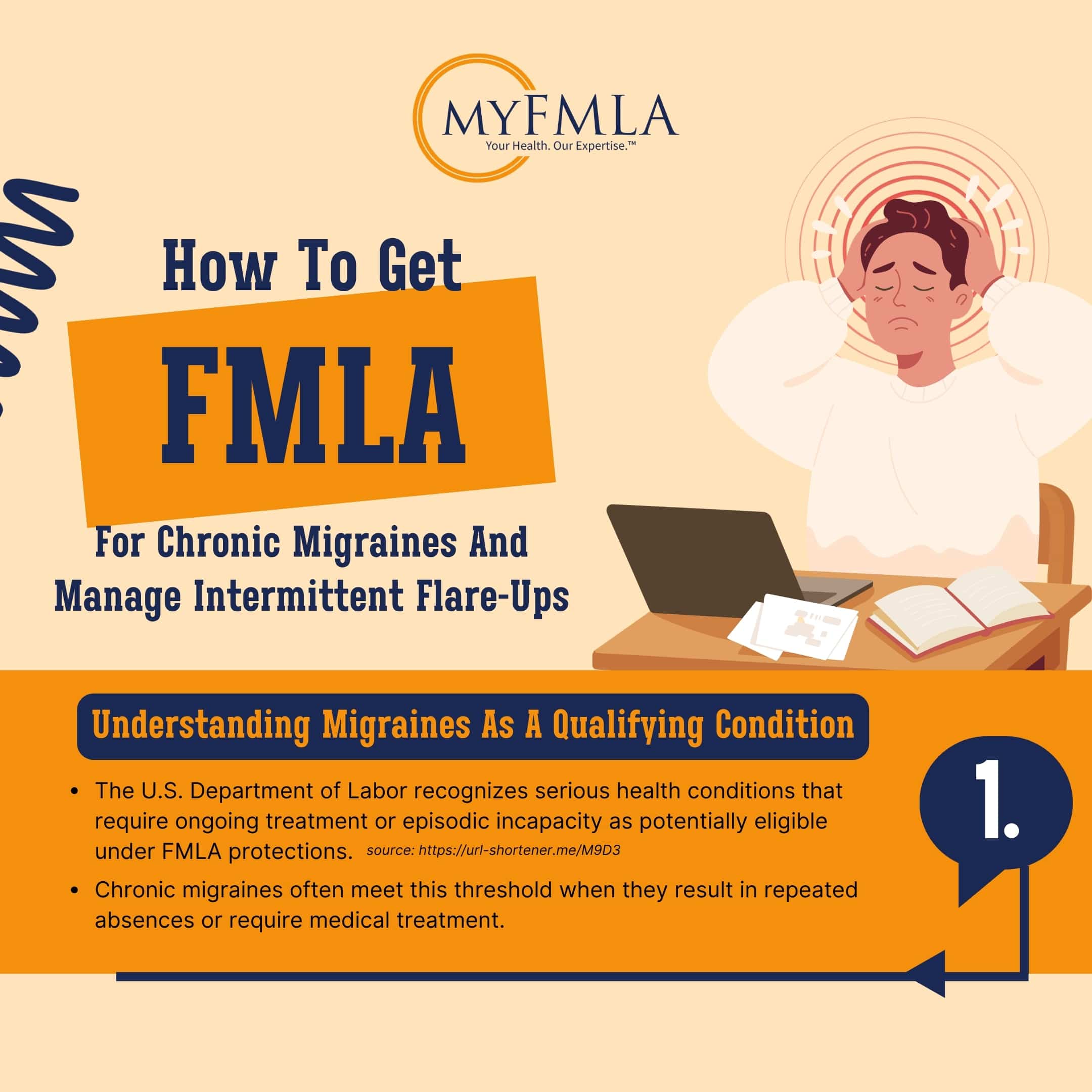
Yes, the Family and Medical Leave Act (FMLA) covers migraines if they meet the legal definition of a serious health condition. Because severe migraines cause temporary incapacity and require ongoing medical care, qualified employees ca...
Yes, the Family and Medical Leave Act (FMLA) covers migraines if they meet the legal definition of a serious health condition. Because severe migraines cause temporary incapacity and require ongoing medical care, qualified employees can secure job-protected intermittent leave to take time off during unexpected flare-ups without risking their employment.
Contents
Understanding FMLA Coverage for Migraines as a Serious Health Condition
The Family and Medical Leave Act of 1993 provides eligible employees with up to 12 workweeks of unpaid, job-protected leave per year for qualifying medical and family reasons. A central question for chronic headache sufferers is whether migraines meet the federal threshold of a "serious health condition."
Under U.S. Department of Labor regulations outlined in 29 CFR § 825.115, a chronic condition qualifies as a serious health condition if it meets three specific criteria:
- Requires periodic visits for treatment: The condition must require visits to a healthcare provider—such as a primary care physician, neurologist, or physician assistant—at least twice per year.
- Continues over an extended period: The condition must persist over an extended duration, typically manifesting as recurring episodes over months or years.
- Causes episodic incapacity: The condition must cause periodic periods of incapacity rather than a single continuous period of disability. Incapacity means the inability to work, attend school, or perform regular daily activities due to the condition or treatment.
Migraines fit this definition precisely. Unlike episodic tension headaches, chronic migraines can inflict debilitating throbbing pain, sensory aura, nausea, vomiting, photophobia (sensitivity to light), and phonophobia (sensitivity to sound). During a severe migraine episode, an individual is often entirely incapacitated and incapable of performing basic job functions, especially those involving screen work, driving, or intense concentration.
FMLA Eligibility Criteria: Do You and Your Employer Qualify?
Even if your migraines medically qualify as a serious health condition, you must meet statutory eligibility standards under federal law before exercising your leave rights. FMLA protection applies only when both the employer and the employee satisfy specific regulatory requirements.
Employer Coverage Requirements
An employer is subject to the FMLA if it falls into one of the following categories:
- Private-sector employers: Must employ 50 or more employees for each working day during 20 or more calendar workweeks in the current or preceding calendar year.
- Public agencies: Includes local, state, and federal government agencies, regardless of the number of employees.
- Public and private elementary and secondary schools: Covered regardless of the total number of employees.
Employee Eligibility Requirements
To be eligible to take FMLA leave, an employee must satisfy three criteria:
- Length of Employment: Worked for the employer for at least 12 months (which do not need to be consecutive, provided any gap does not exceed seven years, subject to certain exceptions).
- Hours Worked: Worked at least 1,250 hours during the 12-month period immediately preceding the start of the leave. Paid time off (PTO), sick leave, and previous FMLA leave do not count toward this 1,250-hour threshold.
- Worksites Location: Work at a location where the employer has at least 50 employees within a 75-mile radius. Remote employees are evaluated based on the office location to which they report or from which their assignments originate.
If you meet these thresholds, your covered employer cannot deny you federal leave protections for a certified migraine condition.
Intermittent FMLA vs. Continuous FMLA for Migraines
FMLA leave can be structured in two ways: continuous leave or intermittent leave. Understanding how these formats apply to migraine conditions is critical for establishing effective workplace accommodations.
- FMLA Leave Options
- Continuous FMLA Leave
- Consecutive days or weeks
- Used for prolonged incapacity
- E.g., post-surgery recovery
- Intermittent FMLA Leave
- Occasional hours or days
- Ideal for unpredictable shifts
- E.g., sudden migraine flare
- Continuous FMLA Leave
Continuous FMLA Leave
Continuous FMLA leave is taken in one uninterrupted block of time. While less common for chronic migraine management, continuous leave may be necessary if an individual undergoes intensive inpatient treatment, medical detoxification from medication-overuse headaches, or specialized outpatient procedures that require several consecutive weeks away from work.
Intermittent FMLA Leave
Intermittent FMLA leave allows an employee to take time off in separate blocks of time—ranging from a few hours to several days—due to a single qualifying medical condition. Because migraine attacks are unpredictable and episodic, intermittent leave is the standard FMLA arrangement for migraine sufferers.
Under intermittent leave, an employee can:
- Take time off on short notice when a migraine strike occurs.
- Arrive late or leave early if an aura or severe headache develops during a work shift.
- Take periodic time off to attend scheduled appointments with a neurologist or pain specialist.
Employers must calculate intermittent leave using the smallest increment of time the employer uses to account for other forms of leave, provided it is not greater than one hour. For example, if an employer tracks leave in 15-minute increments, intermittent FMLA for a migraine must be tracked in 15-minute increments.
Step-by-Step Guide: How to Apply for Intermittent FMLA for Migraines
Securing FMLA coverage requires adhering to a strict administrative process established by the U.S. Department of Labor (DOL). Taking the correct steps protects your employment rights and prevents unnecessary delays or initial rejections.
- Request FMLA paperwork from HR or employer representative
- Submit Form WH-380-E to your treating physician
- Physician details diagnosis, frequency, duration, and necessity of leave
- Return completed form to HR within 15 calendar days
- Employer grants approval and outlines specific call-in protocol
Step 1: Notify Your Employer of the Need for Leave
Notify your human resources department or direct supervisor that you need leave for a recurring medical condition. You do not need to explicitly mention "FMLA" during your initial notice, but you must provide sufficient information for the employer to understand that the condition may qualify under the statute.
If the need for leave is foreseeable (such as a scheduled specialist appointment), you must provide at least 30 days' advance notice. If the leave is unforeseeable (such as a sudden migraine flare-up), you must give notice as soon as practicable, typically following your employer's standard call-in procedures.
Step 2: Obtain the Medical Certification Form
Within five business days of your request or notice, your employer must provide you with an FMLA Eligibility Notice (Form WH-381) and a Medical Certification Form. The standard federal form for an employee's own medical condition is Form WH-380-E, provided by the U.S. Department of Labor's Wage and Hour Division.
Step 3: Have Your Healthcare Provider Complete Form WH-380-E
Take the certification form to the treating physician who manages your migraines. To ensure approval for intermittent leave, your doctor must fill out Part B thoroughly. Key areas include:
- Medical Facts: The doctor must confirm that the condition meets the legal definition of a chronic condition causing episodic incapacity.
- Frequency of Episodes: The doctor must estimate how often flare-ups occur (e.g., "2 to 3 times per month").
- Duration of Incapacity: The doctor must estimate how long each episode lasts (e.g., "1 to 2 days per episode" or "4 to 8 hours per attack").
- Treatment Regimen: Details regarding prescribed acute or preventative treatments, including physician consultations and therapy.
Note: Vague estimates such as "as needed" or "unknown" can result in your employer rejecting the certification as incomplete or insufficient. Ensure your physician provides explicit ranges for frequency and duration.
Step 4: Submit the Certification Within 15 Days
You must return the completed medical certification to your employer within 15 calendar days of receiving the paperwork, unless extenuating circumstances exist despite your diligent, good-faith efforts.
Step 5: Receive Approval Notice
Once you submit the certification, your employer has five business days to review the documentation and issue a Designation Notice (Form WH-382), confirming whether the FMLA leave is approved, denied, or requires additional clarification.
Navigating Call-In Procedures, Employer Rights, and Recertification
Approval of FMLA for migraines does not exempt an employee from basic workplace rules. Both employees and employers must follow standard compliance requirements during intermittent leave usage.
Following Employer Call-In Protocols
When experiencing an unexpected migraine attack, you must follow your employer’s customary notice and call-in procedures unless extraordinary circumstances prevent you from doing so. For instance, if your company policy requires calling a designated attendance line two hours before a shift begins, you must comply. When calling in, state clearly that your absence is related to your approved FMLA condition.
Second and Third Medical Opinions
If an employer has reason to doubt the validity of your medical certification, federal law allows them to require a second medical opinion at the employer's expense. The employer chooses the healthcare provider for the second opinion, but that provider cannot be someone the employer regularly employs or contracts with.
If the first and second opinions conflict, the employer may pay for a third opinion from a healthcare provider jointly selected and approved by both you and the employer. The third opinion is legally binding on both parties.
Recertification Requirements
Employers may request recertification for chronic conditions under specific parameters:
- Standard 30-Day Rule: Generally, an employer cannot request recertification more often than every 30 days, and only in connection with an absence.
- Extended Duration: If the original medical certification specifies a minimum duration of incapacity longer than 30 days (e.g., six months), the employer must wait until that period expires before requesting recertification.
- Every Six Months: In all cases, an employer may request recertification every six months in connection with an absence.
- Exceptions for Sooner Recertification: An employer can request recertification in less than 30 days if the employee requests an extension, if circumstances described in the original certification have changed significantly (e.g., absences occur far more frequently than certified), or if the employer receives information casting doubt on the stated reason for absence.
FMLA vs. ADA Accommodations for Migraine Sufferers
The Family and Medical Leave Act (FMLA) and the Americans with Disabilities Act (ADA) are complementary federal statutes that offer different protections to workers with migraines.
| Feature / Protection | Family and Medical Leave Act (FMLA) | Americans with Disabilities Act (ADA) |
|---|---|---|
| Primary Focus | Job-protected, unpaid leave from work | Reasonable accommodations to perform job duties |
| Coverage Requirement | 50+ employees within 75 miles | 15+ employees nationwide |
| Employee Tenure | 12 months & 1,250 hours worked | Eligible from day one of employment |
| Max Leave Allowed | Up to 12 workweeks per 12-month period | No fixed cap; evaluated on case-by-case basis |
| Common Migraine Use | Unplanned absences, flare-ups, doctor appointments | Ergonomic lighting, quiet rooms, schedule adjustments |
| Benefit Protections | Maintains group health insurance on same terms | Does not mandate health benefit continuation during unpaid leave |
While the FMLA provides protected time away from work, the ADA helps employees remain productive at work. Under Title I of the ADA, enforced by the U.S. Equal Employment Opportunity Commission (EEOC), employees with severe migraines may qualify as individuals with a disability if their condition substantially limits a major life activity.
Practical ADA Accommodations for Migraines
Employees managing chronic migraines often combine intermittent FMLA leave with ADA workplace accommodations, such as:
- Environmental Modifiers: Installing anti-glare screen filters, switching off fluorescent overhead lights in favor of desk lamps, or providing noise-canceling headphones.
- Workplace Relocation: Moving a workspace away from high-traffic zones, loud machinery, or strong scents (fragrance-free policies).
- Schedule Flexibility: Allowing remote work during aura recovery phases or shifting work hours to reduce screen strain.
Overcoming Common Pitfalls and Preventing Employer Retaliation
Common Obstacles in Migraine FMLA Claims
- Imprecise Medical Certifications: If a doctor writes "absences as needed" without quantifying expected monthly frequency or daily duration, the employer can reject the certification as incomplete under 29 CFR § 825.305.
- Exceeding Certified Frequency: If your doctor certified you for 2 absences per month, but you miss 6 days in a month due to migraines, the employer can legally request early recertification or question whether the additional absences fall under FMLA protection.
- Failure to Use Proper Absence Coding: Failing to explicitly mention "FMLA" or your approved medical condition when reporting an absence can result in the time off being unapproved and counted against attendance policies.
Protection Against Interference and Retaliation
Under Section 105 of the FMLA (29 U.S.C. § 2615), it is unlawful for any employer to interfere with, restrain, or deny the exercise of an employee's FMLA rights. Furthermore, employers cannot use the taking of FMLA leave as a negative factor in employment decisions, such as evaluations, promotions, discipline, or termination.
If an employer retaliates against an employee for taking FMLA leave for migraines—such as issuing disciplinary points under a strict attendance policy for certified FMLA absences—the employee can file a complaint with the U.S. Department of Labor's Wage and Hour Division or file a private lawsuit in federal district court.
Frequently Asked Questions
Can an employer deny FMLA for migraines?
An employer can deny FMLA for migraines only if you do not meet statutory eligibility requirements (e.g., hours worked or employer size), if your medical certification is incomplete and not cured within the provided time window, or if a binding second/third medical opinion concludes your condition does not qualify as a serious health condition. They cannot arbitrarily reject a valid, complete medical certification from a licensed physician.
Do I get paid while taking FMLA leave for migraines?
FMLA leave is fundamentally unpaid. However, you may choose—or your employer may require you—to substitute accrued paid leave (such as sick days, vacation time, or PTO) to cover some or all of the FMLA period. When paid leave is substituted, it runs concurrently with your unpaid FMLA entitlement.
Can I use intermittent FMLA to attend doctor appointments for migraines?
Yes. Intermittent FMLA covers time off for ongoing medical treatment, preventive care, and consultations with specialists for a certified serious health condition. You must attempt to schedule non-emergency appointments so as not to unduly disrupt your employer's operations.
What happens if my migraine frequency increases beyond my FMLA paperwork?
If your migraine attacks become more frequent or severe than what was initially specified on Form WH-380-E, you should contact your treating physician to submit an updated certification reflecting the new parameters. This prevents your employer from denying coverage for additional absences that exceed the original estimate.
Can I be fired for taking unexpected leave for a migraine flare-up?
If you have an approved intermittent FMLA certification on file, follow your employer's standard call-in procedures, and identify the absence as FMLA-related, your job is federally protected. You cannot be legally disciplined or terminated for taking covered leave.
Summary and Actionable Next Steps
Managing chronic migraines while maintaining full-time employment can be stressful, but federal law provides robust protections. If recurring migraine flare-ups impact your work:
- Verify Your Eligibility: Confirm you have worked at your employer for at least 12 months, logged 1,250 hours in the past year, and work at a site with 50+ employees within 75 miles.
- Schedule a Physician Visit: Discuss your leave needs with your doctor. Emphasize the importance of clear, precise estimates regarding flare-up frequency and duration on medical forms.
- Request FMLA Forms: Request Form WH-380-E from your HR representative as soon as you anticipate needing leave.
- Submit Documentation promptly: Complete and return all paperwork within the 15-day regulatory window, keeping personal copies of all submitted documents.
- Explore ADA Accommodations: Consider requesting ergonomic or environmental adjustments under the ADA to reduce migraine triggers while at work.
Disclaimer: This article provides general information regarding federal labor laws and should not be construed as formal legal or medical advice. For specific legal issues or medical advice, consult a qualified employment attorney or licensed healthcare professional.
Image Gallery