Understanding the Texas Certificate of Mold Damage Remediation (CMDR-1) in 2026
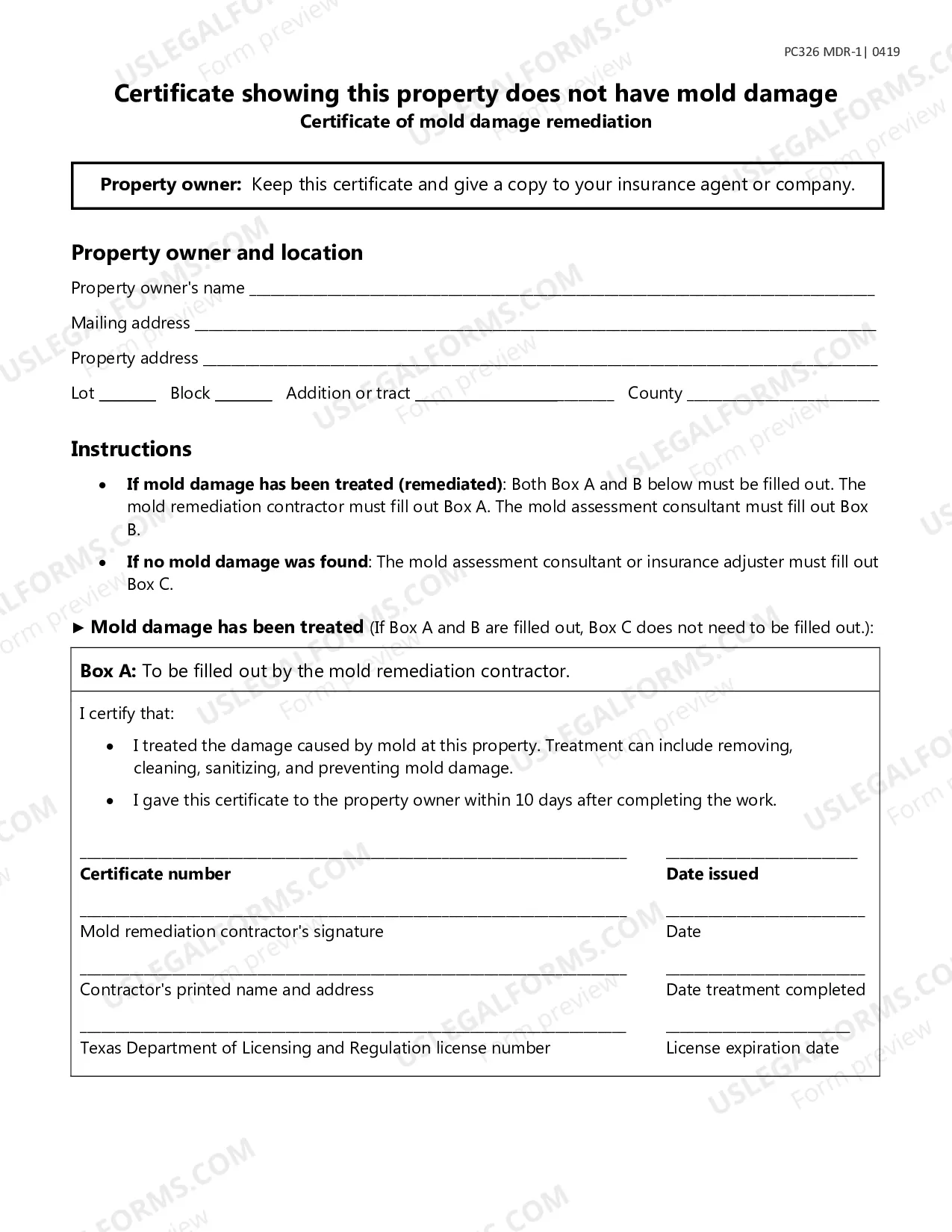
The Texas Certificate of Mold Damage Remediation, commonly referred to as the CMDR-1, is an official document certifying that a property has been properly remediated following mold contamination. Issued by a licensed mold remediation c...
The Texas Certificate of Mold Damage Remediation, commonly referred to as the CMDR-1, is an official document certifying that a property has been properly remediated following mold contamination. Issued by a licensed mold remediation contractor, it confirms that the underlying cause of the mold has been corrected and the affected area has been restored to a safe, healthy state according to state regulatory standards.
Contents
In the Texas real estate and insurance landscape of 2026, the CMDR-1 remains one of the most critical documents for property owners. Whether you are dealing with a minor leak that led to fungal growth or major flood damage, obtaining this certificate is not just a matter of peace of mind—it is a legal safeguard that protects your property value and your ability to secure affordable homeowners insurance.
The Purpose and Legal Framework of the CMDR-1
The Texas Department of Insurance (TDI) and the Texas Department of Licensing and Regulation (TDLR) oversee the protocols surrounding mold remediation. The CMDR-1 form was established under the Texas Insurance Code, specifically to prevent "mold blacklisting," where insurance companies would refuse to cover a home or would significantly hike premiums because the property had a history of mold claims.
When a licensed mold remediation contractor completes a project, they are required by law to provide this certificate if the project meets specific criteria. The document serves as formal evidence that:
- Remediation is Complete: The visible mold has been removed.
- The Cause is Fixed: The water intrusion or humidity issue that caused the mold has been repaired.
- The Property is Safe: A separate, independent mold assessment consultant has verified that the area is clean and meets "clearance" standards.
Why the CMDR-1 is Mandatory for Property Owners
For homeowners in 2026, the CMDR-1 is the primary tool used to maintain the "insurability" of a residence. Under Texas law, if you have a CMDR-1 for a mold remediation project, an insurance company cannot:
- Deny a future insurance application based on that specific mold claim.
- Exclude mold coverage from a future policy for that property.
- Apply a premium surcharge solely due to that previous mold damage.
This protection is valid for five years from the date the certificate is issued. Furthermore, when selling a home in Texas, the seller must disclose any history of mold. Providing a CMDR-1 alongside that disclosure demonstrates to the buyer—and their lender—that the issue was handled professionally and is no longer a threat to the structure or the occupants.
The Multi-Step Process to Obtaining a Certificate
The path to receiving a Texas Certificate of Mold Damage Remediation is strictly regulated to prevent conflicts of interest. In Texas, the law prohibits the same company from performing both the assessment and the remediation on the same project. This "separation of duties" ensures that the person checking the work isn't the same person who did the work.
1. Initial Mold Assessment
The process begins with a Licensed Mold Assessment Consultant (MAC). This professional inspects the property, takes air and surface samples, and determines the extent of the damage. They produce a "Mold Remediation Protocol." This document is a detailed roadmap that tells the remediation contractor exactly what needs to be cleaned, what needs to be demolished, and what safety measures (like plastic containment and HEPA air scrubbers) must be used.
2. Remediation Execution
Once the protocol is set, a Licensed Mold Remediation Contractor (MRC) is hired to do the work. They must follow the MAC’s protocol strictly. During this phase, the source of the moisture—whether it is a roof leak, a burst pipe, or high HVAC humidity—must be permanently fixed. If the remediation is finished but the leak remains, the contractor cannot legally sign the CMDR-1.
3. Post-Remediation Evaluation (Clearance)
After the cleaning is finished but before the containment walls are taken down, the original Mold Assessment Consultant returns for a "clearance" inspection. They conduct a visual inspection and often perform additional air sampling to ensure the mold spore counts inside the work area are lower than or equal to the outdoor air. If the samples pass, the MAC issues a Passed Clearance Report.
4. Issuance of the CMDR-1
Within 10 days of receiving the passed clearance report, the Mold Remediation Contractor must sign and issue the CMDR-1 form to the property owner. The contractor is also responsible for filing a copy with the Texas Department of Insurance (TDI) if the project involved an insurance claim.
Key Differences: Assessors vs. Remediators
Understanding who does what is vital for compliance. If you hire a "one-stop shop" that offers both assessment and remediation for the same job, they are violating TDLR rules, and any CMDR-1 they issue may be considered invalid or fraudulent.
| Role | Responsibility | Licensing Authority | Required for CMDR-1? |
|---|---|---|---|
| Mold Assessment Consultant | Identifies mold, writes the protocol, and performs the final clearance testing. | TDLR | Yes (provides the clearance) |
| Mold Remediation Contractor | Performs the physical cleaning and removal of mold. Issues the final CMDR-1. | TDLR | Yes (signs the certificate) |
| Property Owner | Hires professionals and retains the certificate for at least 5 years. | N/A | Yes (recipient) |
| Insurance Company | Pays for covered claims and records the CMDR-1 in the property’s history. | TDI | No (only receives copy) |
Common Challenges and Troubleshooting
Even with clear regulations, the process of obtaining a CMDR-1 can run into hurdles. One of the most common issues occurs when the remediation is performed by a general contractor who is not licensed specifically for mold. In Texas, if the moldy area is larger than 25 contiguous square feet, a licensed mold professional must be used. If an unlicensed individual performs the work, they cannot issue a CMDR-1, leaving the homeowner without insurance protection.
What if the Contractor Refuses to Issue the Certificate?
If a licensed contractor has completed the work according to a protocol and a clearance report has been issued, they are legally obligated to provide the CMDR-1 within the 10-day window. If they refuse, homeowners should first verify that all payments have been settled, as some contracts include clauses regarding the release of final documents. If the contractor is simply being negligent, a complaint can be filed with the Texas Department of Licensing and Regulation (TDLR).
The "25 Square Feet" Rule
It is a common misconception that every mold cleanup requires a CMDR-1. If the affected area is less than 25 contiguous square feet, a license is not technically required by state law for the person doing the work. However, many insurance companies and mortgage lenders still prefer—or even demand—a professional clearance and a CMDR-1 regardless of the size. For the sake of future property value, many owners choose to follow the full professional protocol even for small areas.
Impact on Insurance and the "CLUE" Report
Insurance companies use a database called the Comprehensive Loss Underwriting Exchange (CLUE) to track claims history on properties. When a mold claim is filed, it appears on the CLUE report, which can be viewed by any insurance company considering a policy for that address.
Without a CMDR-1, a mold claim on a CLUE report acts as a red flag. It suggests that the property might still have an unresolved moisture problem or structural instability. By obtaining and properly filing the CMDR-1, the homeowner essentially "neutralizes" that flag. While the claim remains on the history, the certificate serves as the legal proof that the risk has been mitigated.
Under the Texas Insurance Code Chapter 2101, the protections offered by the CMDR-1 are robust. Homeowners should ensure they receive a copy of the certificate and verify that the "Cause of Mold" section specifically states that the source of the moisture was repaired.
Best Practices for Homeowners in 2026
To ensure the validity of your Texas Certificate of Mold Damage Remediation, follow these practical steps:
- Verify Licenses: Before signing a contract, use the TDLR online search tool to ensure both your Assessor and your Contractor hold active Texas mold licenses.
- Separate the Jobs: Do not allow your remediation company to hire the assessment consultant on your behalf. You should hire the assessor independently to ensure there is no bias during the clearance testing.
- Document the Repair: Ensure you have invoices and photos showing that the water leak was fixed. The contractor needs this evidence to sign off on the CMDR-1.
- Digital Backups: Store a digital copy of the CMDR-1 in the cloud. Physical copies are often lost during home renovations or moves, and you will need this document when you sell the home or switch insurance providers.
- Five-Year Retention: Keep the document for at least five years. This is the period during which the Texas Insurance Code provides the strongest protections against premium increases or coverage denials related to that claim.
A Note on Professional Advice
While the CMDR-1 provides significant insurance and legal protections, it is not a guarantee that mold will never return. It only certifies that a specific instance of mold was remediated. For complex legal disputes regarding property disclosure or insurance bad faith, consulting a real estate attorney familiar with the Texas Occupations Code and Insurance Code is recommended.
Frequently Asked Questions
Can I get a CMDR-1 if I cleaned the mold myself?
No. A CMDR-1 can only be issued by a licensed Mold Remediation Contractor following a protocol from a licensed Mold Assessment Consultant. If you perform the work yourself, you cannot self-certify the project, and you will not receive the legal protections provided by the Texas Insurance Code.
Does the CMDR-1 expire?
The legal protections for insurance (preventing premium hikes or coverage denials) last for five years from the date of issuance. However, the certificate remains a permanent part of the home's maintenance history and should be passed on to future owners to show the property was properly cared for.
Is the CMDR-1 the same as a "mold clearance"?
No. A mold clearance is a report issued by an assessor stating the air quality is safe. The CMDR-1 is the final state-authorized form that incorporates the clearance report and adds the contractor’s certification that the entire project—including fixing the source of the water—is complete.
How much does it cost to get a CMDR-1?
The form itself does not have a specific "filing fee" from the state for the homeowner, but the process of obtaining it involves the costs of hiring a licensed assessor and a licensed contractor. These professional fees vary based on the size of the remediation project.
What if the mold returns after I get the certificate?
If mold returns in the same area, it usually indicates that either the remediation was incomplete or the water source was not actually fixed. In such cases, the original certificate may be scrutinized. This is why hiring an independent assessor for the clearance is so critical—it provides an objective check on the contractor's work.
Final Recommendation
If you are dealing with mold in Texas, do not cut corners. While hiring unlicensed handymen may be cheaper in the short term, the absence of a Texas Certificate of Mold Damage Remediation can cost you thousands in lost property value and increased insurance premiums later. Always ensure that a licensed Mold Assessment Consultant and a licensed Mold Remediation Contractor are involved in any project exceeding 25 square feet. Once the work is done, insist on receiving your CMDR-1 within 10 days of the final clearance, and keep that document in a safe, accessible location for at least five years.
Image Gallery