How Life Insurance Protects Your Human Capital: A Comprehensive Guide to Risk Management
Life insurance protects human capital by acting as a financial hedge against the loss of an individual's future earning potential. By providing a tax-free death benefit, it replaces the economic value a person would have generated over...
Life insurance protects human capital by acting as a financial hedge against the loss of an individual's future earning potential. By providing a tax-free death benefit, it replaces the economic value a person would have generated over their working life, ensuring that dependents can maintain their standard of living and achieve long-term financial goals despite the loss of the primary breadwinner.
Contents
Understanding the Concept of Human Capital
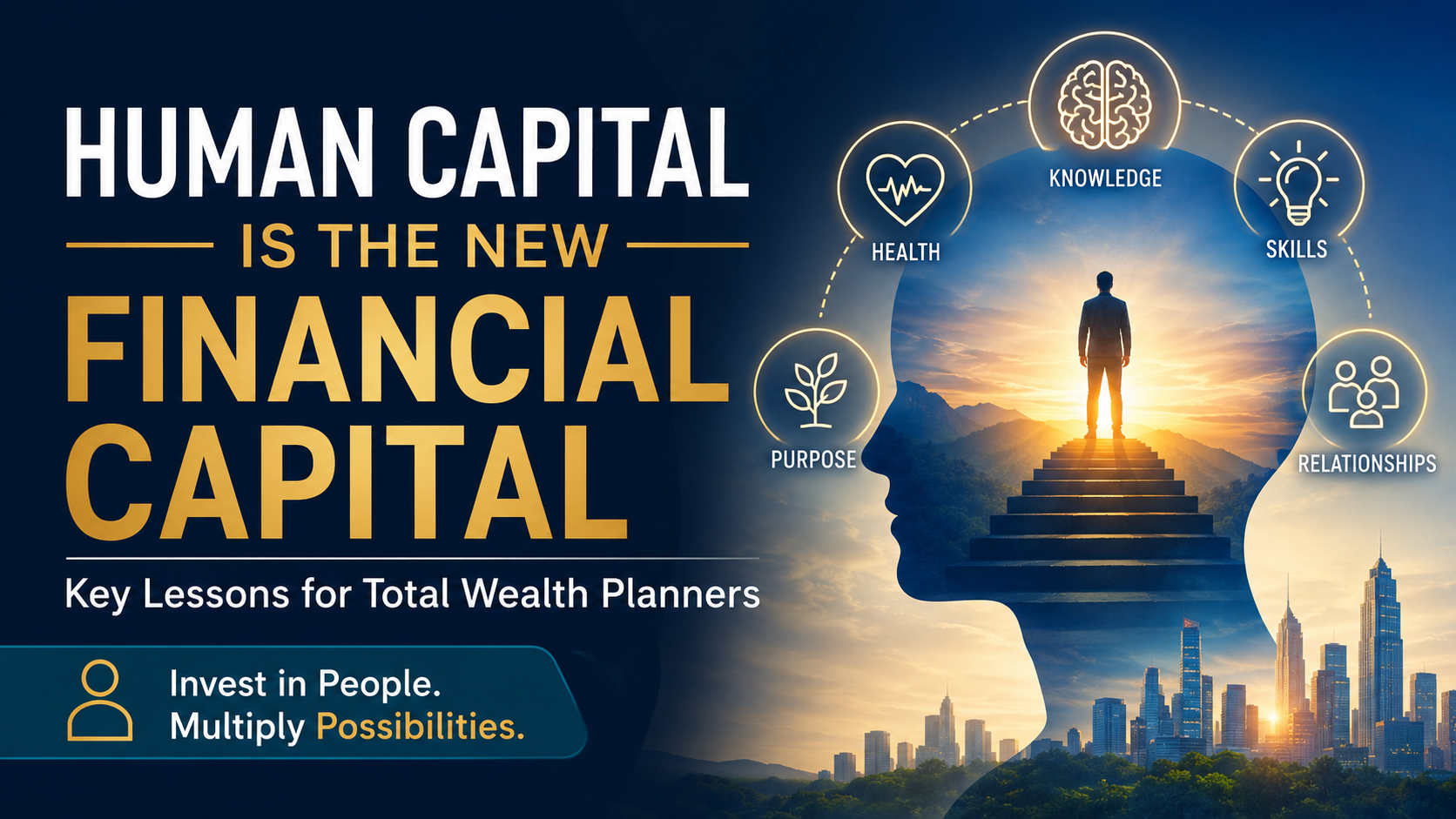
In the context of personal finance and economics, human capital is defined as the total economic value of an individual’s skills, experience, knowledge, and health. It is essentially the present value of all the income you expect to earn from today until your retirement. For most young and middle-aged professionals in 2026, human capital is their single largest asset, often dwarfing the value of their home, retirement accounts, or stock portfolios.
The fundamental theory of human capital was popularized by economists such as Gary Becker and Theodore Schultz. They posited that individuals are essentially "capital goods" that produce an income stream through labor. However, unlike a factory or a piece of machinery, human capital is fragile. It is subject to "mortality risk"—the risk that the individual will die before they can convert their potential earnings into realized wealth (financial capital).
As of 2026, the valuation of human capital has become more complex due to the gig economy, remote work, and specialized technological skills. Yet, the core principle remains: if you have 20 or 30 years of work left, you are sitting on a multi-million dollar asset that is currently uninsured unless you have a robust life insurance policy.
The Economic Relationship Between Human and Financial Capital
To understand why life insurance is necessary, one must look at the inverse relationship between human capital and financial capital over a person's lifetime.
- Early Career: An individual has massive human capital but very little financial capital. They have decades of earnings ahead of them, but their bank accounts and investment portfolios are relatively small. At this stage, the need for life insurance is at its peak because there is a huge "earnings gap" to fill if the individual dies.
- Mid-Career: As the individual works and saves, their human capital begins to decline (because there are fewer working years remaining), while their financial capital grows.
- Retirement: At the point of retirement, human capital theoretically hits zero because the individual is no longer trading labor for income. Ideally, financial capital has grown large enough to support the individual’s lifestyle without the need for further employment.
Life insurance serves as the bridge during the years when financial capital is insufficient to support dependents. It effectively "completes" the financial plan if the human capital is prematurely extinguished.
How Life Insurance Quantifies and Hedging Mortality Risk
Life insurance companies use actuarial science to place a value on human capital. When you apply for a policy, the underwriting process is essentially an appraisal of your human capital. The insurer looks at your current income, your age, your occupation, and your health status to determine how much "economic life" you have left.
The Present Value of Future Earnings (PVFE)
The most common way to calculate the insurance need for human capital protection is the Present Value of Future Earnings (PVFE) method. This involves:
- Estimating annual earnings until retirement.
- Subtracting taxes and personal consumption (the amount the individual spends on themselves).
- Applying a discount rate to account for the time value of money and inflation.
For example, a 35-year-old earning $150,000 annually who plans to work until 65 has 30 years of human capital. Even with modest 3% annual raises, their total future nominal earnings exceed $7 million. After adjusting for taxes and discounting to present value, that individual might have a human capital value of $3.5 million. If they only have a $500,000 life insurance policy, they are underinsured by $3 million.
Risk Transfer
Life insurance is a risk transfer mechanism. By paying a premium, the individual transfers the financial risk of their death to the insurance company. In the event of a claim, the insurer pays out a lump sum that represents the "lost" human capital. This liquidity allows the surviving family to pay off debts, fund education, and replace the lost salary that would have sustained them for decades.
Strategies for Protecting Human Capital at Different Life Stages
Protecting human capital is not a "set it and forget it" task. As your career evolves, so does the value of your human capital and the appropriate insurance strategy to protect it.
The Young Professional (Ages 22–35)
At this stage, the priority is maximum coverage for minimum cost. Term life insurance is usually the most efficient tool here. Since human capital is at its highest, but disposable income may be limited by student loans or first-home purchases, a 20- or 30-year term policy provides a large death benefit to cover the long horizon of future earnings.
The Established Professional (Ages 36–55)
This is often the period of "peak human capital" in terms of annual earnings, though the number of years remaining is lower. Obligations are also at their peak: mortgages, children’s tuition, and aging parents. Many professionals in 2026 utilize a "laddered" approach, using multiple term policies of different lengths to match the gradual decline of their human capital.
Some may also incorporate Permanent Life Insurance (such as Whole Life or Universal Life). While more expensive, these policies offer a "cash value" component that acts as a secondary reserve of financial capital, providing liquidity and tax advantages that complement the protection of human capital.
The Late-Career Executive (Ages 55–67)
As retirement nears, the insurance focus often shifts from "replacing income" to "estate preservation." While human capital is nearly exhausted, the financial capital built up over decades may face significant tax exposure. Life insurance here protects the value of the accumulated financial capital for the next generation.
Comparative Analysis: Human Capital vs. Financial Capital
The following table illustrates how the balance between these two forms of capital shifts and how life insurance requirements change accordingly.
| Life Stage | Primary Asset | Human Capital Value | Financial Capital Value | Recommended Insurance Type | Primary Goal |
|---|---|---|---|---|---|
| Entry Level (20s) | Human Capital | Very High | Very Low | Low-cost Term Life | Debt protection & income replacement |
| Mid-Career (40s) | Balanced | High/Moderate | Moderate | Term + Permanent | Family protection & tax-advantaged growth |
| Pre-Retirement (60s) | Financial Capital | Low | High | Permanent/Survivorship | Estate planning & legacy |
| Retirement (70+) | Financial Capital | Negligible | Very High | Final Expense/Legacy | Asset transfer & liquidity |
Protecting Human Capital in a Business Context
Human capital protection is not limited to individuals; it is vital for business continuity. In a corporate setting, this is often addressed through Key Person Insurance.
If a business relies on a specific executive or developer whose unique skills (human capital) drive the company's revenue, the death of that individual could lead to financial ruin for the firm. A Key Person policy provides the business with the funds necessary to:
- Recruit and train a successor.
- Cover the loss of profits during the transition.
- Reassure creditors and investors that the business remains solvent.
Additionally, human capital is protected via Buy-Sell Agreements. These are legal contracts funded by life insurance that allow surviving business partners to buy out a deceased partner's share. This ensures the deceased's family receives the fair market value of the partner’s human capital contribution to the business, while the business remains in the hands of the surviving operators.
Common Mistakes in Human Capital Protection
Despite the mathematical logic of human capital, many individuals fail to protect it adequately. Common pitfalls include:
- Relying Solely on Employer-Provided Coverage: Most group life insurance policies offer a benefit of 1x or 2x annual salary. For a 30-year-old, this covers only a tiny fraction (often less than 5%) of their total human capital.
- Underestimating Inflation: In 2026, the purchasing power of a $1 million death benefit is significantly lower than it was a decade ago. Human capital calculations must account for the rising cost of living that the surviving family will face.
- Neglecting the Non-Earning Spouse: Human capital is not just about salary. A stay-at-home parent provides services (childcare, household management) that would cost tens of thousands of dollars annually to replace. Their "economic contribution" is a form of human capital that requires protection.
- Treating Life Insurance as an Expense Instead of an Asset: Many see premiums as a sunk cost. However, in the context of human capital, the premium is an investment in a "put option" on your life, ensuring the asset's value is realized even if the asset itself is lost.
Frequently Asked Questions
What happens to my human capital value if I become disabled?
Human capital is not only threatened by death but also by disability. While life insurance protects against the total loss of human capital via death, Disability Insurance is required to protect human capital if you are alive but unable to work. Many modern life insurance policies in 2026 include "waiver of premium" or "accelerated death benefit" riders that provide some protection in the event of chronic or terminal illness.
Is human capital the same as net worth?
No. Net worth is the value of your current assets (financial capital) minus your liabilities. Human capital is the value of your future labor. A medical student may have a negative net worth due to loans but has massive human capital. Conversely, a retiree may have a high net worth but zero human capital.
How does a "Human Life Value" calculation differ from the "Needs Approach"?
The Human Life Value approach focuses strictly on replacing the economic value (income) of the individual. The "Needs Approach" focuses on specific financial goals, such as paying off a mortgage or funding a specific college degree. Most comprehensive financial plans in 2026 use a hybrid of both to ensure the protection is adequate.
Can I insure 100% of my human capital?
Generally, insurance companies limit the amount of coverage you can buy to a multiple of your income (e.g., 20x to 30x salary). This is to prevent "over-insurance," where the death benefit is worth significantly more than the actual economic value of the person, which creates a moral hazard.
Does human capital include my retirement savings?
No. Retirement savings (401ks, IRAs) are considered financial capital. Human capital is the engine that allows you to contribute to those accounts. Once you retire and stop contributing, you have successfully converted your human capital into financial capital.
Strategic Recommendation
To properly protect your human capital in 2026, begin by calculating your Human Life Value. Take your current annual after-tax income and multiply it by the number of years remaining until your planned retirement. Adjust this figure for 3% annual inflation and discount it by a conservative 4% to find the present value. Compare this number to your current life insurance coverage. If there is a gap, prioritize a high-quality term life policy to cover the difference immediately. Consult with a CFP® (Certified Financial Planner) or a licensed insurance professional to ensure your policy includes the necessary riders for inflation protection and disability.
Image Gallery