States With Kissing Bugs: Distribution, Risks, and Prevention in 2026
Kissing bugs, also known as triatomine bugs, are currently established in 29 states across the southern United States. While most prevalent in Texas, Arizona, and New Mexico, their range extends as far north as Pennsylvania and Delawar...
Kissing bugs, also known as triatomine bugs, are currently established in 29 states across the southern United States. While most prevalent in Texas, Arizona, and New Mexico, their range extends as far north as Pennsylvania and Delaware. These insects are significant public health concerns because they can carry Trypanosoma cruzi, the parasite that causes Chagas disease.
Contents
Understanding the Range of Triatomine Bugs in the United States
As of 2026, the geographic distribution of triatomine bugs, colloquially referred to as "kissing bugs," remains a focal point for entomologists and public health officials. These insects are not a new arrival to the United States; they have been documented in the Americas for centuries. However, increased public awareness and shifting climate patterns have led to more frequent reports in regions previously thought to be at low risk.
The primary habitat for kissing bugs in the U.S. is the southern half of the country. Their survival is closely tied to temperature and humidity, as they require relatively warm winters to thrive. In the Southwest, they are often found in desert scrublands, while in the Southeast, they inhabit wooded areas and suburban interfaces where they can find ample hosts.
The expansion of suburban developments into formerly wild areas has increased the frequency of human-insect interactions. When we build homes in "green belts" or near wooded canyons, we are essentially moving into the natural habitat of the kissing bug’s primary hosts, such as woodrats, opossums, and raccoons. This proximity allows the bugs to bridge the gap between wildlife and domestic environments.
Comprehensive List of States with Confirmed Kissing Bug Sightings
While the presence of the bug does not automatically equate to a high risk of Chagas disease, knowing which states host these vectors is the first step in local risk assessment. The following data represents the confirmed distribution of various triatomine species across the U.S. as of 2026.
| State | Risk Level | Primary Species Observed | Common Habitats |
|---|---|---|---|
| Texas | High | T. gerstaeckeri, T. sanguisuga | Woodpiles, crawlspaces, kennels |
| Arizona | High | T. protracta, T. rubida | Desert foothills, packrat nests |
| New Mexico | High | T. protracta | Rural residential areas, stone walls |
| California | Moderate | T. protracta | Foothills, valley edges |
| Louisiana | Moderate | T. sanguisuga | Wooded suburban areas |
| Florida | Moderate | T. sanguisuga | Palmetto thickets, porches |
| Georgia | Moderate | T. sanguisuga | Pine forests, leaf litter |
| Alabama | Moderate | T. sanguisuga | Rural outbuildings |
| South Carolina | Low-Moderate | T. sanguisuga | Coastal and inland forests |
| Virginia | Low | T. sanguisuga | Dense vegetation near homes |
| Pennsylvania | Low | T. sanguisuga | Southern border counties |
| Maryland | Low | T. sanguisuga | Wooded corridors |
Note: Other states with documented sightings include Arkansas, Colorado, Delaware, Illinois, Indiana, Kansas, Kentucky, Mississippi, Missouri, Nebraska, New Jersey, North Carolina, Ohio, Oklahoma, Tennessee, and West Virginia.
Identifying the Kissing Bug: Key Physical Characteristics
Accurate identification is critical because many harmless insects look similar to the kissing bug. Misidentification often leads to unnecessary panic. Triatomine bugs belong to the Reduviidae family (assassin bugs), but they have specific features that distinguish them from their cousins.
The "Cone Nose" Appearance
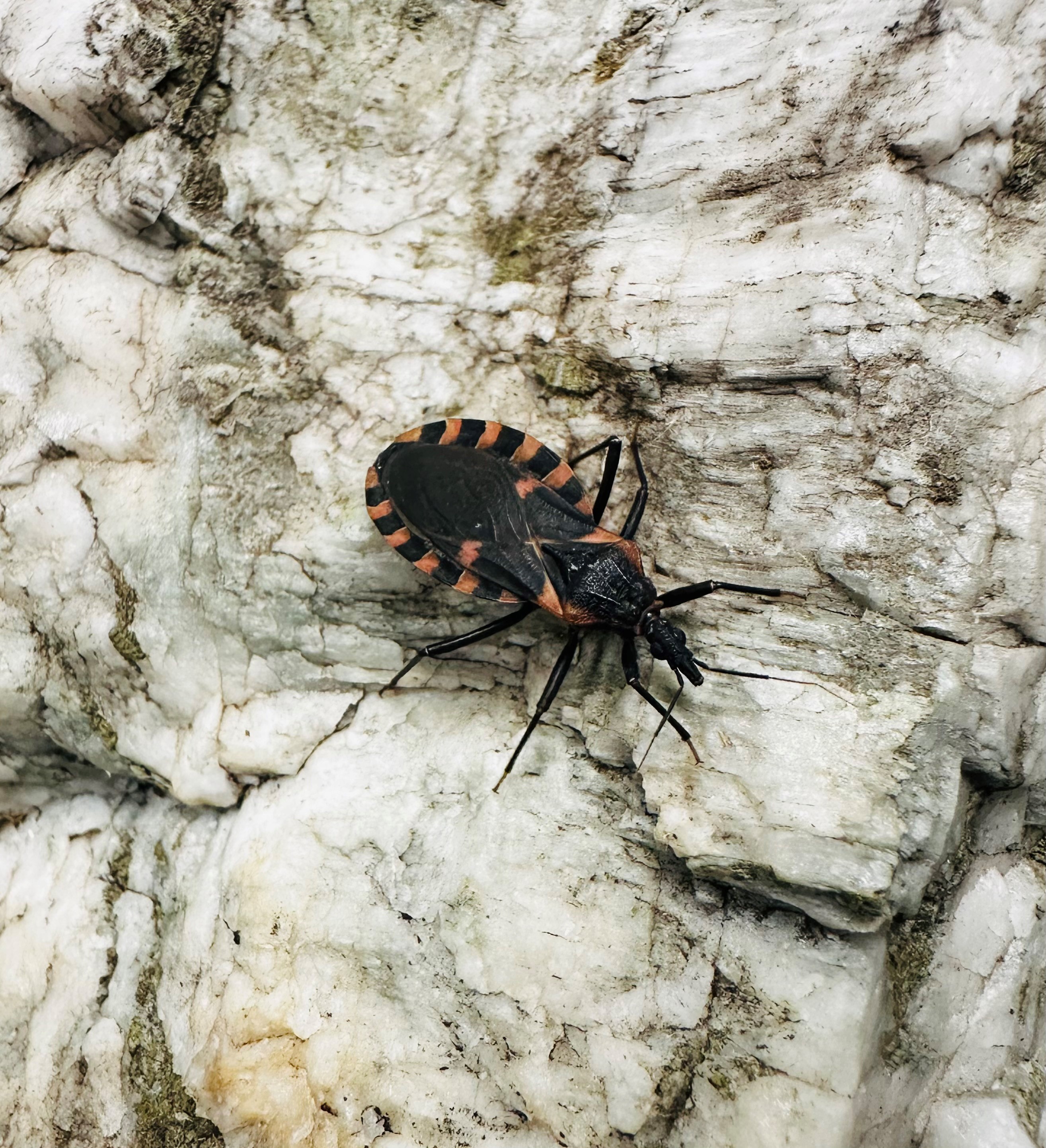
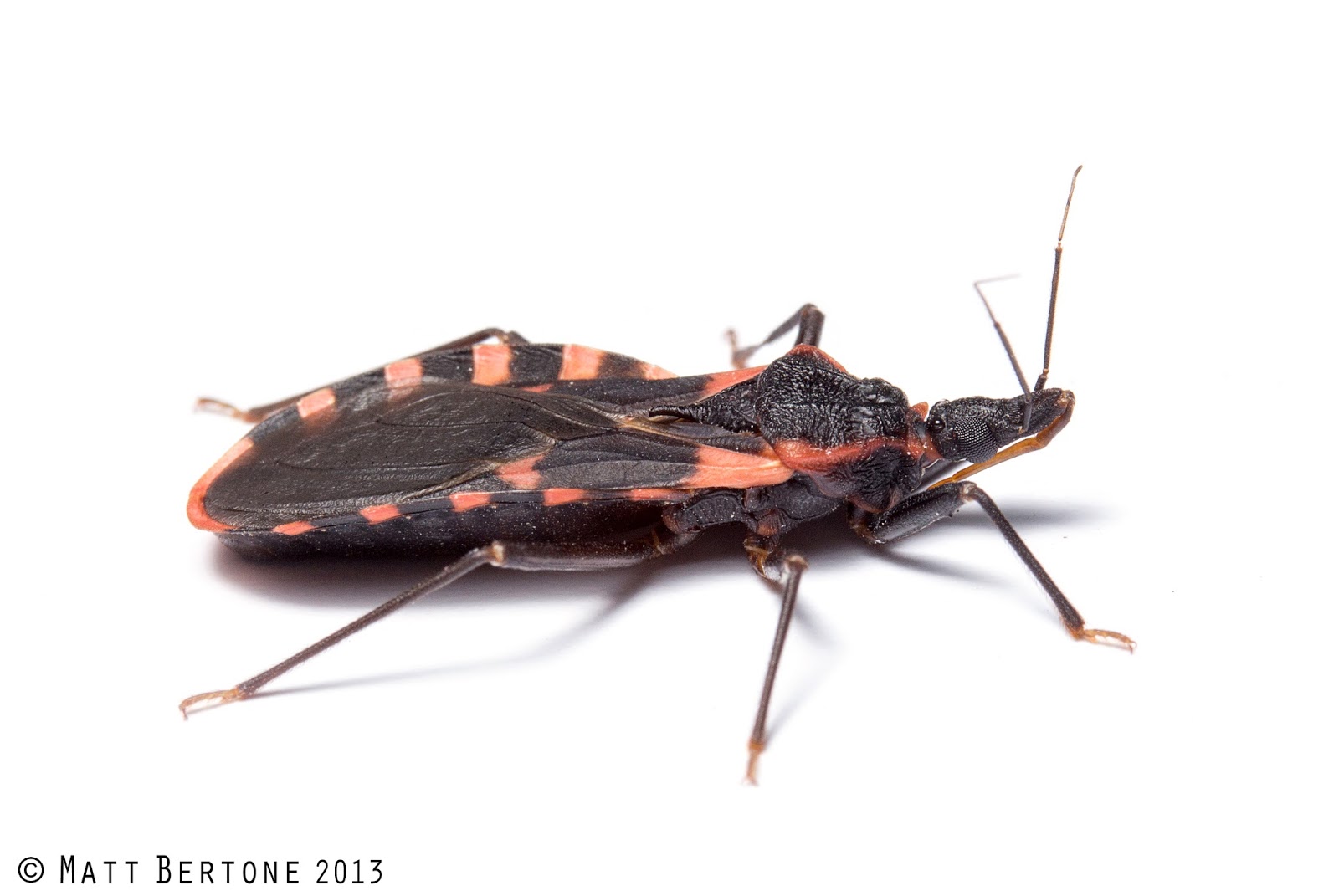
The most defining feature of a kissing bug is its head shape. They have a distinctively elongated, pear-shaped head that tapers into a point, often referred to as a "cone nose." Unlike many other bugs, their mouthparts (the proboscis) are straight and tucked under the head when not in use.
Size and Markings
Adult kissing bugs typically measure between 0.5 and 1.25 inches in length. Most species found in the U.S. are dark brown or black. The edge of their abdomen often features a "checkerboard" or striped pattern of orange, red, or yellow markings. These colors serve as a warning in nature, though the bug itself is relatively secretive.
Look-Alike Species
It is vital to distinguish kissing bugs from the following common insects:
- Wheel Bugs: These are much larger and have a prominent, gear-like crest on their backs. They can bite painfully but do not carry Chagas disease.
- Boxelder Bugs: These are smaller, have bright red veins on their wings, and lack the elongated "cone nose."
- Western Conifer Seed Bugs: These have widened, leaf-like hind legs and are frequently found near pine trees.
The Link Between Kissing Bugs and Chagas Disease
The primary concern regarding these insects is their role as vectors for Trypanosoma cruzi. However, the transmission of this parasite is remarkably inefficient compared to mosquitoes or ticks.
How Transmission Occurs
Contrary to popular belief, the parasite is not transmitted through the bug’s bite. Instead, the parasite lives in the bug's digestive tract and is excreted in its feces. Kissing bugs typically feed on humans at night, often biting near the face or eyes (hence the name). After feeding, the bug may defecate near the bite wound. Infection occurs when the person inadvertently rubs the fecal matter into the bite site, their eyes, or their mouth.
Risk Factors in the United States
While 50% to 60% of kissing bugs in certain parts of Texas and Arizona may carry the parasite, the actual rate of human infection in the U.S. remains low. This is largely due to our housing standards. In regions where Chagas is endemic (Central and South America), bugs often live inside houses made of mud, adobe, or thatch. In the U.S., screened windows and sturdy walls keep most bugs outside.
Symptoms to Watch For
Chagas disease has two phases. The acute phase occurs shortly after infection and may involve swelling at the site of entry (Romaña's sign if it is the eyelid), fever, and fatigue. The chronic phase can remain silent for decades, eventually leading to severe cardiac complications or digestive issues in about 30% of infected individuals.
Medical Disclaimer: If you believe you have been bitten by a kissing bug or are experiencing symptoms of Chagas disease, consult a healthcare professional or contact your state health department for diagnostic testing.
Habitats and Behavior: Where Do They Live?
Understanding where kissing bugs hide can help homeowners reduce the likelihood of an encounter. These insects are nocturnal and are drawn to the carbon dioxide exhaled by mammals, as well as heat signatures.
Outdoor Harborages
In the wild, kissing bugs are found in:
- Animal Burrows: They frequently inhabit the nests of woodrats (packrats) and other small mammals.
- Wood and Rock Piles: Piles of firewood or decorative stones near the home provide excellent hiding spots during the day.
- Pet Kennels: Outdoor dog houses or chicken coops are major attractants, as they provide a steady source of blood meals.
Indoor Entry Points
Bugs usually enter homes accidentally through:
- Gaps under doors (especially those without sweeps).
- Torn window screens.
- Unsealed attic vents or crawlspace entries.
- Being carried in on pets or firewood.
Prevention and Control Strategies for Homeowners
In 2026, the most effective way to manage kissing bug risks is through integrated pest management (IPM), focusing on exclusion rather than heavy chemical use.
1. Structural Exclusion
- Seal Gaps: Use weatherstripping and silicone-based caulk to seal cracks around windows, doors, and pipes entering the house.
- Screen Maintenance: Ensure all window and door screens are tight-fitting and have a fine mesh size.
- Chimney Caps: Install fine-mesh screens over chimney openings and attic vents.
2. Environmental Modification
- Lighting: Kissing bugs are attracted to standard incandescent and mercury vapor lights. Switch outdoor bulbs to "bug lights" with a yellow hue or move lights away from doorways.
- Debris Removal: Move woodpiles, rock piles, and leaf litter at least 20 feet away from the home’s foundation.
- Pet Safety: Keep pets indoors at night. If pets must stay outside, ensure their sleeping areas are elevated and kept clean of debris.
3. Professional Intervention
If you find multiple kissing bugs inside your home, a professional pest control service may be necessary. Synthetic pyrethroids are often used for perimeter treatments, but these should be applied by a licensed technician who understands triatomine behavior.
What to Do If You Find a Kissing Bug
If you find a bug that you suspect is a triatomine, do not squash it. Squashing the bug can release the T. cruzi parasite if it is present.
- Safe Capture: Use a glove or a plastic bag to pick up the bug. Place it in a sealed container (like a pill bottle or a jar).
- Sanitization: Clean the area where the bug was found with a 10% bleach solution or 70% ethanol.
- Submission for Testing: Many universities, such as the Texas A&M Kissing Bug Citizen Science Program, or state health departments accept specimens for identification and testing. This contributes to vital research regarding the spread of the parasite.
Frequently Asked Questions
Can my dog get Chagas disease from kissing bugs?
Yes. Dogs are actually at a higher risk than humans in the United States. They can be infected by being bitten or by eating the bugs. Symptoms in dogs include lethargy, heart murmurs, and sudden collapse. If you live in a high-risk state like Texas or Georgia, monitor your pets closely and consult a veterinarian if you see kissing bugs near their sleeping quarters.
Are kissing bugs becoming more common in the North?
Sightings have increased in northern states like Pennsylvania and Ohio, but this is likely due to better reporting and public awareness rather than a massive migration. However, milder winters associated with climate trends in 2026 allow these bugs to survive further north than they did fifty years ago.
Does a bite mean I have Chagas disease?
No. Even if a bug is carrying the parasite, the chance of transmission during a single bite is estimated to be very low (some studies suggest 1 in 1,000 bites leads to infection). However, because the consequences of Chagas are serious, any suspected bite should be discussed with a doctor.
Can I kill kissing bugs with regular bug spray?
Many over-the-counter sprays will kill an individual bug on contact. However, these sprays do not provide long-term protection or address the source of the infestation. Focus on sealing the home to prevent them from entering in the first place.
Is there a vaccine for Chagas disease?
As of 2026, there is no vaccine available for humans or pets. Management relies entirely on vector control and early diagnosis. If caught in the acute phase, antiparasitic medications like benznidazole are highly effective.
Final Recommendation
Residents in the southern and central United States should maintain a "seal-out" policy for their homes. While the risk of contracting Chagas disease from a kissing bug in the U.S. remains statistically low, the potential for cardiac complications makes prevention a priority. Begin by inspecting your home's exterior for gaps and removing any debris piles within 20 feet of your foundation. If you encounter a bug, use the capture-and-test method to assist local health authorities in tracking the parasite’s prevalence in your area.
Image Gallery