Navigating the Commercial Auto Insurance Marketplace in Florida
The commercial auto insurance marketplace in Florida is a complex ecosystem of admitted carriers, surplus lines insurers, and state-mandated risk pools. In 2026, business owners must navigate a landscape shaped by stringent underwritin...
The commercial auto insurance marketplace in Florida is a complex ecosystem of admitted carriers, surplus lines insurers, and state-mandated risk pools. In 2026, business owners must navigate a landscape shaped by stringent underwriting, the long-term impacts of tort reform, and advanced telematics requirements. Securing coverage involves meeting state-specific financial responsibility laws while balancing the high premiums common in the Sunshine State.
Contents
Understanding the Florida Commercial Auto Ecosystem
The commercial auto insurance marketplace in Florida is not a single entity or exchange, but rather a fragmented environment where businesses procure coverage to protect their vehicles, drivers, and assets. As of 2026, the market is characterized by a "hard market" transition, where insurers remain cautious despite legislative efforts to curb litigation costs.
Florida’s insurance market is overseen by the Florida Office of Insurance Regulation (FLOIR). This agency ensures that rates are not excessive, inadequate, or unfairly discriminatory. However, because Florida is a high-risk state due to its weather patterns and high traffic density, the "marketplace" often feels restrictive to business owners with specialized needs or poor loss histories.
Admitted vs. Non-Admitted Carriers
When shopping the marketplace, you will encounter two primary types of insurers:
- Admitted Carriers: These companies are licensed by the FLOIR and must follow state regulations regarding policy forms and rates. They contribute to the Florida Insurance Guaranty Association (FIGA), which protects policyholders if the insurer becomes insolvent.
- Non-Admitted (Surplus Lines) Carriers: These insurers are not licensed by the state but are permitted to write coverage for risks that admitted carriers won't touch. This is common for heavy trucking, hazardous materials transport, or businesses with significant claim histories. While they offer more flexibility in pricing and coverage, they are not backed by FIGA.
The Market of Last Resort: FJUA
For Florida businesses that cannot find coverage in the voluntary market, the Florida Joint Underwriting Association (FJUA) serves as the "market of last resort." The FJUA provides essential coverage to high-risk entities that have been rejected by at least three licensed insurers. While it ensures no business is forced off the road for lack of insurance, premiums in the FJUA are significantly higher than those in the standard marketplace.
Legal Requirements and Compliance in 2026
Florida operates under a "no-fault" insurance system, though this primarily impacts personal injury claims. For commercial entities, the requirements are more stringent and vary based on the type of vehicle and the nature of the business operations.
Mandatory Minimums
Under Florida’s Financial Responsibility Law, all owners of motor vehicles with four or more wheels must carry:
- Personal Injury Protection (PIP): $10,000 to cover medical expenses and lost wages regardless of fault.
- Property Damage Liability (PDL): $10,000 to cover damage to others' property.
However, these are the absolute minimums for personal vehicles. Commercial vehicles, especially those used for hire or transporting heavy loads, are subject to much higher limits under Florida Statutes Chapter 627 and federal Department of Transportation (DOT) regulations.
Heavy Vehicle and For-Hire Requirements
For businesses operating larger vehicles, the Florida Highway Safety and Motor Vehicles (FLHSMV) department mandates higher liability limits:
- Vehicles over 26,000 lbs (GVW): Generally require $50,000 or more in combined single limit (CSL) coverage.
- Hazardous Materials: Requirements can jump to $1,000,000 or $5,000,000 depending on the substance being transported.
- Passenger Carriers: Limousines and buses must carry significantly higher bodily injury liability limits to protect passengers.
Primary Coverage Components in the Florida Market
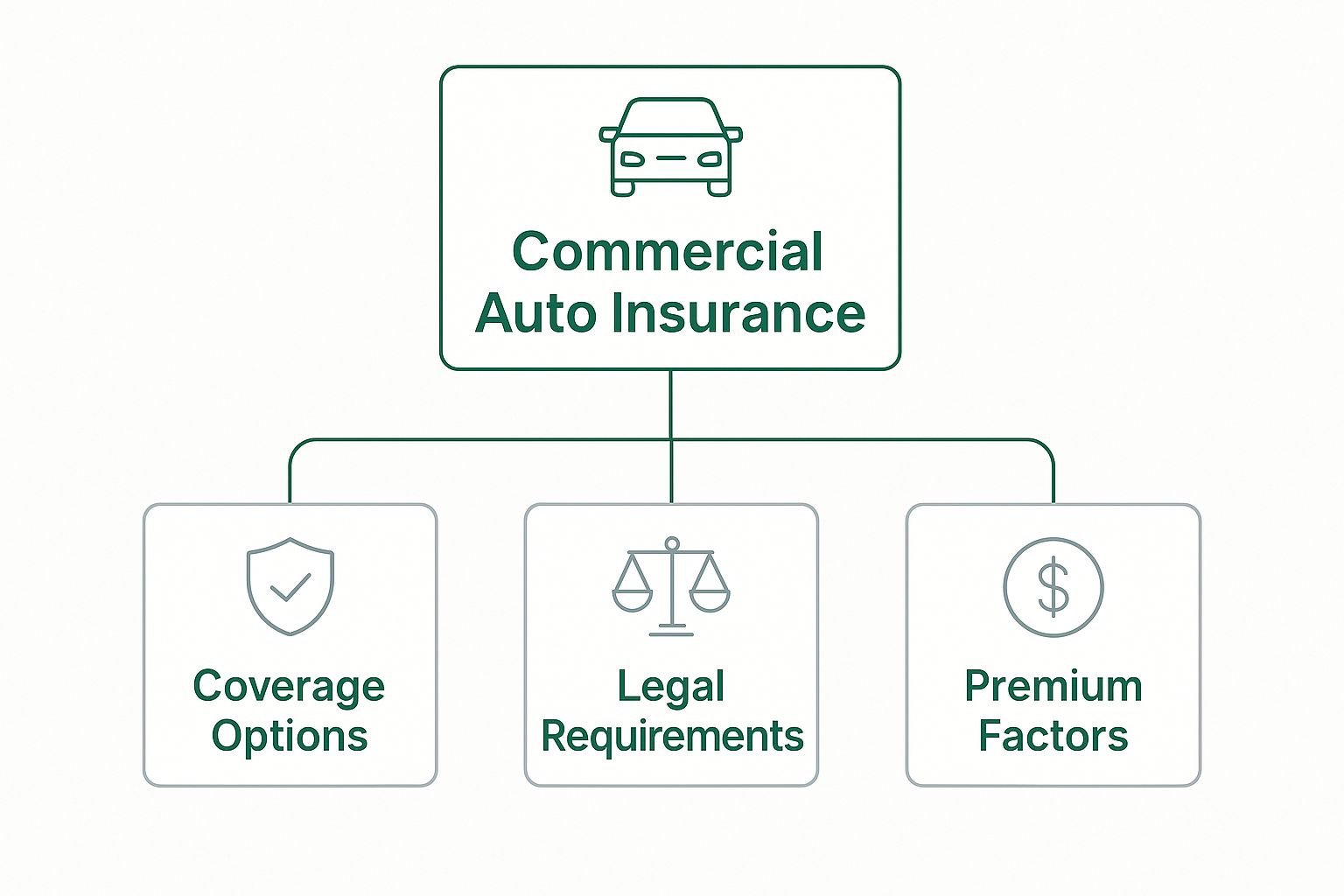
The 2026 Florida marketplace emphasizes a comprehensive approach to coverage. A standard commercial policy is typically a package of several different protections.
Bodily Injury Liability (BI)
While not strictly required for all personal vehicles in Florida, BI is a cornerstone of commercial policies. It covers legal fees, medical bills, and settlements if your driver is found at fault for an accident that injures another person. In Florida’s litigious environment, most agents recommend limits of at least $1,000,000.
Uninsured/Underinsured Motorist (UM/UIM)
Florida consistently ranks among the states with the highest percentage of uninsured drivers. In the commercial marketplace, UM/UIM coverage is vital. It protects your business if one of your drivers is hit by a person who either has no insurance or carries limits too low to cover the damages.
Physical Damage (Comprehensive and Collision)
- Collision: Covers damage to your own vehicle resulting from an accident with another vehicle or object.
- Comprehensive: Covers non-collision events such as theft, fire, vandalism, and the frequent Florida risk of flood or hurricane-driven debris.
Hired and Non-Owned Auto (HNOA)
This is an often-overlooked segment of the marketplace. If your employees use their personal vehicles for business errands, or if your company occasionally rents trucks, HNOA coverage provides liability protection for the business if an accident occurs during those activities.
Factors Influencing Premiums in 2026
Several macroeconomic and regional factors dictate the pricing you will find in the Florida commercial auto marketplace today.
The Impact of Tort Reform (HB 837)
The landmark legislative reforms passed in 2023, specifically House Bill 837, continue to shape the 2026 market. By shifting Florida from a "pure" comparative fault system to a "modified" comparative fault system (where a plaintiff cannot recover damages if they are more than 50% at fault), the state has seen a gradual stabilization in claim frequencies. However, insurers are still pricing for "social inflation"—the trend of rising jury awards and settlement costs.
Telematics and Data Integration
By 2026, the marketplace has moved from "suggesting" telematics to often requiring them. Insurers such as Progressive, Travelers, and Liberty Mutual now offer significant "usage-based" discounts for fleets that share real-time data on braking, acceleration, and idling. Businesses that refuse to use Electronic Logging Devices (ELDs) or dashcams often find themselves relegated to higher-priced, non-admitted carriers.
Geographic and Climate Risk
Florida’s geography remains a primary pricing factor. Coastal regions (Miami-Dade, Broward, Palm Beach) typically see higher premiums due to traffic density and hurricane risk. Conversely, rural areas in the Panhandle may see lower rates but might face limited availability from top-tier carriers.
Comparison of Commercial Auto Needs by Industry
| Industry Segment | Typical Vehicle Types | Key Coverage Focus | Regulatory Oversight |
|---|---|---|---|
| Last-Mile Delivery | Sprinter Vans, Box Trucks | HNOA & General Liability | FLHSMV |
| Long-Haul Trucking | Semi-Tractor Trailers | Cargo & Motor Truck Cargo | FMCSA & Florida DOT |
| Construction | Pickups, Flatbeds, Cranes | Mobile Equipment Endorsements | Florida DBPR |
| Passenger Transport | Limos, Shuttles, Buses | High-Limit Bodily Injury | FLHSMV & Local Municipalities |
| Sales & Consulting | Sedans, SUVs | Uninsured Motorist | Florida Financial Resp. Law |
How to Procure Coverage in the Florida Marketplace
The process of securing commercial auto insurance in Florida requires more preparation in 2026 than in previous decades. Follow these steps to ensure the best possible terms:
- Gather Detailed Fleet Data: You will need VINs, garaging addresses, and original cost-new values for all vehicles.
- Driver Qualification Files (DQF): Insurers will run Motor Vehicle Reports (MVRs) for every driver. Drivers with multiple infractions or serious violations (DUI, reckless driving) in the last 3-5 years can cause an entire fleet to be rejected by admitted carriers.
- Loss Runs: Obtain at least three to five years of "loss runs" (claim history reports) from your previous insurers. Even "closed-no-pay" claims are relevant.
- Safety Manuals: Demonstrating a written safety policy and a regular maintenance schedule can make your business a "preferred risk."
- Engage a Specialized Broker: Because the Florida market is so nuanced, working with an independent agent who has access to both admitted and surplus lines markets is essential.
Common Pitfalls to Avoid
The most frequent mistake Florida business owners make is shopping based solely on the monthly premium. In a state with high litigation rates, a "cheap" policy with low limits or restrictive "step-down" provisions (where limits decrease when certain drivers are behind the wheel) can lead to financial ruin after a single catastrophic accident.
Another pitfall is the failure to account for "Radius of Operation." If you tell your insurer your trucks only operate within 50 miles of Orlando, but an accident occurs in Georgia, the claim could be denied for a material misrepresentation of risk.
Frequently Asked Questions
Is Florida still a no-fault state for commercial vehicles?
Yes, Florida’s no-fault law still applies, meaning each party’s PIP coverage pays for their own minor injuries. However, for commercial entities, this is only the first $10,000 of coverage. In serious accidents, which are common with commercial vehicles, the "no-fault" threshold is easily surpassed, leading to traditional liability claims where fault is aggressively litigated.
Can I use my personal auto policy for my small business in Florida?
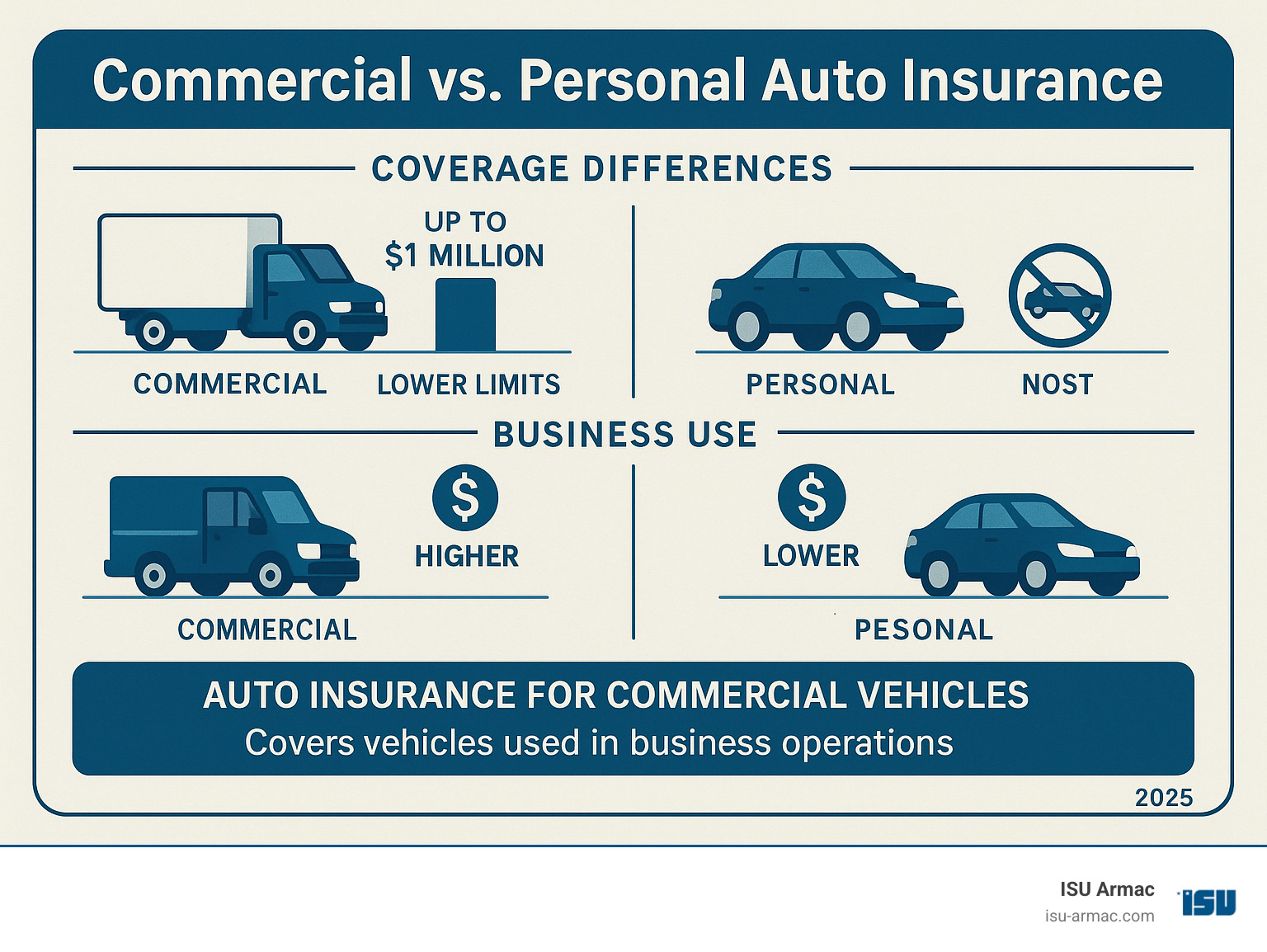
Generally, no. Personal auto policies in Florida specifically exclude coverage for "business use" beyond simple commuting. If you use your vehicle to transport goods for a fee, deliver food, or carry heavy tools to job sites, a personal insurer will likely deny a claim and potentially cancel your policy for fraud.
How much does commercial auto insurance cost in Florida in 2026?
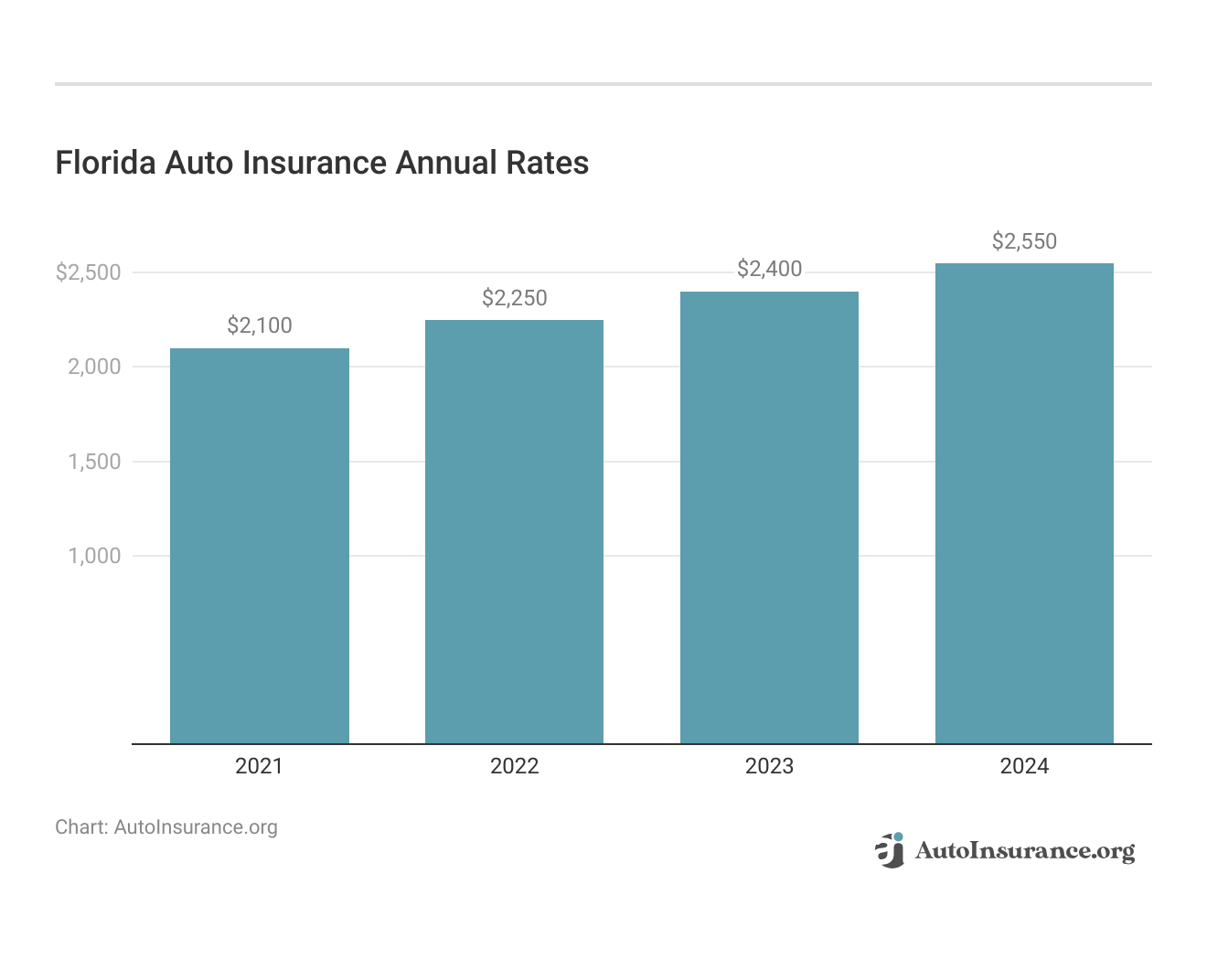
Costs vary wildly, but as a benchmark, a single light-duty delivery van for a clean-risk business might cost between $2,500 and $4,500 annually. For heavy trucking, premiums can exceed $12,000 to $20,000 per power unit depending on the radius of operation and cargo type.
What is a "Composite Rated" policy?
In the Florida marketplace, larger fleets (usually 10+ vehicles) may qualify for composite rating. Instead of pricing each vehicle individually, the insurer applies a flat rate per vehicle or per $1,000 of revenue/payroll. This simplifies administration as you do not need to report every vehicle addition or deletion to the insurer immediately.
Does my policy cover my trailers?
In Florida, "Liability" usually follows the power unit (the truck), but "Physical Damage" (theft/collision) must be specifically added for trailers. If you are hauling trailers you do not own, you must ensure you have "Non-Owned Trailer Damage" coverage in your policy.
Strategic Recommendation
For Florida businesses in 2026, the best path to navigating the commercial auto marketplace is proactive risk management. Since insurers are heavily relying on data-driven underwriting, implementing a formal safety program and installing telematics systems is no longer optional for those seeking competitive rates. Review your policy limits annually with an agent to ensure they align with the current costs of medical care and vehicle replacement, which have risen significantly over the past five years.
For more information on state-specific insurance regulations, visit the Florida Office of Insurance Regulation or the Florida Department of Highway Safety and Motor Vehicles.
Image Gallery