A Comprehensive Overview of the Richest Areas in Maryland
Maryland consistently ranks among the wealthiest states in the United States, largely due to its proximity to the nation’s capital, a highly educated workforce, and a robust professional services economy. The state’s affluence is conce...
Maryland consistently ranks among the wealthiest states in the United States, largely due to its proximity to the nation’s capital, a highly educated workforce, and a robust professional services economy. The state’s affluence is concentrated primarily within the Washington, D.C. suburbs, extending into high-value enclaves in Montgomery, Howard, and Baltimore counties, where median household incomes and property values significantly exceed national averages.
Contents
Defining Wealth in the Maryland Context
When analyzing the "richest" areas of Maryland, statisticians and economists typically rely on metrics from the United States Census Bureau, specifically median household income and per capita income. While these figures provide a snapshot of fiscal health, they do not always capture the full scope of concentrated wealth, which often manifests in real estate valuations, private asset management, and professional designations within specific census-designated places (CDPs).
The wealth in Maryland is structural. It is driven by federal contracting, cybersecurity, biotechnology, and the proximity of government agencies such as the National Institutes of Health (NIH), the Department of Defense, and the various regulatory bodies in Washington. This economic engine requires a specialized, high-earning workforce, creating "pockets of prosperity" that anchor the state’s fiscal status.
Geographic Hubs of High Income
The highest concentrations of wealth in Maryland are not distributed randomly; they are clustered in a corridor that facilitates the professional lives of the D.C.-area elite.
Montgomery County: The Economic Anchor
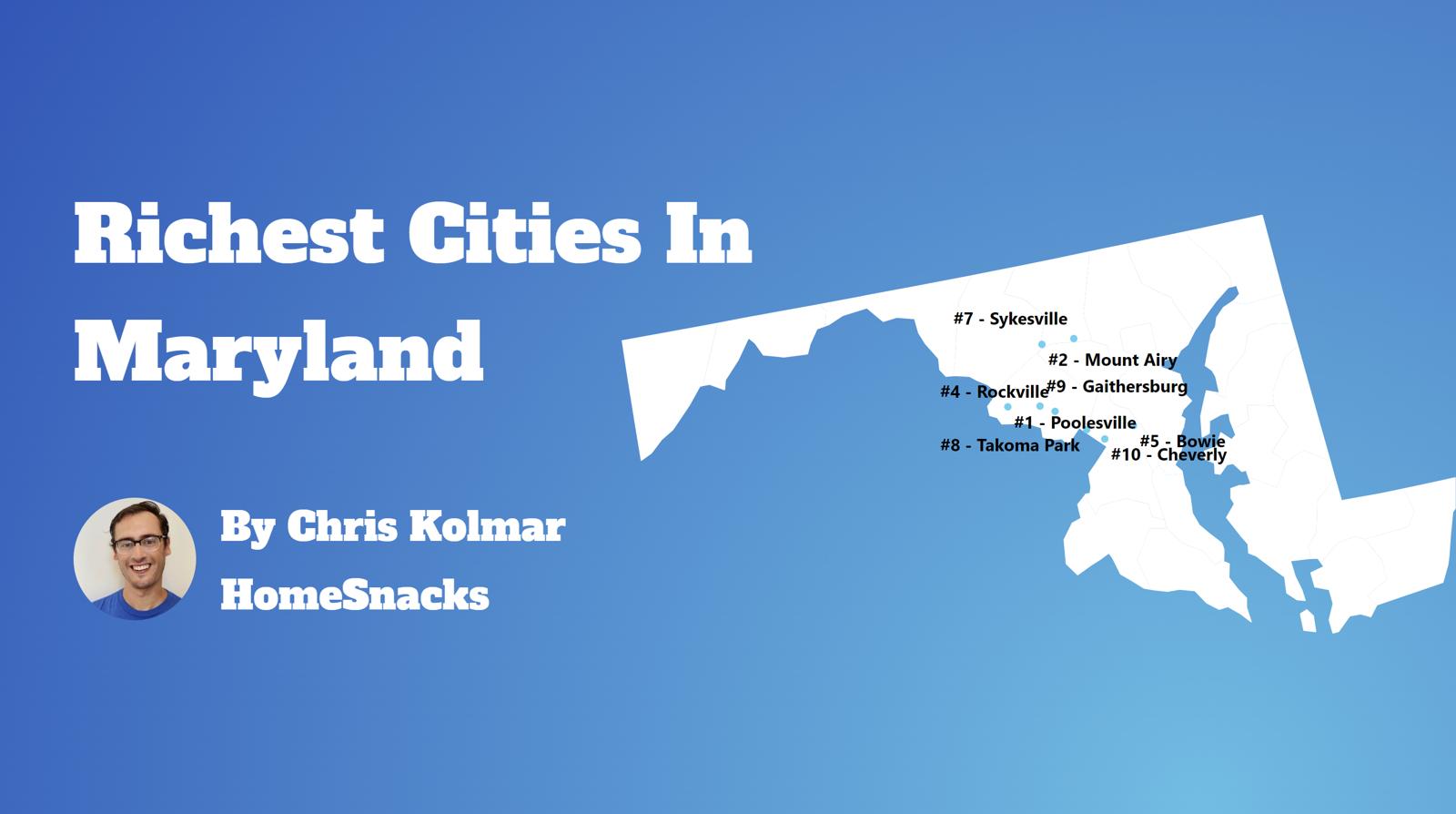
Montgomery County is frequently identified as the primary epicenter of Maryland’s wealth. Communities such as Potomac, Bethesda, and Chevy Chase have long-standing reputations for high property values and top-tier school districts, which correlate strongly with high-income demographics. These areas are characterized by estate-style single-family homes and proximity to major bio-tech hubs, effectively serving as the residential choice for many of the region’s C-suite executives and senior federal officials.
Howard County: Strategic Growth
Howard County, particularly areas surrounding Columbia and Ellicott City, has emerged as a premier location for professionals seeking a balance between suburban comfort and high-earning opportunities. Howard County consistently ranks at or near the top of national lists for median household income. The infrastructure here—modern business parks, a highly developed retail landscape, and rigorous public school systems—supports a demographic of dual-income, highly skilled households.
The Baltimore County "Gold Coast"
While Montgomery and Howard Counties dominate the D.C.-adjacent market, areas north of Baltimore, such as Lutherville-Timonium, Ruxton, and parts of the Greenspring Valley, represent historical wealth. These regions feature expansive historical properties and a more established, generational approach to affluence compared to the newer, project-driven wealth found in the D.C. suburbs.
Comparative Metrics of Affluence
Understanding the differences between these regions requires a look at how income and real estate intersect. The following table provides a comparison of how different high-income zones in Maryland characterize their economic status based on standard regional reporting.
| Area / Region | Economic Driver | Housing Characteristics | Primary Demographic |
|---|---|---|---|
| Potomac (Montgomery) | Federal & Bio-tech | Estate-sized properties | Senior Executives |
| Bethesda (Montgomery) | Professional Services | Urbanized luxury condos/SFH | Legal/Medical Professionals |
| Columbia (Howard) | Tech & Government | Planned community/Suburban | Mid-Senior Professionals |
| Ruxton (Baltimore) | Private Equity/Medical | Historical/Large lots | Legacy Wealth/Professionals |
Prerequisites for High-Value Real Estate Investment
For those looking to move into or invest in these regions, understanding the barriers to entry is essential. Wealth in Maryland is deeply tied to real estate, and high-value areas are rarely "starter" markets.
- Market Competition: In high-income enclaves, inventory is often low, and competition for properties with specific amenities (such as proximity to Metro lines or specific school districts) is fierce.
- Tax Considerations: Maryland’s tax structure, including county-level income taxes added to state taxes, is a significant consideration for high-earning residents. Prospective residents should consult with a financial advisor to understand the specific tax implications of their chosen county.
- Professional Licensing: Many of the residents in these areas are employed in sectors requiring specialized state or federal licensing. Moving to these areas often necessitates proximity to specialized hubs where these professional networks are most dense.
Common Misconceptions Regarding Maryland Wealth
A frequent error in assessing Maryland’s wealth is assuming that all high-income areas are identical. There is a distinct cultural and economic divide between the D.C.-metro wealth, which is often tied to federal fiscal cycles and government contracting, and the Baltimore-metro wealth, which often leans toward legacy real estate and diversified regional industries.
Additionally, readers should avoid conflating "high cost of living" with "high quality of life." While areas like Bethesda have high property taxes and high costs for services, they also offer specific public infrastructure benefits that may not be present in lower-taxed jurisdictions. Always verify the current property tax rates through the Maryland Department of Assessments and Taxation (SDAT) before committing to a property purchase.
Frequently Asked Questions
1. Which county in Maryland is considered the wealthiest? Howard and Montgomery Counties consistently trade places for the highest median household income in the state. The choice between them often depends on whether the individual prefers the biotech/federal focus of Montgomery or the planned-community growth of Howard.
2. Are property values in these areas stable? Historically, properties in these affluent regions have shown high resilience. Proximity to the federal government provides a unique economic floor that buffers these regions from the volatile swings seen in other parts of the country.
3. Does high income in Maryland correlate with better public services? Yes. In counties like Montgomery and Howard, higher property tax bases directly fund some of the highest-rated public school systems in the nation. This is a primary driver for families moving into these affluent zip codes.
4. Is it possible to find affordable living within these affluent counties? While the counties themselves are wealthy, most contain diverse census tracts. It is possible to find more modest, entry-level housing in fringe areas of these counties, though the cost of living remains influenced by the overall economic health of the region.
5. How do I verify the current economic status of a specific Maryland town? The most reliable data can be found through the U.S. Census Bureau’s "QuickFacts" tool. Ensure you are looking at the most recent American Community Survey (ACS) 5-year estimates for the most accurate, verified demographic data.
Next Steps for Prospective Residents
If you are considering a relocation to one of Maryland's wealthiest areas, your first step should be to define your professional proximity requirements. Because travel times in the D.C. corridor are significant, your choice of residence is often dictated by your office location or travel hubs. Consult with a local real estate professional who specializes in luxury or executive relocation, and review the current school district ratings and property tax assessments for your target zip codes to ensure they align with your long-term financial strategy.
Image Gallery