How to Dry Hair Fast Without a Blow Dryer: Efficient Heat-Free Techniques
To dry hair quickly without a blow dryer, prioritize moisture removal in the shower, use a high-absorbency microfiber towel instead of terry cloth, and employ techniques like "plopping" or "scrunching" with paper towels. Combined with...
To dry hair quickly without a blow dryer, prioritize moisture removal in the shower, use a high-absorbency microfiber towel instead of terry cloth, and employ techniques like "plopping" or "scrunching" with paper towels. Combined with air-dry-specific styling products and strategic airflow, these methods significantly reduce drying time while preventing heat-induced damage.
Contents
Air-drying hair is often perceived as a slow, passive process that leaves strands damp for hours. However, in 2026, the science of hair care emphasizes that drying without heat is not only a way to preserve hair integrity but can be optimized for speed through mechanical and environmental adjustments. Reducing the time hair spends in a wet state is crucial for minimizing hygral fatigue—the stretching and swelling of the hair cuticle caused by prolonged moisture retention. By understanding the physics of water absorption and evaporation, you can achieve a polished look in a fraction of the usual air-drying time.
The Foundation: Preparation in the Shower
The process of drying hair fast begins before you even step out of the shower. Effective water removal is contingent upon how the hair cuticle is managed during the washing process.
Conditioning and Sealing the Cuticle
Conditioner does more than just detangle; it plays a vital role in how hair sheds water. Most modern conditioners contain ingredients like silicones or fatty alcohols that smooth the hair cuticle. A smoothed cuticle is essentially "water-resistant" compared to a roughened one. When the cuticle scales lie flat, water slides off the hair shaft more easily rather than being trapped within the internal structure.
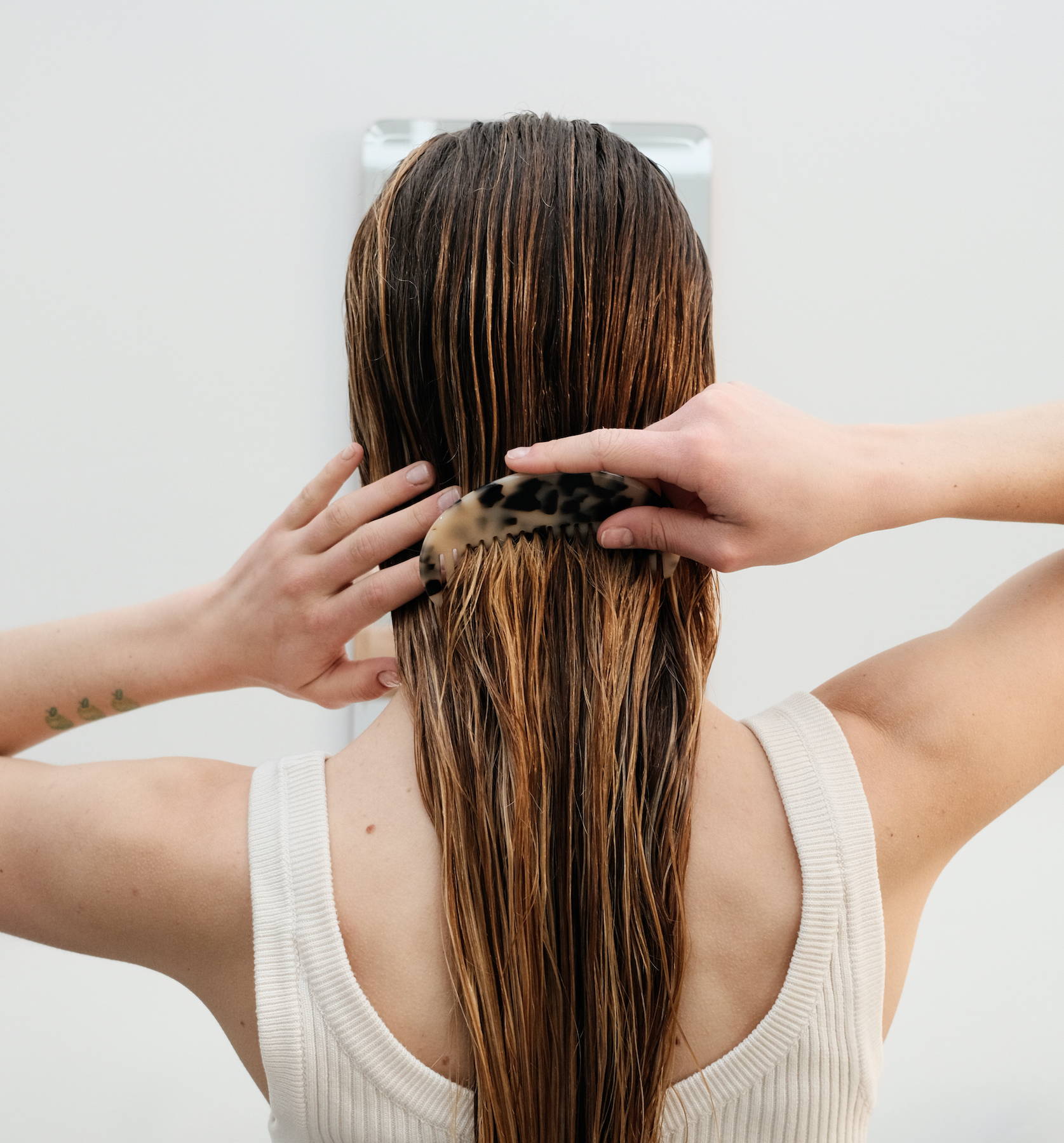
While in the shower, use a wide-tooth comb to distribute conditioner evenly. This ensures every strand is coated, which prevents the hair from clumping together in a way that traps deep pockets of moisture. Before turning off the water, perform a final rinse with cooler water. This helps to further seal the cuticle, making the subsequent towel-drying steps more effective.
The Initial Hand-Wring
Before reaching for a towel, use your hands to remove the bulk of the water. Start at the roots and gently squeeze (do not wring or twist) down to the ends. By removing the "heavy" water manually, you prevent your towel from becoming instantly saturated, which extends its ability to absorb finer moisture later.
Selecting High-Performance Drying Tools
The standard cotton terry cloth towel found in most bathrooms is perhaps the least efficient tool for fast drying. Its large loops of thread are designed for durability and scrubbing, which can cause friction, frizz, and breakage on wet hair.
The Superiority of Microfiber
In 2026, microfiber remains the gold standard for heat-free drying. These towels are made from a blend of polyester and polyamide fibers that are split to be much finer than a human hair. This creates a massive surface area with millions of tiny pores that wick water away through capillary action.
A high-quality microfiber towel can absorb several times its weight in water without requiring the user to rub the hair. When using microfiber, the "squeeze-and-hold" method is most effective. Wrap a section of hair in the towel and squeeze firmly for five to ten seconds. This allows the fibers to pull water out of the hair cortex rather than just wiping it off the surface.
The Cotton T-Shirt Alternative
For those with curly or wavy hair, a flat-weave cotton T-shirt is an excellent alternative. Unlike the loops of a terry towel, the smooth surface of a T-shirt doesn't disrupt the natural curl pattern. While it may not be quite as absorbent as microfiber, it excels at removing excess water while keeping the hair's shape intact, which is a key component of the "plopping" technique.
The Paper Towel Method for Roots
The roots are typically the slowest part of the hair to dry because they are dense and lack airflow. To accelerate this specific area, use highly absorbent paper towels. Gently press the paper towels into the scalp and the first few inches of the hair. Paper towels are engineered for maximum liquid retention and can reach into the dense root area more effectively than a bulky fabric towel.
Advanced Techniques for Rapid Air-Drying
Once the initial moisture is removed, the goal shifts to maximizing surface area exposure to the air.
The Plopping Technique
Originally popularized by the curly hair community, "plopping" is a method where hair is gathered on top of the head and wrapped in a T-shirt or microfiber cloth.
- Lay the cloth flat on a chair or counter.
- Flip your hair forward and "drop" it onto the center of the cloth.
- Wrap the sides of the cloth around your head and tie them at the nape of the neck.
- Leave it for 10–20 minutes.
This technique works because it keeps the hair compressed against the absorbent material while preventing gravity from pulling the hair down and trapping moisture against the scalp. When you "un-plop," the hair is significantly drier and the curls are set.
The "Shake and Rake" Method
For straight or wavy hair, keeping the hair in motion is essential. Once the hair is no longer dripping, use your fingers to "rake" through the strands, separating them. Periodically flipping your hair upside down and shaking it at the roots introduces airflow into the interior layers of the hair. If the hair stays in one solid mass, only the outer layer evaporates, while the inner layers stay damp for hours.
Strategic Sectioning
If you have particularly thick or long hair, it will never dry fast if it stays in a single bundle. Use clips to divide your hair into four or more sections. By separating the hair, you increase the total surface area exposed to the air. This is especially important for the back of the head, which is often shielded from light and air.
| Method | Best For | Speed Rating | Frizz Control |
|---|---|---|---|
| Microfiber Squeeze | All hair types; thick hair | High | Excellent |
| T-Shirt Plopping | Curly, wavy, and frizzy hair | Medium | Superior |
| Paper Towel Press | Roots and thick sections | Very High | Fair |
| Finger Raking | Straight and fine hair | Medium | Good |
| Sectional Clipping | Very thick or very long hair | High | Good |
Utilizing Air-Dry Specific Products
Chemical assistance can significantly bridge the gap between air-drying and blow-drying. The beauty industry in 2026 has refined "air-dry creams" and "speed-dry sprays" that work through various mechanisms.
Evaporative Polymers
Many modern speed-dry sprays contain specialized polymers that help water evaporate faster. These products are often lightweight and contain volatile ingredients that carry water molecules away from the hair shaft as they dissipate.
Lightweight Sealants
Applying a lightweight leave-in conditioner or a dedicated air-dry cream helps to keep the hair strands separated. By preventing "clumping," these products ensure that air can circulate around individual hairs. Look for ingredients like hemisqualane or lightweight jojoba esters, which provide shine and manageability without weighing the hair down or trapping moisture.
Environmental Optimization
The environment in which you dry your hair is just as important as the tools you use.
- Avoid the Bathroom: The bathroom is a high-humidity environment, especially after a shower. Move to a dry, well-ventilated room.
- Utilize Natural Airflow: Sit near an open window or beneath a ceiling fan. Even a gentle breeze provides the mechanical energy needed to move moisture away from the hair surface.
- The Root Lift: Use a wide-tooth comb or your fingers to lift the hair away from the scalp. When hair lies flat against the skin, the heat and moisture from your scalp create a humid microclimate that stalls the drying process.
Common Mistakes to Avoid
To ensure your hair dries as quickly and healthily as possible, avoid these frequent errors:
- Vigorous Rubbing: This creates friction that damages the cuticle and leads to frizz. Always use a "squeeze" motion.
- Applying Heavy Oils Early: If you apply heavy oils or thick butters to soaking wet hair, you create an occlusive barrier that traps water inside the hair shaft, drastically increasing drying time.
- Tying Hair in a Bun: Putting wet hair into a tight bun or ponytail is a recipe for slow drying and potential scalp issues, like fungal growth or "sour hair" smell, as the interior remains damp for a day or longer.
Frequently Asked Questions
Is air-drying better for your hair than blow-drying?
Air-drying is generally better for preventing heat-related damage, such as "bubble hair" or protein degradation. However, leaving hair wet for extended periods (over 4–6 hours) can lead to hygral fatigue, where the hair swells and puts pressure on the cell membrane complex. The healthiest approach is to air-dry using the "fast" techniques mentioned above to minimize the time the hair spends in a weakened, wet state.
Can I use a fan to dry my hair faster?
Yes, using a fan is an excellent way to accelerate air-drying without the risks associated with high heat. The moving air increases the rate of evaporation. For best results, stay in motion or rotate your head so the airflow reaches the underside and roots.
How do I dry thick hair fast without heat?
Thick hair requires a multi-step approach: first, use the paper towel method on the roots. Next, section the hair into at least four parts using clips. Use a high-absorbency microfiber towel on each section individually, and finish by raking your fingers through the hair frequently while sitting in a room with good cross-ventilation.
Does salt spray make hair dry faster?
Salt sprays can speed up the perception of drying because salt is a desiccant that draws moisture out. However, salt can also be very drying to the hair fiber itself, potentially leading to brittleness. It is better to use dedicated speed-dry sprays that use evaporative polymers instead of salt.
Why does my hair take so long to air dry?
Hair porosity is often the culprit. High-porosity hair absorbs water easily but also loses it quickly, whereas low-porosity hair has a tightly closed cuticle that makes it hard for water to get in—but once it’s in, it’s very hard to get out. If your hair takes more than 5 hours to dry, you likely have low-porosity hair and should focus on root-lifting and microfiber squeezing.
Practical Recommendation
For the fastest results in 2026, adopt a "mechanical first" strategy. Start with a cold rinse and a thorough hand-squeeze in the shower. Immediately wrap your hair in a microfiber hair turban for 10 minutes while you finish your post-shower routine. Remove the turban, apply a lightweight evaporative air-dry spray, and use paper towels to specifically target the moisture at your roots. Finally, keep your hair separated and in motion—either by air-fluffing with your fingers or sitting near a fan—to finish the process. This combination can reduce air-drying time by up to 50% compared to traditional passive methods.
Image Gallery