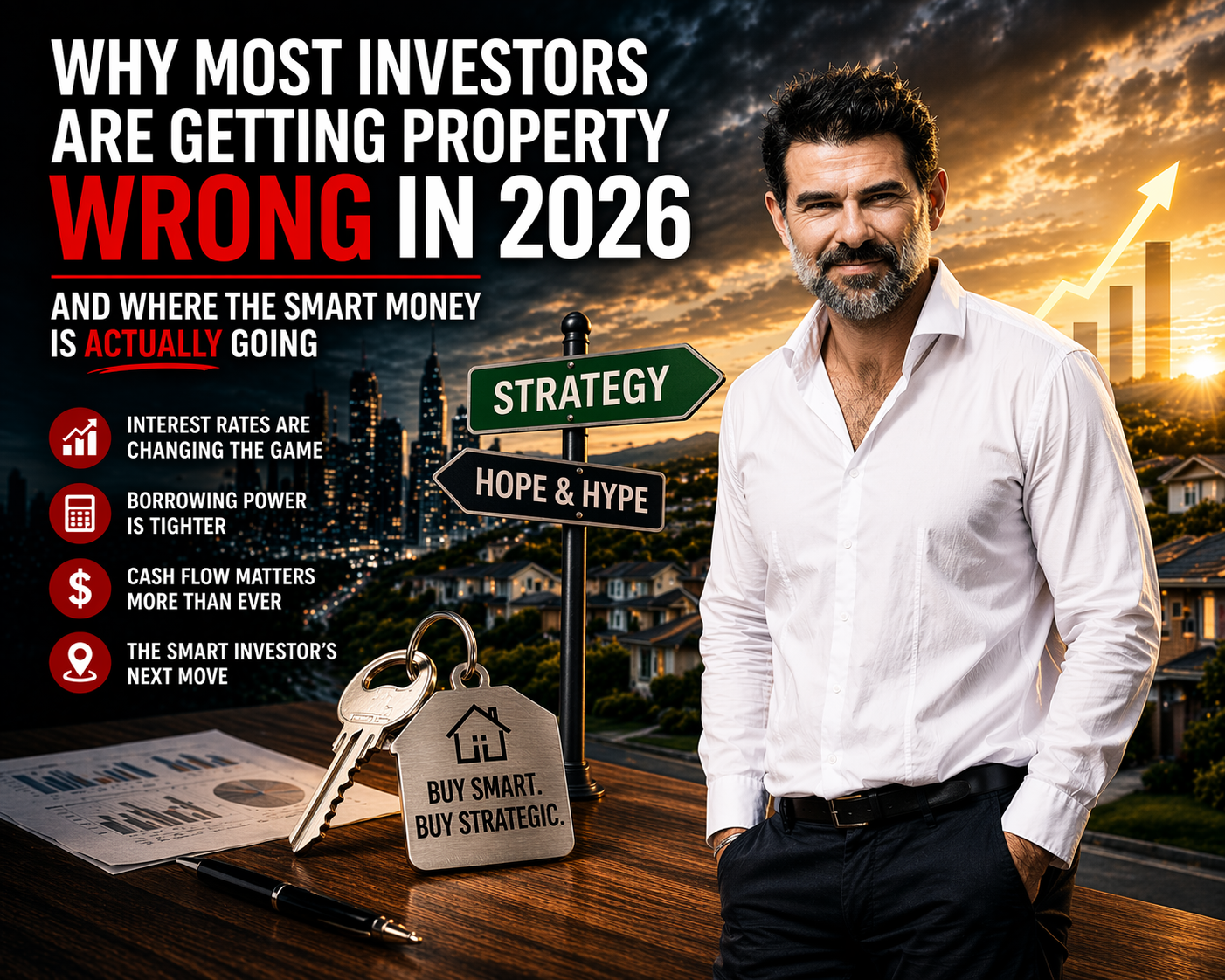
Investor Proposal Reaction: Why Most Pitch Decks Are Skipped Instantly
Investors skip most proposals because of a fundamental mismatch between the entrepreneur’s narrative and the investor’s specific mandate, risk appetite, or financial criteria. Most rejections occur within the first 60 to 90 seconds due...
Investors skip most proposals because of a fundamental mismatch between the entrepreneur’s narrative and the investor’s specific mandate, risk appetite, or financial criteria. Most rejections occur within the first 60 to 90 seconds due to poor "Founder-Market Fit," unsubstantiated financial projections, or a lack of clear unit economics that support long-term scalability.
Contents
The Psychology of the Investor Proposal Reaction
The initial reaction an investor has to a proposal is rarely a deep analytical dive; instead, it is a rapid exercise in pattern matching. In the high-stakes environment of 2026, where capital is deployed with more surgical precision than in previous decades, venture capitalists (VCs) and angel investors receive thousands of decks annually. Their primary goal is not to find a reason to say "yes," but to find a reason to say "no" as quickly as possible to protect their most finite resource: time.
This "skip" reflex is often triggered by cognitive biases. If a proposal does not align with an investor’s successful "mental models" of what a winning company looks like, they experience a negative reaction. This includes the "Complexity Bias," where an overly complicated business model is discarded in favor of one that can be articulated in a single sentence, and the "Social Proof Bias," where a lack of recognizable names (advisors, previous investors, or customers) leads to an immediate loss of interest.
Technical and Narrative Red Flags
Beyond the initial gut feeling, several structural flaws in a proposal will cause an investor to move on to the next candidate. By 2026, the standard for technical documentation and data transparency has reached an all-time high.
Failure to Establish Founder-Market Fit
One of the most common reasons for a skip is the absence of a clear connection between the founders and the problem they are solving. Investors look for "unfair advantages." If the team consists of generalists trying to disrupt a highly regulated or technical field like biotechnology or deep-tech without relevant PhDs or industry experience, the proposal reaction is one of immediate skepticism. Investors want to see that the team has lived the problem they are trying to solve.
The "Market Size" Mirage
Many founders fall into the trap of citing a massive Total Addressable Market (TAM) without explaining their Serviceable Obtainable Market (SOM). Claiming that "the global retail market is $30 trillion and we only need 1%" is a classic red flag. Investors skip these proposals because they demonstrate a lack of strategic focus. In 2026, sophisticated investors require a "bottom-up" market analysis that proves exactly how the first $10 million in revenue will be captured.
Lack of Traction Evidence
In a post-correction economy, "vibe-based" investing has been replaced by "traction-based" investing. If a proposal lacks proof of concept—be it pilot programs, signed Letters of Intent (LOIs), or month-over-month user growth—it is frequently skipped. Investors react poorly to pitches that rely entirely on future promises without a foundation of past performance.
The Role of Algorithmic Screening in 2026
As we move through 2026, the "proposal reaction" is no longer exclusively human. Many mid-to-large-scale venture firms now utilize AI-driven screening tools to perform the initial triage of incoming pitch decks. These algorithms are trained on historical data of successful exits and failed ventures.
If a proposal’s metadata or core text does not contain specific keywords, financial benchmarks, or ESG (Environmental, Social, and Governance) compliance markers, it may be automatically filtered out before a human partner ever sees it. This makes the technical precision of the deck’s language more critical than ever. Common "algorithmic skips" occur when the burn rate is inconsistent with the industry average or when the competitive landscape analysis is deemed incomplete compared to the algorithm's proprietary database.
Financial Misalignment and Unit Economics
A significant portion of investors skip proposals because the financial modeling is either too optimistic or fails to account for the "Cost of Goods Sold" (COGS) in a realistic manner.
| Feature | Retention Signal (Why They Stay) | Skip Trigger (Why They Skip) |
|---|---|---|
| Unit Economics | Positive LTV/CAC ratio from day one. | High customer acquisition costs with no path to recovery. |
| Revenue Model | Clear, recurring, or high-margin transactional. | Vague "monetization via data" or ad-based models. |
| Use of Funds | Specific allocation toward R&D and scaling. | Vague categories like "Marketing" or "General Operations." |
| Burn Rate | Sustainable runway (18–24 months). | Aggressive burn with less than 6 months of runway. |
| Exit Strategy | Logical list of potential acquirers or IPO path. | No clear exit or "we don't plan to sell." |
Investors look for the "LTV to CAC" ratio (Lifetime Value to Customer Acquisition Cost). If the cost to acquire a customer is higher than the value that customer brings in over their lifetime—and there is no clear technical roadmap to flip that ratio—the proposal is discarded as a "lifestyle business" rather than a scalable venture.
The Narrative "Bridge" Problem
Even with great numbers, a proposal can be skipped if the narrative bridge is broken. The narrative bridge is the logical flow from "The Problem" to "The Solution" to "The Business Model." If there is a disconnect—for example, if the problem is a global supply chain crisis but the solution is a niche B2C app—the investor’s brain will register a "logic gap."
When an investor encounters a logic gap, they experience cognitive dissonance. Rather than spending fifteen minutes trying to figure out how the founder plans to bridge that gap, they simply hit the "delete" key. Clarity of thought is often equated with clarity of execution. A muddled proposal suggests a muddled business operation.
Operational and Legal Prerequisites
Sometimes, the skip has nothing to do with the idea or the team, but with the lack of "investment readiness." Institutional investors have strict compliance checklists that must be met before they can even consider a deal.
- Corporate Structure: Most US-based VCs require a Delaware C-Corp structure. If a company is structured as an LLC or a different entity that creates tax headaches for LPs (Limited Partners), it’s an instant skip.
- Intellectual Property (IP): If the core technology is not clearly owned by the company (e.g., it was developed at a university without a clear license agreement), the risk is too high.
- Cap Table Health: If the "dead equity" (equity held by founders who have left or non-active advisors) is too high, it disincentivizes the current team. Investors will skip because they don't want to spend their time "cleaning up" a messy cap table.
- Jurisdictional Limits: Many funds are restricted by their own charters to invest only in certain geographical regions. Submitting a proposal to a fund that does not cover your region is a guaranteed way to be skipped.
How to Pivot the Reaction from "Skip" to "Schedule"
To avoid the skip, a proposal must address the investor's primary fears immediately. This is achieved by leading with the strongest data point. If the team is the strongest asset, start with the team. If it’s the revenue growth, start with the traction chart.
In 2026, "Interactive Decks"—web-based proposals that allow investors to toggle between data layers—have become a standard for getting past the initial skip. These tools allow an investor to verify claims in real-time, reducing the friction of the due diligence process. Transparency is the antidote to the skip reflex.
FAQ
Why do investors say "I love the idea but it's too early"?
This is often a polite way of saying the proposal was skipped because it lacks the necessary traction to de-risk the investment. In the investor's mind, the "reaction" was that the current evidence does not justify the valuation or the capital requested at this specific time.
Does the design of the proposal really matter?
While a beautiful deck won't save a bad business, a poorly designed, cluttered, or difficult-to-read deck will almost always cause a skip. Design is a proxy for professional standards. If a founder cannot produce a clean 10-slide deck, an investor will doubt their ability to build a world-class product.
How much weight is given to the "Exit Strategy" in 2026?
Significant weight. Since the IPO market remained volatile through the mid-2020s, investors are hypersensitive to M&A (Mergers and Acquisitions) potential. If your proposal doesn't list 3-5 logical companies that would buy you in five years, it suggests you haven't thought about how the investor will actually get their money back.
Is it better to send a teaser or a full proposal?
In 2026, the "teaser" (a 1-2 page executive summary) is the preferred entry point. Sending a massive 50-page document for an initial cold contact is a high-friction move that usually results in an immediate skip. The teaser is designed to trigger a positive reaction and a request for the full deck.
What is "Thesis Mismatch"?
A thesis mismatch occurs when a founder pitches a firm that doesn't invest in their sector. For example, pitching a FinTech fund a "sustainable agriculture" project. This is the most common reason for a skip and is entirely preventable through proper research.
Practical Recommendation
To minimize the chances of your proposal being skipped, conduct a "60-second stress test." Give your deck to someone who knows nothing about your business and ask them to tell you what you do, how you make money, and why you will win within one minute. If they cannot answer those three questions, your proposal is at high risk of being skipped by an investor. Ensure all financial data is compliant with the latest 2026 reporting standards and that your corporate structure is "investment-ready" before your first outreach.
Image Gallery