Why Are People Wearing Masks Again? Understanding the 2026 Health Landscape
People are wearing masks again primarily due to the seasonal resurgence of respiratory viruses like COVID-19, influenza, and RSV, alongside deteriorating air quality from regional wildfires. While official mandates are now rare, indivi...
People are wearing masks again primarily due to the seasonal resurgence of respiratory viruses like COVID-19, influenza, and RSV, alongside deteriorating air quality from regional wildfires. While official mandates are now rare, individuals utilize high-filtration masks as a voluntary, evidence-based tool to manage personal health risks and prevent workplace absenteeism.
Contents
The Seasonal Triple Threat: COVID-19, Flu, and RSV in 2026
As we move through the 2025–2026 viral season, the phenomenon of the "tripledemic" has become a predictable, albeit challenging, reality for public health. Unlike the early years of the decade where one virus often dominated, the current landscape involves the simultaneous circulation of multiple respiratory pathogens. This overlap creates a cumulative pressure on healthcare systems and individual immune responses.
COVID-19 has transitioned into an endemic state, but its ability to evolve remains its most persistent trait. The lineages circulating in 2026, largely descendants of the JN.1 and BA.2.86 branches, exhibit significant immune evasion. Even for those with prior infections or updated vaccinations, these sub-variants can cause disruptive, if not severe, illness. Masking serves as a primary mechanical barrier that remains effective regardless of a virus's genetic mutations.
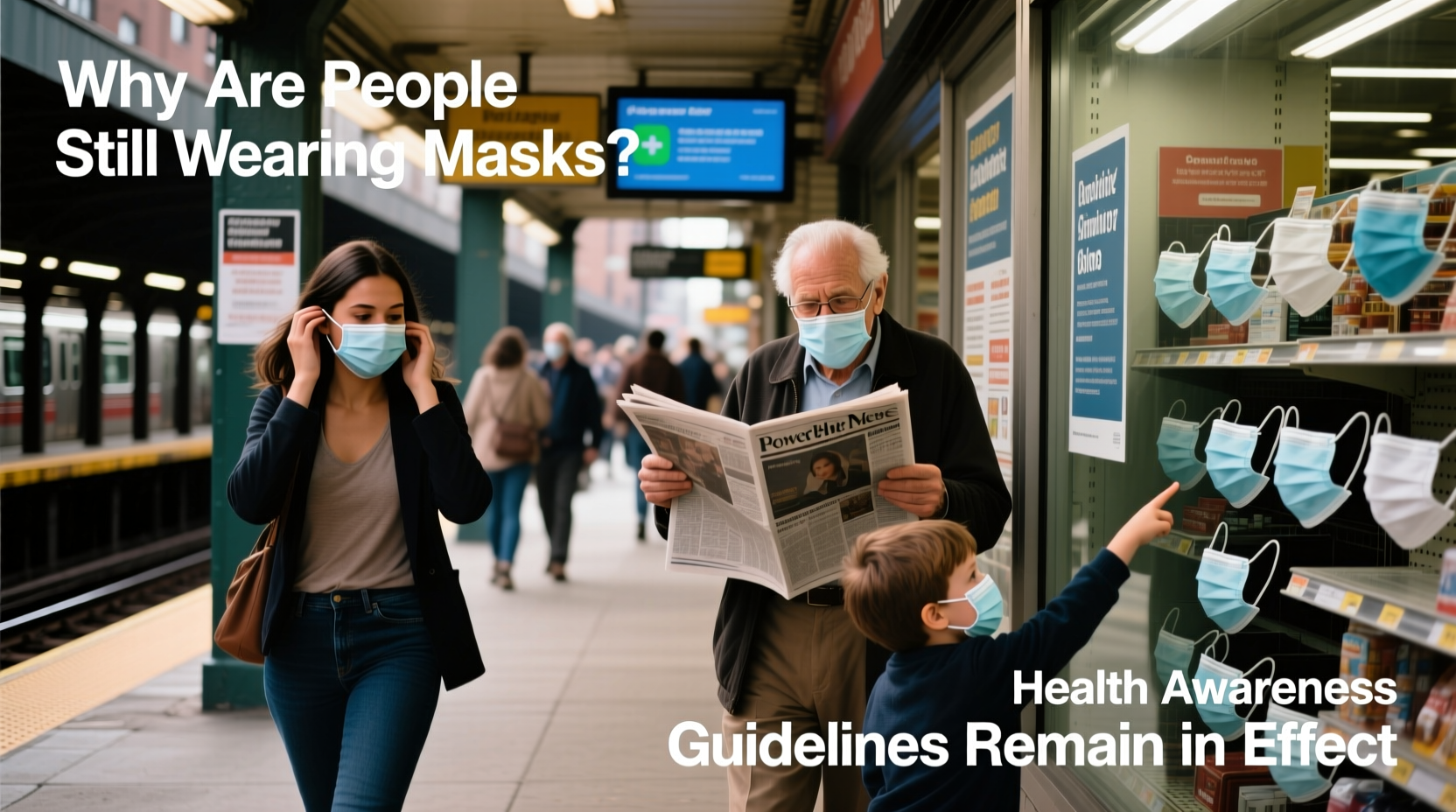
Influenza and Respiratory Syncytial Virus (RSV) have also returned to traditional seasonal patterns, but with increased intensity in certain urban corridors. For many professionals, the decision to wear a mask in high-density environments—such as subways or open-plan offices—is a pragmatic choice to avoid losing a week of productivity to illness. The normalization of respiratory protection means that masking is no longer viewed as an emergency response, but as a standard component of seasonal wellness, much like getting a vitamin booster or an annual shot.
Environmental Triggers: Air Quality and Particulate Matter
While biological pathogens are a major driver, environmental factors have increasingly dictated masking behavior in 2026. Data from the Environmental Protection Agency (EPA) shows that the frequency of "unhealthy" Air Quality Index (AQI) days has risen due to prolonged wildfire seasons and stagnant urban air masses. These conditions release high concentrations of PM2.5—fine particulate matter that is 2.5 micrometers or smaller in diameter.
PM2.5 is particularly hazardous because it is small enough to bypass the body's natural filtration systems in the nose and throat, penetrating deep into the lungs and entering the bloodstream. For individuals with asthma, COPD, or cardiovascular issues, masking is a medical necessity when AQI levels exceed 100. High-filtration masks like N95s and KF94s are specifically designed to filter out these fine particulates, providing a level of protection that surgical or cloth masks cannot match.
In many regions, people are now checking their weather apps for air quality just as frequently as they check for rain. If the sky appears hazy or the local sensors indicate elevated smoke levels, the appearance of masks in the community increases almost instantly. This reflects a more sophisticated public understanding of how environmental pollutants affect long-term lung health and systemic inflammation.
The Cultural Shift Toward Voluntary Precaution
One of the most significant changes observed by 2026 is the decoupling of masking from government mandates. In the early 2020s, masking was often a matter of legal requirement or intense social debate. Today, the practice is largely driven by personal risk assessment and a "one-way masking" philosophy.
One-way masking refers to the efficacy of high-quality respirators (N95, FFP2) in protecting the wearer even if those around them are unmasked. This shift has empowered individuals to take control of their own health without waiting for institutional directives. Research from the World Health Organization (WHO) continues to emphasize that consistent use of well-fitted respirators significantly reduces the viral load an individual inhales, which can mean the difference between a mild infection and a severe one.
Furthermore, there is a burgeoning sense of social etiquette regarding illness. It is increasingly common to see individuals wearing masks in public spaces if they have a minor cough or "scratchy throat," even if they haven't tested positive for a specific virus. This "source control" approach—masking to protect others—is a habit that has stuck in many communities, mirroring long-standing cultural norms in East Asian countries.
Comparing Respiratory Protection Options in 2026
Not all masks provide the same level of protection against the various threats present today. Choosing the right tool depends on whether the goal is protection from large droplets, fine aerosols, or environmental pollutants.
| Mask Type | Filtration Efficiency | Primary Use Case | Fit and Breathability |
|---|---|---|---|
| N95 Respirator | >95% of 0.3-micron particles | Maximum protection against viruses and PM2.5 smoke. | Tight seal; may feel restrictive during heavy exercise. |
| KF94 / KN95 | ~94-95% of particles | High-risk settings (travel, crowds, hospitals). | Boat-shape or ear-loop design; generally more comfortable for long wear. |
| Surgical Mask | ~60-80% (varies by fit) | Basic source control; prevents spreading your own droplets. | Loose fit allows significant "leakage" around the sides. |
| Cloth Mask | <50% (variable) | Low-risk outdoor settings; primarily aesthetic or minimal barrier. | High breathability but offers minimal protection against modern variants. |
Protecting Vulnerable Populations and the Immunocompromised
For the millions of people living with primary immunodeficiency, undergoing chemotherapy, or managing organ transplants, the world in 2026 remains a high-stakes environment. While the general population may perceive the current viral variants as "mild," these same strains can be life-threatening for those with weakened immune systems.
People are wearing masks again to create a "cocoon" of safety around these vulnerable individuals. When a family member is high-risk, the entire household often adopts masking in public to prevent bringing pathogens home. In clinical settings and senior living facilities, masking remains a standard of care during the peak winter months.
Advancements in mask technology by 2026 have also led to the development of "transparent respirators"—N95-grade masks with clear windows that allow for lip-reading and better social interaction. These have become popular among educators and healthcare workers who need to maintain high safety standards without sacrificing the nuances of human communication, particularly when working with the hearing-impaired.
The Economics of Masking: Preventing Workplace Disruption
From a corporate perspective, masking has emerged as a tool for economic stability. Large employers have noted that during high-transmission weeks, the cost of absenteeism far outweighs the minor inconvenience of encouraging respiratory protection. In 2026, many "smart offices" utilize CO2 monitors to track ventilation quality; when CO2 levels rise (indicating poor air exchange), automated systems may suggest that employees in communal areas mask up.
The "return to office" mandates of the mid-2020s have also played a role. As more people spend 40 hours a week in shared air spaces, the likelihood of "office-wide" outbreaks increases. Many employees choose to mask during their morning commute on public transit specifically to ensure they don't miss important meetings or project deadlines due to preventable illness. This pragmatic, productivity-focused motivation is a key reason why masking remains visible in the professional world.
Frequently Asked Questions
Do masks still work against the latest 2026 variants?
Yes. While some variants have evolved to be more contagious, the physical size of the viral particles has not changed. High-filtration respirators like N95s work through a combination of mechanical filtration and electrostatic charge, which effectively traps virus-carrying aerosols regardless of the specific genetic mutations of the virus.
Why do some people wear masks outdoors?
Outdoor masking is typically linked to air quality issues. When wildfire smoke or urban smog reaches levels that are hazardous to health (usually an AQI above 100), an N95 mask is the most effective way to filter out fine particulate matter (PM2.5) that can cause immediate respiratory distress and long-term cardiovascular issues.
Are there any mandates currently in place?
In 2026, mandates are almost exclusively limited to specific high-risk settings, such as oncology wards, emergency rooms, and certain long-term care facilities. Most masking seen in public spaces like grocery stores or airports is entirely voluntary and based on personal health assessments or local health department "strong recommendations" during peak surges.
What is the best mask for long-duration travel?
For long flights or train rides, KF94 or KN95 masks are often preferred because they provide high levels of filtration while offering a more comfortable fit around the ears and nose compared to the tight head-straps of a standard N95. However, for the highest level of security in crowded, poorly ventilated terminals, a NIOSH-approved N95 remains the gold standard.
Is it still necessary to mask if I am up to date on my vaccines?
Vaccines are highly effective at preventing severe disease, hospitalization, and death. However, they do not always prevent "breakthrough" infections or the potential for long-term complications like Long COVID. Masking provides an additional layer of protection, reducing the initial viral load you might be exposed to, which often correlates with a milder course of illness if an infection does occur.
Practical Recommendation for 2026
Given the current health landscape, the most effective approach is to maintain a "situational awareness" of your environment. Keep a high-quality (N95 or KF94) mask in your bag or car. Monitor local air quality and viral transmission levels through reputable sources. If you find yourself in a crowded, poorly ventilated space, or if the AQI is in the "unhealthy" range, donning a mask is a simple, low-cost intervention that protects your long-term health and prevents immediate disruption to your daily life.
Image Gallery