Driver Requirements for Listing on an Auto Insurance Policy
To list a driver on an auto insurance policy, insurance companies require their full legal name, date of birth, driver's license number, state of issuance, and relationship to the primary policyholder. Carriers mandate that all license...
To list a driver on an auto insurance policy, insurance companies require their full legal name, date of birth, driver's license number, state of issuance, and relationship to the primary policyholder. Carriers mandate that all licensed household members and any regular, unlisted operators of the covered vehicles be disclosed for underwriting and risk evaluation.
Contents
Mandatory vs. Optional: Who Must Be Listed on Your Auto Insurance Policy?
Auto insurance contracts are legally binding financial agreements built on accurate risk assessment. When an insurer underwrites a personal auto policy, pricing is calculated based on the combined risk profile of every individual who has regular access to the insured vehicles. Failing to disclose eligible drivers alters this risk evaluation and can undermine your coverage when a claim occurs.
Household Members
As a general rule, auto insurance carriers operate under the legal presumption that anyone living under your roof who holds a valid driver's license has access to your vehicles. Underwriting guidelines typically require policyholders to list all resident relatives, including:
- Spouses and Domestic Partners: Even if a spouse rarely drives or owns another vehicle registered under a separate policy, most insurance contracts require them to be listed as a named insured or driver.
- Licensed Children and Dependents: High school and college-aged drivers living at home must be listed as soon as they receive their full, unrestricted driver's license (and in some jurisdictions, while holding a learner's permit).
- Extended Family Members: Parents, siblings, adult children, or in-laws residing in the same household must be declared on the policy.
Regular Non-Household Operators
Physical residence is not the sole factor determining whether a driver must be listed. Insurance companies also examine vehicle usage patterns. Any individual who does not live in your home but regularly drives your vehicle must be declared to the insurer. Common examples include:
- Caregivers and Nannies: Household employees or trusted aides who drive your car to transport family members or run errands multiple times per week.
- Carpool Partners: Friends or co-workers who share driving duties using your vehicle on a recurring schedule.
- Non-Resident Partners: Significant others who maintain a separate address but frequently visit, sleep over, or borrow your automobile.
Permissive Use Exceptions
Not every person who operates your car needs to be explicitly listed on your policy documents. Most standard auto policies contain a clause known as permissive use. Permissive use provides coverage when an unlisted individual drives your car under specific conditions:
- Infrequent Operation: The person drives the vehicle only occasionally (e.g., borrowing the car for a single afternoon or driving during a trip emergency).
- Explicit Consent: The policyholder gave clear verbal or written permission for the driver to operate the vehicle.
- Non-Resident Status: The driver does not reside in the policyholder's household.
Permissive use is designed for unexpected or rare circumstances. It is not a substitute for listing regular operators, and insurance companies will investigate claims to verify whether an unlisted driver meets true permissive use criteria or should have been listed beforehand.
Standard Driver Eligibility and Documentation Requirements
When adding a driver to an auto insurance policy, insurance companies enforce strict documentation standards to verify identity, eligibility, and driving history. Gathering these details beforehand streamlines the policy update process.
| Driver Listing Checklist | Requirements |
|---|---|
| 1. Personal Information | Full Legal Name, Date of Birth, Social Security No. |
| 2. Licensing Details | Active Driver's License Number & Issuing State |
| 3. Residence Status | Proof of Household Address or Student Verification |
| 4. Driving Record | Motor Vehicle Record (MVR) & Claims History (CLUE) |
| 5. Vehicle Assignment | Designated Primary Vehicle & Annual Mileage Estimate |
Valid Driver's License Status
To be added as an active driver, the individual must possess an active, valid driver's license issued by a U.S. state, territory, or recognized international jurisdiction. Insurers will check the status of the license directly through state departments of motor vehicles (DMVs).
- Learner's Permits: Many insurance carriers permit household teens with a learner's permit to be covered under the parents' policy at no additional charge until they receive their provisional or unrestricted license. However, you must still notify the carrier when the permit is issued.
- Suspended or Revoked Licenses: Individuals with a suspended, revoked, or expired license cannot be listed as active operators. Depending on state law and company guidelines, these individuals must either be designated as non-drivers or officially excluded from the policy.
- Foreign or International Licenses: Drivers holding an international driving permit (IDP) or a license from another country can often be listed, though insurers may require an official translation, proof of local residency, or a transition to a state-issued license within a specified timeframe (typically 30 to 90 days).
Required Personal Identification and Demographics
Underwriters analyze demographic factors to assess driver risk accurately. When submitting a request to list a new driver, you must provide:
- Full Legal Name: As displayed on official state identification or passport.
- Date of Birth: Essential for establishing age-based underwriting tiers.
- Social Security Number (SSN): Used to verify identity, check credit-based insurance scores (where allowed by state law), and pull historical driving records.
- Relationship to Named Insured: Indicates whether the individual is a spouse, child, relative, roommate, or non-relative.
Driving History and Background Verification
Once personal information is submitted, the insurance company requests two key background reports:
- Motor Vehicle Record (MVR): Tracks driving violations, moving infractions, speed convictions, license suspensions, and driving under the influence (DUI) offenses over the past 3 to 7 years.
- Comprehensive Loss Underwriting Exchange (C.L.U.E.) Report: A centralized database managed by LexisNexis that records auto insurance claims history associated with the driver over a 5- to 7-year period.
High-risk driving records, multiple moving violations, or prior at-fault accidents will result in higher policy premiums and may require specialized non-standard auto coverage.
Driver Classifications on an Auto Policy
Not every person listed on an insurance policy carries the same legal rights, responsibilities, or financial coverage limits. Insurance policies classify individuals into specific categories:
| Driver Classification | Policy Rights | Standard Coverage Level | Can Make Policy Changes? | Impact on Premium |
|---|---|---|---|---|
| Named Insured (Primary) | Full legal ownership of policy contract | Full coverage across all listed vehicles | Yes (Add/remove coverage, cancel policy) | Primary baseline for policy rate |
| Listed / Additional Driver | Authorized operator of policy vehicles | Covered under primary policy limits | No (Cannot alter policy terms) | Increases or decreases based on MVR |
| Excluded Driver | Expressly restricted from driving policy vehicles | Zero coverage (No defense or liability) | No | Eliminates risk/cost for that individual |
| Permissive User | Temporary, infrequent operator | Policy limits apply (Subject to state rules) | No | None (Unless an accident occurs) |
Named Insured vs. Listed Driver
The Named Insured (often the vehicle owner and policy purchaser) owns the insurance contract, holds sole authority to alter policy terms, and bears primary responsibility for paying premiums. A Listed Driver (or additional driver) receives protection under the policy's liability, collision, and comprehensive coverages when operating covered vehicles, but lacks administrative control over the policy.
Special Scenarios: Teen Drivers, College Students, and Roommates
Handling driver requirements can become complex when dealing with young drivers, college students living away from home, or unrelated roommates.
House Rules for Household Drivers
- Teen Drivers
- Must list upon getting full license.
- Eligible for Good Student Discounts.
- College Students
- Keep on policy if home address is primary.
- Discount if school > 100 miles without car.
- Roommates
- Must list OR submit Named Exclusion.
- Avoid assuming permissive use applies.
Newly Licensed Teen Drivers
Teenage drivers represent the highest-risk demographic for auto insurers due to lack of driving experience.
- When to Notify: You must contact your insurance provider as soon as your teenager transitions from a learner's permit to a driver's license. Delaying notification can result in denied claims if an accident occurs during that unnotified window.
- Cost Management: While adding a teenager increases premiums significantly, policyholders can offset costs through Good Student Discounts (typically requiring a B average / 3.0 GPA or higher), driver training course completions, and assigning the teen to the oldest, safest vehicle on the policy.
Students Living Away at College
Whether a college student must remain on your policy depends on vehicle ownership and physical residence rules:
- Student Takes a Car to School: The student must remain listed on the family policy, and the policy's garaging location must be updated to the student's campus address if it resides in a different ZIP code or state.
- Student Leaves Car at Home: If the student attends school more than 100 miles away from home and does not bring a car, insurance companies often allow them to stay listed at a significantly discounted rate (commonly called a "Student Away at School" discount). This maintains continuous insurance history for the student while reflecting their reduced access to the vehicle.
Roommates and Unrelated Household Members
Unrelated roommates sharing an apartment or home present a common insurance gray area. Because roommates reside under the same roof, insurers generally presume access to key hooks and parked vehicles.
- If They Drive Your Car: They must be added as a listed driver.
- If They Have Their Own Car and Insurance: You must provide proof of their separate insurance coverage (such as a Declarations Page) to your carrier to exclude or omit them from your policy.
- If They Never Drive Your Car: You must either list them, prove separate coverage, or execute a Named Driver Exclusion depending on state regulations.
Named Driver Exclusions: How and When to Exclude a Driver
A Named Driver Exclusion is a formal endorsement attached to an auto policy stating that a specific individual is explicitly prohibited from operating any vehicle listed on the policy.
CRITICAL WARNING: DRIVER EXCLUSIONS
Signing a Named Driver Exclusion completely removes insurance protection for that person. If an excluded driver operates your vehicle and causes an accident:
- Liability Coverage: DENIED
- Collision & Property Damage: DENIED
- Legal Defense Protection: DENIED
- Personal Liability: You and the driver are personally responsible for ALL damages.
Reasons to Use an Exclusion
Policyholders typically execute driver exclusions in two main scenarios:
- High-Risk Household Members: If a household member has a severe driving history (e.g., multiple DUIs, major reckless driving charges, or a license suspension), adding them would make policy premiums unaffordable or cause the carrier to non-renew the policy. Excluding them isolates their risk from the rest of the household.
- Licensed Non-Drivers: Elderly family members who no longer drive, or adult relatives with separate vehicles and policies who will never operate your car.
Legal Limitations and State Variations
Driver exclusions are governed by state law and are not legal in every jurisdiction:
- Permitted States: Many states allow named driver exclusions to give families an affordable option to maintain insurance while excluding high-risk drivers.
- Restricted/Prohibited States: Several states restrict or completely prohibit named driver exclusions (particularly for mandatory minimum liability coverages) to protect public safety and ensure accident victims receive compensation. Check with your state's department of insurance—such as the National Association of Insurance Commissioners (NAIC) directory—to confirm local regulations.
Financial and Legal Risks of Unlisted Drivers
Failing to list required household drivers or regular operators to keep insurance premiums artificially low carries severe legal and financial consequences.
Claim Denials and Material Misrepresentation
When an unlisted household member gets into an accident, the insurance company will conduct a claims investigation. If the adjuster discovers that the driver resides in the household or operates the car regularly, the carrier may deny the claim under the principle of material misrepresentation.
Material misrepresentation occurs when a policyholder intentionally withhold or falsifies key information that would have altered the insurer's underwriting decision or premium calculation. A claim denial leaves the policyholder personally responsible for medical bills, vehicle repairs, and third-party property damage.
Policy Cancellation and Back-Billing
If an undisclosed driver is discovered, insurance companies may take corrective action:
- Retroactive Premium Back-Billing: The insurer may calculate the premiums you should have paid had the driver been properly listed from the day they joined the household, adding that balance immediately to your account bill.
- Policy Rescission or Cancellation: The insurer may cancel your policy for misrepresentation, making it difficult and more expensive to secure coverage with other insurance carriers in the future.
- SR-22 and High-Risk Classification: Driver non-disclosure leading to cancellation can classify you as a high-risk applicant, forcing you into non-standard insurance markets with elevated rates.
Step-by-Step Guide: How to Add a Driver to Your Auto Policy
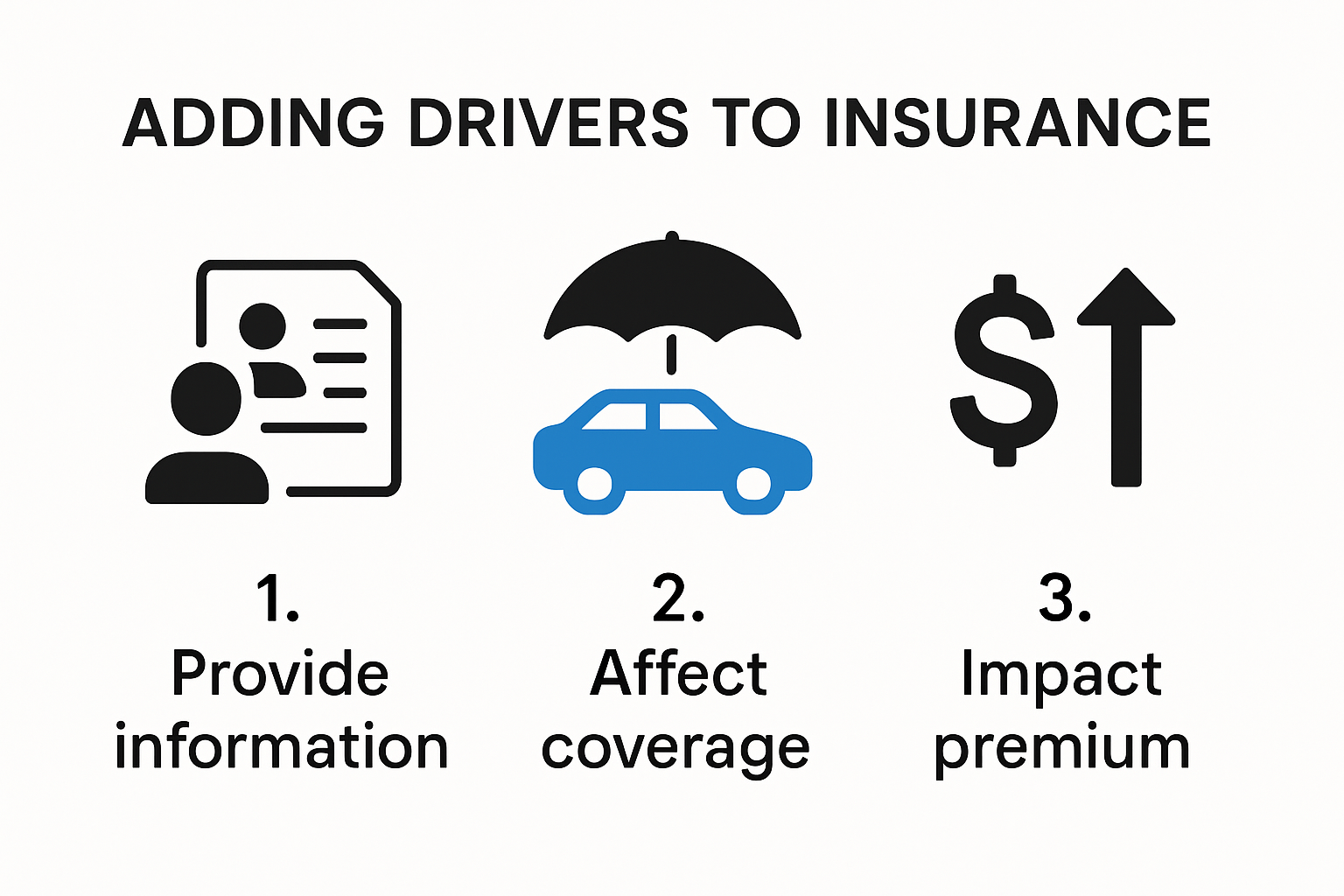
Adding a driver to an existing auto insurance policy is a straight-forward process when done correctly:
- Gather Required Documents: Collect the driver's full legal name, date of birth, Social Security Number, and active driver's license number.
- Review Garaging and Usage: Determine which vehicle the new driver will primarily operate and estimate their annual mileage contribution.
- Contact Your Insurer or Agent: Submit the request online via your portal, mobile app, or directly through your licensed insurance agent.
- Evaluate Discount Eligibility: Request available discounts, such as multi-driver savings, Good Student discounts, or defensive driver course completion credits.
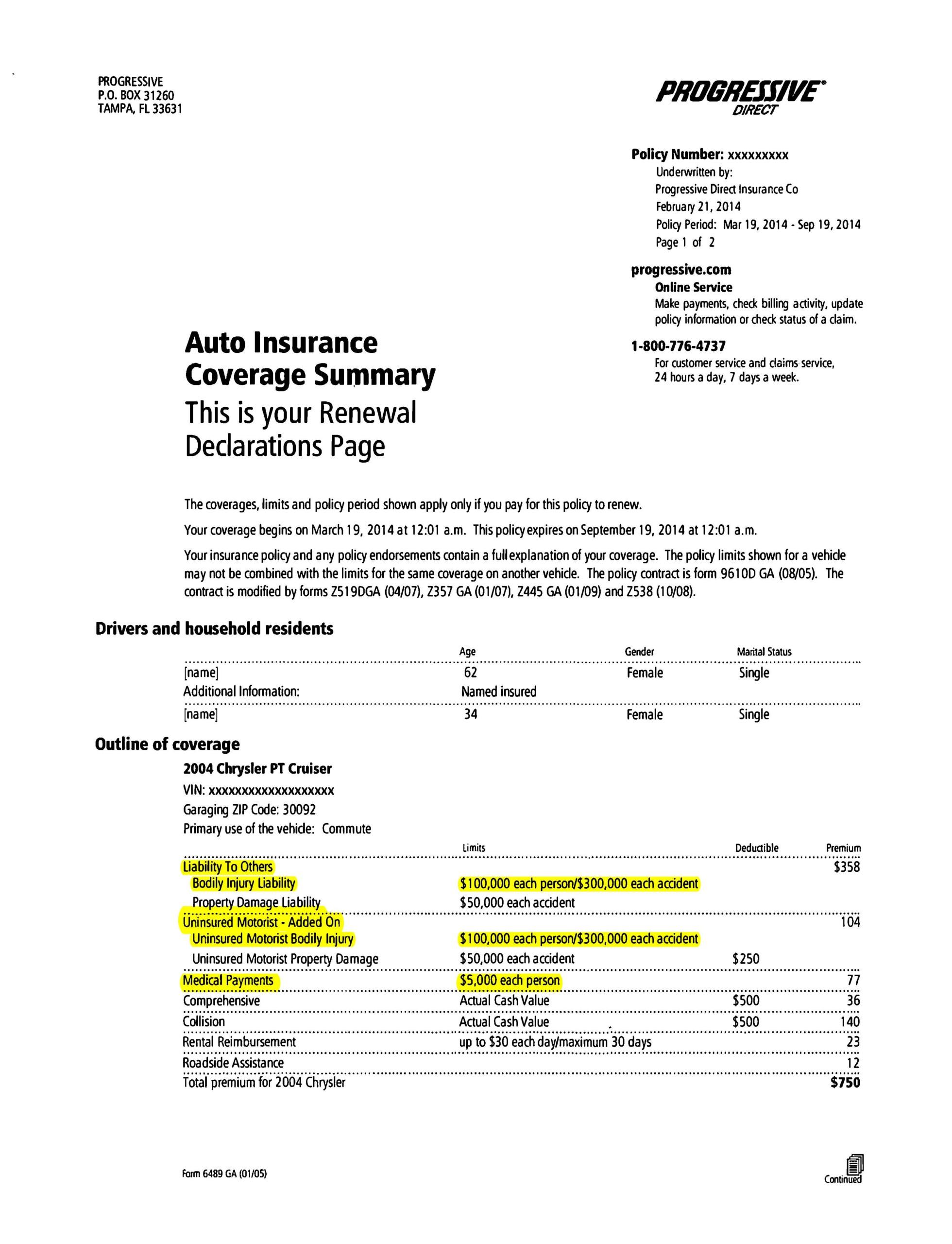
- Review the Updated Declarations Page: Once processed, verify the new driver's details on your updated policy Declarations Page to confirm accuracy and coverage effective dates.
Frequently Asked Questions
Do I need to list my roommate on my auto insurance policy?
Yes, most auto insurance companies require you to disclose all licensed household members, including unrelated roommates. If your roommate has their own car and insurance policy, you can usually avoid adding them to your coverage by providing proof of their independent insurance to your provider. If they do not drive your vehicle and do not have insurance, your insurer may require you to sign a Named Driver Exclusion.
Can I list a driver who does not live with me on my insurance policy?
You can list a non-resident driver if they drive your insured vehicle on a regular basis (such as a caregiver, shared carpool driver, or child with joint custody). However, if the non-resident driver is the primary driver and garaging the car at a different address permanently, the vehicle may need its own separate policy rated for that specific location.
What happens if an unlisted driver gets into an accident in my car?
If the driver had your permission to borrow the car infrequently and does not live in your household, the accident is generally covered under your policy's permissive use clause. However, if the unlisted driver lives in your home or drives the car regularly, the insurance company may deny coverage for the claim, cancel your policy, or back-bill you for uncollected premiums due to non-disclosure.
Does a teenager with a learner's permit need to be listed on insurance?
In most states and with most insurance carriers, you must notify your insurance company when a household member receives a learner's permit. While many insurers do not charge an additional premium until the driver obtains a full, unrestricted license, failure to inform your carrier can complicate coverage if an accident occurs during instruction.
What is the difference between a named insured and a listed driver?
A named insured is the contract holder who owns the policy, makes payments, and has authority to alter coverage terms or add/remove drivers and vehicles. A listed driver is an authorized operator approved to drive the covered vehicles under the terms of the policy, but they cannot make administrative changes or alter policy limits.
Recommended Action Plan
To ensure your vehicle and finances remain fully protected:
- Conduct an Annual Household Audit: Review your policy Declarations Page annually to ensure all licensed family members, teenagers, and regular operators are accurately listed.
- Promptly Report Life Changes: Notify your insurance provider immediately when a household member earns a license, a college student moves off to campus, or a long-term partner moves into your home.
- Consult Your State Regulator: For questions regarding state-specific insurance mandates and driver exclusion rules, visit the official site of the National Association of Insurance Commissioners (NAIC) to access your local state insurance department resources.
Disclaimer: Auto insurance requirements, permissive use definitions, and driver exclusion laws vary significantly by state and carrier contract. Consult a licensed insurance professional or your state's department of insurance for personalized legal and policy guidance.
Image Gallery