Comprehensive Guide to Treatment Options for Psoriatic Arthritis
Psoriatic arthritis treatment focuses on controlling systemic inflammation, alleviating joint pain, preventing structural bone and joint damage, and clearing skin lesions. Modern management incorporates nonsteroidal anti-inflammatory d...
Psoriatic arthritis treatment focuses on controlling systemic inflammation, alleviating joint pain, preventing structural bone and joint damage, and clearing skin lesions. Modern management incorporates nonsteroidal anti-inflammatory drugs (NSAIDs), conventional synthetic disease-modifying antirheumatic drugs (csDMARDs), targeted biologic therapies, oral small molecules, physical therapy, and customized lifestyle adjustments tailored to individual disease manifestations.
Contents
Medical Disclaimer: The information presented here is for educational purposes only and should not replace professional medical advice, diagnosis, or treatment. Always consult a qualified healthcare provider or rheumatologist regarding specific health conditions.
Understanding Psoriatic Arthritis and Treatment Goals
Psoriatic arthritis (PsA) is a chronic, immune-mediated inflammatory disorder affecting joints, entheses (where tendons and ligaments insert into bone), skin, and nails. Approximately 30 percent of individuals diagnosed with psoriasis eventually develop psoriatic arthritis. Without effective therapy, persistent joint inflammation leads to irreversible structural damage, severe pain, reduced mobility, and diminished quality of life.
The management of psoriatic arthritis has evolved beyond simple symptom relief toward targeted therapeutic strategies aimed at altering disease progression. Current medical guidelines prioritize achieving clinical remission or low disease activity (LDA) through a treat-to-target approach. Establishing control over systemic inflammation protects joint structures, reduces cardiovascular comorbidities associated with systemic inflammation, and improves overall physical function.
Because psoriatic arthritis manifests heterogeneously—affecting different body sites in varying combinations—treatment plans are highly individualized. Clinical decisions depend on which domains are active: peripheral joints, axial skeleton (spine and sacroiliac joints), enthesitis (inflammation of tendon insertion sites), dactylitis ("sausage digits"), skin, or nail disease.
First-Line Therapies: NSAIDs and Corticosteroids
For mild cases of psoriatic arthritis, initial therapy often begins with symptomatic treatments designed to control immediate pain and swelling, though these medications do not stop long-term structural joint damage.
- Initial Clinical Assessment & Diagnosis
- Mild Symptom Management: NSAIDs & Local Steroid Injections
- Domain-Specific Initial Treatment:
- Peripheral Joint Dominant: csDMARDs (Methotrexate, etc.)
- Axial / Enthesitis Dominant: Biologics (bDMARDs) (TNF or IL-17 Inhibitors)
- Advanced/Refractory Disease: Targeted Biologics / tsDMARDs (IL-23, JAK Inhibitors, PDE4 Inhibitors)
Nonsteroidal Anti-Inflammatory Drugs (NSAIDs)
NSAIDs reduce pain and localized swelling by inhibiting cyclooxygenase (COX) enzymes, thereby blocking the synthesis of pro-inflammatory prostaglandins. Common agents include ibuprofen, naproxen, meloxicam, and celecoxib.
- Indications: Mild peripheral joint involvement without evidence of progressive structural damage.
- Limitations: NSAIDs address symptoms but do not prevent joint erosion or alter underlying immune dysregulation.
- Safety Considerations: Long-term use requires monitoring due to potential gastrointestinal mucosal bleeding, increased blood pressure, reduced renal function, and elevated cardiovascular risks.
Corticosteroids
Systemic and intra-articular corticosteroids provide rapid anti-inflammatory action during acute inflammatory flares.
- Intra-Articular Injections: Corticosteroid injections directly into inflamed joints or tendon sheaths deliver localized relief with minimal systemic side effects. They are particularly useful for monoarthritis or severe localized enthesitis.
- Systemic Corticosteroids: Oral prednisone is generally used sparingly in psoriatic arthritis. Rapid withdrawal or tapering of oral steroids can trigger severe pustular flares of underlying skin psoriasis. When systemic steroids are necessary, they are administered at the lowest effective dose for short durations.
Conventional Synthetic DMARDs (csDMARDs)
When joint swelling and systemic inflammation persist despite first-line agents, rheumatologists introduce disease-modifying antirheumatic drugs. csDMARDs suppress broader immune pathways to reduce structural damage over time.
Methotrexate
Methotrexate remains the most widely prescribed conventional DMARD for psoriatic arthritis. It works by interfering with folate metabolism, inhibiting rapidly dividing cells, and accumulating adenosine, which exerts a broad anti-inflammatory effect.
- Clinical Efficacy: Effective for peripheral joint arthritis and co-existing skin psoriasis. It has limited efficacy for axial spinal disease or isolated enthesitis.
- Administration: Administered orally or subcutaneously once weekly, supplemented with folic acid to minimize adverse effects.
- Monitoring: Requires regular blood tests to track liver enzymes, complete blood counts, and renal function due to risks of hepatotoxicity and bone marrow suppression.
Sulfasalazine and Leflunomide
For individuals who cannot tolerate methotrexate or experience inadequate symptom control, alternative csDMARDs are prescribed:
- Sulfasalazine: Works well for peripheral arthritis. Common side effects include nausea, abdominal discomfort, and skin rash. Routine monitoring of complete blood counts and liver function is standard practice.
- Leflunomide: Inhibits pyrimidine synthesis, reducing T-cell proliferation. It treats both joint and skin manifestations. Potential adverse effects include diarrhea, elevated liver enzymes, hair thinning, and hypertension. Leflunomide carries strict teratogenic warnings and requires a drug-elimination protocol if discontinued due to toxicity or planned pregnancy.
Biologic DMARDs (bDMARDs)
Biologic disease-modifying antirheumatic drugs represent targeted therapies engineered to block specific cytokines and proteins driving systemic inflammation. Biologics have altered the management of psoriatic arthritis, particularly for moderate-to-severe disease and patients unresponsive to csDMARDs.
The American College of Rheumatology (ACR) and National Psoriasis Foundation guidelines recommend biological agents early in the treatment pathway for active disease across multiple clinical domains.
| Biologic Class | Target Cytokine/Pathway | Primary Clinical Domain Strengths |
|---|---|---|
| TNF Inhibitors | Tumor Necrosis Factor-alpha (TNF-α) | Peripheral, Axial, Enthesitis, Dactylitis, Skin |
| IL-17 Inhibitors | Interleukin-17A / IL-17F | Skin & Nails, Axial Disease, Enthesitis, Peripheral Joints |
| IL-23 Inhibitors | Interleukin-23 (p19 subunit) | Psoriatic Skin Lesions, Enthesitis, Peripheral Joints |
| IL-12/23 Inhibitors | Interleukin-12 and Interleukin-23 (p40 subunit) | Plaque Psoriasis, Peripheral Joints |
Tumor Necrosis Factor (TNF) Inhibitors
TNF inhibitors target tumor necrosis factor-alpha, a key cytokine driving synovial inflammation and joint destruction.
Common TNF inhibitors include:
- Adalimumab (Subcutaneous injection)
- Etanercept (Subcutaneous injection)
- Infliximab (Intravenous infusion)
- Golimumab (Subcutaneous injection)
- Certolizumab pegol (Subcutaneous injection)
TNF inhibitors demonstrate consistent efficacy across peripheral arthritis, axial disease, enthesitis, dactylitis, and skin psoriasis. Prior to starting a TNF inhibitor, patients must be screened for latent tuberculosis (TB) and hepatitis B, as immunosuppression can reactivate these infections.
Interleukin-17 (IL-17) Inhibitors
IL-17 inhibitors target interleukin-17A or interleukin-17F, cytokines heavily implicated in mucosal defense, epidermal hyperplasia, and entheseal inflammation.
Key IL-17 inhibitors include:
- Secukinumab
- Ixekizumab
- Bimekizumab
IL-17 inhibitors show high rates of skin clearance while effectively halting joint erosion and controlling axial disease. Patients with co-existing inflammatory bowel disease (IBD), such as Crohn's disease, should use IL-17 inhibitors with caution, as these drugs may exacerbate underlying intestinal inflammation.
Interleukin-23 (IL-23) Inhibitors
IL-23 inhibitors bind to the p19 subunit of interleukin-23, disrupting the upstream regulatory pathways that stimulate pathogenic Th17 cell development.
Approved agents include:
- Guselkumab
- Risankizumab
- Ustekinumab (Inhibits both IL-12 and IL-23 via the shared p40 subunit)
These medications offer high efficacy for cutaneous psoriasis and demonstrate sustained improvements in enthesitis and peripheral joint swelling. They typically feature less frequent dosing schedules after initial loading phases.
Targeted Synthetic DMARDs (tsDMARDs) and Oral Small Molecules
Targeted synthetic DMARDs are small-molecule oral compounds that pass through cell membranes to target intracellular signaling enzymes involved in immune cascades.
Janus Kinase (JAK) Inhibitors
JAK inhibitors block the Janus Kinase (JAK-STAT) signaling pathway, interrupting downstream signal transduction for multiple inflammatory cytokines.
Approved JAK inhibitors for PsA include:
- Tofacitinib
- Upadacitinib
JAK inhibitors are administered orally once or twice daily, providing an option for patients who prefer avoiding self-injections or intravenous infusions. Because they broad-spectrum modulate immune pathways, safety evaluations monitor for risk of major adverse cardiovascular events (MACE), venous thromboembolism (VTE), severe infections (including herpes zoster reactivation), and laboratory abnormalities in blood lipids and cell counts.
Phosphodiesterase-4 (PDE4) Inhibitors
Apremilast is an oral small-molecule inhibitor of the PDE4 enzyme. By elevating intracellular cyclic adenosine monophosphate (cAMP) levels, it indirectly downregulates pro-inflammatory cytokines while increasing anti-inflammatory mediators.
- Clinical Role: Prescribed for mild-to-moderate psoriatic arthritis and psoriasis, particularly when biopharmaceutical injections or strong systemic immunosuppression are contraindicated.
- Safety & Tolerability: Apremilast does not require routine laboratory blood monitoring. The most common side effects include gastrointestinal distress (diarrhea, nausea), headache, and weight loss.
Comparative Overview of Treatment Options
Selecting an optimal therapeutic strategy requires weighing drug efficacy across specific domains against administration routes, laboratory monitoring requirements, and safety profiles.
| Treatment Class | Primary Mechanism | Route of Administration | Key Domain Strengths | Required Monitoring / Cautions |
|---|---|---|---|---|
| NSAIDs | COX-1 / COX-2 Inhibition | Oral | Mild joint pain, symptom relief | Renal function, blood pressure, GI ulceration risk |
| csDMARDs (Methotrexate) | Antimetabolite / Adenosine pathway | Oral / Subcutaneous | Peripheral joints, skin psoriasis | CBC, LFTs, renal function; teratogenic risk |
| TNF Inhibitors | Neutralization of TNF-α | Subcutaneous / Intravenous | Peripheral, axial, enthesitis, skin | Latent TB screening, infection risk, heart failure caution |
| IL-17 Inhibitors | Direct inhibition of IL-17A/F | Subcutaneous | Skin clearance, axial disease, joints | Screen for Inflammatory Bowel Disease (IBD), candidiasis |
| IL-23 Inhibitors | Binding of p19 IL-23 subunit | Subcutaneous | Cutaneous psoriasis, enthesitis | TB screening, routine infection monitoring |
| JAK Inhibitors | Intracellular JAK-STAT blockade | Oral | Peripheral joints, enthesitis, skin | Lipids, CBC, LFTs; VTE and cardiovascular risk checks |
| PDE4 Inhibitors | Intracellular cAMP elevation | Oral | Mild peripheral joints, enthesitis, skin | Weight monitoring, GI symptoms; minimal blood work |
Non-Pharmacological Therapies and Lifestyle Management
Medication remains the cornerstone of disease control, but non-pharmacological interventions preserve joint biomechanics, maintain muscle strength, and lower systemic background inflammation.
Physical and Occupational Therapy
Structured physical therapy programs help preserve range of motion, protect tendon integrity, and build strength around compromised joints.
- Occupational Therapists: Provide adaptive tools, ergonomic modifications, and joint-protection strategies for hand and wrist involvement.
- Hydrotherapy & Low-Impact Exercise: Swimming, cycling, and walking allow patients to build cardiovascular health and joint stability without excessive mechanical impact on weight-bearing joints.
Weight Management and Metabolic Health
Systemic inflammation in psoriatic arthritis correlates directly with visceral adipose tissue. Adipocytes release pro-inflammatory cytokines (adipokines) that can impair therapeutic responsiveness to biologic treatments, particularly TNF inhibitors. Detailed analysis in medical research available through NCBI StatPearls highlights that weight loss reduces mechanical stress on weight-bearing joints (knees, hips, ankles) and improves clinical response rates to systemic therapies.
Diet and Stress Reduction
While no single diet cures psoriatic arthritis, anti-inflammatory dietary patterns—such as the Mediterranean diet rich in omega-3 fatty acids, whole grains, and fresh vegetables—can support overall health. Stress management techniques, including mindfulness-based stress reduction and adequate sleep hygiene, reduce neuroendocrine stress triggers that frequently precede clinical disease flares.
Surgical Interventions for Advanced Joint Damage
When medical management fails to halt joint destruction or when irreversible structural damage severely limits mobility and quality of life, surgical options are considered.
- Arthroplasty (Total Joint Replacement): Most frequently performed on severely eroded hip or knee joints. Modern joint replacement restores physical function and provides significant pain relief.
- Synovectomy: Surgical removal of inflamed synovial tissue. Performed when localized synovitis fails to respond to intra-articular injections or systemic medication, helping to protect surrounding cartilage.
- Arthrodesis (Joint Fusion): Typically reserved for severe destruction in smaller joints of the hands, wrists, or feet to stabilize the joint and alleviate pain at the expense of flexibility.
Domain-Based Treatment Selection Guidelines
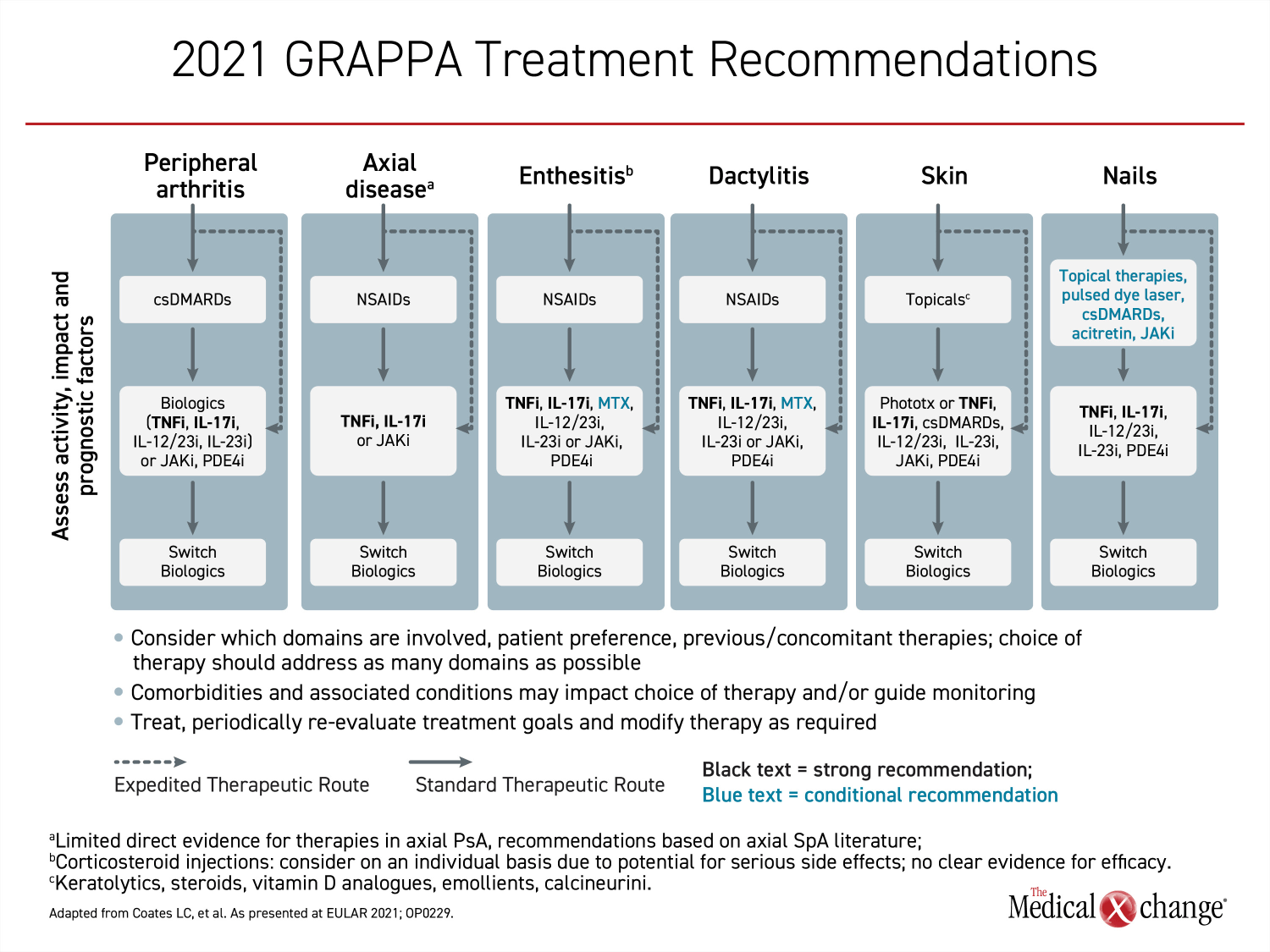
The Group for Research and Assessment of Psoriasis and Psoriatic Arthritis (GRAPPA) and the American College of Rheumatology recommend choosing therapeutics based on the predominant clinical domains present in an individual.
- Psoriatic Arthritis Clinical Domains
- Peripheral Arthritis:
- csDMARDs
- TNF Inhibitors
- IL-17 Inhibitors
- IL-23 Inhibitors
- JAK Inhibitors
- Axial Disease:
- TNF Inhibitors
- IL-17 Inhibitors
- (csDMARDs ineffective for axial disease)
- Enthesitis / Dactylitis:
- TNF Inhibitors
- IL-17 Inhibitors
- IL-23 Inhibitors
- PDE4 Inhibitors
- (csDMARDs limited)
- Peripheral Arthritis:
- Peripheral Arthritis: csDMARDs (methotrexate) remain an initial choice in many global guidelines, though biologics (TNF, IL-17, or IL-23 inhibitors) or JAK inhibitors are introduced promptly if disease activity persists.
- Axial Disease (Spinal involvement): Conventional csDMARDs such as methotrexate are generally ineffective for axial inflammation. First-line therapy defaults directly to NSAIDs, followed by TNF inhibitors or IL-17 inhibitors.
- Enthesitis and Dactylitis: Biologic DMARDs (TNF, IL-17, or IL-23 inhibitors) or targeted synthetic molecules (PDE4 or JAK inhibitors) display greater efficacy than csDMARDs for entheseal attachment inflammation.
- Dominant Skin and Nail Psoriasis: IL-17 and IL-23 inhibitors often produce high rates of complete skin clearance alongside joint protection, making them preferred agents when cutaneous manifestations are severe.
Frequently Asked Questions
What is the first-line treatment for psoriatic arthritis?
First-line therapy for mild joint symptoms often starts with nonsteroidal anti-inflammatory drugs (NSAIDs) alongside localized corticosteroid injections. However, for active disease with peripheral joint swelling or structural damage risk, conventional synthetic DMARDs (like methotrexate) or biologic DMARDs (such as TNF or IL-17 inhibitors) are initiated early to suppress underlying systemic inflammation.
Can psoriatic arthritis be cured completely?
There is currently no complete cure for psoriatic arthritis. However, modern therapeutic regimens can induce long-term clinical remission or low disease activity. Reaching remission stops joint damage progression, clears skin lesions, and restores baseline functional capacity.
How quickly do biologic medications work for psoriatic arthritis?
Some patients notice symptomatic improvements within 2 to 4 weeks after starting a biologic therapy. Maximum therapeutic response for joint swelling, enthesitis, and skin lesions typically develops within 3 to 6 months of continuous administration.
What lifestyle changes help manage psoriatic arthritis flare-ups?
Key non-pharmacological strategies include low-impact aerobic exercise, physical therapy, maintaining a healthy body weight, stress management, and adopting an anti-inflammatory diet. Weight reduction reduces stress on weight-bearing joints and improves systemic responsiveness to targeted biologics.
Are over-the-counter medications sufficient to treat psoriatic arthritis?
Over-the-counter NSAIDs (such as ibuprofen or naproxen) can temporary relieve mild joint pain and stiffness, but they do not stop immune system activity or prevent structural bone and cartilage damage. Long-term disease management requires evaluation by a rheumatologist to consider disease-modifying therapies.
Recommended Next Steps
Managing psoriatic arthritis requires active collaboration between patients, rheumatologists, and dermatologists. If you experience persistent joint pain, morning stiffness lasting longer than 30 minutes, or swelling in your fingers or toes alongside psoriasis:
- Schedule a Comprehensive Rheumatology Evaluation: Early diagnosis and prompt therapeutic intervention prevent irreversible structural joint damage.
- Establish Clinical Baseline Testing: Before beginning systemic DMARDs or biologics, complete baseline screening—including blood counts, liver and kidney function panels, and screening tests for latent tuberculosis and hepatitis.
- Track Active Symptom Domains: Document joint swelling, morning stiffness duration, skin flare intensity, and specific pain locations (such as heel or Achilles tendon pain) to help your physician select the correct domain-targeted therapy.
- Maintain Follow-Up Schedules: Regular clinic visits every 3 to 6 months ensure your treatment plan is adjusted based on therapeutic response and routine safety monitoring.
Image Gallery